Razer Thunderbolt 5 Docking Station merges port expansion and SSD storage in one compact unit
With Thunderbolt Share, the dock enables fast file transfers between PCs without using a network
Handles three 4K monitors at 120Hz through a single connection
Razer has launched a new accessory based on the latest Thunderbolt standard, designed to boost data transfer speed, graphics performance, and connectivity for users who want more from their current setup.
The Razer Thunderbolt 5 Docking Station supports data speeds up to 120Gb/s and drives up to three 4K displays at 120Hz, offering considerable bandwidth for external monitors and peripherals.
One notable feature of this device is its integrated SSD storage, up to 8TB, which allows the dock to function not only as a hub but also as a high-speed external drive. It also consolidates eleven ports into a single unit, reducing cable clutter while providing flexibility for demanding workflows
High-speed storage meets port expansion
The design includes Thunderbolt Share, which allows for fast file transfers and control between systems.
This could appeal to users who work across multiple PCs or want to offload projects quickly without involving a network.
The base version of the dock is priced at $299.99, but models with integrated storage scale up significantly, with the top-end 8TB configuration priced at $999.99.
Whether that cost is justified depends on how much users value the combination of a high-speed SSD and a next-gen connectivity hub in one unit.
Razer says the new dock addresses pain points around high-refresh displays, rapid file movement, and system expandability, all without needing a full desktop.
“The Razer Thunderbolt 5 Dock is designed to meet the growing need for faster data transfer and robust multi-display support,” said Travis Furst, Head of Notebooks and Accessories at Razer.
“With the Razer Core X V2, we’re extending that experience - delivering a high-performance external graphics boost that brings desktop graphics to laptops. Thanks to the support of the latest NVIDIA and AMD graphic cards, it’s a seamless upgrade that can transform ultra-thin Thunderbolt enabled laptops into creative or gaming workstations.”
Although the product is marketed to professionals and content creators, the high price tag and niche features may limit its appeal.
The real test will be whether users find the SSD expansion and port density compelling enough to replace multiple discrete accessories.
In addition, Razer also introduced the Core X V2, a Thunderbolt 5 external GPU enclosure that supports full-length PCIe graphics cards.
Designed for use with laptops and handhelds, the Core X V2 is priced at $499.99 and includes fan control and 140W laptop charging.
It serves a different but complementary audience, those who need desktop-class graphics in a modular shell.
After testing eight home soda makers, I've found the best machines for whipping up your own fizzy drinks while saving money and lowering your sugar intake.
Yahoo Japan is betting big that mandatory AI use can unlock workplace innovation
The company’s plan starts with automating 30% of daily tasks, like meetings and documents
Internal tools like SeekAI will handle expenses, research prompts, and summarizing meeting notes
Yahoo Japan is taking a bold step by requiring all 11,000 of its employees to integrate generative AI into their daily work, aiming to double productivity by 2028.
The company, which also operates LINE, plans to make AI tools a standard part of tasks like research, meeting documentation, expense management, and even competitive analysis.
The idea is to shift employee focus from routine output to higher-level thinking and communication by letting AI handle the groundwork and create continuous innovation.
Targeting the 30% first
The rollout begins in the more universal aspects of office life: areas like searching, drafting, and routine documentation, which Yahoo Japan estimates take up about 30% of its employees’ time.
The company has already developed internal tools like SeekAI to manage tasks such as expense claims and data searches using prompt templates.
AI will also be used to help create agendas, summarize meetings, and proofread reports, thereby giving staff more room to concentrate on decision-making and discussion.
This move might seem extreme, but it follows a broader trend of companies trying to harness AI as a productivity tool rather than just a cost-cutting one.
Yahoo Japan's strategy assumes that automation is not just an efficiency tool but a workplace standard, but there is growing evidence that treating AI as a complete replacement for human workers may be shortsighted.
A recent report by Orgvue claims, more than half of UK businesses which replaced workers with AI now regret that decision. This speaks to a crucial distinction: while AI can support and streamline, it often falls short in areas requiring nuance, empathy, or real-world context.
In this light, Yahoo Japan’s model, one that promotes AI as a support layer rather than a substitute, might prove more sustainable.
This is certainly a sign of things to come, and from my perspective, generative AI is not here to erase jobs, even although there are reports of people losing jobs to AI in some regions.
AI should only shift what jobs look like by removing repetitive tasks and freeing up space for critical thinking and creativity, where human input remains indispensable.
Yahoo Japan’s approach, if implemented with care and flexibility, might help shape that shift in a more inclusive and less disruptive way.
Aokzoe mini PC flaunts a red rocket button with no clear functional explanation
Branding overwhelms the chassis, with buzzwords replacing useful technical or design explanations
The processor has real muscle, but the product’s direction feels uncertain and unfocused
Aokzoe has announced its first mini PC powered by AMD’s new Ryzen AI Max+ 395 APU will soon be launched globally.
The company has remained vague about key technical details, but the announcement has stirred attention for its daring design and ambiguous branding.
The mini PC has been previewed with terms like “AI PC,” “A IPC,” and “Hypermind Drive” emblazoned across its surfaces, leaving its final name uncertain.
Design choices raise questions about purpose and practicality
This device is visually striking with a design that flaunts aggressive angles, bright highlights, and an unexplained red “rocket” button, which feels like a custom or programmable function button, possibly for performance mode.
Mini PCs often lean toward understated forms, but Aokzoe has taken the opposite approach.
Branding is everywhere, with large text and graphics dominating the chassis, raising doubts about whether this machine is intended as a functional business PC or a flashy collector's piece.
Speculation has intensified due to the inclusion of the Ryzen AI Max+ 395, a high-end Strix Halo APU.
This processor is part of AMD’s push into AI-enhanced computing and has only recently started appearing in compact desktops.
Although it holds appeal for demanding tasks like content creation, the lack of detailed specs from Aokzoe makes it difficult to gauge whether this mini PC can realistically serve as a capable video editing PC or handle long work sessions typical in business settings.
At this point, the hardware’s potential seems to outpace the product’s clarity.
Nevertheless, from the official images, the front panel of this device includes a USB4 or Thunderbolt port marked with a lightning bolt icon just before the red “rocket” button.
Next is a full-sized SD card reader, a USB-C port, two USB-A ports (likely differing in speed), and a 3.5mm audio jack for headphones or microphone use.
The company will officially confirm the specs of this device intermittently through social media, avoiding formal release timelines or performance benchmarks.
While a global release has been promised, prospective buyers have little more than renderings and vague labels to assess.
For now, it's difficult to say if the product is serious about computing or simply playing with bold visuals and buzzwords.
Although Aokzoe’s approach is not unique, other brands such as GMKtec and Aoostar are also introducing Strix Halo-based systems.
OpenCart websites were silently injected with malware that mimics trusted tracking scripts
Script hides in analytics tags and quietly swaps real payment forms for fake ones
Obfuscated JavaScript allowed attackers to slip past detection and launch credential theft in real time
A new Magecart-style attack has raised concerns across the cybersecurity landscape, targeting ecommerce websites which rely on the OpenCart CMS.
The attackers injected malicious JavaScript into landing pages, cleverly hiding their payload among legitimate analytics and marketing tags such as Facebook Pixel, Meta Pixel, and Google Tag Manager.
Exepers from c/side, a cybersecurity firm that monitors third-party scripts and web assets to detect and prevent client-side attacks, says the injected code resembles a standard tag snippet, but its behavior tells a different story.
Obfuscation techniques and script injection
This particular campaign disguises its malicious intent by encoding payload URLs using Base64 and routing traffic through suspicious domains such as /tagscart.shop/cdn/analytics.min.js, making it harder to detect in transit.
At first, it appears to be a standard Google Analytics or Tag Manager script, but closer inspection reveals otherwise.
When decoded and executed, the script dynamically creates a new element, inserts it before existing scripts, and silently launches additional code.
The malware then executes heavily obfuscated code, using techniques such as hexadecimal references, array recombination, and the eval() function for dynamic decoding.
The key function of this script is to inject a fake credit card form during checkout, styled to appear legitimate.
Once rendered, the form captures input across the credit card number, expiration date, and CVC. Listeners are attached to blur, keydown, and paste events, ensuring that user input is captured at every stage.
Importantly, the attack doesn’t rely on clipboard scraping, and users are forced to manually input card details.
After this, data is immediately exfiltrated via POST requests to two command-and-control (C2) domains: //ultracart[.]shop/g.php and //hxjet.pics/g.php.
In an added twist, the original payment form is hidden once the card information is submitted - a second page then prompts users to enter further bank transaction details, compounding the threat.
What stands out in this case is the unusually long delay in using the stolen card data, which took several months instead of the typical few days.
The report reveals that one card was used on June 18 in a pay-by-phone transaction from the US, while another was charged €47.80 to an unidentified vendor.
This breach shows a growing risk in SaaS-based e-commerce, where CMS platforms like OpenCart become soft targets for advanced malware.
There is therefore a need for stronger security measures beyond basic firewalls.
Automated platforms like c/side claim to detect threats by spotting obfuscated JavaScript, unauthorized form injections, and anomalous script behavior.
As attackers evolve, even small CMS deployments must remain vigilant, and real-time monitoring and threat intelligence should no longer be optional for e-commerce vendors seeking to secure their customers’ trust.
Experts warn of malware running real apps in fake virtual environments
GodFather bypasses security checks and overlays fake screens to steal credentials
Targets banking and crypto apps globally with nearly invisible techniques
Zimperium zLabs has uncovered a new version of the GodFather malware that uses on-device virtualization to hijack real banking and cryptocurrency apps.
Unlike older attacks that showed fake login screens, this malware launches the actual apps in a virtual space where attackers can see everything the user does.
The attack begins with a host app that includes a virtualization tool - this host app downloads the targeted banking or crypto app and runs it in a private environment.
Moving beyond simple overlays
When users open their app, they are unknowingly redirected into the virtual version. From there, every tap, login, and PIN entry is tracked in real time.
Because the user is interacting with a real app, it is almost impossible to spot the attack by looking at the screen.
GodFather also uses ZIP tricks and hides much of its code in a way that defeats static analysis. It requests accessibility permissions and then silently grants itself more access, making the attack smooth and hard to detect.
“Mobile attackers are moving beyond simple overlays; virtualization gives them unrestricted, live access inside trusted apps,” said Fernando Ortega, Senior Security Researcher, Zimperium zLabs.
“Enterprises need on-device, behavior-based detection and runtime app protection to stay ahead of this shift toward a mobile-first attack strategy.”
Zimperium’s analysis shows that this version of GodFather is focused on Turkish banks, but the campaign targets almost 500 apps globally. These include financial services, cryptocurrency platforms, e-commerce, and messaging apps.
The malware checks for specific apps on the device, clones them into the virtual space, and uses the cloned version to collect data and track user behavior.
It can also steal device lock screen credentials using fake overlays that look like system prompts.
Attackers can control the infected phone remotely using a set of commands. These can perform swipes, open apps, change brightness, and simulate user actions.
How to stay safe
Avoid installing apps from unknown sources - always use official stores like Google Play.
Check app permissions carefully. If an app asks for accessibility access or screen overlay permissions without a clear reason, uninstall it immediately.
A threat actor has used a patched vulnerability in SonicWall software
The group is tracked as UNC6148
This allowed UNC6148 to potentially steal credentials and deploy ransomware
A financially motivated threat actor, tracked by Google’s Threat Intelligence Group as UNC6148, has been observed targeting patched end-of-life SonicWall Secure Mobile Access (SMA) 100 series appliances.
These attacks, Google determines with ‘high confidence’, are using credentials and one-time passwords (OTP) seeds that were obtained through previous instructions, which has allowed them to re-access even after organizations have updated their security.
A zero-day remote code execution vulnerability, Google says with ‘moderate confidence’, was used to deploy OVERSTEP on the targeted SonicWall SMA appliances. The threat intelligence group also “assesses with moderate confidence that UNC6148's operations, dating back to at least October 2024, may be to enable data theft and extortion operations, and possibly ransomware deployment.”
UNC6148
The previously unknown persistent backdoor/user-mode rootkit, OVERSTEP, was deployed by the actor. This malware modifies the appliance’s boot process to allow persistent access, steal sensitive credentials, and then hide its own components;
“An organization targeted by UNC6148 in May 2025 was posted to the "World Leaks" data leak site (DLS) in June 2025, and UNC6148 activity overlaps with publicly reported SonicWall exploitation from late 2023 and early 2024 that has been publicly linked to the deployment of Abyss-branded ransomware (tracked by GTIG as VSOCIETY),” Google continued.
Earlier in 2025, SonicWall firewalls were hit by a worrying cyberattack, in which a vulnerability was leveraged by threat actors to gain access to target endpoints, interfere with the VPN, and further disrupt the target further.
These attacks highlight the importance of updating software as soon as patches become available. Organizations which fail to keep on top of system updates can be left vulnerable to known-exploits. If it’s too daunting of a task, take a look at our choices for the best patch management software for a helping hand.
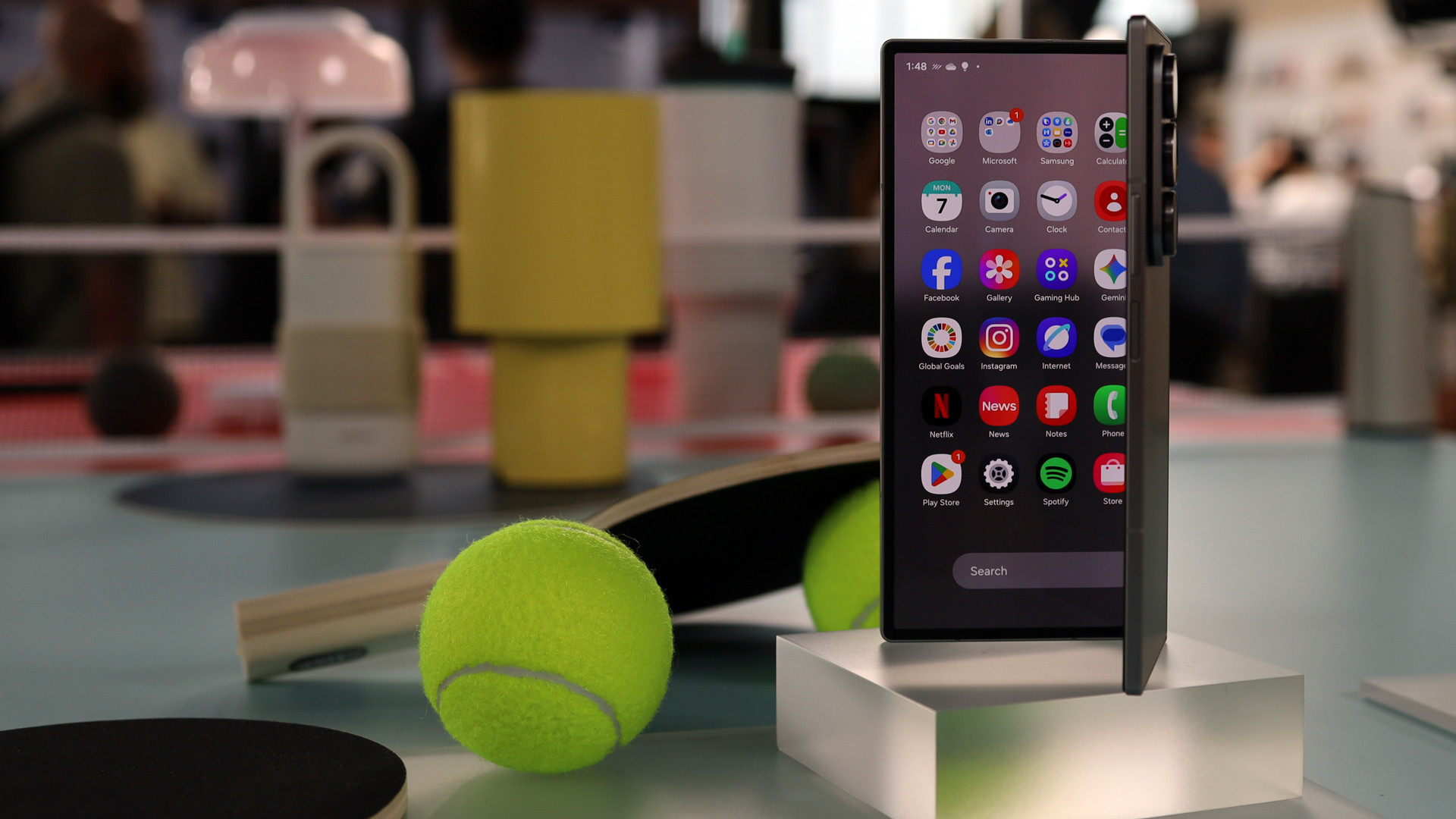
It’s hard to overestimate just how incredible the Samsung Galaxy Z Fold 7 is in the glass and metal. It’s not your average folding phone, and the in-hand wow factor far outweighs that of most flagship phones over the past few years, including many of the best folding phones.
Over the past week, I’ve shown Samsung’s new folding phone to several people, and the response has been nearly uniform: 'wow, that’s light'. Then I ask them to unfold it, and the response is even more surprising.
The Galaxy Z Fold 7 nails this on the head, and most people are incredibly surprised when they first unfold it. I’ve used every major Samsung Galaxy flagship launched since the first Galaxy S-series handset in 2010, and this is why the Galaxy Z Fold 7 is one of Samsung’s best phones.
Three design changes make all the difference
(Image credit: Lance Ulanoff / Future)
Samsung is widely credited with launching the foldable phone market, at least in most global markets; however, sales of folding phones have somewhat stagnated as they faced a series of challenges that needed to be overcome.
The biggest of these was the size, and despite Samsung making its folding phones thinner and lighter each year, even the Galaxy Z Fold 6 was considerably thicker, bulkier, and heavier than Samsung’s non-folding phones.
(Image credit: Lance Ulanoff / Future)
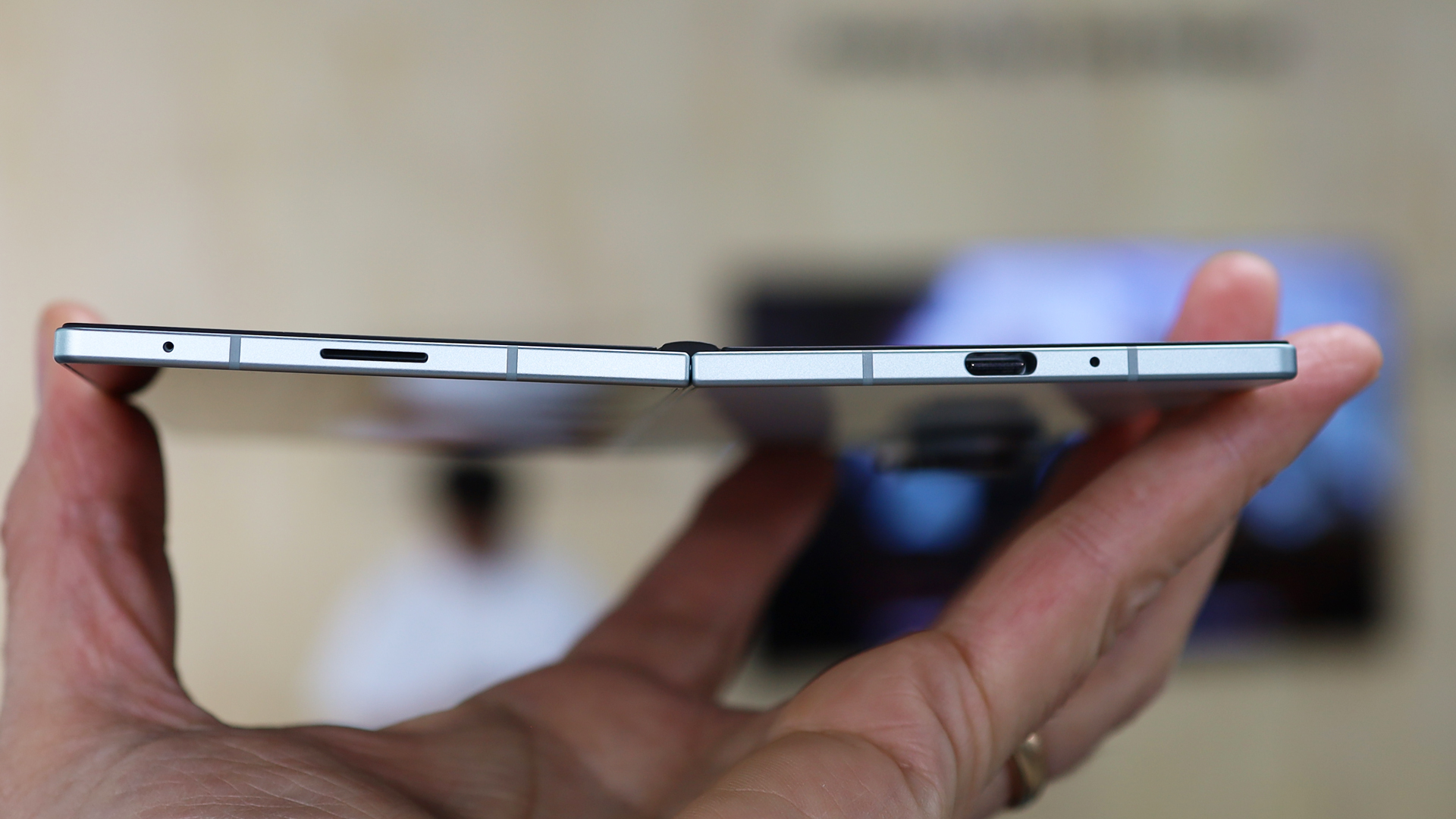
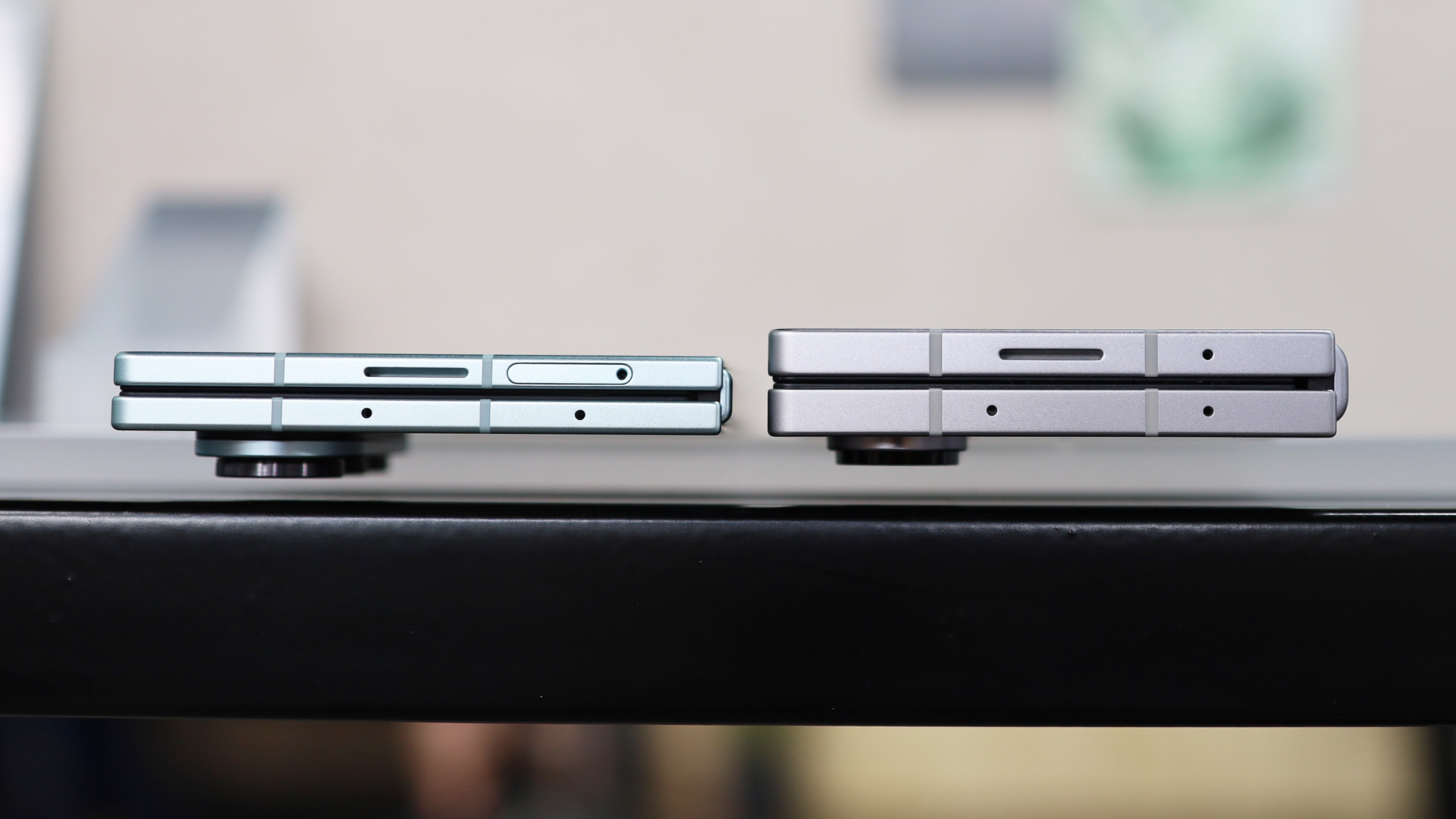
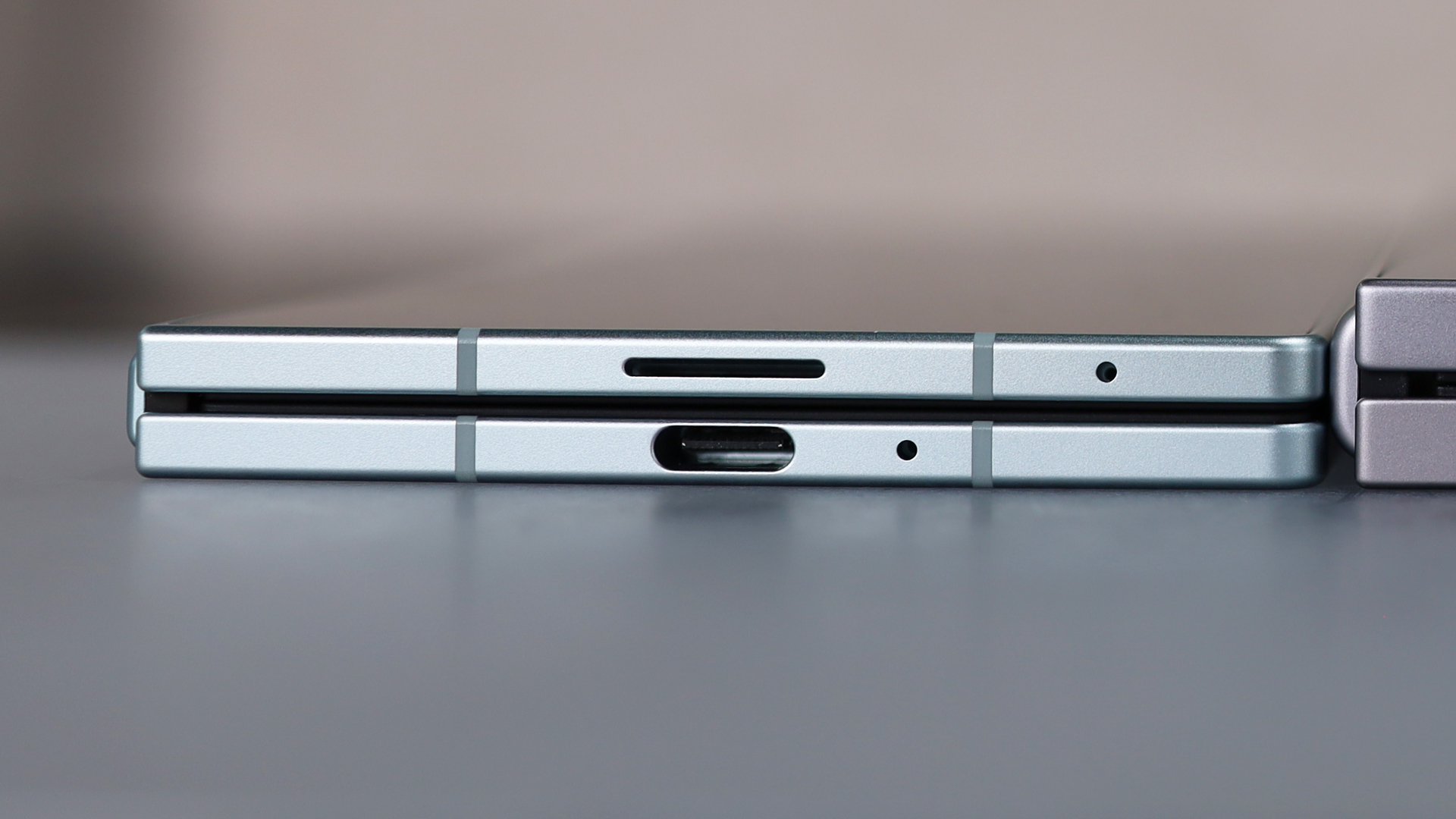
The Galaxy Z Fold 7 immediately rectifies this: it’s 4.2mm thick when unfolded, which allows it to be 8.9mm thick when folded. That’s 0.7mm thicker than the Galaxy S25 Ultra, yet the Galaxy Z Fold 7 feels better, as it’s 3.8mm narrower and three grams lighter. It’s the sleekest Samsung phone ever made, and the nicest folding phone I’ve ever felt in the hand.
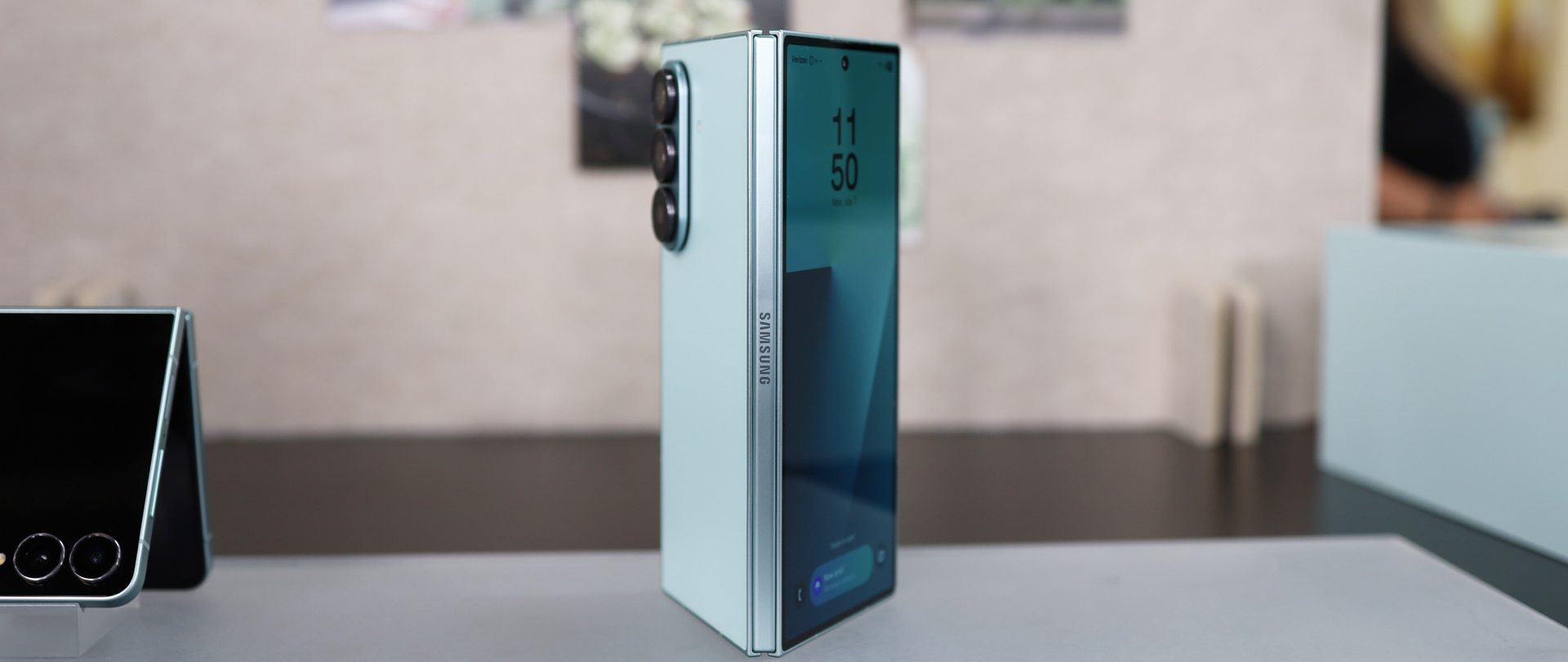
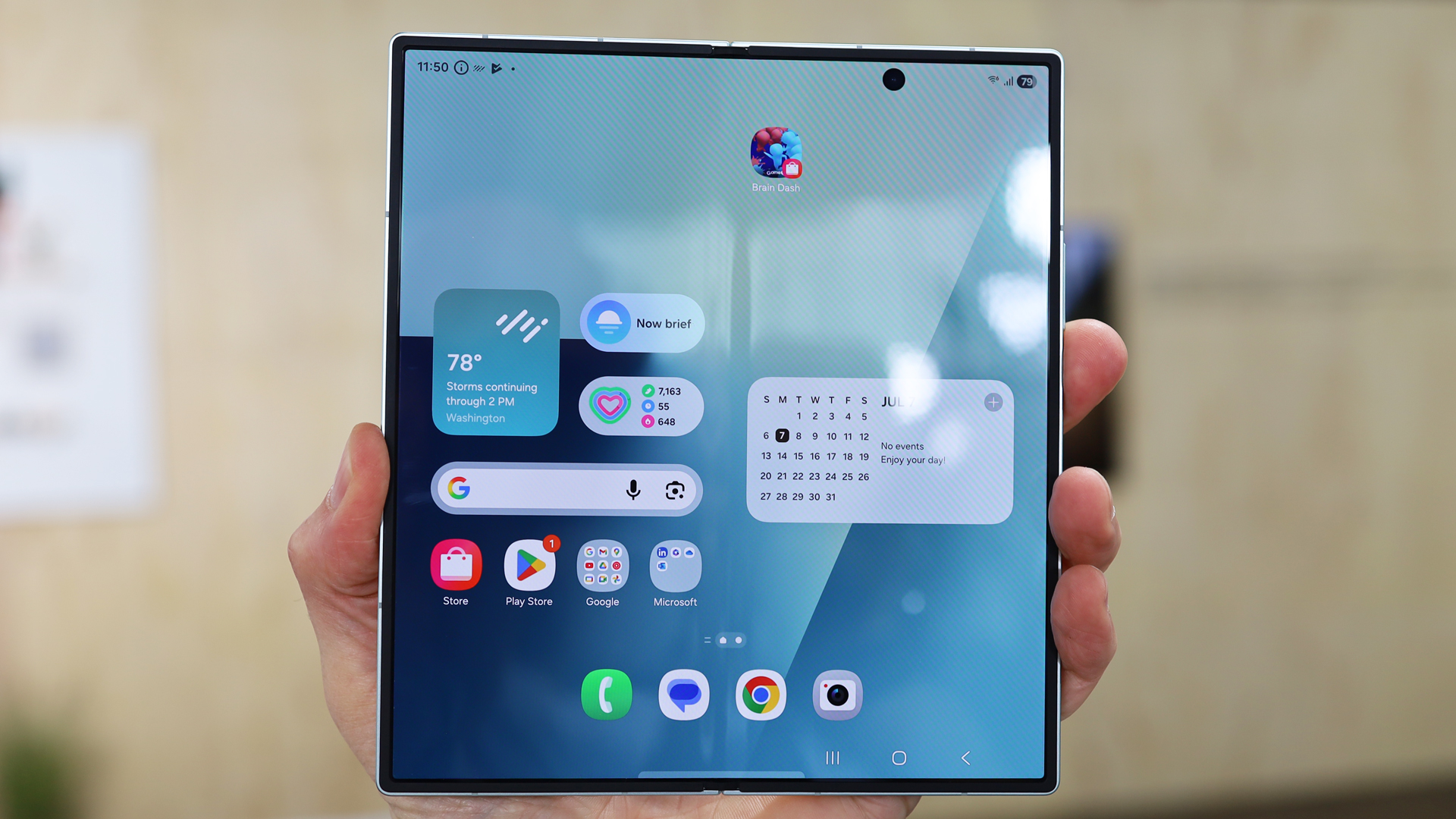
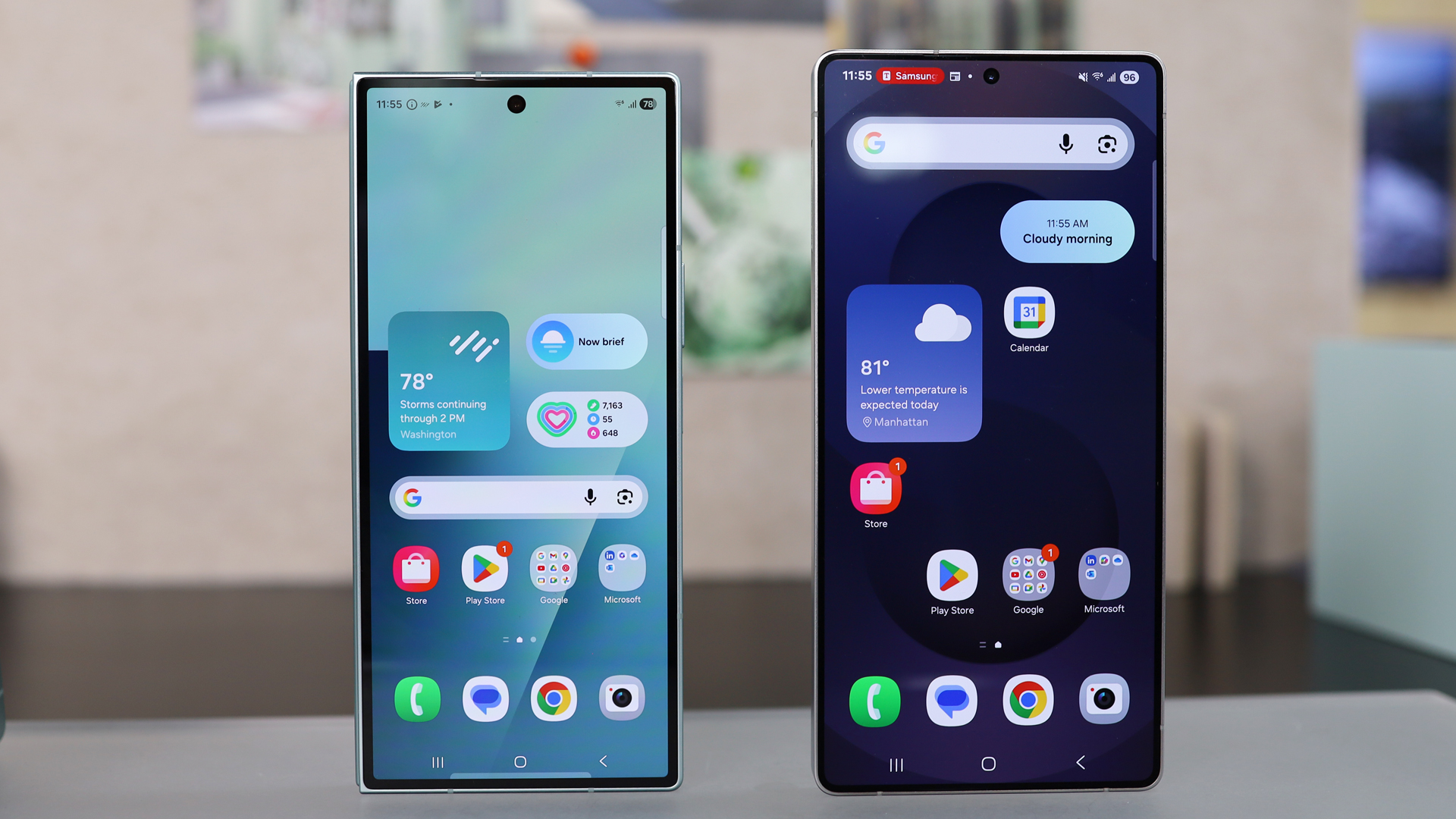
One of the biggest challenges for previous Samsung folding phones was the narrow front screen, but the Galaxy Z Fold 7 cover display feels very similar to the regular Galaxy S25. It’s significantly better than the Fold 6, and it makes the Fold 7 feel just like a normal phone that unfolds into a tablet.
And create a genuine wow factor
(Image credit: Lance Ulanoff / Future)
All of this combines to create something that feels magical. I’ve long wondered what it would take to persuade smartphone users to upgrade to a folding phone, and the Galaxy Z Fold 7 could be the device that finally prompts people to make the switch. It packs a ton of wow factor, and unlike its chief rivals, it’ll be widely available globally.
Rivals like the Oppo Find N5 and Honor Magic V5 have a limited release, and although the latter is expected to launch globally in the coming months, it will still have fewer carrier and retail partnerships than the Galaxy Z Fold 7. This is a crucial fact, as it adds even more credence to the significant differences between the Galaxy Z Fold 7 and the Galaxy Z Fold 6; thankfully, Samsung has this covered.
Smartphones don’t change that often, and most years, we suggest that it’s not worth upgrading from the most recent previous generation. This year, the Galaxy Z Fold 7 feels like a completely new phone that I think every phone user — folding or otherwise — should consider switching to. I don’t think we’ve seen Samsung achieve this level of wow factor in years.
All the right big numbers
(Image credit: Lance Ulanoff / Future)
During the early part of my career, I spent almost a decade working for carriers in the UK, and one thing is clear: big numbers sell, or specifically, the right big numbers.
The Galaxy Z Fold 7 doesn’t have the absolute best specs on a folding phone, but it has enough large numbers to persuade customers to buy it. Between advertising, Samsung’s other marketing efforts, and word of mouth, it’s arguably inevitable that many non-folding phone users will want to experience the Galaxy Z Fold 7 at least once.
Galaxy Z Fold 7 front screen (left) vs Galaxy S25 Ultra (right)(Image credit: Lance Ulanoff / Future)
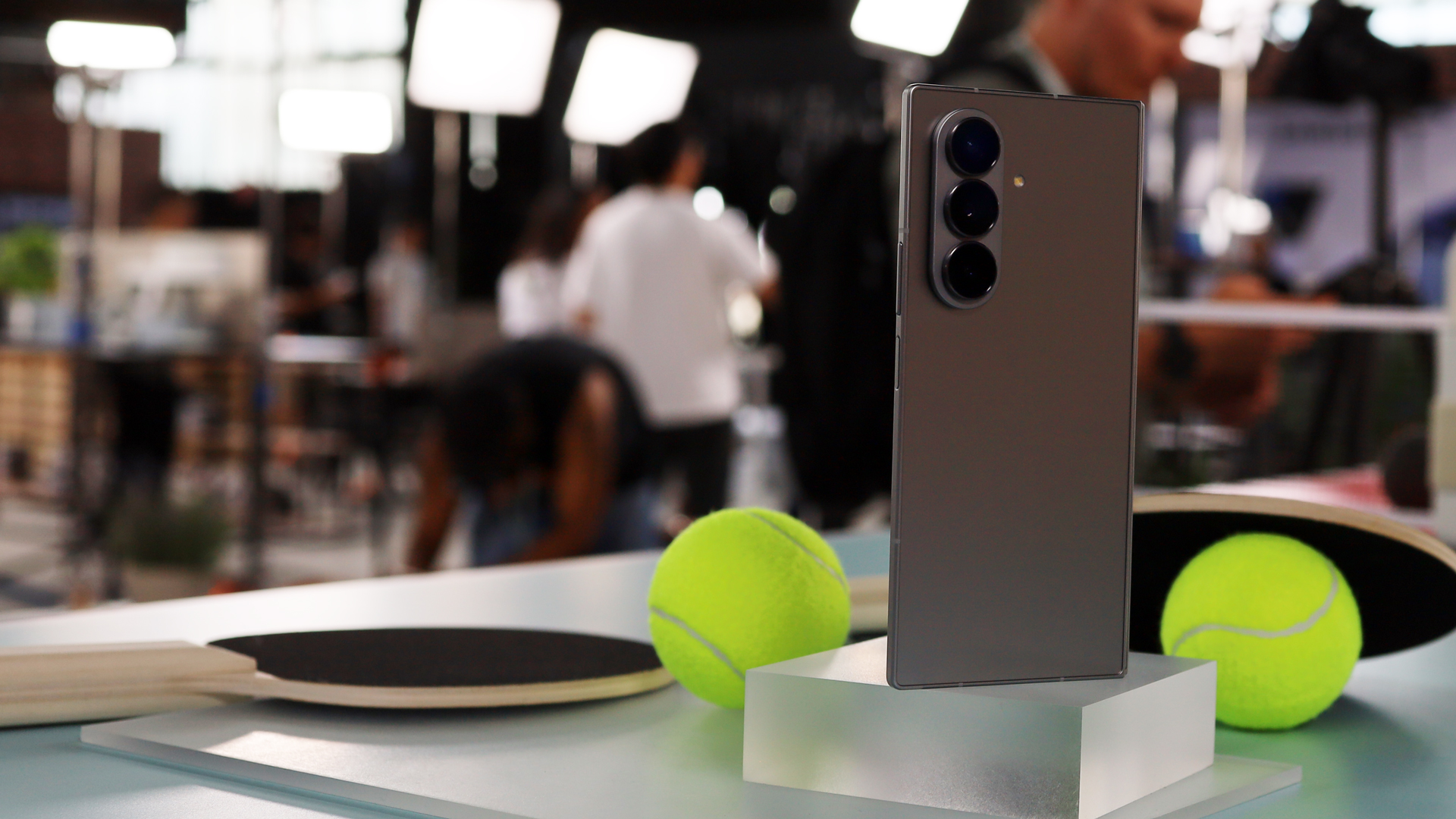
When they do, they’ll likely ask about the key numbers involved, and the Galaxy Z Fold 7 hits most of these, even though it lags behind the competition in many areas. A triple camera with a headline 200-megapixel sensor — that’s ostensibly the same as the one found in the lauded Galaxy S25 Ultra — will get any customer’s attention. The camera is better than I expected, and should prove to be good enough for most people, as long as they don’t want to capture photos at long focal lengths.
The 4,400mAh battery and 25W charging aren’t world-beating — in fact, they’re lower than all the key rivals — but sound big enough for someone switching from a Galaxy S25 Plus or iPhone 16 Pro. In actual practice, it’s a full day of usage with very little to spare, but considering most people sit at a desk, or plug in to charge while in the car, I think it’ll be passable, but barely.
Z Fold 7 thickness (left) vs the Galaxy Z Fold 6 (right)(Image credit: Lance Ulanoff / Future)
Even the chip hits the right note, albeit with one big caveat. It’s the same Snapdragon 8 Elite for Galaxy chipset used in Samsung’s other flagship phones this year, at least on paper. In actual practice, the silicon feels throttled compared to Samsung’s other flagships, and performs similarly to the also ultra-thin Galaxy S25 Edge.
There will undoubtedly be doubts about the longevity of the Galaxy Z Fold 7's battery, which is understandable, but I suspect that the design and wow factor are special enough for customers to accept certain shortcomings. It doesn’t have the best battery life, but I’ve found that it’s sufficient for most people, even if it falls short of rival folding phones.
The ultra-thin foldable we’ve been waiting for
(Image credit: Lance Ulanoff / Future)
The Galaxy Z Fold 7 is an engineering marvel simply for how fantastic it feels. When I first held it at a Galaxy Unpacked preview event, I was blown away by how thin, light, and sleek it felt. I had my reservations, but I’ve wondered if my initial reaction was reflective of an average user or someone who has a passion for folding phones.
To answer this, I’ve shown the Galaxy Z Fold 7 to many different people, and it’s reaffirmed what I thought at first: this is one of the most special folding phones ever made — a case in point is my mother. She won’t consider the Galaxy S25 Ultra because it’s too big, but she wants a great camera. She uses a Galaxy S22 Plus and refuses to switch to an iPhone.
(Image credit: Lance Ulanoff / Future)
I showed my mother the Galaxy Z Fold 7 and she was floored by its design. She’s so impressed that she’s heavily considering buying it. This was the biggest surprise, as I had shown her other folding phones — like the Find N5 and the Magic V3 — and this was the first folding phone she was willing to consider.
If it can appeal to someone resistant to technology change, like my mother, the Galaxy Z Fold 7 will surely appeal to the masses more than any other folding phone before it. Could this finally be the folding phone industry’s iPhone moment, or will that need to wait for next year’s rumored iPhone Fold or this year's rumored Samsung tri-fold? Either way, the Galaxy Z Fold 7 is shaping up to be the best foldable yet.