Lenovo’s ThinkPad P14s Gen 6 supports up to 96GB DDR5 RAM, but only with Krackan Point CPU models
Rapid Charge delivers 80% power in 60 minutes using a 65W USB-C adapter
However its battery may struggle under heavy performance loads
Lenovo has announced its most powerful AMD laptop yet: the ThinkPad P14s Gen 6, which is set to launch with the 12-core AMD Ryzen AI 9 HX Pro 370, making it the company's first AMD-powered model to break past the eight-core ceiling.
Aimed at creative professionals and mobile users who need both AI processing and core-heavy performance, the ThinkPad P14s Gen 6 supports up to 96GB of DDR5-5600 RAM - but only in configurations using the Krackan Point CPUs, namely the Ryzen AI 5 Pro 340 and Ryzen AI 7 Pro 350.
That means the 12-core Strix Point model may be capped at 64GB of soldered memory. While it's a limitation, it still offers enough for demanding workloads like 3D rendering or Photoshop, making it a strong candidate for users searching for the best laptop for photo editing.
Poor choice of battery
While the processing capacity could place it among the best workstation contenders in terms of raw power, there’s a drawback: the model’s battery may struggle to match the chip’s power demands.
Weighing 1.39 kg (3.06 lbs) and measuring 10.9–16.3 mm thick, the device uses either a 57Whr or 52.5Whr battery, depending on the CPU.
Although both batteries are larger than the weedy 39.3Whr battery on the previous ThinkPad P14s Gen 5, they may still struggle under the load of the new, more powerful processors. However, the laptop supports Rapid Charge with a 65W adapter, capable of reaching 80% battery in 60 minutes.
It includes TÜV certifications for Eyesafe and Low Blue Light, a touchscreen, integrated PrivacyGuard, and will be available in different IPS variants offering up to 500-nit brightness.
Graphics are handled by an integrated AMD Radeon 890M, built on RDNA 3.5 architecture, delivering up to 32 TOPS and supported by AMD’s PRO Graphics Driver.
For connectivity, the device offers WiFi 7, Bluetooth 5.3, optional 5G or CAT16 WWAN with eSIM, and optional NFC.
Physical ports include two USB-C (Thunderbolt 4) ports, two USB-A (5 Gbps) ports, HDMI 2.1, RJ45 Ethernet, a headphone/mic combo jack, and optional Nano SIM and smart card readers.
Price and availability remain unclear, as the listing simply states “available soon.” Given that the T14 Gen 6 AMD models are unlikely to ship before May or June 2025, the P14s variant likely won’t hit shelves before summer either.
ChatGPT’s memory used to be simple. You told it what to remember, and it listened.
Since 2024, ChatGPT has had a memory feature that lets users store helpful context. From your tone of voice and writing style to your goals, interests, and ongoing projects. You could go into settings to view, update, or delete these memories. Occasionally, it would note something important on its own. But largely, it remembered what you asked it to. Now, that’s changing.
OpenAI, the company behind ChatGPT, is rolling out a major upgrade to its memory. Beyond the handful of facts you manually saved, ChatGPT will now draw from all of your past conversations to inform future responses by itself.
According to OpenAI, memory now works in two ways: “saved memories,” added directly by the user, and insights from “chat history,” which are the ones that ChatGPT will gather automatically.
This feature, called long-term or persistent memory, is rolling out to ChatGPT Plus and Pro users. However, at the time of writing, it’s not available in the UK, EU, Iceland, Liechtenstein, Norway, or Switzerland due to regional regulations.
The idea here is simple: the more ChatGPT remembers, the more helpful it becomes. It’s a big leap for personalization. But it’s also a good moment to pause and ask what we might be giving up in return.
A memory that gets personal
(Image credit: Shutterstock)
It’s easy to see the appeal here. A more personalized experience from ChatGPT means you explain yourself less and get more relevant answers. It’s helpful, efficient, and familiar.
“Personalization has always been about memory,” says Rohan Sarin, Product Manager at Speechmatics, an AI speech tech company. “Knowing someone for longer means you don’t need to explain everything to them anymore.”
He gives an example: ask ChatGPT to recommend a pizza place, and it might gently steer you toward something more aligned with your fitness goals – a subtle nudge based on what it knows about you. It's not just following instructions, it’s reading between the lines.
“That’s how we get close to someone,” Sarin says. “It’s also how we trust them.” That emotional resonance is what makes these tools feel so useful – maybe even comforting. But it also raises the risk of emotional dependence. Which, arguably, is the whole point.
“From a product perspective, storage has always been about stickiness,” Sarin tells me. “It keeps users coming back. With each interaction, the switching cost increases.”
OpenAI doesn’t hide this. The company's CEO,. Sam Altman, tweeted that memory enables “AI systems that get to know you over your life, and become extremely useful and personalized.”
That usefulness is clear. But so is the risk of depending on them not just to help us, but to know us.
Does it remember like we do?
(Image credit: Getty Images)
A challenge with long-term memory in AI is its inability to understand context in the same way humans do.
We instinctively compartmentalize, separating what’s private from what’s professional, what’s important from what’s fleeting. ChatGPT may struggle with that sort of context switching.
Sarin points out that because people use ChatGPT for so many different things, those lines may blur. “IRL, we rely on non-verbal cues to prioritize. AI doesn’t have those. So memory without context could bring up uncomfortable triggers.”
He gives the example of ChatGPT referencing magic and fantasy in every story or creative suggestion just because you mentioned liking Harry Potter once. Will it draw from past memories even if they're no longer relevant? “Our ability to forget is part of how we grow,” he says. “If AI only reflects who we were, it might limit who we become.”
Without a way to rank, the model may surface things that feel random, outdated, or even inappropriate for the moment.
Bringing AI memory into the workplace
Persistent memory could be hugely useful for work. Julian Wiffen, Chief of AI and Data Science at Matillion, a data integration platform with AI built in, sees strong use cases: “It could improve continuity for long-term projects, reduce repeated prompts, and offer a more tailored assistant experience," he says.
But he’s also wary. “In practice, there are serious nuances that users, and especially companies, need to consider.” His biggest concerns here are privacy, control, and data security.
“I often experiment or think out loud in prompts. I wouldn’t want that retained – or worse, surfaced again in another context,” Wiffen says. He also flags risks in technical environments, where fragments of code or sensitive data might carry over between projects, raising IP or compliance concerns. “These issues are magnified in regulated industries or collaborative settings.”
Whose memory is it anyway?
OpenAI stresses that users can still manage memory – delete individual memories that aren't relevant anymore, turn it off entirely, or use the new “Temporary Chat” button. This now appears at the top of the chat screen for conversations that are not informed by past memories and won't be used to build new ones either.
However, Wiffen says that might not be enough. “What worries me is the lack of fine-grained control and transparency,” he says. “It's often unclear what the model remembers, how long it retains information, and whether it can be truly forgotten.”
He’s also concerned about compliance with data protection laws, like GDPR: “Even well-meaning memory features could accidentally retain sensitive personal data or internal information from projects. And from a security standpoint, persistent memory expands the attack surface.” This is likely why the new update hasn't rolled out globally yet.
What’s the answer? “We need clearer guardrails, more transparent memory indicators, and the ability to fully control what’s remembered and what’s not," Wiffen explains.
Not all AI remembers the same
(Image credit: OpenAI & Google & Microsoft)
Other AI tools are taking different approaches to memory. For example, AI assistant Claude doesn’t store persistent memory outside your current conversation. That means fewer personalization features, but more control and privacy.
Perplexity, an AI search engine, doesn’t focus on memory at all – it retrieves real-time web information instead. Whereas Replika, AI designed for emotional companionship, goes the other way, storing long-term emotional context to deepen relationships with users.
So, each system handles memory differently based on its goals. And the more they know about us, the better they fulfill those goals – whether that’s helping us write, connect, search, or feel understood.
The question isn’t whether memory is useful; I think it clearly is. The question is whether we want AI to become this good at fulfilling these roles.
It’s easy to say yes because these tools are designed to be helpful, efficient, even indispensable. But that usefulness isn’t neutral, it’s intentional. These systems are built by companies that benefit when we rely on them more.
You wouldn’t willingly give up a second brain that remembers everything about you, possibly better than you do. And that’s the point. That’s what the companies behind your favorite AI tools are counting on.
There are plenty of internet providers servicing beautiful Boulder, from high-speed fiber to cable internet. Check out our expert picks to find the best broadband for your home.
Ryan Gosling is officially joining the Star Wars universe
He'll play an all-new character inStar Wars: Starfighter, which hit theaters in May of 2026
The casting and film were announced at Star Wars Celebration in Japan
While we’ve known there are some feature-length Star Wars films in the works, up until late last night – April 17, 2025 – we only knew that the Mandalorian and Grogu would make the jump to the big screen next Memorial Day, May 26, 2026.
But hold your blue milk – there’s another brand-new Star Wars film set for May 2027, and it starts production this Fall. Even better, it’s directed by Shawn Levy, the man behind the incredibly excellent Deadpool & Wolverine, but maybe even better is the fact that Ryan Gosling is joining the Star Wars universe.
Yes, the actor with his roots in the Mickey Mouse Club and the person who played Ken in Barbie, will be playing an all-new character in Star Wars: Starfighter. The title of the forthcoming film certainly has intrigue, but not a whole lot else about the plot or the storyline is known.
Star Wars: Starfighter comes to theaters on May 28, 2027. #StarWarsCelebration pic.twitter.com/dsbVb3VdBYApril 18, 2025
The casting was announced on stage at Star Wars Celebration 2025 in Japan. Starfighter will be a stand-alone film that is set five years after The Rise of Skywalker. Gosling was wearing a hat with the phrase, “Never tell me the odds.” on it, a Han Solo quote which might hint that this will be an action-packed adventure film. And it will be turning a new page as the Skywalker saga will be concluded by this point.
Star Wars: Starfighter is slated to begin production this fall and will be released on Memorial Day 2027, which means May 28. After a year, Star Wars is set to return to big screen with The Mandalorian & Grogu.
While we have footage of both Gosling and Levy on stage at Celebration 2025, the only other piece of media is a logo, title teaser for the Starfighter film. It’s a journey we’ll be following closely on TechRadar, though.
Sam Witwer has surprised fans at the Lucasfilm Animation 20th anniversary #StarWarsCelebration panel. https://t.co/l7Y4C7Zr3M pic.twitter.com/M76x28yJFSApril 18, 2025
Also announced at Star Wars Celebration 2025 is a new animated series titled, Maul: Shadow Lord. And this will be excellent news for fans of The Clone Wars, among other animated shows in the Star Wars universe. Better yet, Sam Witwer will be reprising his role to voice Maul in this show. Maul: Shadow Lord will be exclusive to one of the best streaming services, Disney+, when it arrives in 2026.
At just €6 per terabyte, Storadera undercuts US cloud giants
It skipped SSDs for HDDs to slash costs while maintaining solid speeds
Storadera plans to expand into Germany, the UK, and beyond
Storadera, a Tallinn-based cloud startup, is offering some of the best cloud storage for photos with S3-compatible storage at €6/TB/month. This puts it head-to-head with providers like Backblaze, which offers a slightly lower rate of €4.75/TB/month.
The company's pitch lies not just in low pricing but also in jurisdiction. Being a Europe-based startup, its stored data is beyond the direct jurisdiction of non-EU countries, making it appealing to organizations that require data sovereignty.
Storadera’s architecture relies on HDDs rather than SSDs for primary writes. “If we can offer fast enough service on 10x less expensive hardware, then it sounds like magic,” Tommi Kannisto, the founder of Storadera, explained.
Hyperconverged setup
While SSDs are used for metadata, accounting for just 0.05 percent of total disk space, all major writes are done to traditional disks. "QLC 100-plus TB SSDs are still too expensive – and probably will be for the next ten years,” Kannisto said.
The company uses a hyperconverged setup, with all servers writing to JBODs – racks containing 102 conventional Western Digital hard drives – using erasure coding schemes such as 4+2 and 6+2, with 8+2 coming soon. Each server has 32GB of RAM and runs services written in 100,000 lines of Go code.
“All software runs in all servers and all servers write to all JBODs. There is no load balancer unit,” Kannisto said.
The system adapts to load, using “small blocks at times of low load with bigger blocks used at high load times,” and can achieve “close to 300MBps with 2MB files.” It is also preparing to implement higher-capacity shingled magnetic recording (SMR) drives to reduce capital expenditure by up to 25 percent. Storadera also offers bucket geo-replication, object locking for immutability, and integrity checks every 60 days.
The company says it is doing well financially, with around 100 customers, including Telia and the Estonian government. It has positioned itself as one of the best cloud storage and cloud backup options available.
Despite making slightly less than €1 million a year, the company says it is sustainable and eyeing further growth. “We are profitable… we make a very good profit [and] we’re growing 5 percent/month in revenue,” Kannisto said.
Storadera plans to expand into Germany by mid-2025, and aims to enter the UK, and possibly North America or the Asia-Pacific region, later in the year
No, it’s not quite May the 4th. We’re still 19 days away from May 4, 2025, which is known to us in the galaxy and those far, far away as Star Wars Day. Even so, that’s not stopping Lego from ushering in nine – yes, nine – new Star Wars sets.
You’ll soon use Lego Bricks to build everything from the loveable droid Chopper – as seen in Star Wars: Ahsoka and Star Wars Rebels – to a new Ultimate Collector Series that will please any bounty hunter, a fresh ship and, of course, a few sets to thrill those on the dark side.
In addition to loving all sorts of technology and breaking it down for you, I’m a pretty huge Star Wars and Lego fan, so I’ve done the hard work of deciphering Lego’s May 4th, 2025 drop and am sharing my favorite three out of the nine.
Plus, a look at some of the deals you can score when these go up for order in just a few days. And trust me, signing up for the free Lego Insiders rewards program makes a lot of sense – it’ll bring you closer to the force –err, deals.
You can finally build Chopper
(Image credit: Lego)
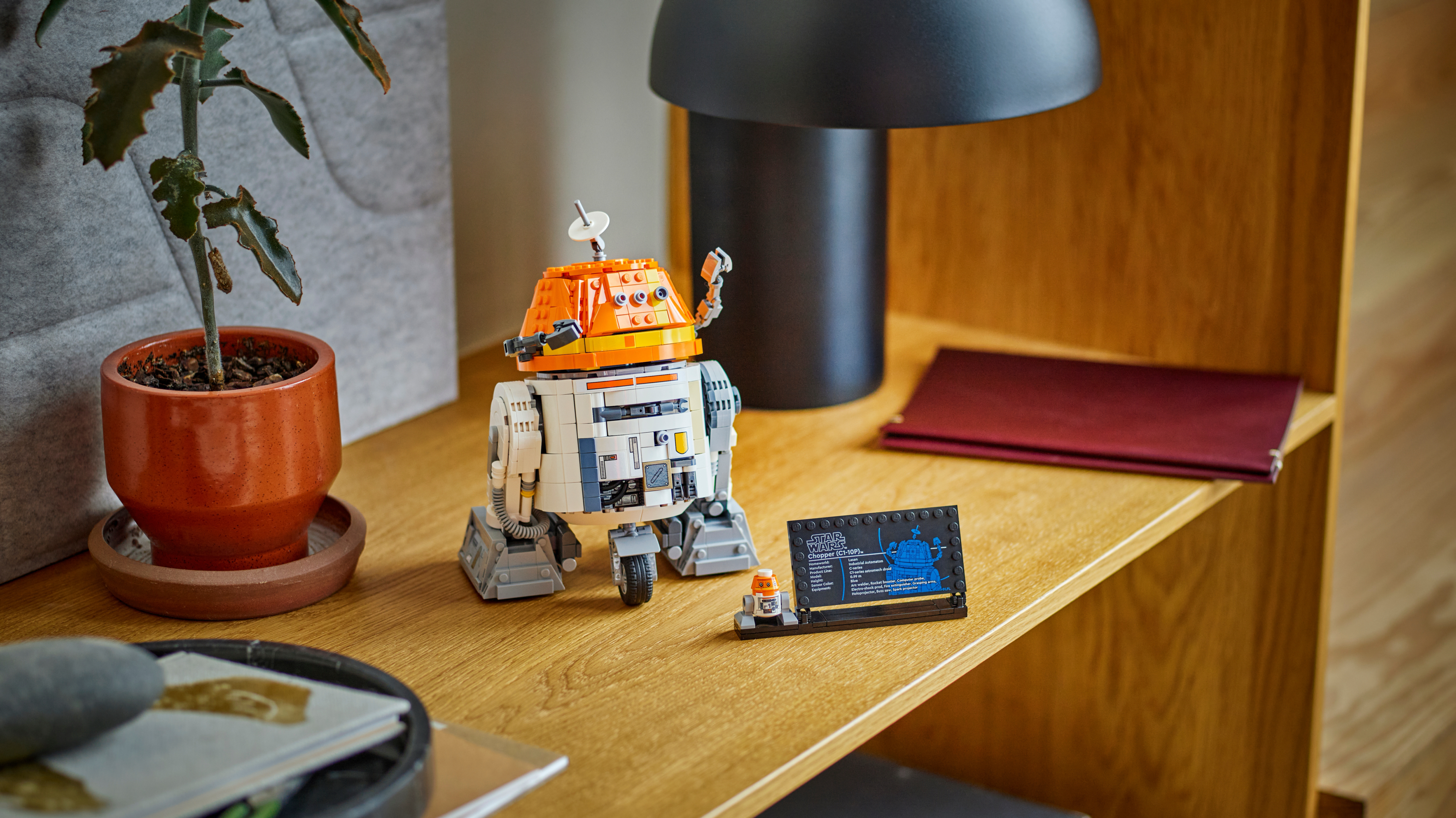
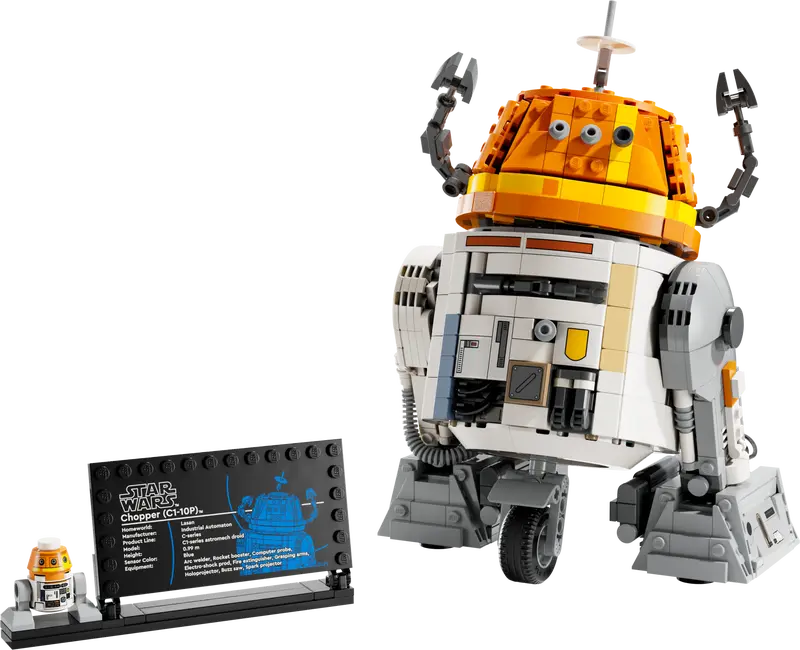
Kicking things off is the C1-10P Droid, better known as Chopper. This droid will be instantly familiar with its orange top and tan, grey main body, as well as its two main roller wheels. Fans of the Ghost Crew from Star Wars Rebels will know Chopper could have a bit of an attitude. You’ll get to build all of that and even show those emotions with the Lego Star Wars™ Chopper (C1-10P)™ Astromech Droid set.
You’ll build the iconic droid out of 1,039 pieces, and once built, Chopper will be over eight inches tall. This should be a fun one to build, especially while rewatching Star War Rebels on Disney+, one of the best streaming services, and the Chopper Droid set will launch on May 1, 2025, with preorders available right now at $99.99 / £99.99.
The Lego Star Wars Chopper – C1-10P – Astromech Droid set can be ordered now and will ship on May 1, 2025. For $99.99 / £99.99, you'll build the iconic robot out of 1,039 bricks.View Deal
The latest Ultimate Collector Series is a fun one
(Image credit: Lego)
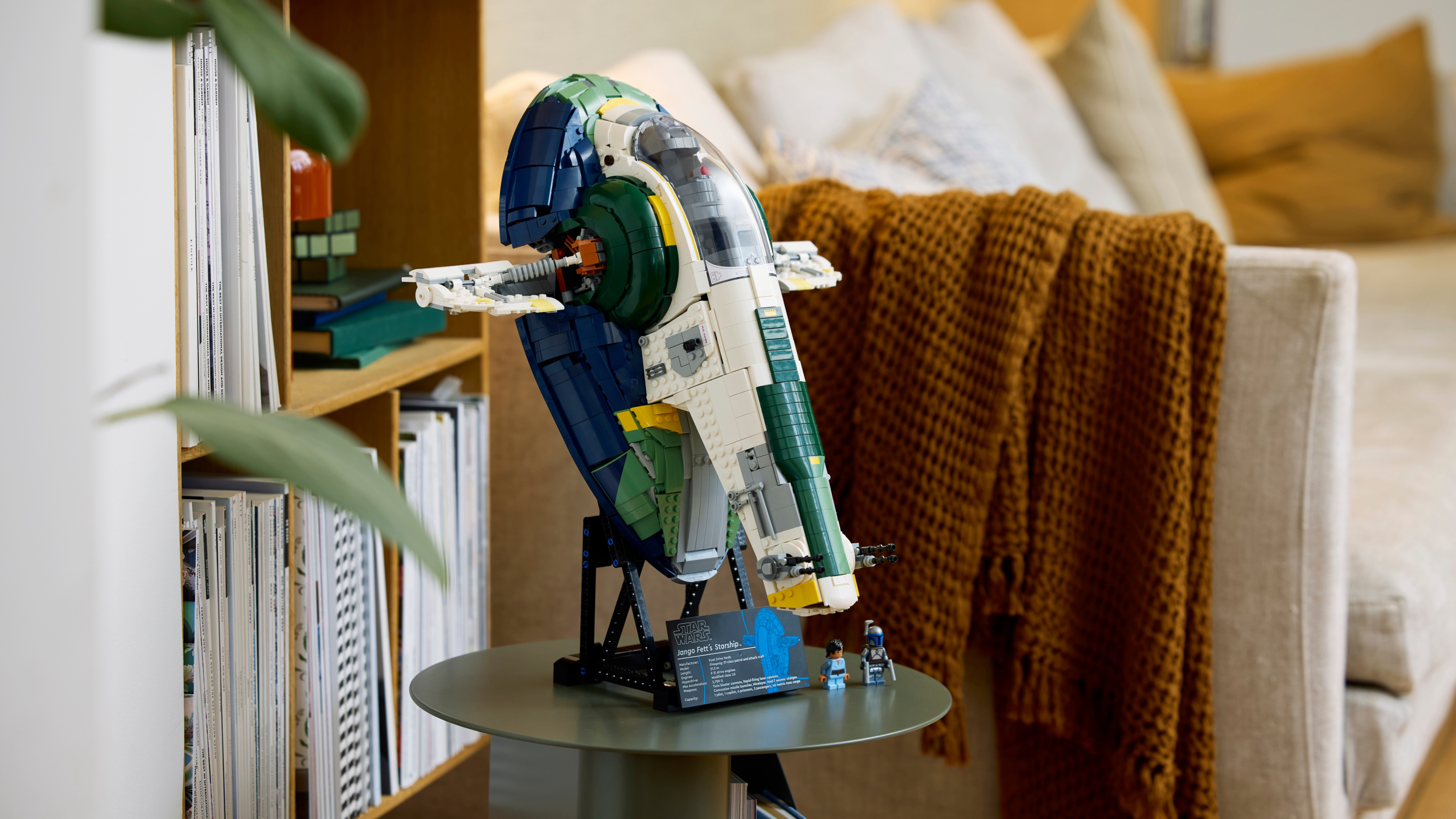
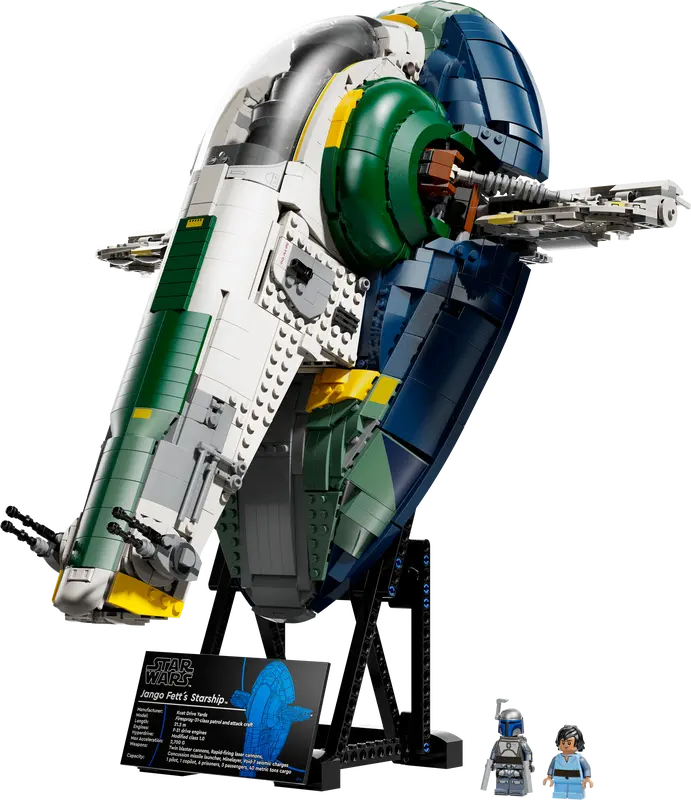
The newest Ultimate Collector Series might not be massive like huge AT-AT or the Millennium Falcon, but this one still looks sharp. Meet the Lego Star Wars Jango Fett’s Firespray-Class Starship, which, like other UCS sets, comes with a display launch and a stand that lets you set the ship upright as if it were in flight or in a landing position. This set is made from 2,970 pieces and arrives on May 1, 2025, for $299.99 / £299.99.
As seen in share photos, you’ll build the interior including the cockpit and there are a lot of moveable details. You also get two minifigures here – Jango Fett and Boba Fett.
The latest ultimate collector series from Lego is an iconic ship that fans of Jango Fett will instantly recognize. It will be up for order on May 1, 2025 for $299.99 / £299.99. View Deal
You could build a U-Wing Starfighter while watching 'Andor'
If you are getting excited for Andor to return to Disney+ or simply a Rebel starship, this one is for you. The new LEGO Star Wars Rebel U-Wing Starfighter is not just a fresh take on the ship, but you also get several Minifigures: Deedra Meero, Cassian Andor, K-2SO, and an ISB Tactical Agent.
This one arrives at 395 pieces for $69.99 / £59.99 and lands on May 1, 2025.
The Star Wars Rebel U-Wing Starfighter will soon be available for preorder from Lego for $69.99 / £59.99.View Deal
Now, if you opt to preorder or order, you will be eligible for a few gifts with purchases if you’re a Lego Insiders member and if you order from Lego directly. If you go for the new Ultimate Collector Series, you’ll score a LEGO Star Wars Jango Fett Starship Keychain if you preorder between May 1 to May 5.
Additionally, during that same period you’ll get a LEGO Star Wars Kamino Training Facility mini set for spending over $160 / £145. Those who spend over $40 / £35 will get a mini build of the iconic Millenium Falcon, and yes this stacks with the more expensive freebie if you get them before supplies run out.
Now, the above three are my favorite, but here’s a look at the other six sets. And if you’re sold on any of these, you can sign up for preorder or in some cases order it right now from Lego’s online store.
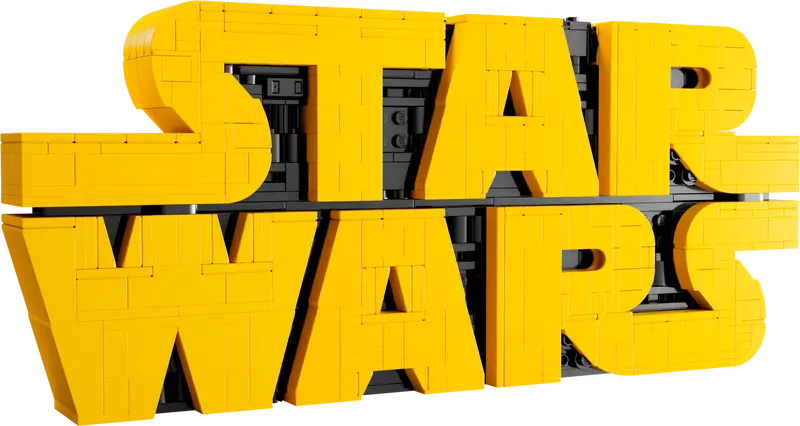
The opening crawl to any Star Wars film might be one of the most iconic starts of any film franchise. And now, you can finally build the iconic Star Wars logo out of Lego bricks, and the design team hid in some fun details.
This fantastic set is up for preorder now at $59.99 / £59.99 from Lego directly.View Deal
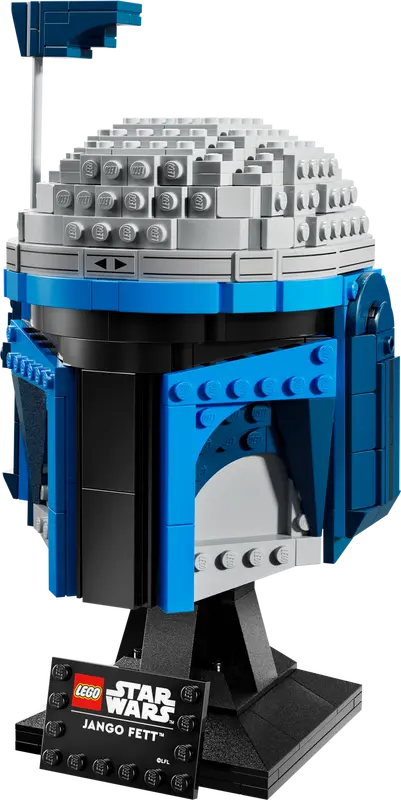
Along with the new Ultimate Collector Series set, you can also build Jango Fett's iconic helmet in this set that's built from 616 pieces. It's up for preorder now from Lego.View Deal
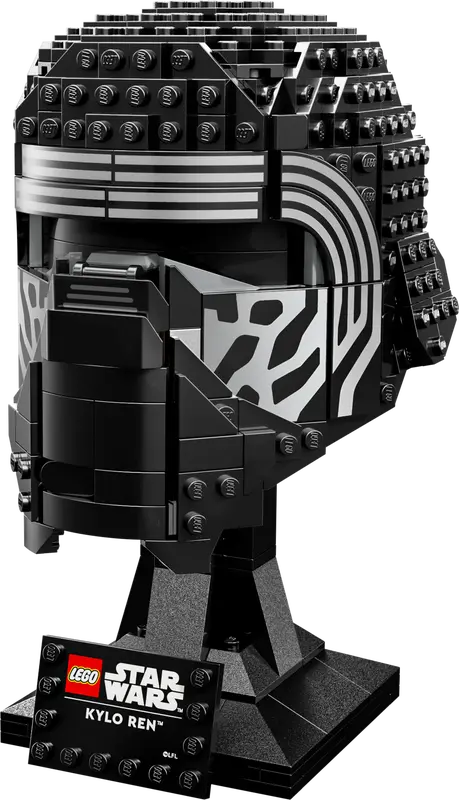
Is your allegiance to the dark side? Well, you'll likely want to build Kylo Ren's Helmet. View Deal
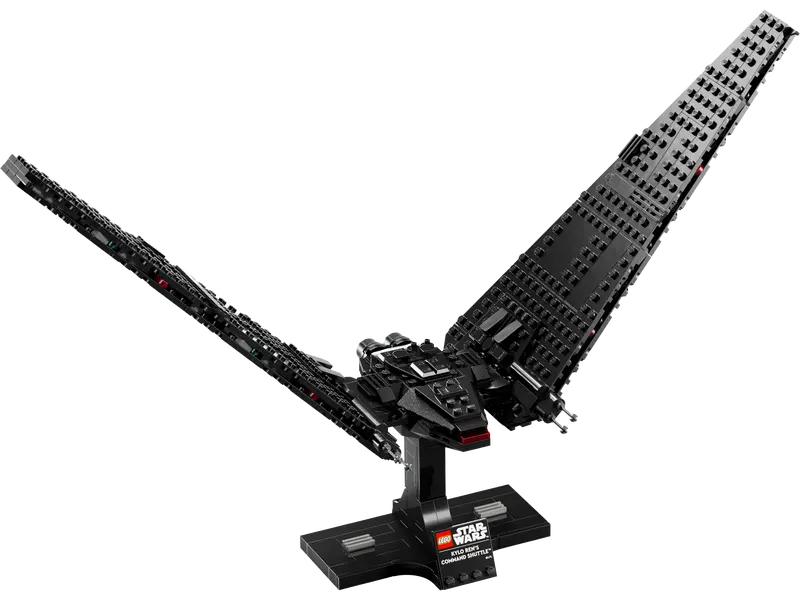
Similar to the set the above, Lego's Kylo Ren's Command Shuttle is an excellent one to display. You'll build Ren's iconic ship out of 386 pieces, and it comes with a stand.View Deal
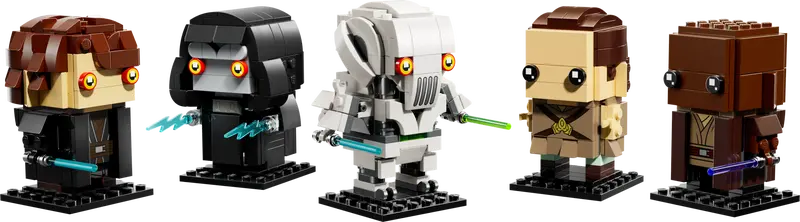
With this set of five BrickHeadz, you'll build Anakin Skywalker, Padmé Amidala, General Grievous, Emperor Palpatine, and Mace Windu.View Deal
This is a cool entry into the BrickHeadz lineup. You can build Luke Skywalker as a Rebel Pilot, and it's only $9.99.View Deal
In what we can only assume is a potential thumb in the eye of Elon Musk, Sam Altman's Open AI is reportedly considering building a social network, possibly inside ChatGPT.
This comes via a new report from The Verge, which claims this week that the social network possibly being built on top of OpenAI's AI services is only in the "early stages." Still, it could set up ChatGPT and other OpenAI platforms for a head-to-head battle with Grok, a generative AI platform built on top of Elon Musk's X (formerly Twitter).
There are essentially no details about what this social platform might look like, and OpenAI has little experience with shareable content outside of what its models can generate and what you can see in Sora (the video generation system) of other people's creations.
Take that, X
The fact that this rumor is out there might have little to do with behind-the-scenes development and more to do with Altman's ongoing battle with former partner Musk.
The pair founded OpenAI together before Musk walked away in 2018. He has since criticized and sued OpenAI for, among other things, becoming, in part at least, a for-profit entity (see OpenAI's partnership with Microsoft and the rise of Copilot).
Let's assume for a moment, though, that this is real. Why would OpenAI want to build a social network? In a word: data.
If millions flock to the platform and then start, I guess, sharing AI-generated memes on it, they'll be dropping a ton of rich data into the OpenAI system. If users allow it, future versions of the GPT model could be trained on it. Real data and activities that show how real people think, talk, act, create, etc, can be invaluable to a young generative model.
Social timing is everything
I wonder if this might've made more sense a year or two ago when Musk took over Twitter, transformed it into X, removed many of the protective content guardrails, and turned it into a social media hellscape. It was in that moment that Meta's Threads first rushed in. It was followed in notoriety by Bluesky. Both of them are distributed social networks, meaning no one owns your identity or your data.
Their growth has been remarkable, and it stands in contrast to X's fortunes. Depending on who you talk to, active user growth is stagnant or shrinking. But that doesn't mean the public's appetite for more alternative platforms is growing. Threads' growth has slowed, and Bluesky is relatively small compared to X and Threads.
The action is mostly on image and video-based social platforms like Snapchat, TikTok, Instagram Reels, and YouTube Shorts. The Verge report does not mention video, which leads us to assume this could be another micro-blogging-style network – something no one necessarily needs or, perhaps, wants.
Even so, as an opportunity to cause Elon Musk a little more agita, it's probably a worthy trial balloon from Altman.
Nvidia confirms it will fully manufacture its AI supercomputers in the United States
Arizona and Texas to host chip and supercomputer production facilities
Trump-backed push for onshore tech drives trillions in new investment
Nvidia has announced it will manufacture its AI supercomputers entirely in the United States.
The company revealed plans to produce $500 billion worth of AI infrastructure in the US over the next four years, building and testing chips in Arizona and assembling AI supercomputers in Texas.
More than a million square feet of new manufacturing space is being developed to support this expansion.
The Trump effect?
Production of Nvidia’s Blackwell AI chips has begun at TSMC’s facilities in Phoenix. In Texas, Foxconn and Wistron will handle supercomputer manufacturing in Houston and Dallas, with mass production expected to scale up within 12 to 15 months.
Nvidia is also working with Amkor and SPIL in Arizona to package and test its chips. Together, these facilities form a new supply chain based entirely in the US, something the company has never done before. Will this make a huge difference? Probably not.
According to the The White House, this move is part of a broader trend driven by efforts to bring key tech manufacturing back to American soil.
“It’s the Trump Effect in action,” a White House statement said. “President Donald J. Trump has made U.S.-based chips manufacturing a priority as part of his relentless pursuit of an American manufacturing renaissance, and it’s paying off - with trillions of dollars in new investments secured in the tech sector alone.”
Earlier in 2025, President Trump announced a $500 billion private investment in AI infrastructure led by OpenAI, Oracle, and Softbank, called Stargate.
Apple also announced a $500 billion investment, while TSMC committed $100 billion toward domestic chipmaking. The White House noted that onshoring these industries supports American workers, strengthens the economy, and improves national security.
“The engines of the world’s AI infrastructure are being built in the United States for the first time," Nvidia CEO Jensen Huang said.
"Adding American manufacturing helps us better meet the incredible and growing demand for AI chips and supercomputers, strengthens our supply chain and boosts our resiliency.”