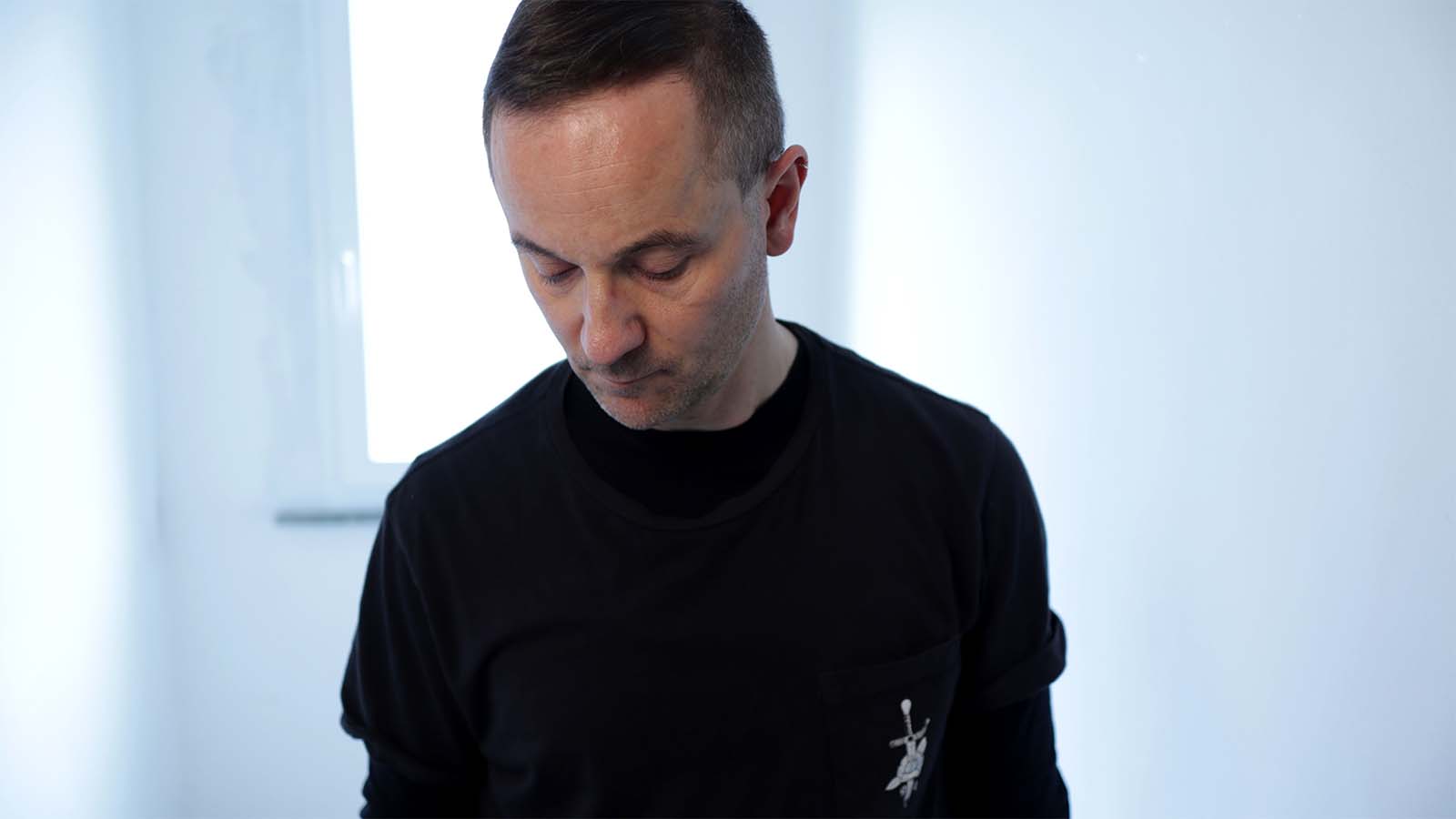
Ime Archibong, Head of New Product Experimentation at Meta (née Facebook), says designing truly innovative products in the tech sector is all about failing, but doing so quickly.
Speaking at Slush 2021 in Helsinki, Archibong set out his philosophy for nurturing startups and small product teams in-house at Meta, which has been his job for the last two and a half years.
“For most startups, the first idea you come up with isn’t likely to be the one that grows. The average experience is one of a lot of pivots, a lot of tries and a lot of failures,” he said, in conversation with CNN’s Larry Madowo.
“At Meta, we’ve tried to create a space where people can fail, fast. The iterative approach to experimentation begets innovation; you have to be comfortable just putting something out there. And it’s not about how often you’re right, but rather when you’re right, how right are you?”
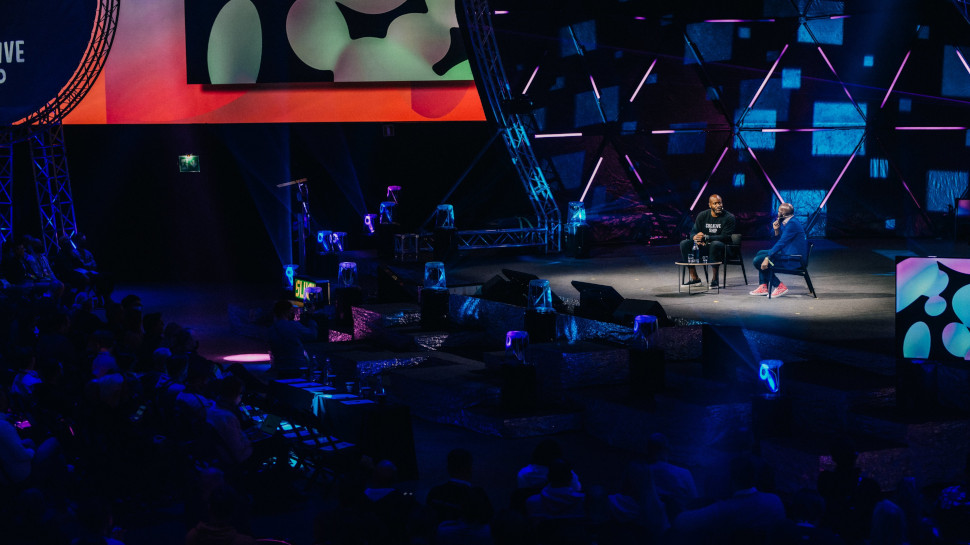
Archibong (left) on stage at Slush 2021 with Madowo (right).(Image credit: Slush / Larry Madowo)
The gardener of Meta
Later in the chat, Archibong compared his role at Meta to that of a gardener, who “creates the fertile ground for entrepreneurs to build their ideas and plant their seeds” at the company.
“A key part of my role is to be a great listener. Then it’s about asking how I can empower these entrepreneurial teams, get out of their way, and give them the psychological safety to fail multiple times within a company that has a high bar for success,” he said.
In the coming years, Meta will inevitably focus on what the metaverse will look like and the VR and AR hardware needed to bring it to fruition. But Archibong says the company’s focus will be far from narrow, especially when it comes to geography.
Asked why he was in attendance at Slush, so far from Silicon Valley, Archibong explained he strongly believes the next era of innovation will come not from the US, but rather from “non-traditional” regions that have been “overlooked” in the past.
“I’m very bullish on the African continent, Latin America and Asia,” he said. “The barriers to entry are getting exponentially lower and cheaper; anyone with a design mindset can be successful - you don’t even need programming skills these days.”
“In that environment, there’s going to be new, innovative ideas happening in corners of the world you can’t see from Silicon Valley.”
The Google Pixel 6 and Pixel 6 Pro have now been unveiled and while it was rumored that the Pixel Watch might arrive at the same time, it wasn't to be. Given all we've heard about a Google Watch, we can surmise that it's been in development, but the big question then is when it will arrive.
The latest report says it'll arrive at some point in 2022, so you can likely expect to be able to buy the new smartwatch next year.
Just like how Pixel phones are a showcase for Android, the Google Pixel Watch is expected to be an example of the full potential of Wear OS – and given the wearable operating system's big update was shown off at Google IO, we figured the watch wasn't far behind.
Below we're going to break down everything we know so far about the upcoming watch. Then, further down, we've put together a list of the features we'd like from the first flagship Google Watch.
Latest news
A new report suggests the Google Pixel Watch remains in development, and it may be set to arrive in 2022.
Cut to the chase
What is it? The first flagship watch designed by Google
What will it cost? Probably a high-end cost, but no specifics yet
When is it out? Possibly early 2022
Google Pixel Watch release date and price
An exact release date for the rumored Google Pixel Watch isn't clear – just predictions based on leaks. The latest report from Insider claims to have spoken to people familiar with the matter who suggest it's coming in 2022.
That matches what we've heard from other sources in recent months, but the Pixel Watch has been rumored to be in development for a good number of years now.
A tweet from noted leaker Evleaks claiming a "reliable source" said it would be announced alongside the Google Pixel 3 and Pixel 3 XL back in 2018, then a rumor claimed the Google Watch would land on October 15 2019 at the Pixel 4 launch – but of course, neither happened, and we're still waiting.
We're fairly confident that such a watch is in the works though, and it's possible that the Pixel Watch could benefit from Google's acquisition of Fitbit, which could see the latter company's wearable skills put towards Google smartwatch hardware, but that deal was only finalized in January 2021.
A smartwatch based on Fitbit's tech is probably unlikely to land in the near future – though Google has announced that a premium Fitbit running Wear OS is in the works.
Better still, at Google IO 2021 the company announced that Wear OS is integrating features from Samsung's Tizen OS, which could suggest what's coming in the Google Watch.
We've also heard that Google has reportedly ordered processors from Samsung (according to ETNews) which would be capable of detecting body movements. There's no guarantee that these are for a smartwatch (they could be for a Pixel phone) but a wearable would be an obvious fit. That, then, is strong evidence that some form of Pixel Watch is in the works.
As for price, we don't currently have any idea how much this watch will cost. Considering the Pixel range is usually high-end products with generally flagship level prices, we'd expect that but we don't currently have any evidence supporting it.
Google Pixel Watch news and rumors
In terms of spec, there isn't much known about the Google Pixel Watch, though one source suggests it will use a 5nm chipset - likely the same one as the Samsung Galaxy Watch Active 4 is rumored to have. You can expect a 5nm chipset to be much more powerful than the ones we've seen in current Wear OS watches.
We've also seen a Google patent, which details a gesture control system that would allow a smartwatch to detect movements you make with your arm, wrist or fingers.
For example, you could make a fist to launch Google Assistant and open the fist to dismiss it. These gestures would be done on the arm or hand that the watch is worn on. However, patents aren't always used, so there's no guarantee we'll see this.
There could also be a big focus on fitness, both because Google is buying Fitbit, and because Google sent out a survey asking people about features they'd like to see in Wear OS, and those features included things like SPO2 (oxygenation) tracking, sleep apnea detection, sleep analysis, heartbeat alerts, recovery time monitoring, stress tracking, pairing for medical devices and gym equipment, rep detection, and calorie tracking.
Of course, it's unlikely they would all be added, but some may well be, and it shows that Google is thinking about health and fitness.
As for specs, the Pixel Watch is likely to run Qualcomm's latest Snapdragon Wear 4100 Plus chipset that will mean lots of power for running your favorite apps on your wrist.
Wear OS is the latest version of Google's smartwatch operating system
One rumored feature was something codenamed 'Blackghost'. It was thought to be be a power management integrated circuit built into the chipset itself that will allow the watch to listen out for voice commands at all times without draining the battery.
That isn't a feature on the Snapdragon Wear 4100 Plus, but it may be Google has found a way to make it an exclusive feature for the Pixel Watch when it launches - or that the watch will use a newer chipset.
If so, expect to be able to ask Google Assistant questions without either draining your smartwatch after a few hours or having to press a button beforehand.
Another report - this time from WinFuture - has suggested there may actually be three versions of the Pixel Watch in development. The website has heard word of devices with code names Ling, Triton and Sardine all in development at Google HQ.
Exactly what the differences for the devices would be are currently unclear. It may mean we'll see three variants of the Pixel Watch. That same report also suggested at least one version of the watch will come with 1GB of RAM.
This report could mean there will be one watch in the range with LTE or another that's designed to be more focused on fitness, but so far we've yet to hear any rumors of what those different versions will be. This report is also quite old now, so it may no longer be relevant.
Rumors died down for over a year until April 2020, when a leak suggested the Pixel Watch could have a feature typically reserved for analog timepieces: a physical crown, according to an image from leaker Jon Prosser.
Prosser followed up with a batch of rendered images based on info provided by a source which show potentially the first full looks at the Pixel Watch's supposed design. Here's the full video of Prosser's reveal.
Per the renders, the Pixel Watch looks like a circular smartwatch with a bezel-less display, no buttons, and a single physical crown on the right side. The renders also recreate the suggested interface, including a watch face with radial time markers, giving it an analog timepiece look. The apps look very simple, suggesting Google could be going for a more elegant minimalist design.
What we want to see
Below we've put together a list of the things we want to see from the Google Pixel Watch.
1. Rotating crown or bezel
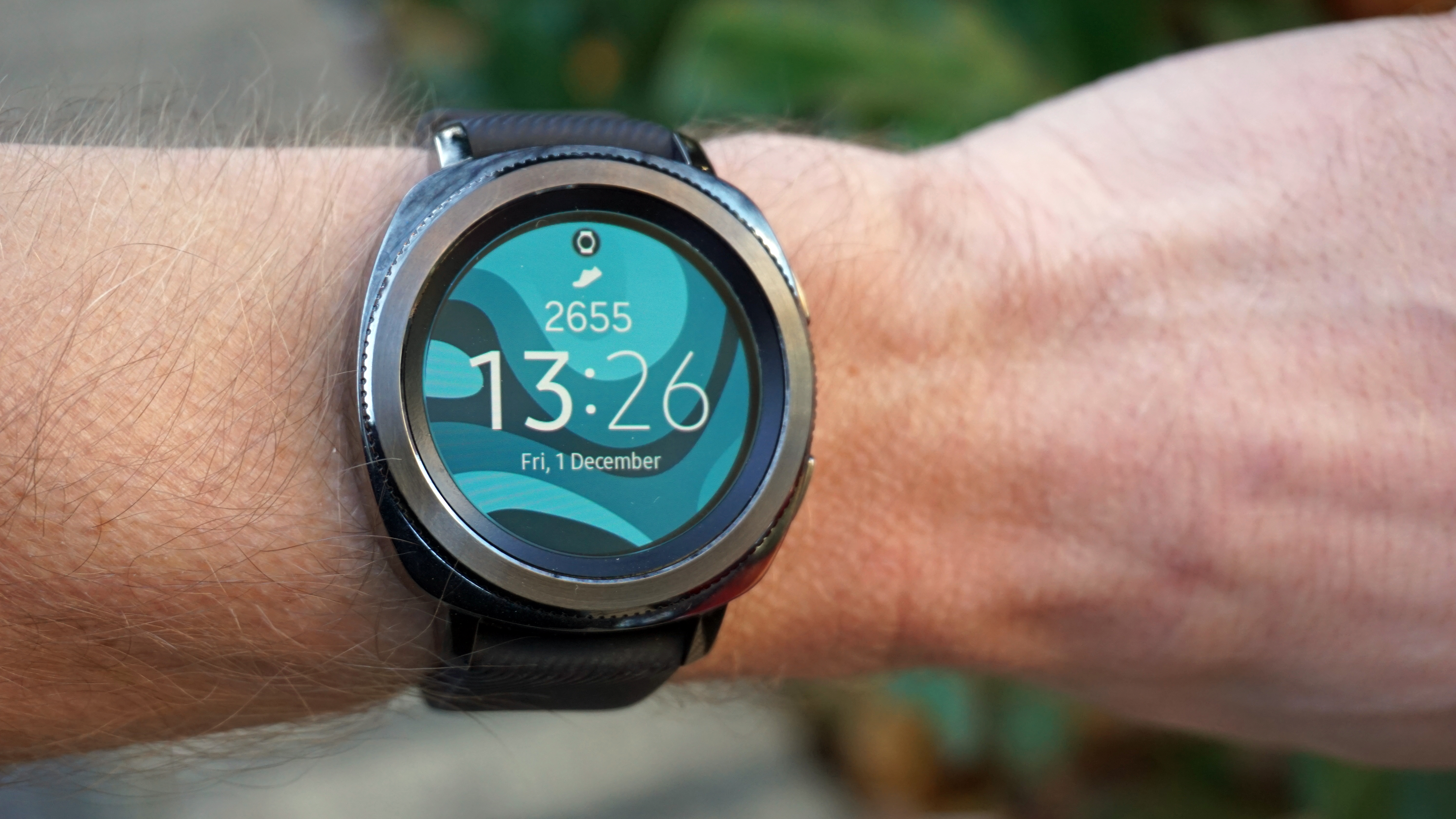
Samsung's Gear Sport uses a rotating bezel
Before the switch to Wear OS, Android Wear 2.0 put a big focus on how the design had been reworked to play well with rotating bezels and crowns, but then we haven't seen many watches embrace that.
Why not use it for the Google Pixel Watch? Those features may be far in Google's rear view mirror as the Wear OS updates take precedent, but we'd love to see an innovative way of interacting with the watch such as a rotating crown or bezel.
2. In-display fingerprint scanner
If Google really wants to put the Pixel Watch on the map, adding an in-display fingerprint scanner would go a long way to doing that. Currently Wear OS watches (and the Apple Watch) allow you to secure them with a PIN code – but that’s not the most secure form of protection available.
With an in-display fingerprint scanner, the secure biometric technology would fit seamlessly into the wearable without disrupting the visual appeal of the watch. It would also allow you to approve purchases over the current contactless limit (assuming the Pixel Watch comes with NFC).
There are a couple of potential negatives here though. Firstly, the addition of this fledgling technology could increase the thickness of the watch – and no one wants an overly chunky wearable – but secondly it’ll also likely push the price tag way up.
If Google can overcome these two things though, you can sign us up for a Pixel Watch right now.
3. Swimproof
We’re used to smartwatches coming with a level of dust and water resistance, but few carry an IP certification high enough to ensure their survival when we cannonball into the local pool.
A fully swim-proof Google Pixel Watch would not only allow you to keep the wearable on in the bath, but also allow you to track workouts in the pool without fear of malfunction.
4. Three day battery life
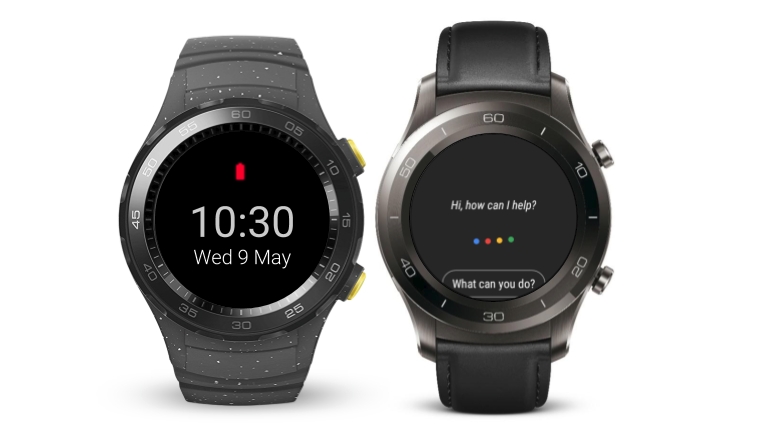
The new enhanced battery saver mode on Wear OS
This is a simple one, but we want the Google Pixel Watch to last as long as it can. Imagine a fully fledged smartwatch that doesn't need charging after two days of intensive usage.
Wear OS is integrating a useful enhanced battery saver mode that should give you a lot more time with your smartwatch, but it'll limit the amount of features you can use when it's on.
Clearly Google wants to improve how long your watch will last from one charge, but we'd love to see a big battery inside the watch and well optimized software that offers the best battery for a smartwatch on the market right now.
5. NFC payments
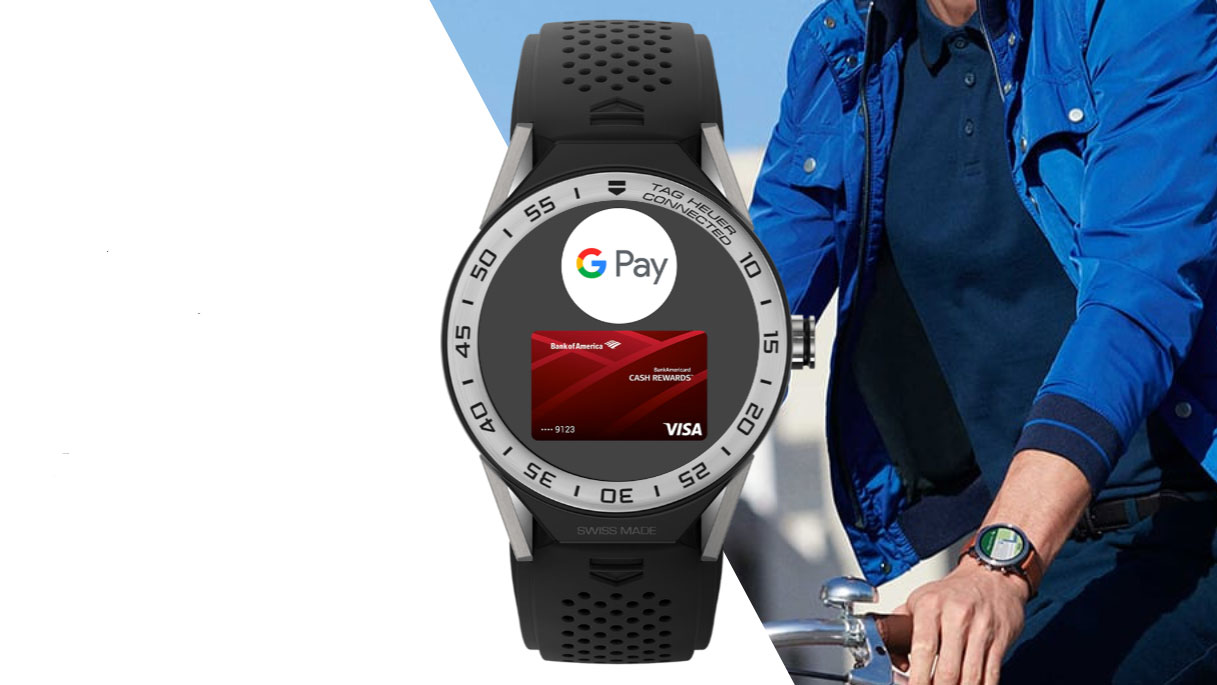
Another simple one here, but quite a few Wear OS watches don't come with NFC built in so you aren't able to use Google Pay features on your wrist. That's a frustration for a lot of people, so we're hoping Google will include an NFC chip inside the watch.
That'll especially be useful when you're out for a run and you need to buy a bottle of water, but you've left your wallet at home.
6. Best in class fitness
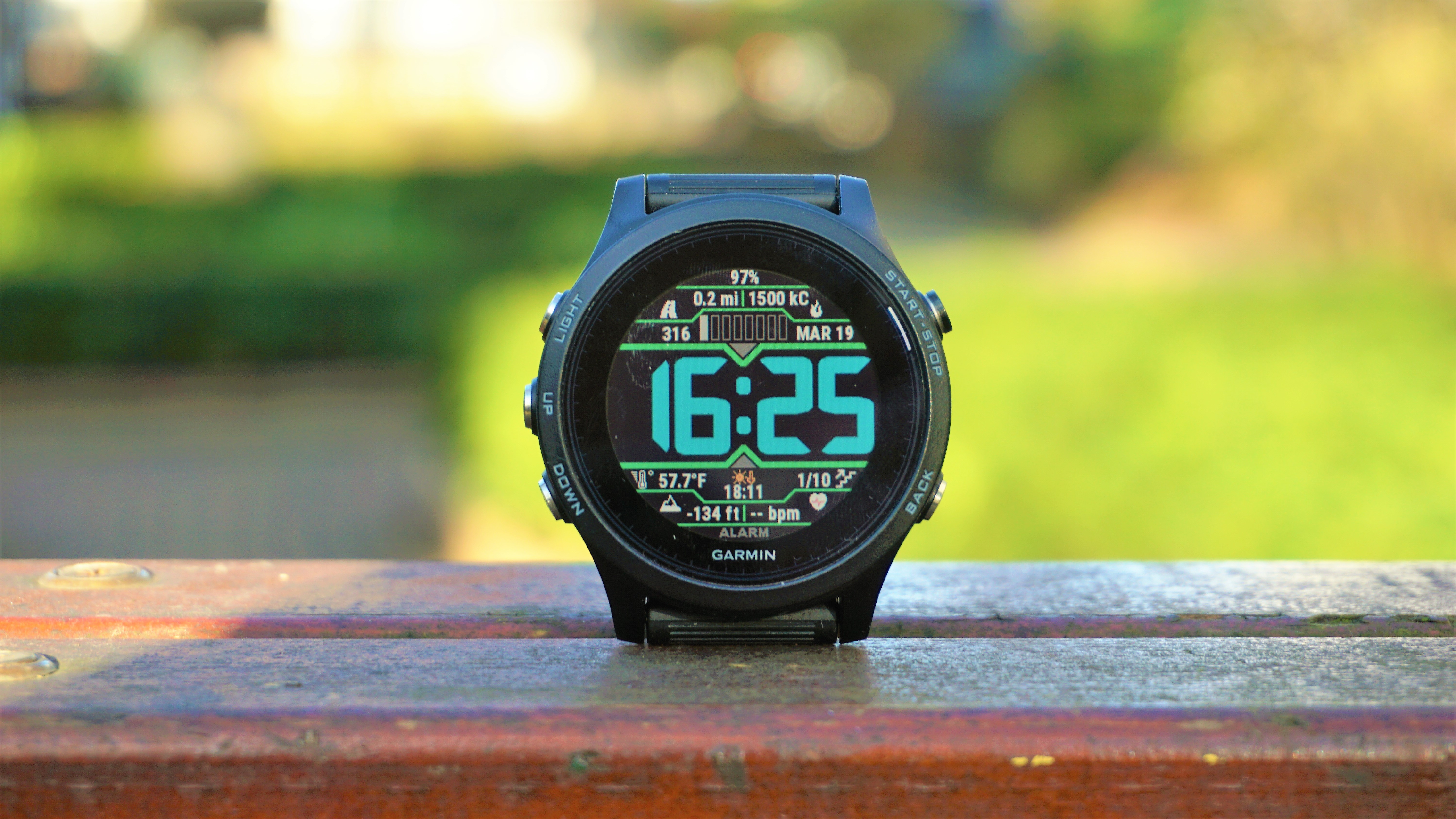
Garmin's Forerunner 935 comes with a lot of fitness features built-in.
While we're on the topic of running, we want the Pixel Watch to compete with the fitness prowess of the Apple Watch 3 as well as top-end specialist watches like the Garmin Forerunner 935.
Imagine if Google can include all of the latest tracking tech including accurate GPS, LTE so we can listen to music on the go as well as a top of the range heart rate tracker.
We want to be able to strap the Google Pixel Watch to our wrist and head out for any type of exercise and know we'll be tracked accurately and get as much fitness stats as we possibly can.
7. High-end watch design
This one is a given, but we want to see a watch that you're not embarrassed to wear on your wrist. Not every Wear OS watch is a gorgeous creation, so we wish Google will be able to offer a slimmer option than most other manufacturers that uses high-end materials and feels like a proper timepiece you're excited to wear.
If you're going to be spending a fair amount of money on a new watch, you'll want it to look great on your wrist so this is one of the most important things we want to see on the new wearable.
How do you convey the yawning abyss of infinity that is a black hole to a person who hasn't immersed themselves in non-Euclidean geometries with infinite dimensions, the 'math side' of superstring theory, and the century-long pursuit of a unified theory of physics?
If you're Dr. Valery Vermeulen, you mix it into an LP.
Mikromedas AdS/CFT 001, which is now available through Ash International, is the product of more than a year of production work. In a lot of ways, though, it's an electronic music album that has been in the making since Vermeulen was a teenager.
"Even at a young age, I was always interested in science and music," Vermeulen told me when we spoke a couple of weeks ago. "I started playing piano I think when I was seven years old. I also got into physics and science. I stumbled across quantum physics around 16. We had a library and I am a curious person."
That brush with quantum physics in a library started a decades-long fascination with quantum gravity, the elusive goal of physicists to bridge the gap between the two great theories of the universe: Einstein's General Relativity and Quantum Mechanics.
The best, and maybe only, hope to tie these two seemingly contradictory theories together runs right through the point in space where the two theories intersect behind a veil of darkness we can never peer behind: the singularity at the heart of a black hole.
Using streams of data from black hole mergers – simulations of particle behavior at the event horizon of a black hole – and the influence of Jazz legends like Oscar Peterson, Vermeulen attempts to sonify the unseeable interior of the most exotic object in the known universe.
The result is a sometimes haunting, always deeply fascinating seven-track album that aims to unify science and art as much as it does relativity and quantum mechanics.
A unified theory
Dr. Vermeulen pursued two separate tracks in his early life, studying for a Ph.D. in mathematics and performing as a street busker in Antwerp. "People sometimes ask me, 'Are you a scientist or an artist?', but I regard it all as creativity," Vermeulen said.
Living two seemingly separate lives had its challenges, though. "It was very difficult," he told me, "but I embrace it now. It took a long time to accept that these are both sides of who I am."
If only physics were that easy to bring together.
In the century-plus since Albert Einstein published his theory of general relativity in 1915, its predictions have been tested and verified more times than anyone has bothered to count.
But problems for relativity, and physics generally, began even before it was proposed. In 1900, Max Planck published a paper showing that light, under certain conditions, appeared to behave as if it was matter, and not a wave of energy as physics had long determined.
Things got curiouser and curiouser for physics in the 1920s as physicists like Niels Bohr and Werner Heisenberg delved deeper into the bizarro world of the subatomic.
Here, particles could be in multiple places at once. They could either be a particle or a wave – but not both – and which one it was depended on how the observer wanted to measure it.
(Image credit: Valery Vermeulen)
Here, a famous cat could be both alive and dead at the same time. And two entangled particles could appear to communicate instantaneously across vast distances in defiance of Einstein's proof that the speed of light was the fastest anything could ever hope to move in the universe.
In the century since the foundation for quantum mechanics, it too has been tested and verified many times over. It has even been the basis of revolutionary technological innovations like lasers and quantum computers.
Above the atomic level, Einstein's general relativity theory reigns supreme, but it falls apart the moment you cross beneath atomic scales. Quantum mechanics, whose only governing law appears to be the laws of probability, stops abruptly at the edge of the atom.
That edge, so clearly defined, is maddeningly difficult to bridge. The search for a single theory that can encompass both, a theory of everything, is one of the great scientific challenges of the day. Everyone seems to agree that black holes may hold the key.
There, inside a black hole, the mass of billions upon billions of stars can occupy a single point in space of infinite density, smaller than any subatomic particle. But that mass exerts such incomparable gravity that light is as much a prisoner to it as the poor infalling star that is ripped apart like cosmic tissue paper.
There, relativity and quantum mechanics may be united as quantum gravity, if only we could see it – but a black hole keeps its secrets well.
Sonifying the abyss
(Image credit: Carolien Teunisse)
It is the attempt to plumb the depths of that hidden space that inspired Vermeulen to compose his new album.
Vermeulen earned his Ph.D. in Mathematics in 2001, studying what he helpfully called "the mathematical part" of superstring theory. He has worked for years as a data scientist, but he has made some efforts previously to combine his two great passions, earning a Master's in Music Composition along the way.
"There was a former series," he said, "the sonification of a journey from the Earth to the center of the Milky Way. I was using a lot of sonified data streams in that first EP, but it was never released. But I wanted to take it a step further.
"Then I was like wait, maybe I can use deeper mathematical structures as a basis, which brought me back to one of my dreams, quantum gravity. Can I maybe work with that and combine it with music?"
When talking about the interior of a black hole where quantum gravity might reside, all one has to go on is math, the very theoretical, post-doctoral kind. Even the album title, Mikromedas AdS/CFT 001, takes as inspiration the wild, mind-bending idea that reality can be seen as a 3D projection of a 2D reality as it exists on a sphere an infinite distance away from us. At least, that's how Vermeulen described it to me. I don't know what any of that even means.
However, it's a fitting analogy. Using data pulled from gravitational waves produced by black hole mergers, black hole simulations, and other black hole data from universities in several countries, Vermeulen had a lot of numbers to work with, but how does one project those numbers into something you can hear?
"So the data I used, there are some data streams that I simulated myself, but I also got a lot of data from external sources like universities," he said. "I also worked with Thomas Hertog, a former collaborator with Stephen Hawking, and with Thomas I worked on gravitational waves, and there are a lot of gravitational waves in the album."
"They’re rather boring," he added. "You change the frequency and you get a whooping sound."
Musical, they are not.
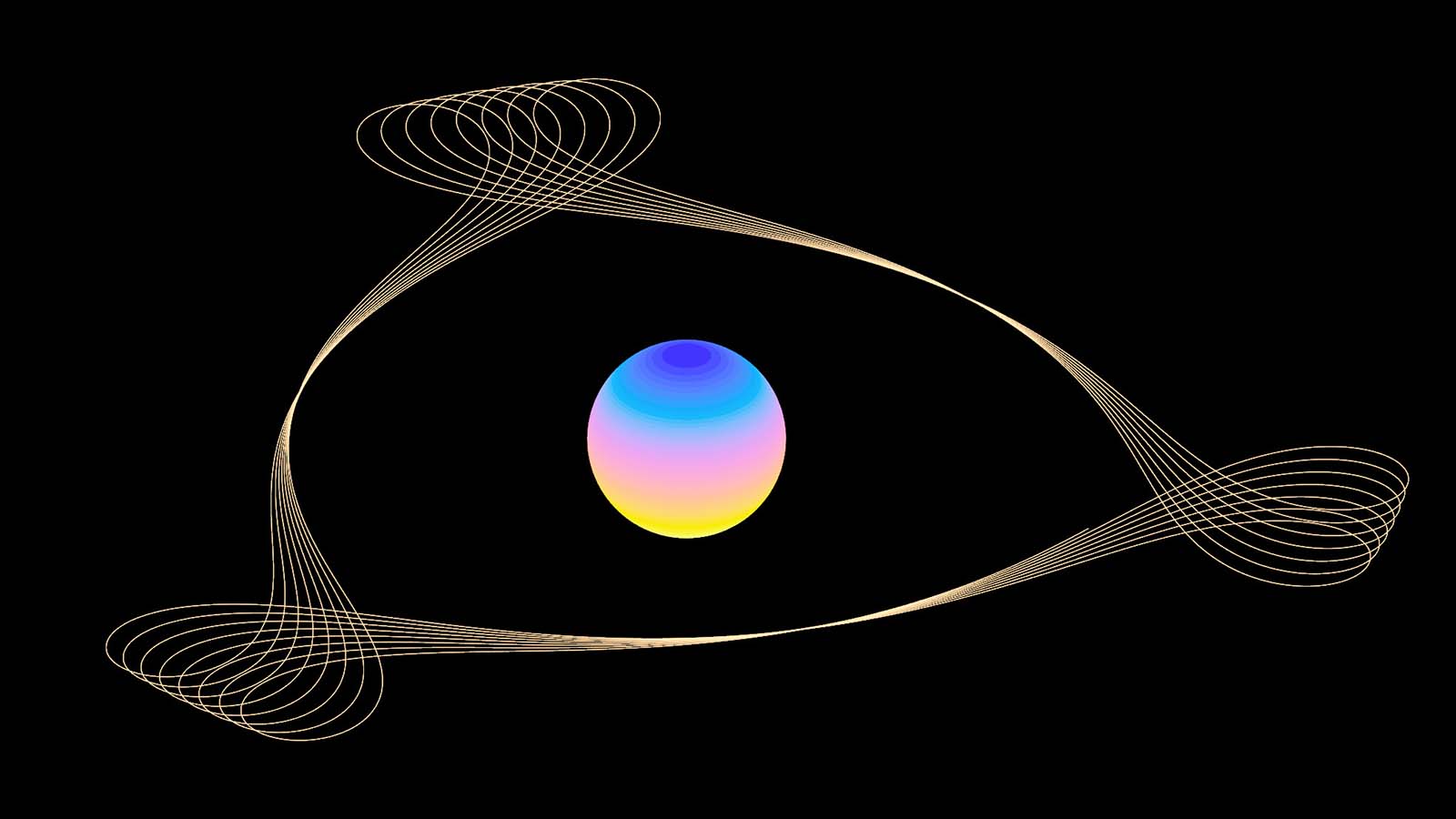
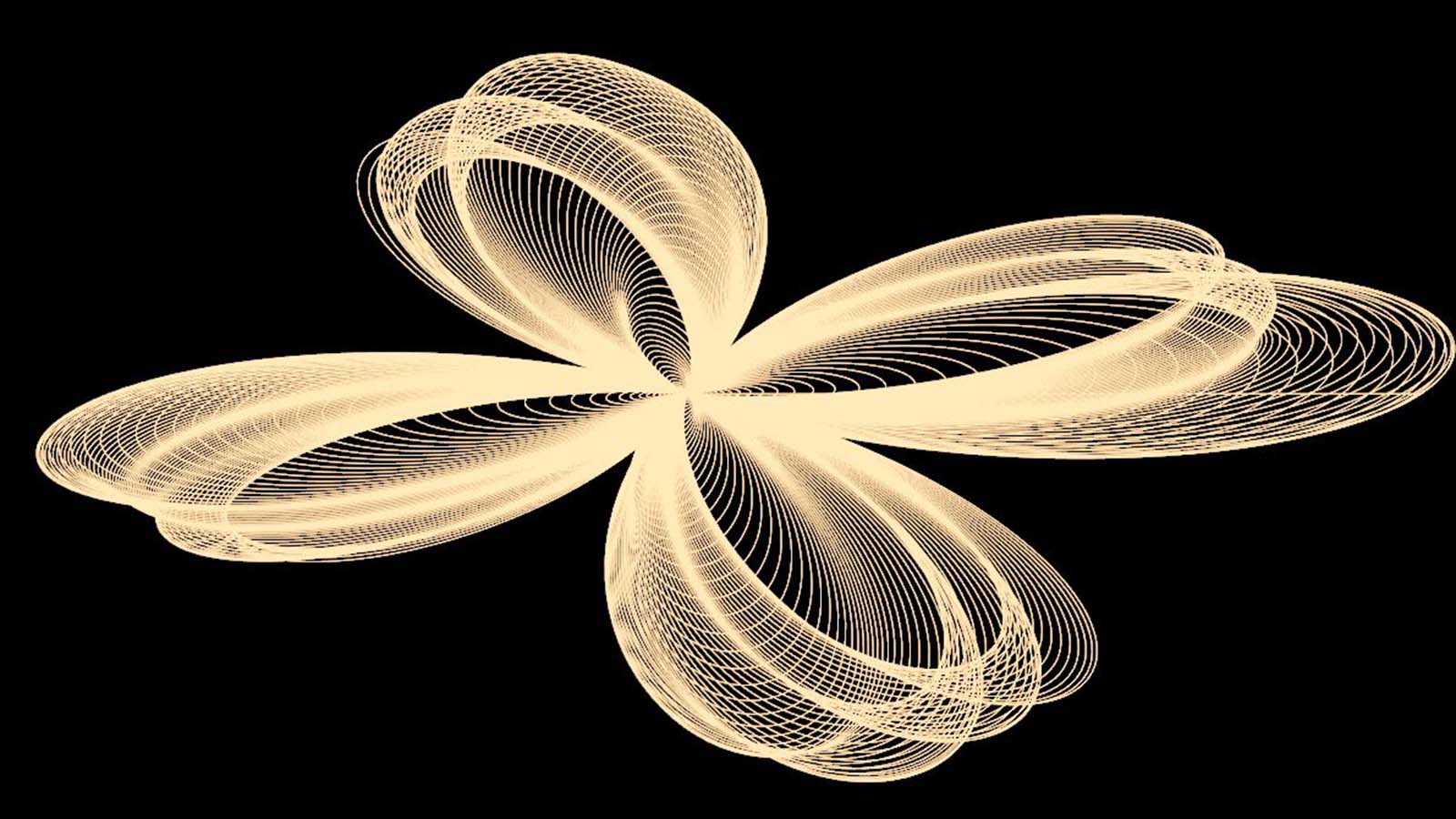
"The solution I found was three-dimensional renderings of those gravitational waves," Vermeulen said.
In order to do that, he had to see the data differently, not as numbers on a line graph, but almost as if it was fluid. "The gravitational waves can be expressed in three dimensions as sums of spherical harmonics – basically they’re solutions to fluid equations.
"This gave me a lot more opportunities. Then I made two-dimensional cuttings of the three-dimensional fluctuating structures, and those are 2D evolving shapes, and those you can sonify and print to wavetable synthesis."
In addition to the black hole mergers, Vermeulen used simulations of the behavior of massive and massless particles at the event horizons of different black holes to translate the environment just at the event horizon into something you can hear.
Between all of these different data streams, Vermeulen was able to create a vast array of samples and instruments fed by these data streams, and from there, he could build the sonified black holes of the album.
Channeling infinity
(Image credit: Valery Vermeulen)
"There’s two phases in the compositional process," Vermeulen explained.
"In the first phase, I’ll make a whole database of sonified samples. So, for example, with 1000 different simulations, I can make 1000 different sounds. And the other thing is to make instruments. Instruments are fed by data, or you can map knobs and controls to those instruments."
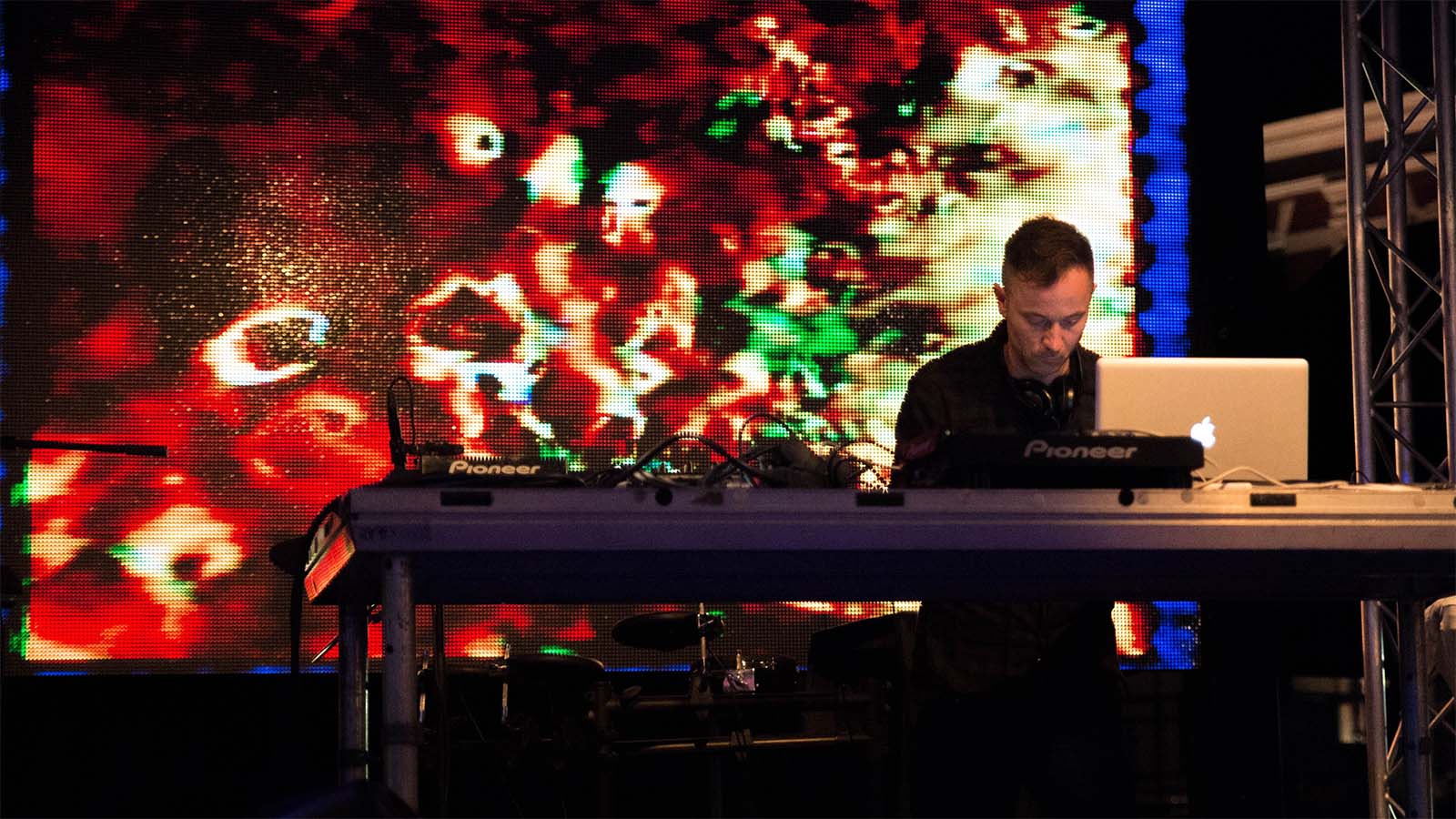
Using Ableton, Vermeulen was able to weave together the compositions using a combination of scientific data and his artistic sensibility.
"It’s an aesthetic, artistic decision in the second part that I make. I use this material, and then I try to get an abstract feeling, of course it’s also about emotions even if it’s abstract, and then I just make compositions. I make an arrangement and focus a lot on the sound design and mixing. I’ve been mixing for over a year on the album to get everything as I want it to sound."
(Image credit: Caroline Lessire)
The process of taking something as mathematically impenetrable as the interior of a black hole and making it accessible to our senses is an important part of the scientific process, Vermeulen believes.
"I’m interested in making connections between abstract geometrical, mathematical structures and sonification. Those objects are cold, dead objects. They’re not active, so I try to find a way to activate them, to make a link between geometry and sound using sonification.
"One of the things in my Ph.D., the geometries I was studying were infinite dimensional. I would love to make them tangible, to bring science closer to people, to let them see. Science is just an approach to look at reality, it’s not a replacement for reality."
While we might never "see" behind the veil of the event horizon of a black hole to discover its secrets, experiencing that mystery is important in itself. It is something that Vermeulen hopes to continue to explore in his work going forward. You can find more of his work on his artist website or on his Instagram.
One of the biggest new features of the new Snapdragon 8 Gen 1 chipset is an always-on camera. Yes, you read that right. An always-on camera on your phone.
It means your future smartphone - this chipset will likely be in a lot of the best Android phones of 2022 - would be able to constantly run its front and rear cameras.
Flights and accommodation for this launch event were funded by Qualcomm, but the views reflect the writer's own independent opinion.
The idea is it’ll allow for innovations that mean you don’t have to touch your phone to activate it. For example, it may allow you to one day be able to unlock your phone when your hands are busy.
Other examples Qualcomm has given is that certain apps could introduce security features through this new tech.
One demonstration showed how an app could track other faces in the front camera’s view, so it could work out if someone is looking over your shoulder while you’re looking at private information or entering your banking details.
While this has its use cases, it will understandably worry some users when it comes to potential security risks. According to Qualcomm, this isn’t an issue.
“It’s going to scare some people”
During its Tech Summit 2021 event, Qualcomm reassured customers that they’ve tackled this in a sensible manner.
Judd Heap, VP of Product Management at Qualcomm’s Camera, Computer Vision and Video departments, told TechRadar, “The always-on aspect is frankly going to scare some people so we wanted to do this responsibly.
“The low power aspect where the camera is always looking for a face happens without ever leaving the Sensing Hub. All of the AI and the image processing is done in that block, and that data is not even exportable to DRAM.
“We took great care to make sure that no-one can grab that data and so someone can’t watch you through your phone.”
This means the data from the always-on camera won’t be usable by other apps on your phone or sent to the cloud. It should stick in this one area of the phone’s chipset - that’s what Heap is referring to as the Sensing Hub - for detecting your face.
Heap continues, “We added this specific hardware to the Sensing Hub as we believe it’s the next step in the always-on body of functions that need to be on the chip. We’re already listening, so we thought the camera would be the next logical step.”
We’ve seen always-on microphones in smartphones for the last few years to ensure you can open up apps such as Siri or Google Assistant without having to touch your device. This is similar for that, but for the camera.
Separately, Qualcomm has confirmed that the camera cannot capture photos or video through this element of the Sensing Hub on the new chipset.
Heap said, “It can usher in a lot of really good security features as well. It could even be potentially something that means you won’t need your lock screen anymore. Your phone will just know the context at all times.”
For those concerned about an always-on camera, you may have to avoid handsets with the Snapdragon 8 Gen1 SoC in them as Qualcomm has yet to confirm if this is a feature you'll be able to disable.
“We will have a few OEMs picking up the feature in this generation. There will be even more in the next generation, next year.”
We don’t yet know which phones will be supporting this feature, or how it’ll be implemented. We’ll have to wait until the launch events for handsets like the Oppo Find X4, Xiaomi 12 and OnePlus 10 to be sure of how these manufacturers will use the always-on camera.