After announcing that it would stop accepting Visa-issued credit cards in the UK, Amazon is now considering ending its partnership with the company on its co-branded credit card in the US.
According to a new report from Reuters, the ecommerce giant is currently in talks with Visa, Mastercard and American Express to review its co-branded credit card agreements.
If you shop on Amazon's ecommerce platform frequently, you've likely seen promotions for its Amazon Prime Rewards Visa Signature Card at checkout with the offer of a $200 Amazon Gift Card upon approval. In addition to its co-branded card with Visa, the company also has a partnership with American Express for its Amazon Business Prime American Express Card which offers a $125 Amazon Gift Card upon approval instead.
An Amazon spokesperson described these talks with the three big credit card companies to Reuters as part of its standard process for reviewing its co-branded credit card agreements.
Rising credit card surcharges
Credit card processing fees typically range between 1.5 to 3.5 percent of each transaction and these surcharges can make it difficult for Amazon and other online retailers as well as small businesses to offer their goods and services at a cheaper price to consumers.
In response to increasingly high fees from Visa, Amazon recently introduced surcharges on customers using Visa credit cards in both Singapore and Australia. Meanwhile in the UK, Visa began charging 1.5 percent of the transaction value for credit card payments made online or over the phone between the UK and EU. This is because an EU-enforced cap on fees charged by credit card issuers is no longer in place in the UK following Brexit.
While retailers have previously had to deal with processing charges from credit card firms to gain access to their huge networks of users, this could be changing as shown by Amazon's current negotiations with Visa, American Express and Mastercard. Although the ecommerce giant could be planning to launch its own payments system, it also might be using the massive size of its customer base to get a better deal from credit card companies when it comes to transaction fees.
We'll have to wait and see how negotiations between Amazon and Visa play out but for the time being, you'll still be able to use your Visa credit card when shopping for Black Friday and Cyber Monday deals on its platform.
General Motors' Factory Zero is ready to build the first electric Hummers, and the commander in chief was on hand at opening celebrations to take the mammoth EV out.
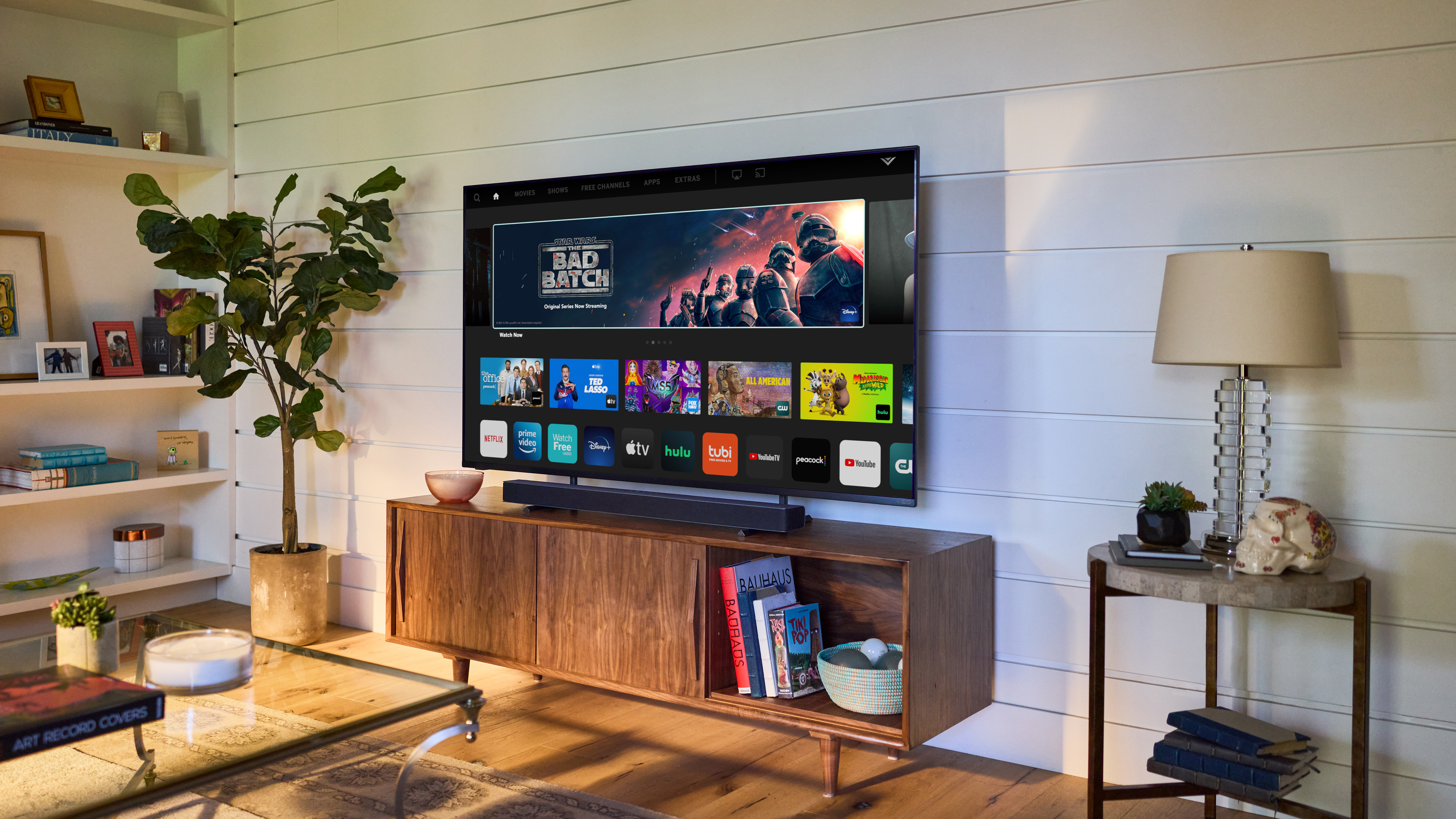
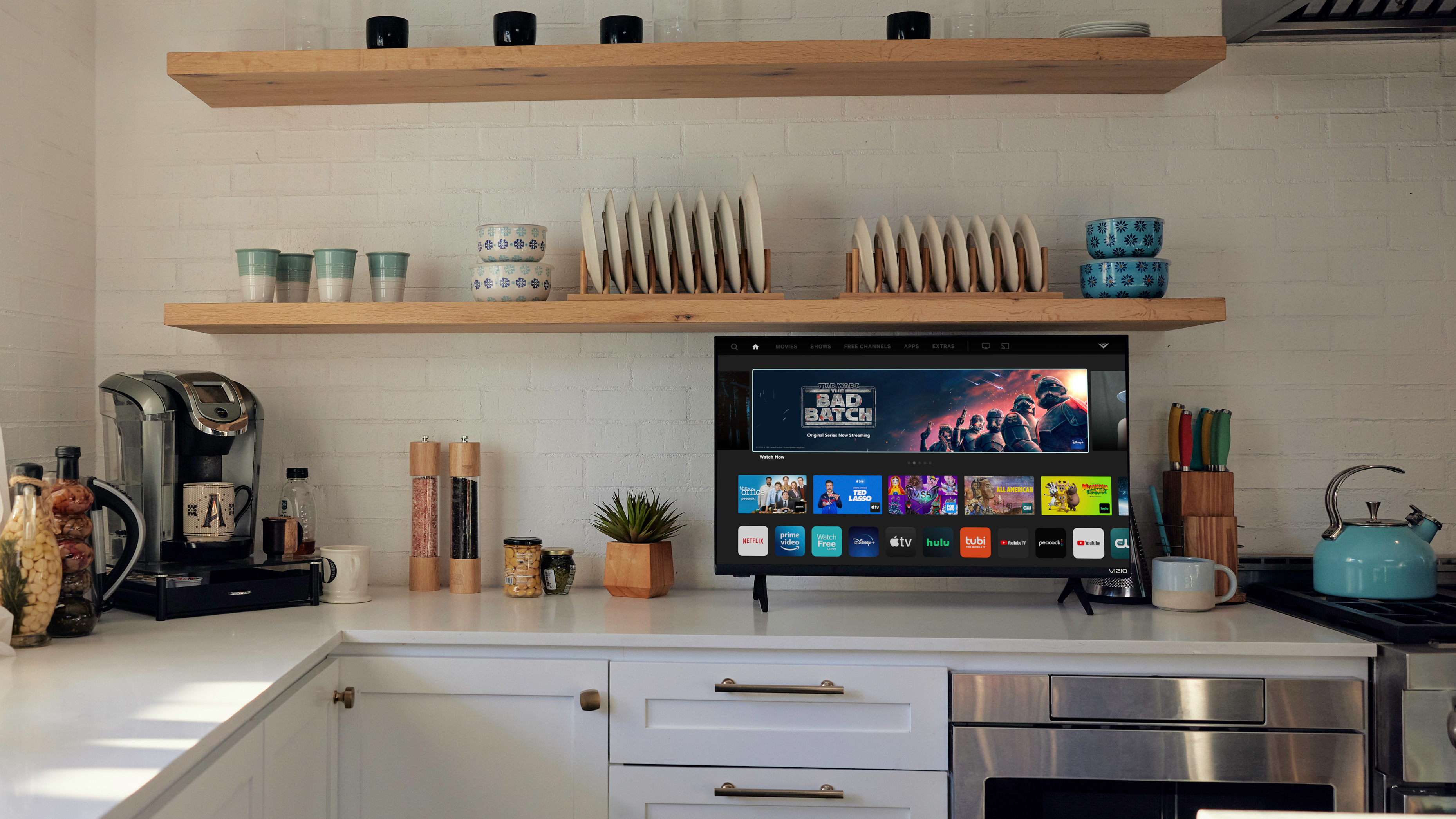
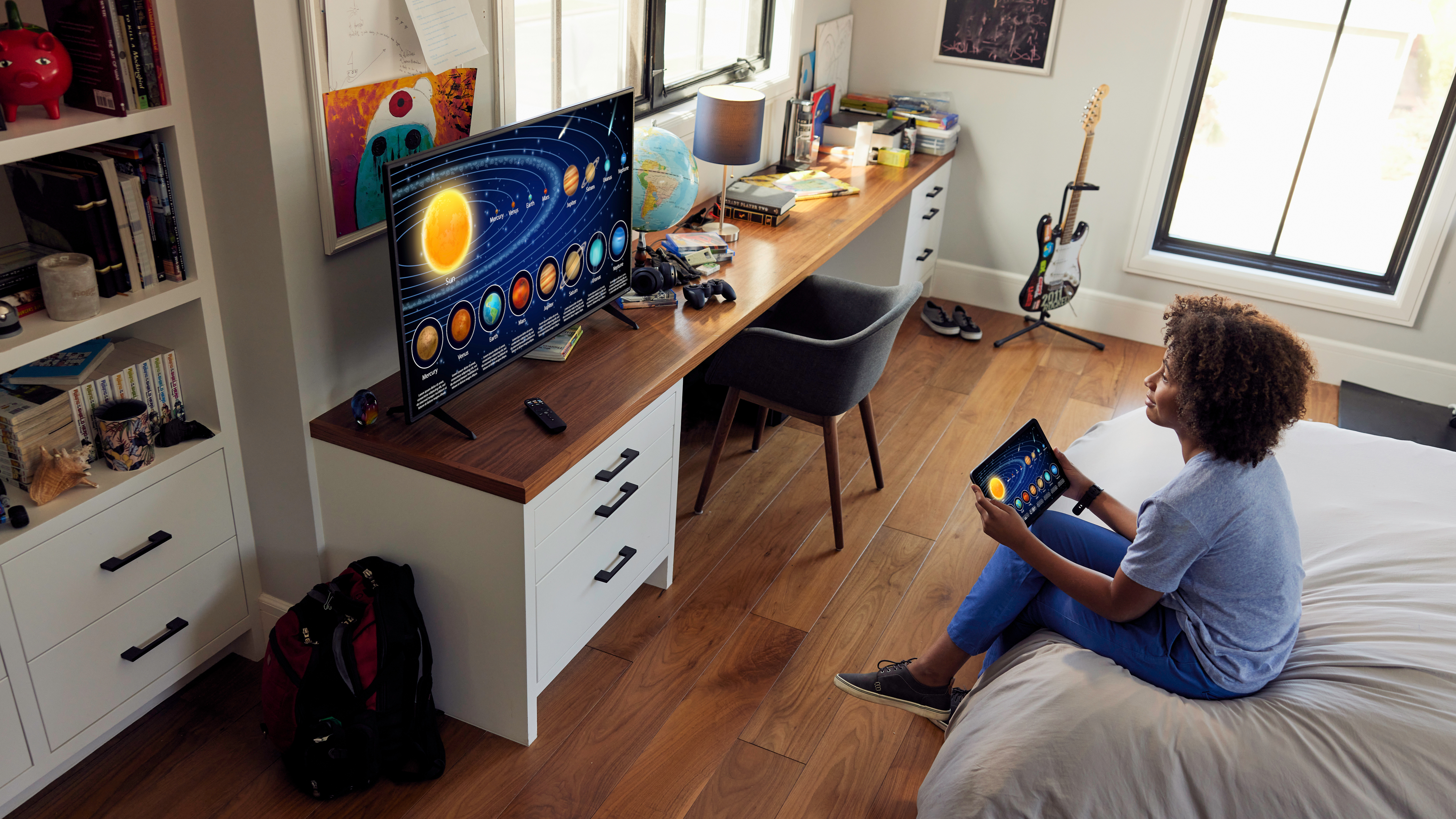
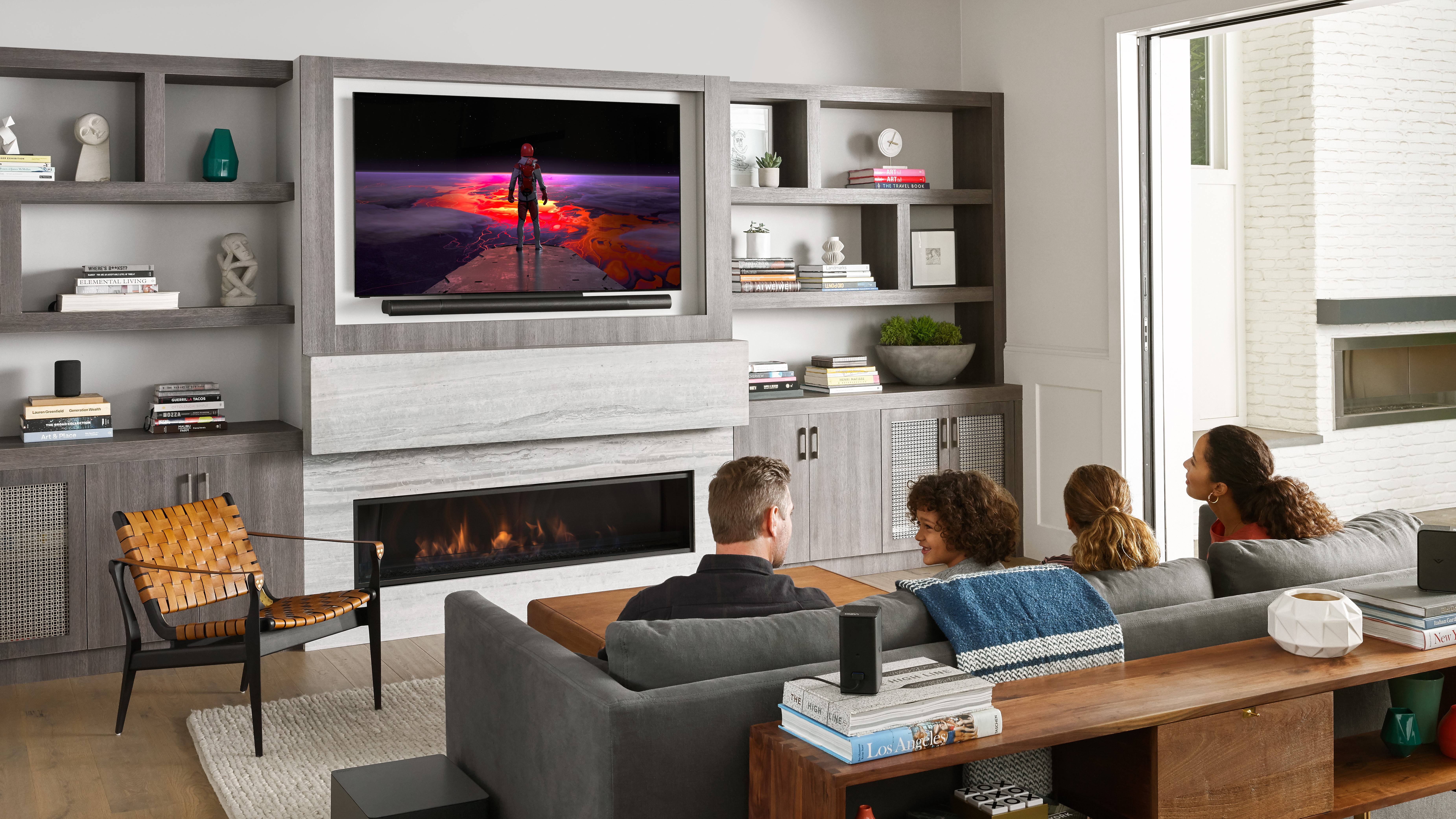
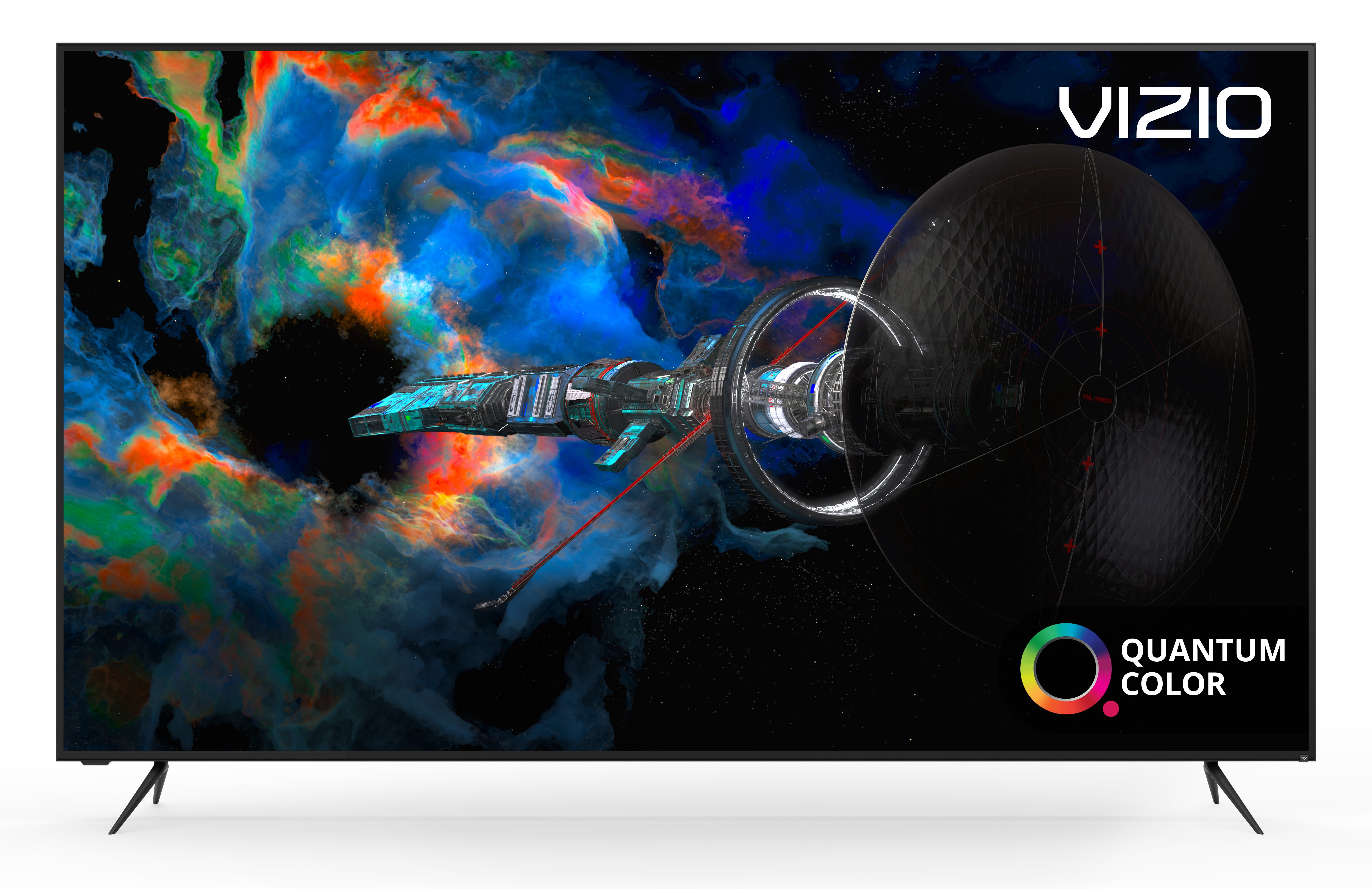
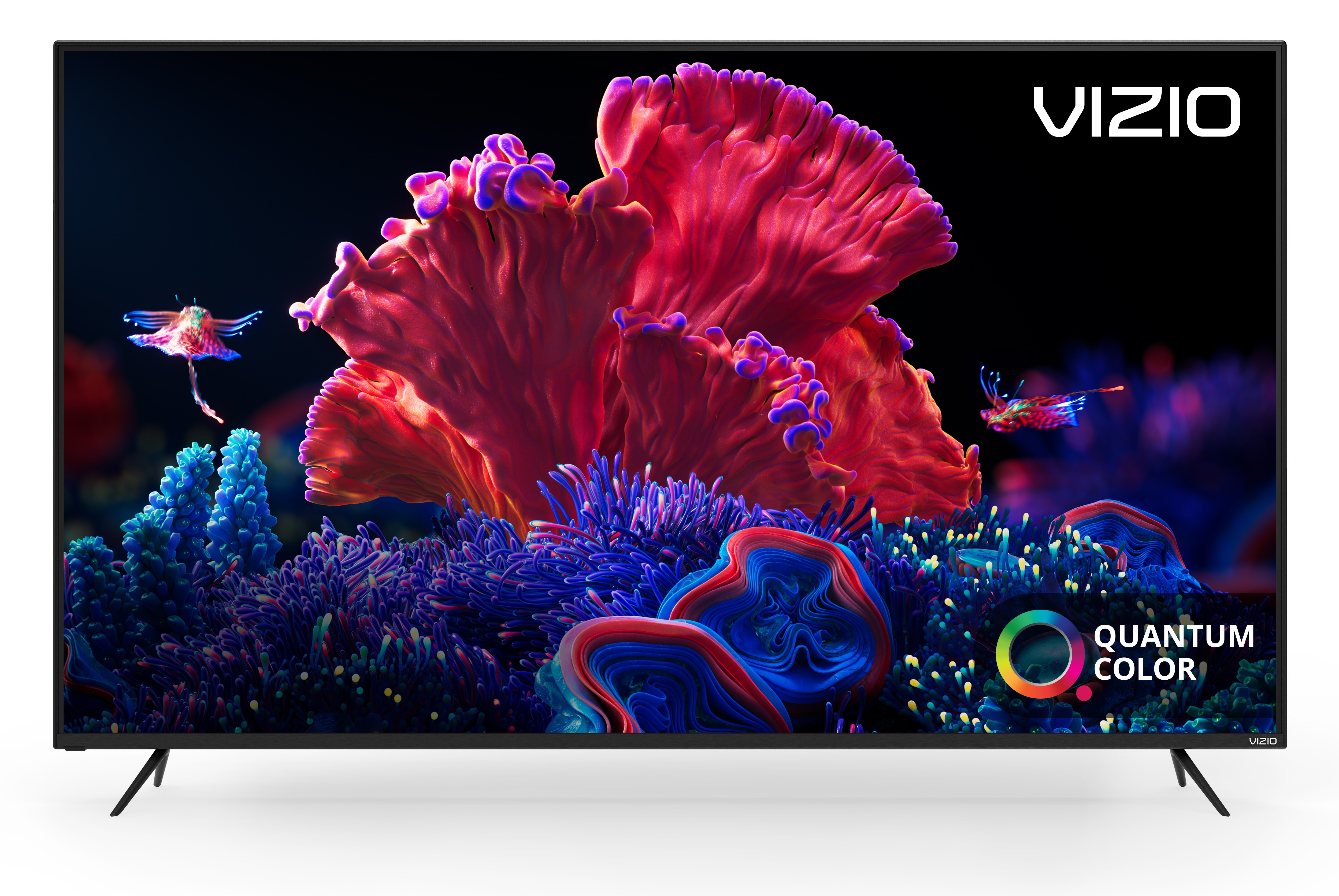
This year, Vizio's TV lineup is all about bringing the best features down to the more affordable price ranges. That's always been Vizio's MO, but this year the TV manufacturer is taking that to new levels with the addition of the IQ Processor to the D-Series of Full-HD TVs and 4K/120Hz support in the P-Series Quantum.
While there's no new OLED TV this year or any 8K TVs, Vizio's 2021-2022 TV lineup runs the gamut of affordability with the top spot going to the new-and-improved Vizio P-Series Quantum X that comes in a massive 85-inch screen size.
That said, where most folks will find the best combination of value and performance is the tried and tested M-Series Quantum, available in the new M-Series MQ7 and MQ6 lineups. The former is slightly brighter and has more local dimming zones, but the latter is a little cheaper and retains many of the same features.
That's doubly true if you're looking at a Vizio TV for Black Friday 2021. Vizio has been known to pull out all the stops for the shopping holiday, often discounting its TVs upwards of 40-50%. If you're after some steep discounts, make sure to check out our best Black Friday TV deals for all the latest price drops.
Previous years have brought a massive change in technology – like quantum dots or OLED TVs – to Vizio's TV lineup. This year, however, that's not the case.
Most of the big changes you'll see in this year's lineup are to the remote that now comes with a built-in microphone and support for AMD Free-Sync on more models. For console gamers, the entire Vizio TV lineup will play nicely with the PS5 and Xbox Series X as many support HDMI 2.1, however you'll only be able to play games at their highest settings on the Vizio P-Series Quantum and P-Series Quantum X that support 4K/120.
Speaking of the P-Series Quantum and P-Series Quantum X, Vizio says the latest models can hit up to 84% of REC2020 and 85% of REC2020, respectively, making them some of the most colorful TVs we've yet to see from the manufacturer. In terms of brightness you're looking at 1,200 nits and up to 3,000 nits, respectively, which means Samsung could have a competitor on its hands when you're looking for the brightest TVs on the market.
Further down the line, VRR via HDMI 2.1 and Vizio’s ProGaming Engine make their return this year and offer faster response time and lower input lag for the D-Series, V-Series, M-Series, P-Series and P-Series Quantum X. Plus, on top of that, you've got Dolby Vision support all the way through the V-Series, just like last year.
Outside of those big changes, we're getting a refreshed version of the ultra-budget D-Series for 2021 that will offer Full-HD and HD resolution in 24-, 32- and 40-inch screen sizes that could be great for younger kids or a second bedroom.
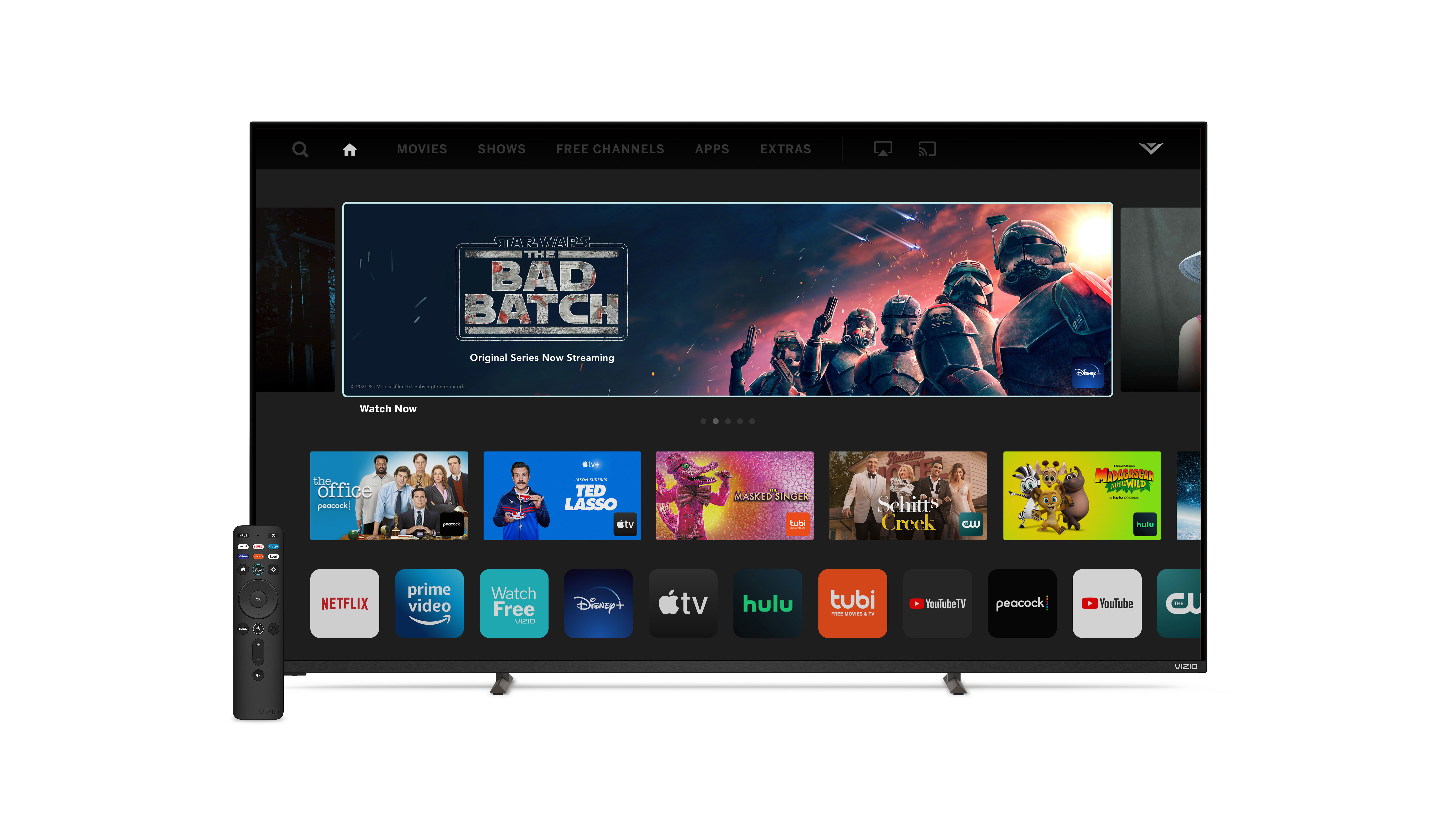
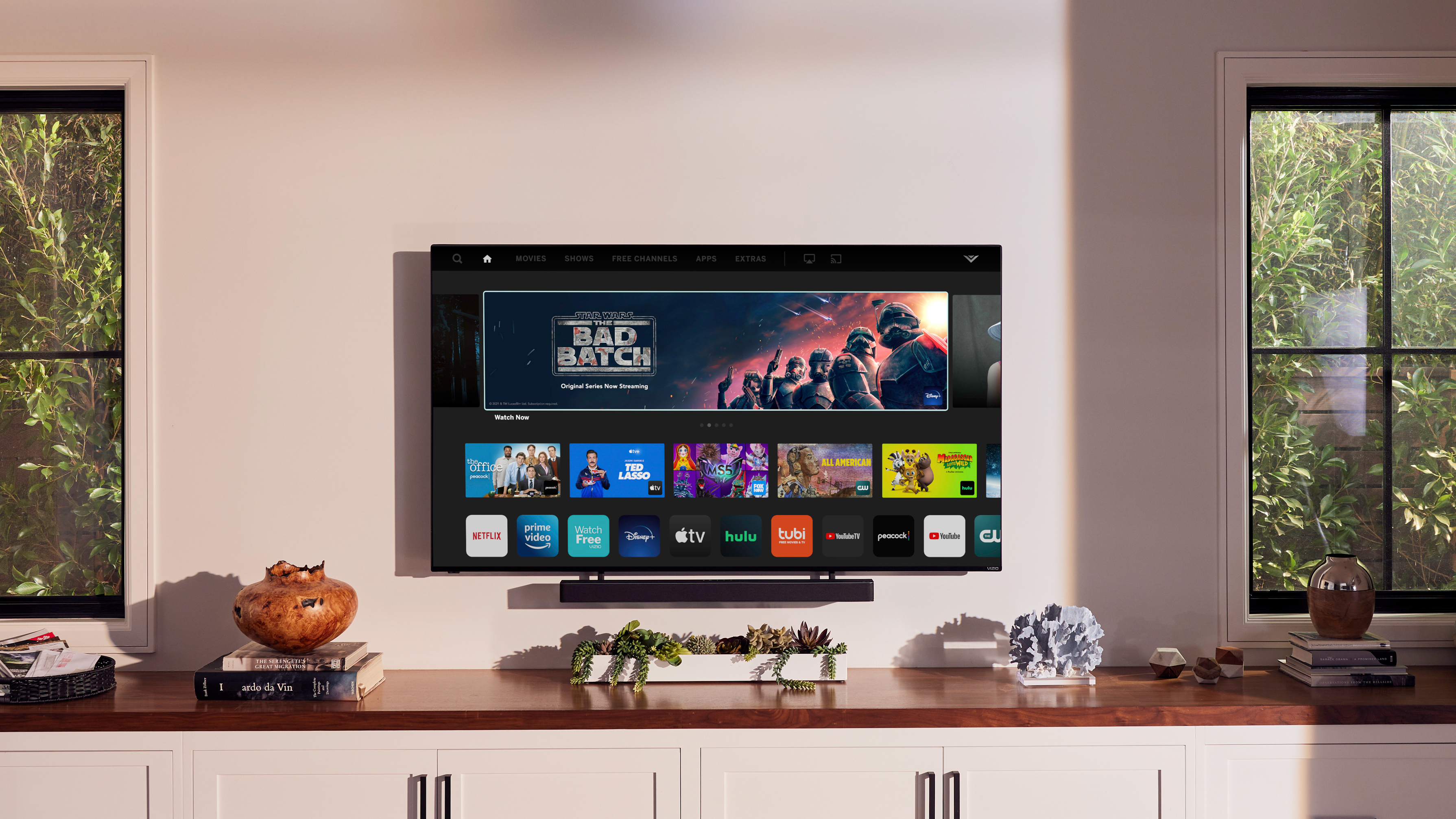
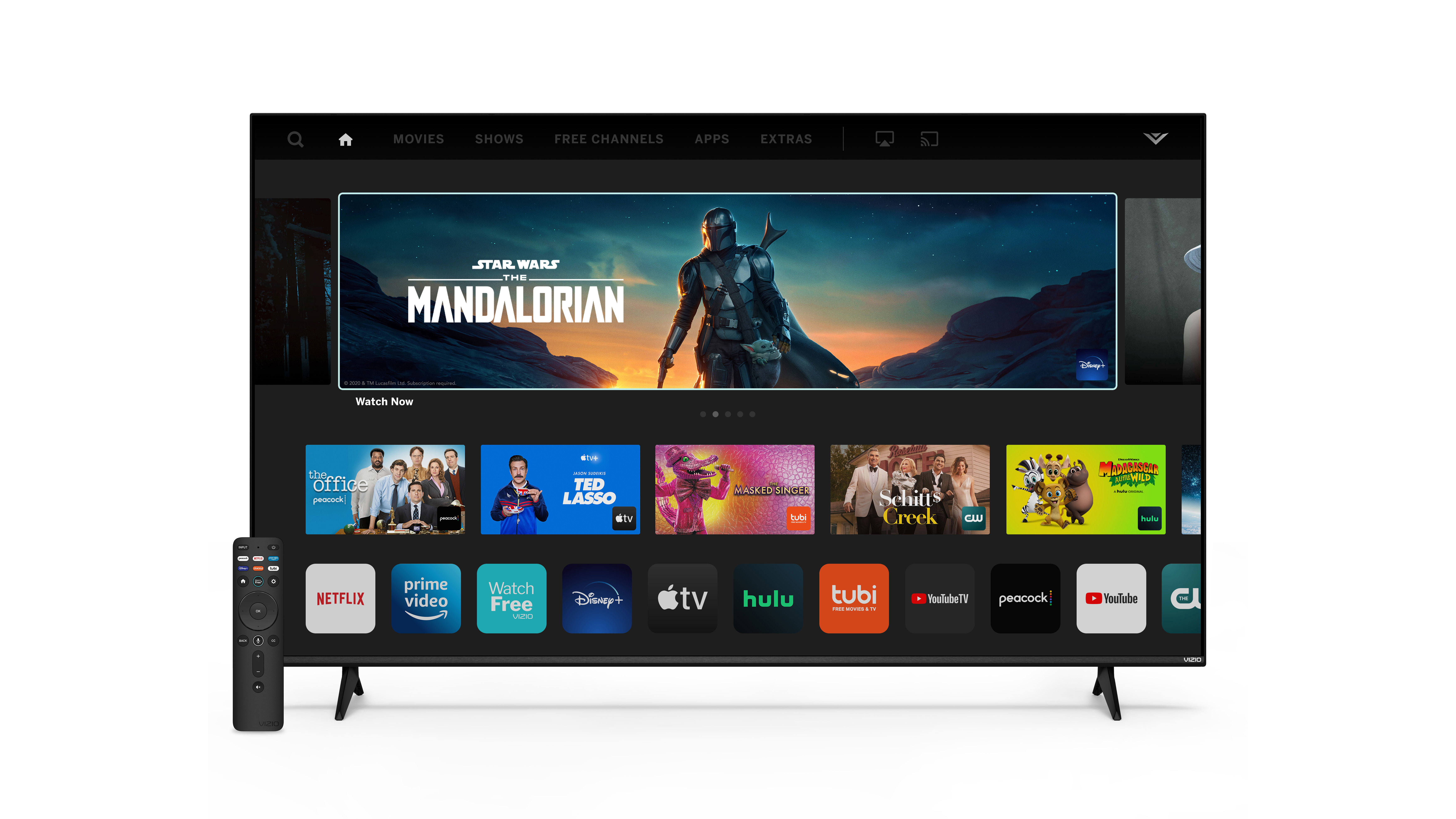
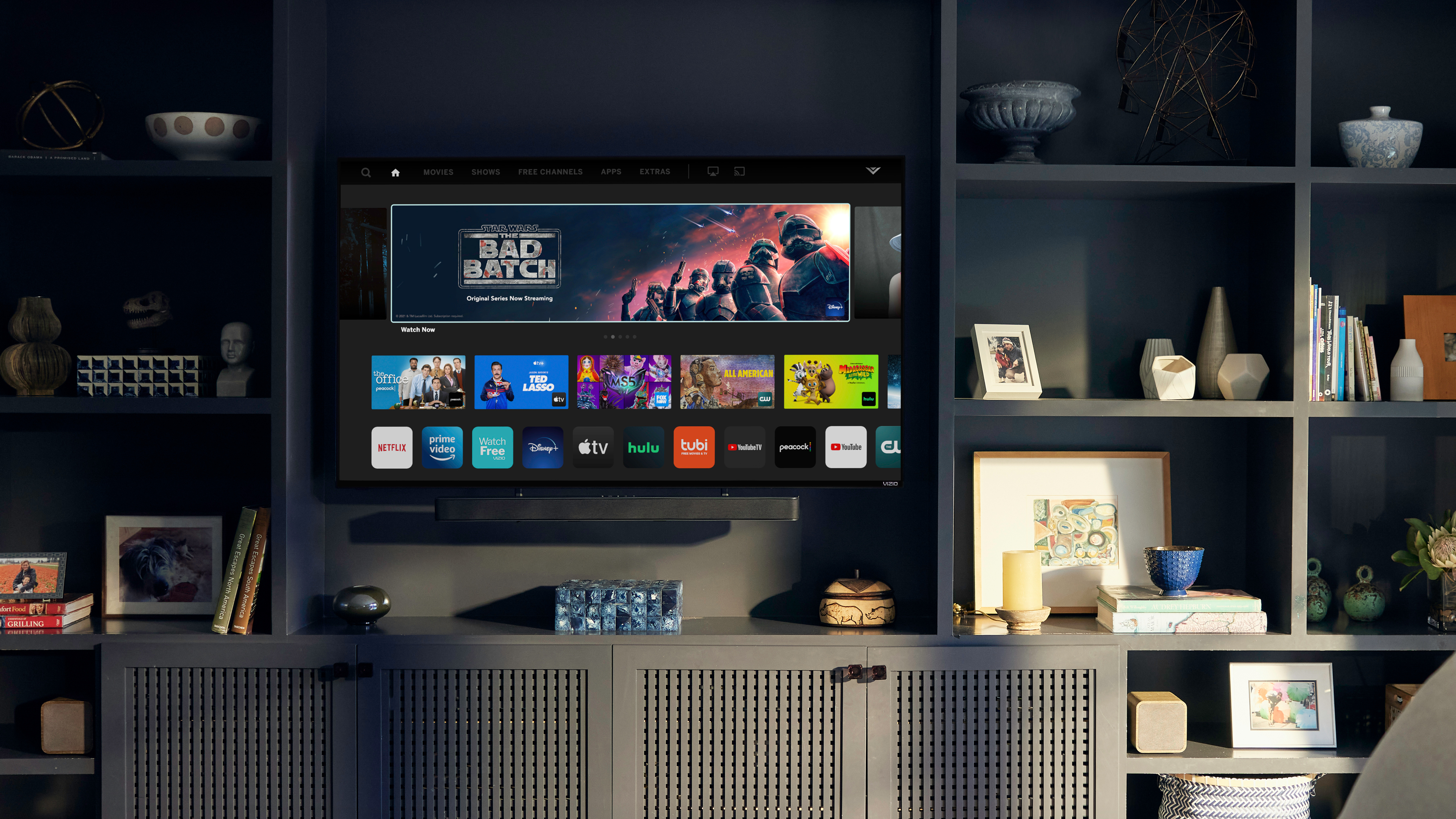
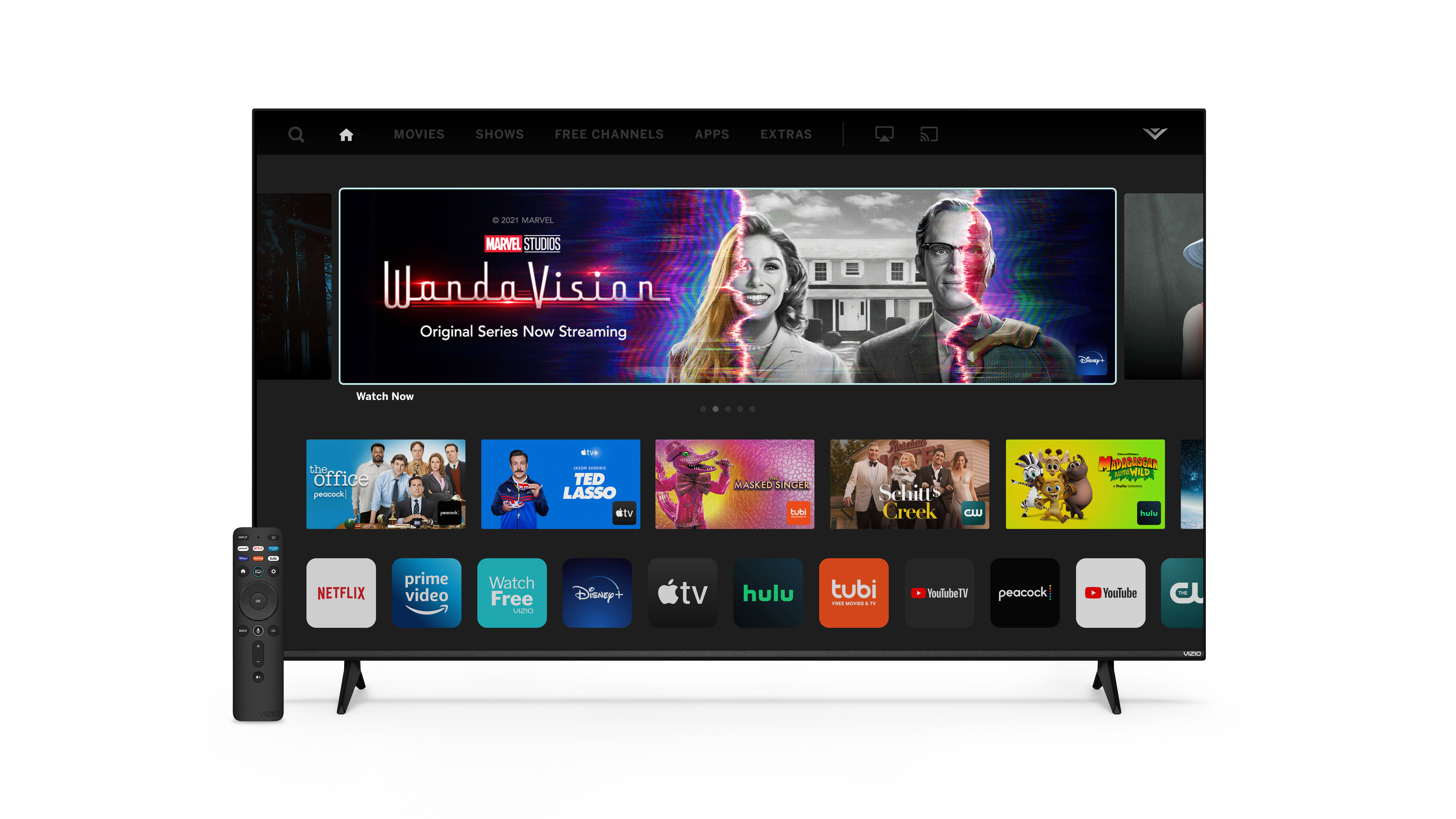
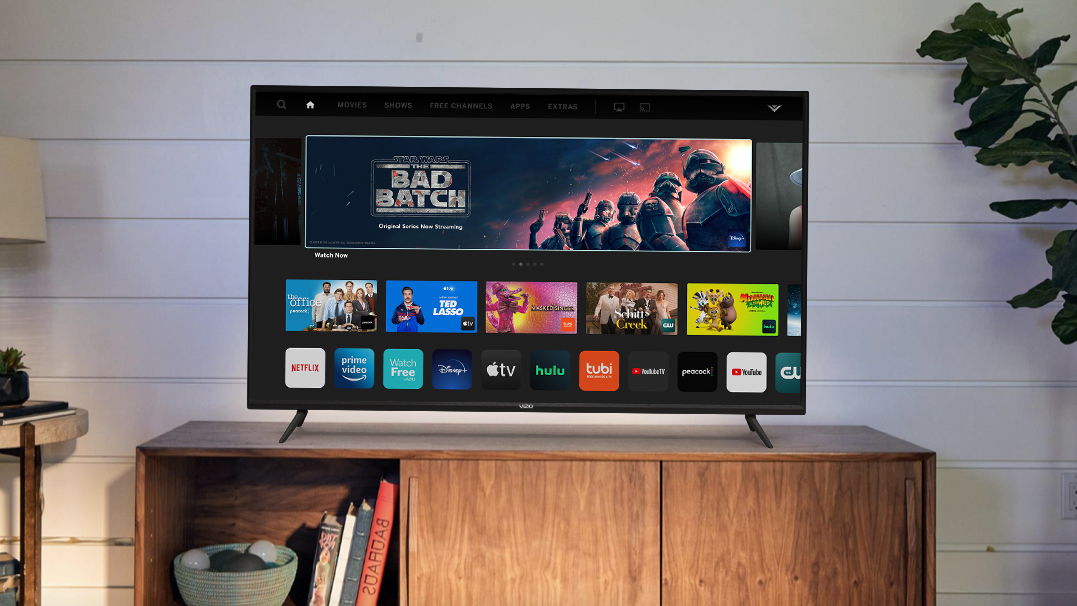
In terms of smart platforms, Vizio is once again stocking its TVs with SmartCast. The latest version of the smart platform is significantly faster and smoother, according to Vizio, and will support Apple HomeKit, Google Assistant and Alexa interactions. The new voice remote will allow you to jump to shows and movies from any screen, or you can use it to search for something new to watch.
Overall, this isn't the most massive overhaul in technology for Vizio, but the changes are welcome all the same.
New Vizio TVs for 2021 and 2022
Vizio P-Series Quantum X
Only available in a massive 85-inch screen size, the P-Series Quantum X will make its triumphant return in 2021. The highlights of the screen this year are the higher peak brightness and wider color gamut of 3,000 nits and 85% of REC2020, plus the 792 local dimming zones. Once again the LED-LCD TV will use the IQ Ultra Processor and will support the latest game consoles at 4K/120. There's Dolby Vision HDR as well as HDR10, HDR10+ and HLG, and the TV comes with the new voice remote.
US Model Names: TBD
Image 1 of 2
(Image credit: Vizio)
Vizio P-Series Quantum (PQ9)
Image 2 of 2
(Image credit: Vizio)
Vizio P-Series Quantum (PQ9)
Stepping down from the P-Series Quantum X is the P-Series Quantum (PQ9), available in a more reasonable 65- and 75-inch screen sizes. This model drops the local dimming zones from 792 down to only 210 in the 75-inch model, and drops the brightness from up to 3,000 nits down to only 1,200 nits or so. Other than that, many of the high-end specs remain including support for all the HDR formats and HDMI 2.1 for 4K/120, plus the voice remote.
US Model Names:
Vizio P-Series P65Q9-J01, Vizio P-Series P75Q9-J01
Image 1 of 3
(Image credit: Vizio)
Vizio M-Series (MQ7 and MQ6)
Image 2 of 3
(Image credit: Vizio)
Image 3 of 3
(Image credit: Vizio)
Vizio M-Series Quantum (MQ7 and MQ6)
OK, here's where it gets a little confusing. Like previous years, Vizio is once again making two different M-Series lineups, the MQ7 and the MQ6. The MQ7 is the better of the two, offering higher brightness and more local dimming zones. Both the MQ7 and MQ6 use the IQ Active Processor instead of the IQ Ultra Processor found in the P-Series lineup, but still support all the high-end HDR formats. The biggest tradeoff here is that the TVs only have a native refresh rate of 60Hz, meaning you won't be able to get them to support 4K/120 when using an Xbox Series X or PS5. Still, they'll be much more affordable than the P-Series Quantum and are likely to sell out fast come Black Friday and Cyber Monday.
US Model Names:
Vizio M-Series M43Q6-J04, M50Q6-J01, M55Q6-J01, M65Q6-J09, M70Q6-J03, M75Q6-J03 | Vizio M-Series M50Q7-J01, M55Q7-J01, M58Q7-J01, M65Q7-J01
Image 1 of 2
(Image credit: Vizio)
Vizio V-Series (V6 and V5)
Image 2 of 2
(Image credit: Vizio)
Vizio V-Series (V6 and V5)
Dropping down one more step we find the Vizio V-Series, available in two series. The V6 is going to be the slightly better-performing of the two with better motion handling, but it's only going to be available in two screen sizes: 70- and 75-inches. What you're more likely to come across is the new Vizio V-Series V5 that's available in 7(!) different screen sizes from 43 inches all the way up to 75 inches. Expect lower brightness and color volume than the M-Series as well as poor off-axis viewing, but in exchange for those shortcomings you're going to save some money on the price.
US Model Names:
Vizio V-Series V435-J01| V505-J09, V555-J01, V585-J01, V655-J09 | V705-J03, V705x-J03, V706-J03, V755-J04, V756x-J03
Image 1 of 3
(Image credit: Vizio)
Vizio D-Series (D4 and D-Series)
Image 2 of 3
(Image credit: Vizio)
Image 3 of 3
(Image credit: Vizio)
Vizio D-Series (D4 and D-Series)
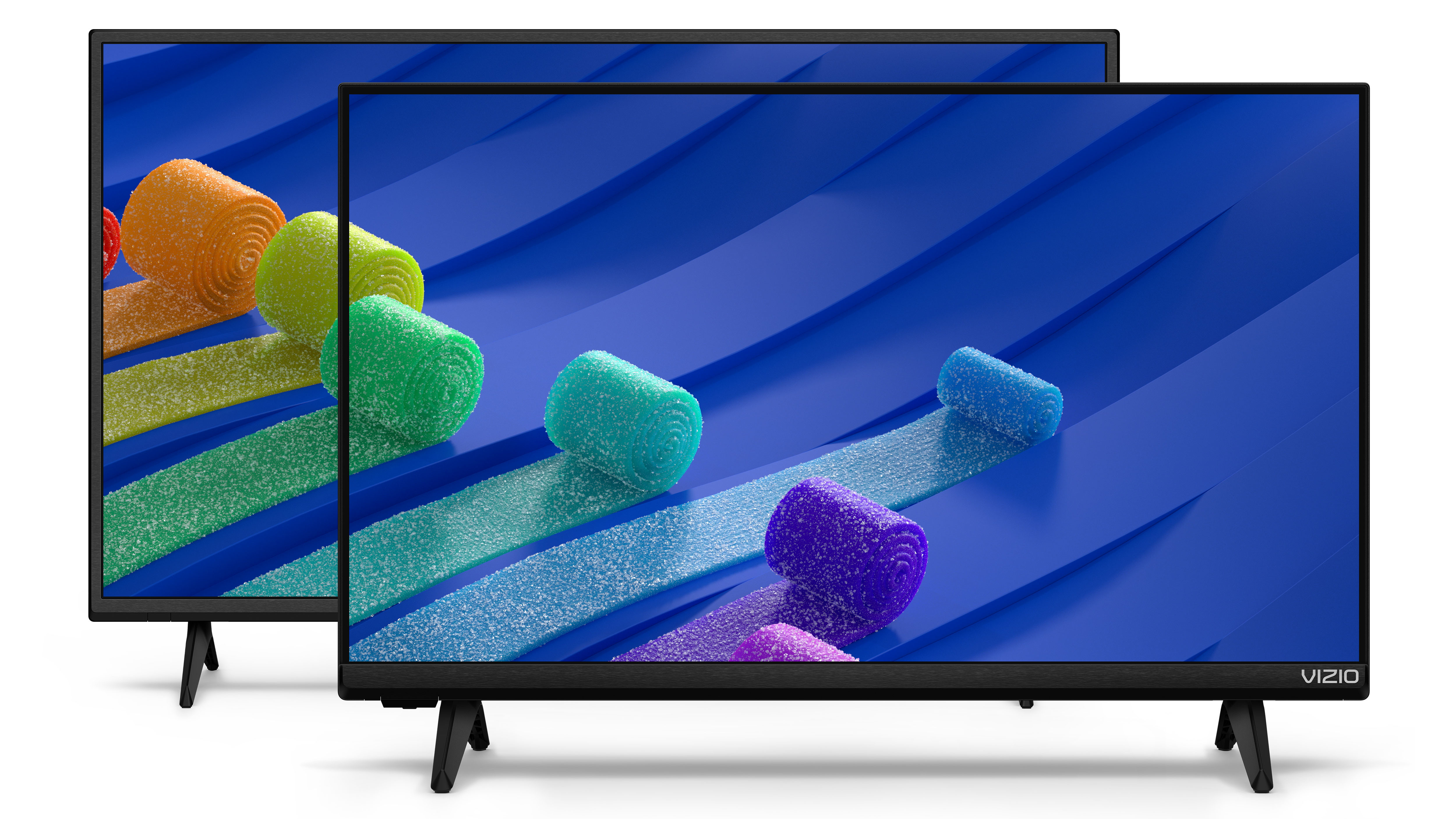
Finally, we have two new ranges of D-Series this year. It's not every year that we see new D-Series TVs, but it's nice to see that the lineup isn't dead. These are Vizio's HD TVs. The D4 Series supports Full-HD resolution in two screen sizes – 24 and 32 inches – while the standard D-Series supports both Full-HD and standard HD in four different screen sizes. These TVs will use the standard IQ Processor instead of the IQ Active or IQ Ultra, but will use the Vizio Gaming Engine to make games play a little better than you'd expect for an HD TV. Again, the highlight here is that they're going to be the most affordable models in the lineup, and might make for a nice second TV in a spare bedroom or a kids room where resolution is less important.
US Model Names:
Vizio D-Series D24h-J09, D24f-J09, D24f4-J01, D32h-J09, D32f-J04, D32f4-J01, D40f-J09, D43f-J04
Vizio TVs from 2020
(Image credit: Vizio)
Vizio OLED (H1 Series)
The Vizio OLED might be one of the most exciting TVs of the year. It promises to lower the price of OLED screens by at least $300 here in the US if you plan on buying a 55-inch model, and even more if you have your eye on a 65-inch screen size.
In terms of specs, the Vizio OLED will use Vizio’s new IQ Ultra image processor and support VRR up to 120Hz. Vizio says the TV covers 98% of the DCI-P3 color space - but is limited to only around 800 nits of peak brightness.
Unlike the other Vizio 2020 TVs that are available starting in late June, we won’t get the Vizio OLED until the fall (September through November). By then, LG will have its BX OLED available and the Sony A8H OLED will have had a number of months head start. Still, if you can hold out for a few more months, you can stand to save a lot of money on an OLED.
US Model Names: Vizio OLED55-H1 ($1,299), OLED65-H1 ($1,999)
Vizio P-Series Quantum and P-Series Quantum X (Q9-H1 and QX-H1)
At the top of Vizio’s LED-LCD offerings are the Vizio P-Series Quantum and Vizio P-Series Quantum X that are returning for their second consecutive year.
The P-Series Quantum X is definitely the more formidable of the two, especially considering its crazy peak brightness, and will be available starting in June for $1,499. You’ll have three sizes to choose from (65-, 75- and 85-inches) and all of them use the new IQ Ultra image processor and VRR up to 120Hz. The 65- and 85-inch TVs hit 3,000 nits peak brightness and use 384 or 792 local dimming zones respectively, while the 75-inch version only reaches 2,800 nits with 480 local dimming zones.
Stepping down to the regular Vizio P-Series Quantum, you’ll still get the IQ Ultra image processor and VRR up to 120Hz, however you’ll take a massive hit in terms of brightness (they’re only 1,200 nits) and local dimming zones (200 or 240, respectively, for the 65- and 75-inch sizes). That said, the regular P-Series Quantum is cheaper than the P-Series Quantum X, and you can save about $300 by choosing the lower-specc’d displays.
All the TVs in the range except for the 85-inch P-Series Quantum X will be available in late June and the latter will be available in the fall around the time of the Vizio OLED.
US Model Names: Vizio P65QX-H1 ($1,499), Vizio P75QX-H1 ($1,999), Vizio P85QX-H1 ($2,999), Vizio P65Q9-H1 ($1,199), Vizio P75Q9-H1 ($1,699)
As you step further down the lineup, things become even more complicated - for example, like last year you’ll find two different versions of the M-Series that are wildly different. Both only have a 60Hz native refresh rate and use the IQ Active image processor, but that’s where the similarities end.
The better of the two series is the Vizio M-Series Q8 that’s only available in either a 55- or a 65-inch screen size. Both have 90 contrast control zones, far less than the P-Series but far more than the M-Series Q7 models, and use the IQ Active image processor instead of the IQ Ultra that you’d find in the higher-end models.
Then there’s the Vizio M-Series Q7 that comes in 50-, 55- and 65-inch sizes that use 16 or 30 contrast control zones. They too use the IQ Active image processor and according to the specs provided by Vizio, hit between 400 and 600 nits of peak brightness. That said, they’re ultra affordable and will likely sell super well during Black Friday this year.
US Model Names: Vizio M55Q8-H1($549), Vizio M65Q8-H1 ($749), Vizio M50Q7-H1 ($399), Vizio M55Q7-H1 ($499), Vizio M65Q7-H1 ($699)
(Image credit: Vizio)
Vizio V-Series
In case you missed the memo, the V-Series stands for value. It’s Vizio’s catchall term to describe any TV that it feels like fits into that framework, and therefore is comprised of a number of different models, all of which use full array lighting and the IQ Active processor.
The good news is that all the TVs below support four types of HDR (HDR10, HDR10+, Dolby Vision and HLG) and while they’re not the most advanced in terms of specs, offers a 70-inch screen size that’s only $659 brand-new. It’s a crazy deal and is available starting today.
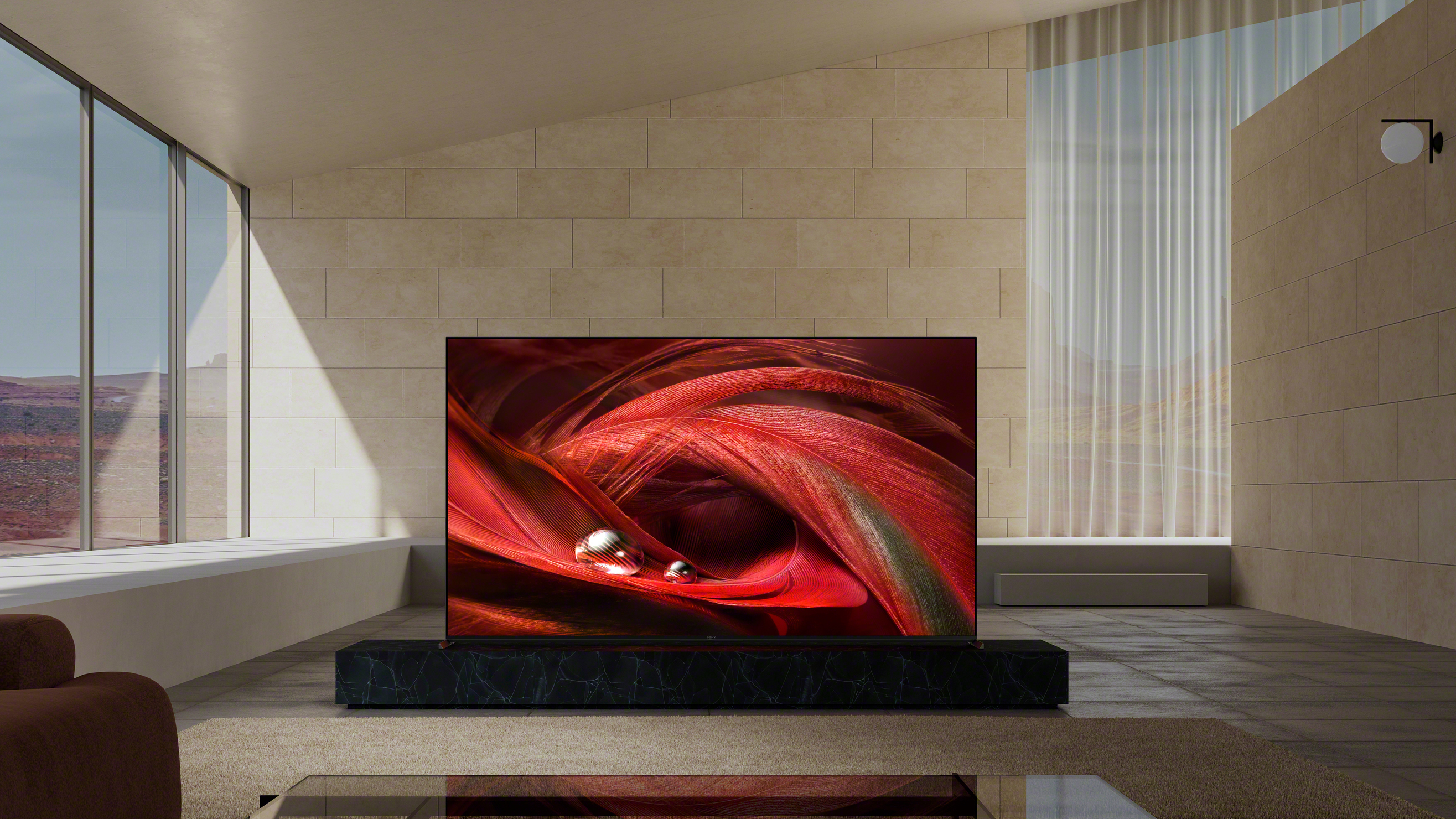
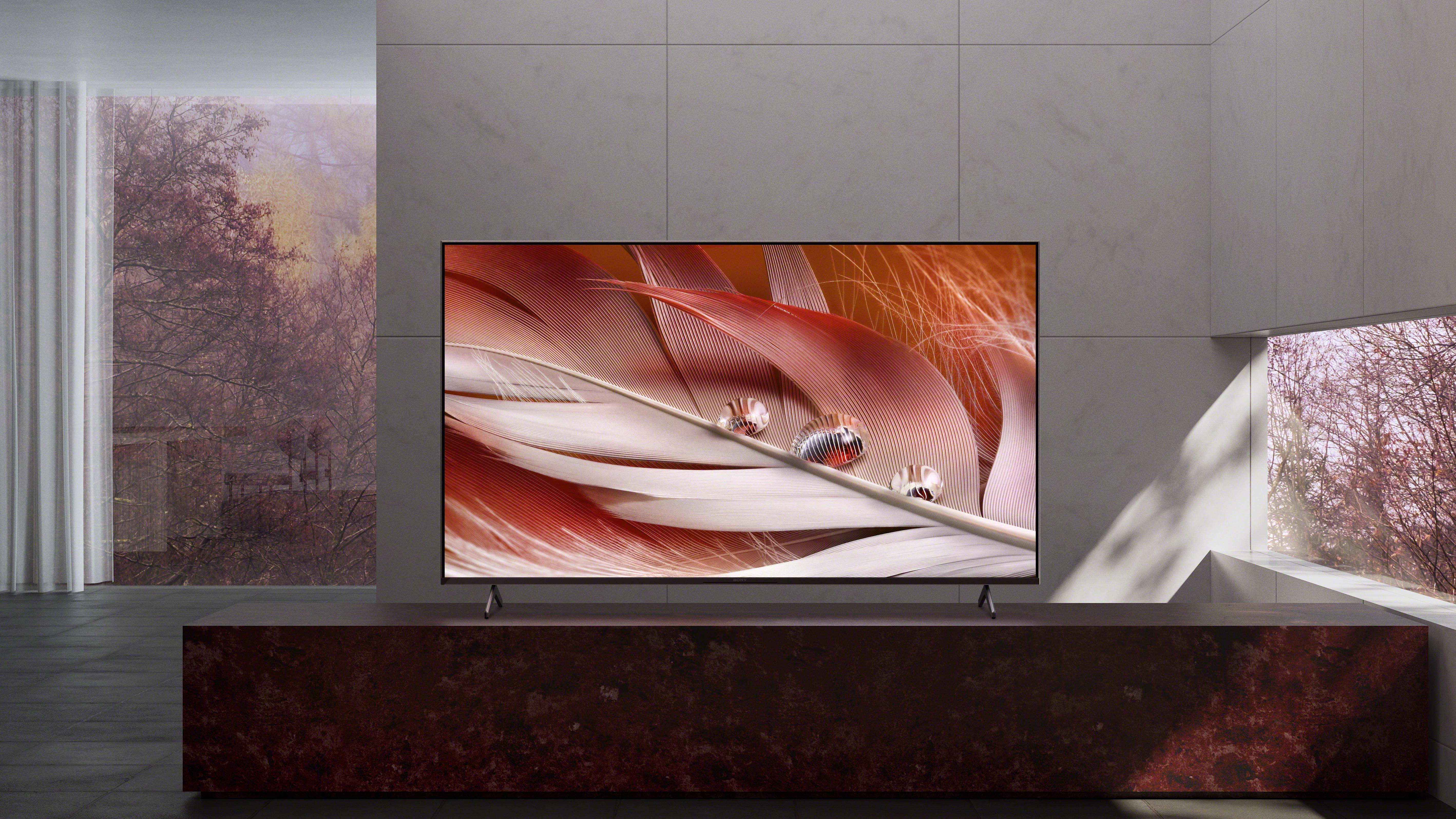
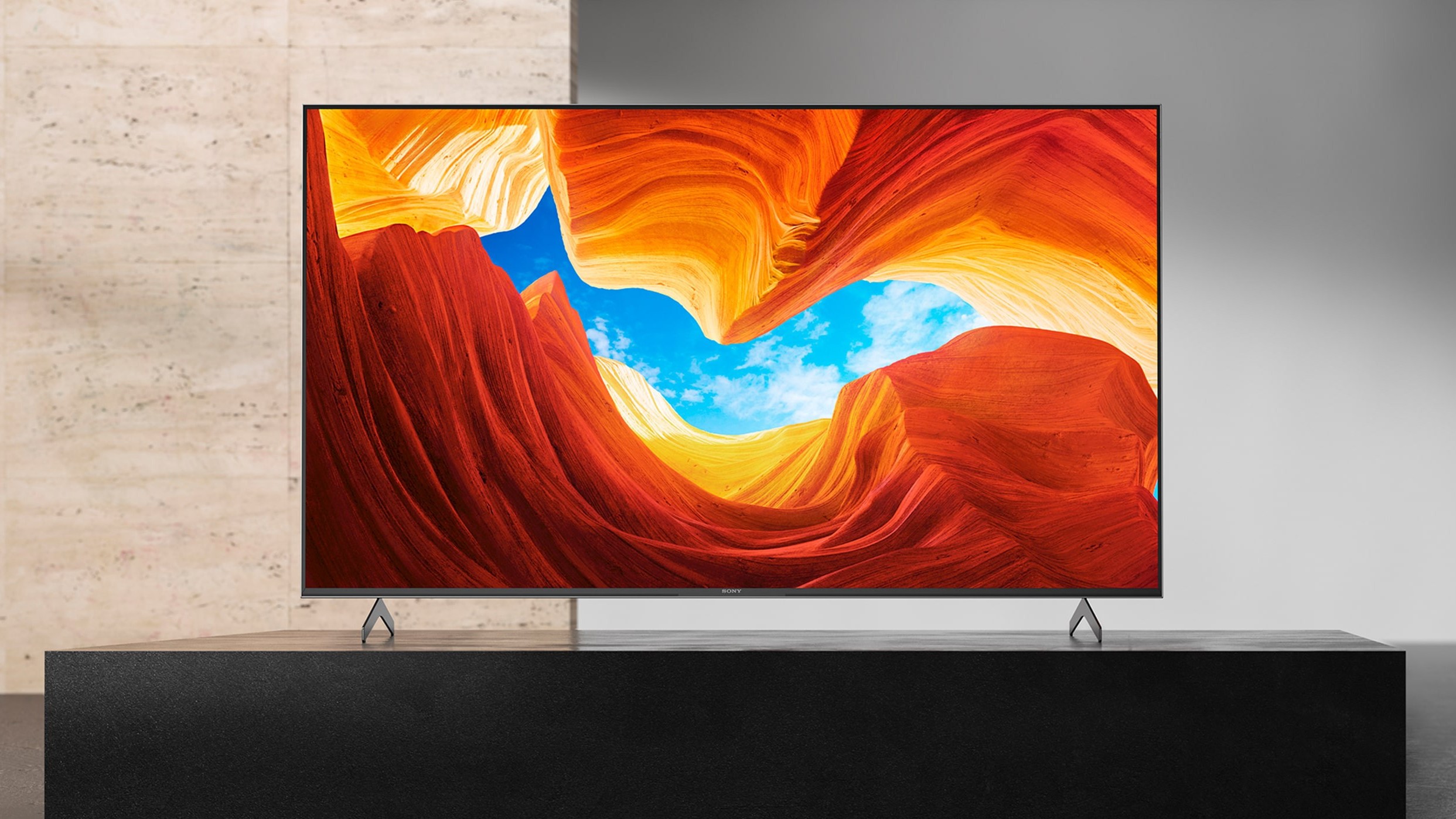
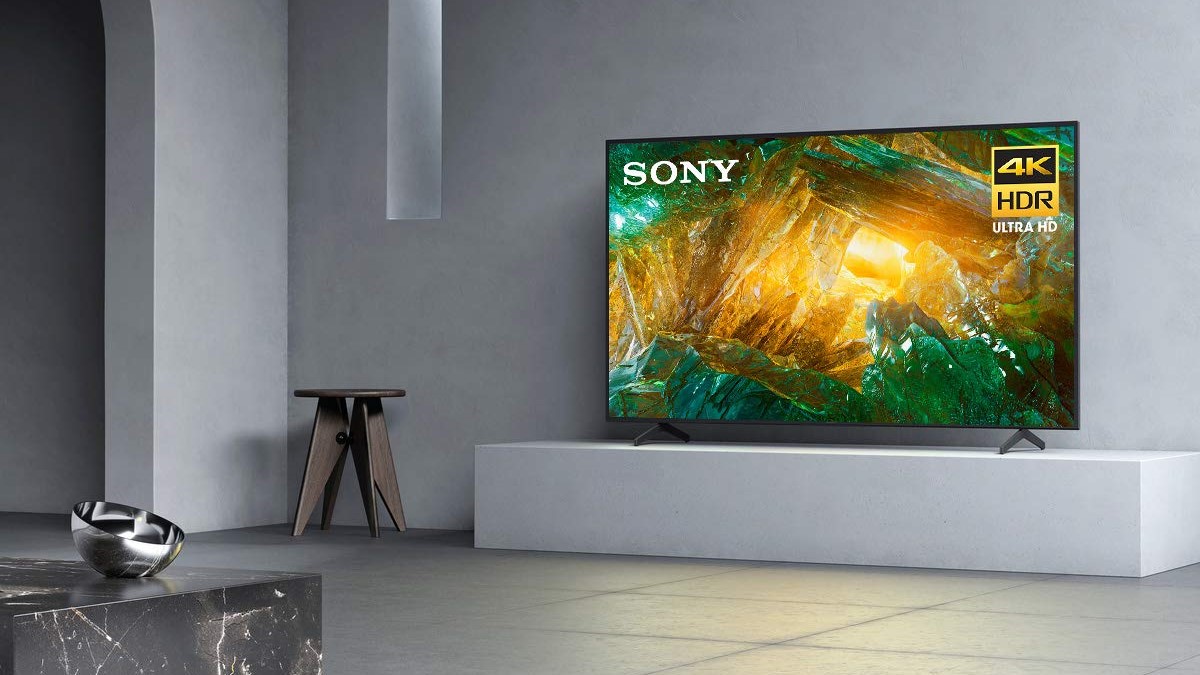
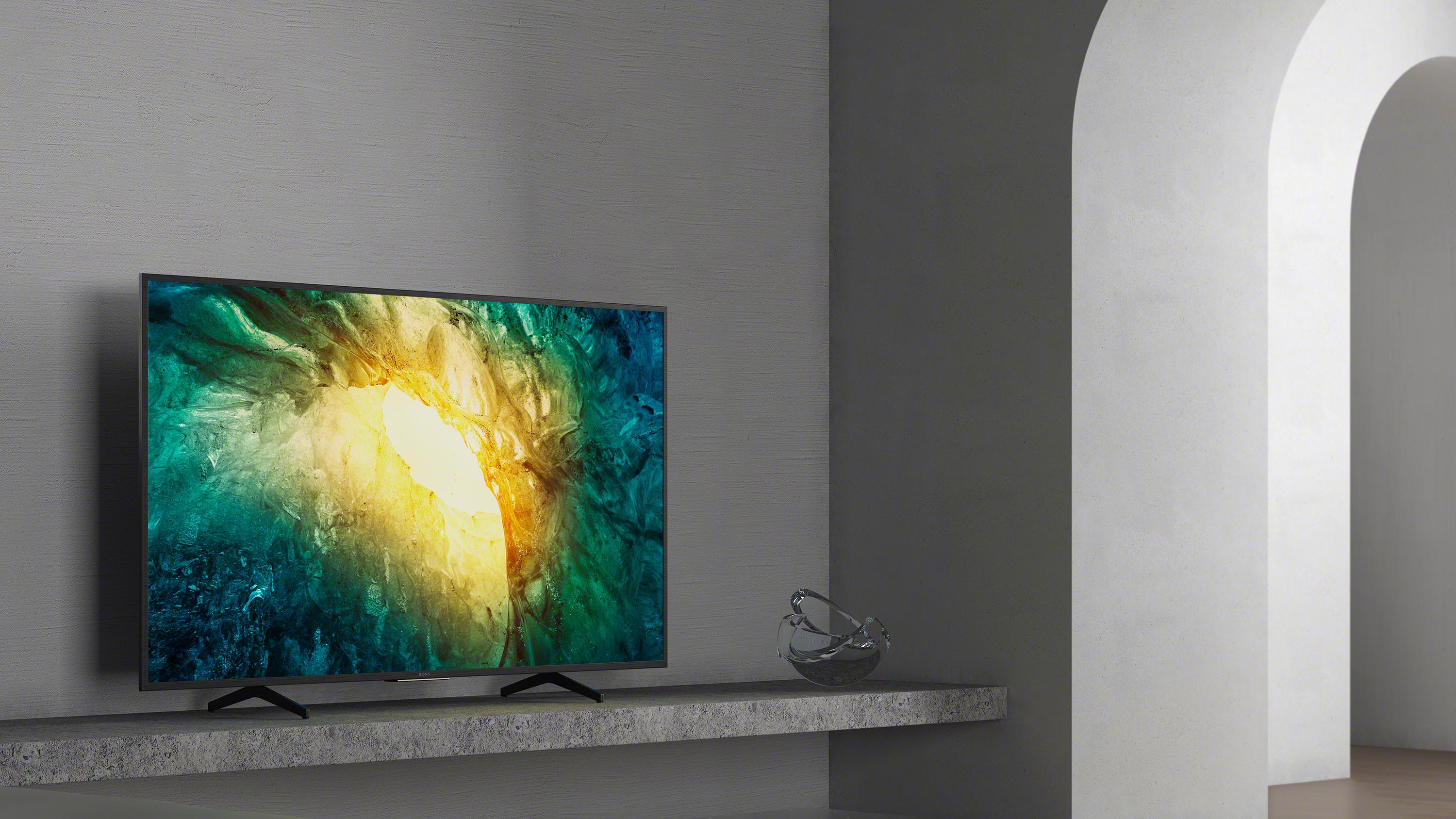
The Sony TV 2021 lineup could be the smartest, fastest and most feature-rich range of TVs that the Japanese company has ever released.
That’s big praise, of course, but thanks to the new Cognitive XR Processor in every new Sony TV, from the high-end Master Series all the way through to the mid-spec X90J, it really rings true.
While there are still some super expensive models in this year's lineup like in years past, Sony is offering a number of great deals in the lead up to Black Friday that are worth watching if you want to put a new Sony TV underneath the tree this year.
Among those deals are the A80J OLED and versatile 48-inch A9S OLED, as well as the X95J and X90J full array LED-LCD TVs. Keep an eye on our best Black Friday TV deals as we close in on the big shopping holiday, and for more discounts as we await the unveiling of the 2022 models at CES 2022.
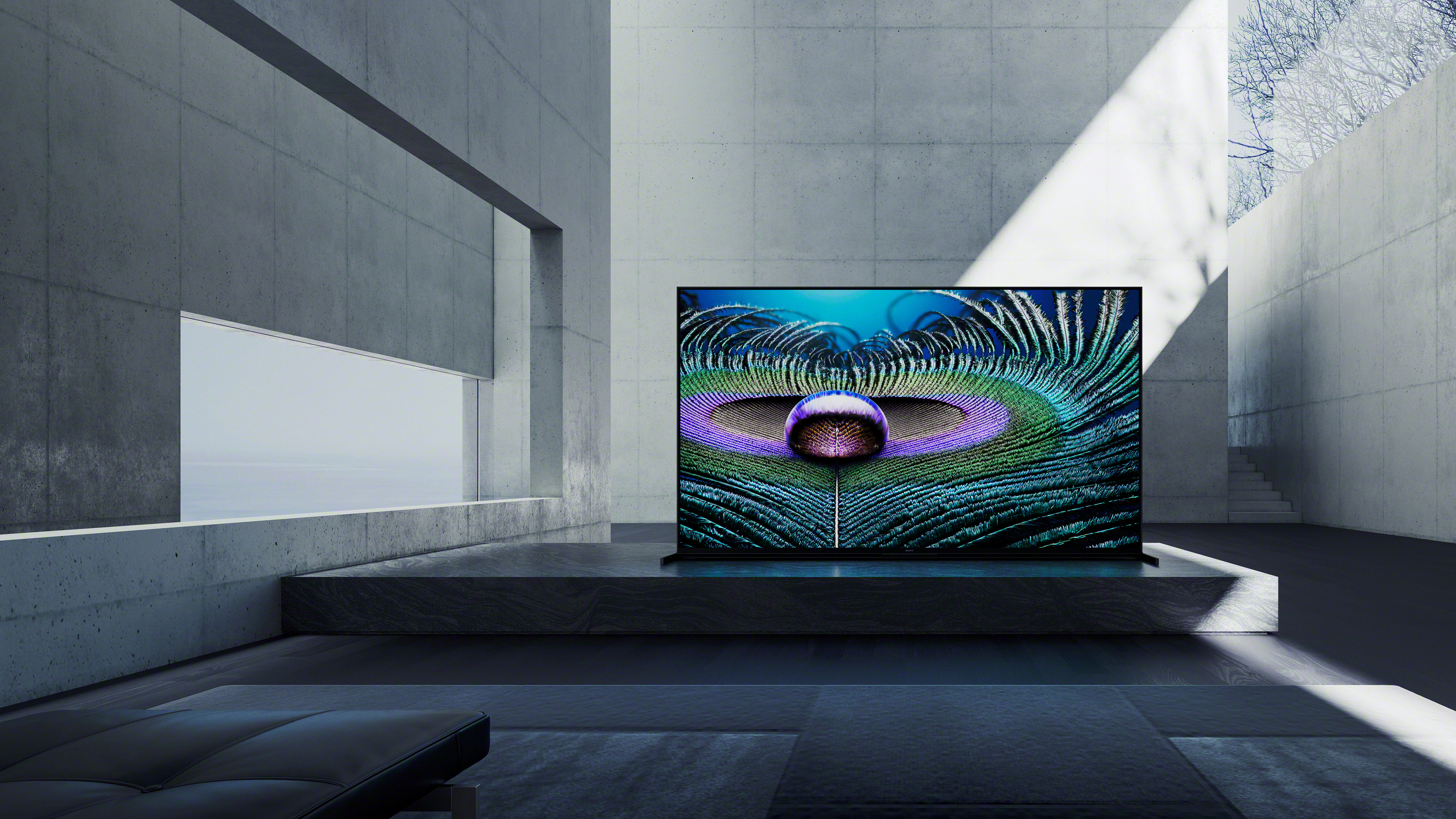
Sony Z9J Master Series LED-LCD 8K TV (available in 85- and 75-inches): The only 8K TV we know about in Sony’s 2021 lineup is the Z9J Master Series.
What makes the Z9J appealing is that it uses the Cognitive XR Processor to enable a feature called XR Contrast Booster 15 that greatly enhances contrast by boosting brightness and black levels with better zone controls, and has the highest-performing upscaling algorithm in the lineup that it needs to fill all those pixels.
It has X-Anti Reflection that reduces glare and X-Wide Angle viewing that helps you see every detail from anywhere in the room and both a light and color temperature sensor that reads the intensity of the ambient light in the room and adjusts the picture accordingly. Last but not least, the legs of the Z9J can be adjusted to fit both wide and narrow TV stands, or it can be wall-mounted if that works better for your space.
Both the 75-inch and 85-inch sizes will be available to pre-order from mid-2021.
Sony XR-75Z9J: $7,999 (around £5,700 / AU$10,300)
Sony XR-85Z9J: $9,999 (around £7,100 / AU$12,800)
(Image credit: Sony)
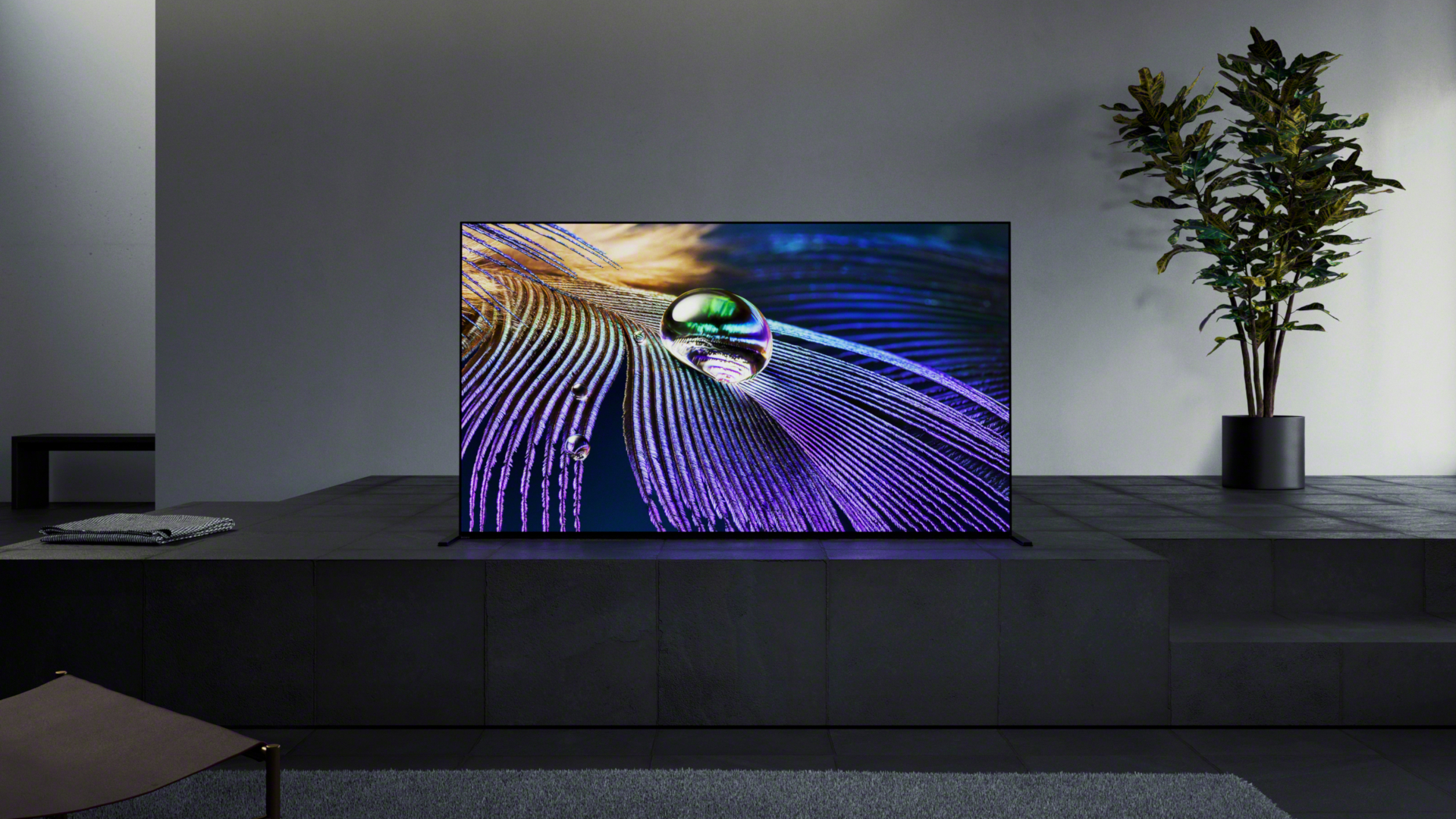
Sony A90J Master Series OLED 4K TV (available in 83-, 65- and 55-inches): The A90J earns its Master Series status by being one of the brightest OLED TVs ever made - this is because of Sony’s work on thermal dissipation and the new Cognitive XR Processor that can accurately balance the RGB and White subpixels simultaneously for extreme brightness.
You'll be getting 4K resolution, as well as 4K/120Hz video at 48Gbps through multiple (at least two) HDMI 2.1 ports, and both VRR (variable refresh rate) and ALLM (auto low latency mode). The A90J also supports Dolby Atmos passthrough, as well as HDR10 and Dolby Vision dynamic HDR. That said, it's not cheap (you can see the pricing below). The 55-inch and 65-inch models are now available to pre-order, with the 83-inch coming in May.
Sony XR-83A90J: $7,999 / £6,999 (around AU$10,300)
(Image credit: Sony)
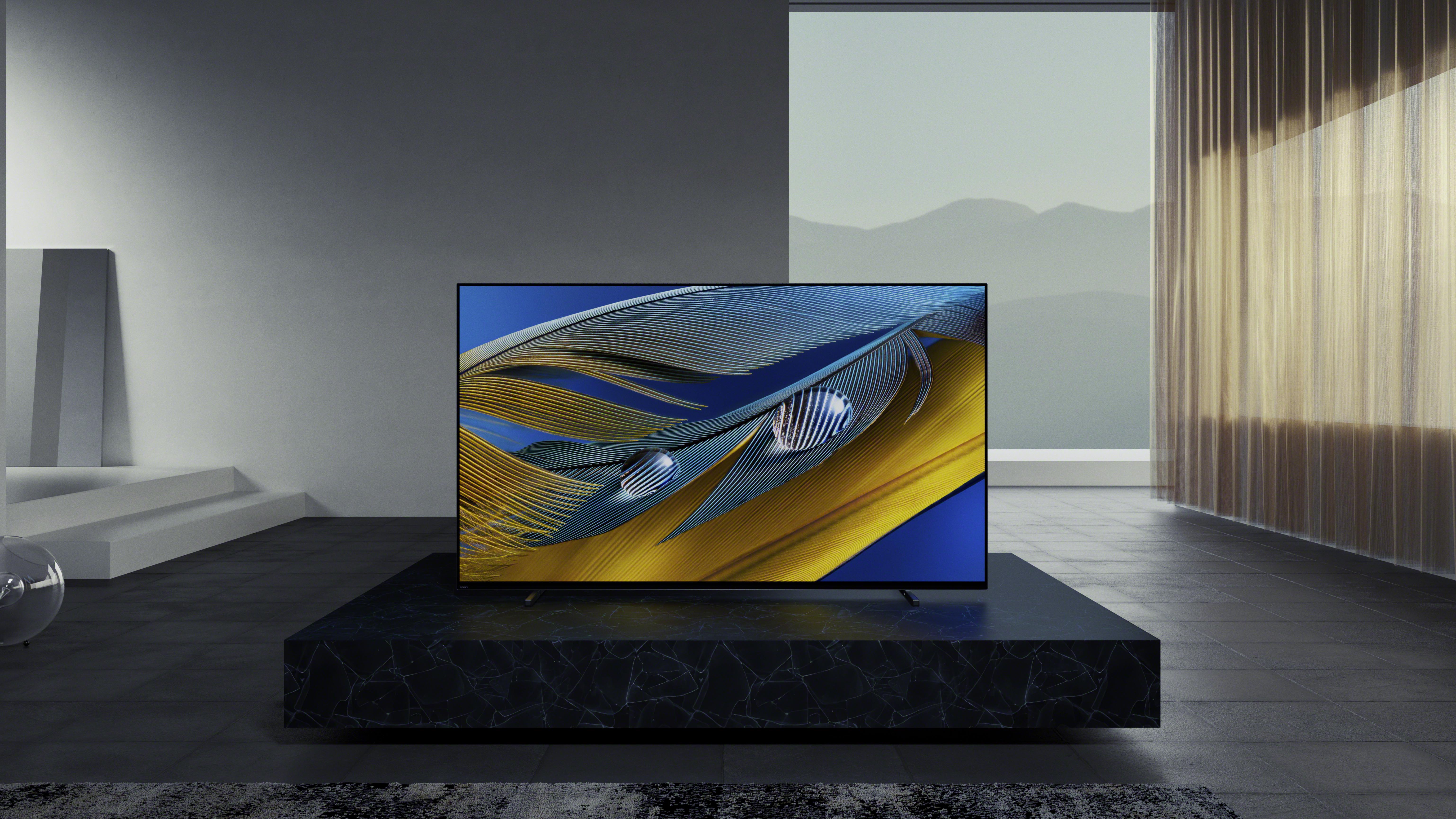
Sony A80J OLED 4K TV (available in 77-, 65- and 55-inches): The Sony A80J is the lesser of the two Sony 2021 OLEDs, but only because it lacks the higher brightness of the A90J. Even without it, the A80J has some seriously impressive technical specs and uses XR 4K Upscaling, XR Triluminos Color Pro and XR Motion Clarity.
Because it’s not as fully specified as the A90J, we’re expecting the A80J to be the more affordable of the two OLEDs, and if it can deliver most of the same performance then it will be a seriously compelling alternative to the LG CX OLED and LG BX OLED from last year. All sizes are now available to pre-order.
Sony X95J 4K LED-LCD TV (available in 85-, 75- and 65-inches): The Sony X95J is the first step down in that middle range of the Sony TV lineup from the pricey premium models. That said, you’re not sacrificing a ton of features to be here: the X95J still offers the XR Contrast Booster that the Master Series uses (though it won’t be as bright) and the XR 4K Upscaling technology. It has X-Wide Angle, XR Motion Clarity and 3D Audio Upscaling thanks to the Cognitive XR Processor, but will only have X-Anti-Reflection on the two larger models.
In terms of changes compared to last year’s X950H/XH95, one of our favorite Sony TVs from 2020, the X95J is slimmer by about 10mm and adds HDMI 2.1 ports for 4K/120 gameplay – perfect for the PS5 and Xbox Series X. That was a huge sore spot on last year’s X950H, so it’s great that Sony has added them in for this year. Pricing and release date are yet to be confirmed though. The X95J will be available to pre-order from mid-2021.
Sony X90J and X92J LED-LCD TV(available in 75-, 65-, 55- and 50-inches, X92 available in 100-inches): While the X90J doesn’t have all the fancy features like the color sensor of the Z9J or the X-Contrast Pro of the A90J OLED, the X90J has the one feature that really counts: the Cognitive XR Processor. With it, the X90J has the same XR 4K Upscaling as the other TVs, the same XR Triluminos Pro tech to enhance colors and 3D Surround Upscaling.
It has Dolby Atmos passthrough and 4K/120 support. It has the potential to offer unparalleled value to anyone who wants a cinephile-quality TV at an affordable price, and we can’t wait to test it for ourselves. The X92J model is the 100-inch option.
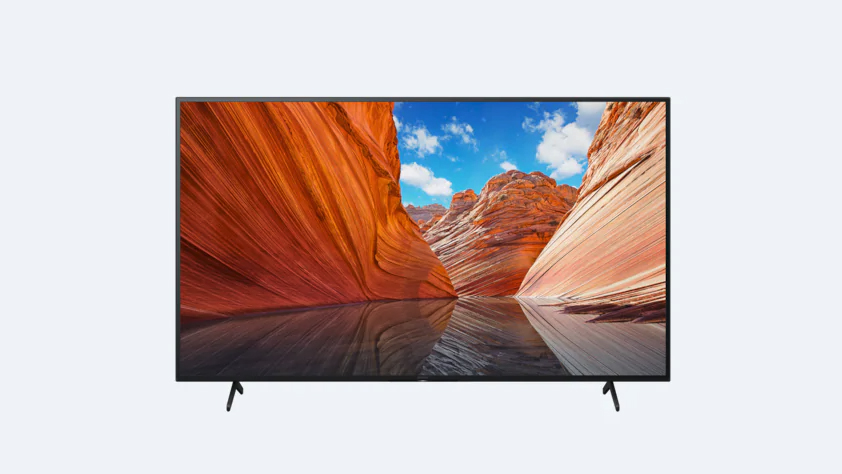
Sony X80J / X81J LED-LCD TV(available in 43, 50, 55, 65, 75-inch): If you want an even cheaper option, the Sony X80J is a step-down model with a 60Hz panel, meaning you won't get the benefits of HDMI 2.1 found on the X90J above. You will, however, get a 4K HDR panel, the Google TV platform, and the capable X1 processor from previous Sony TV ranges. The X80J also packages all this at around half the price of the X90J, starting at $749 / £584 (around AU$1,000) for a 43-inch model. The Sony X81 variation in the UK adds some more advanced motion processing and will cost slightly more at smaller sizes too.
Sony XR-43X80J: $749 / £584 (around AU$1,000)
Sony XR-50X80J: $849 / £667 (around AU$1,100)
Sony XR-55X80J: $949 / £899 (around AU$1,250)
Sony XR-65X80J: $1,149 / £1,049 (around AU$1,500)
Sony XR-75X80J: $1,699 / £1,499 (around AU$2,200)
Technology
Sony 2021 TV technology
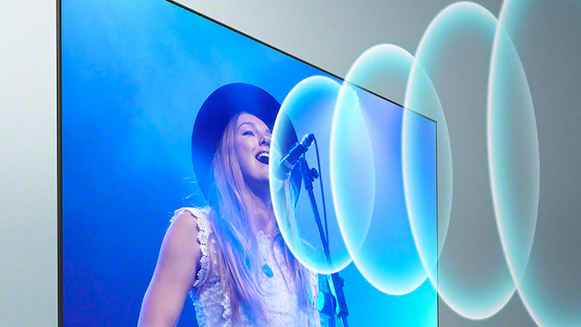
Acoustic Surface Audio+ vibrates the panel itself to emit sound from across the screen.(Image credit: Sony)
So, what’s new with Sony TVs this year? The main change comes in the form of its Cognitive XR processor, which Sony claims is bringing a huge upgrade in capability to its 2021 TV range.
Can Sony one-up the X1 Ultimate processor that's been driving its premium TVs for the past few years? Sony certainly thinks so, saying that the Cognitive XR chip utilizes a “completely new processing method designed to replicate the ways humans see and hear”, detecting a so-called “focal point” in the TV’s picture to focus processing around the more important parts of the image. “While conventional Artificial Intelligence (AI) can only detect and analyze picture elements like color, contrast and detail individually, the new processor can cross-analyze an array of elements at once, just as our brains do,” Sony says.
On top of the new processor, each model of the Sony 2021 line-up will use the new Google TV smart platform instead of the older Android TV software. That means you’ll essentially get a Chromecast with Google TV built into your TV which, considering that a standalone streaming stick would set you back $49 / £59 / AU$99, feels like a nice perk. Baked in support for Google Assistant is a given, though you can also connect your TV to smart speakers like the Amazon Echo (which uses Alexa) too.
In an interview with TechRadar, Sony told us that each of the models shown off so far will support 4K/120Hz with at least two 48Gbps HDMI 2.1 ports, and the Master Series will also offer a third HDMI port that’s 8K/60Hz-enabled. VRR (variable refresh rate) and ALLM (auto low latency mode) features are supported for gamers, helping to ensure responsive play and a smooth picture, while eARC (enhanced audio return channel) allows for lossless audio passthrough from the TV to a connected soundbar.
Cognitive XR processing could be a game-changer for Sony TVs(Image credit: Sony)
You’ll also get Dolby Vision support across the series as well as Dolby Atmos passthrough in every model as well.
While that last bit makes the Sony 2021 series perfect partners for a Sony-made Dolby Atmos soundbar, the company is making some major changes to the built-in audio of its TVs that will make them sound a lot better out of the box. The highlight of these features is called XR Surround that can take a two-channel or 5.1 surround signal and convert it to 5.1.2 – meaning you’ll have a basic faux-Atmos system with every TV you purchase. The impact of this will, we expect, vary between the audio capabilities of individual sets.
We'll also be seeing the return of Sony’s Acoustic Surface Audio+ technology, which uses motor-driven ‘actuators’ placed around the set’s casing to vibrate sound across the whole panel. It’s a neat concept in theory, though it can serve to muddy the audio somewhat as it spreads it around.
The much-marketed Netflix Calibrated Mode makes a return, too – even if we wouldn’t bother using it – but IMAX Enhanced is also supported for those with compatible content.
2020 Sony TVs
2020 Sony TVs
(Image credit: Sony)
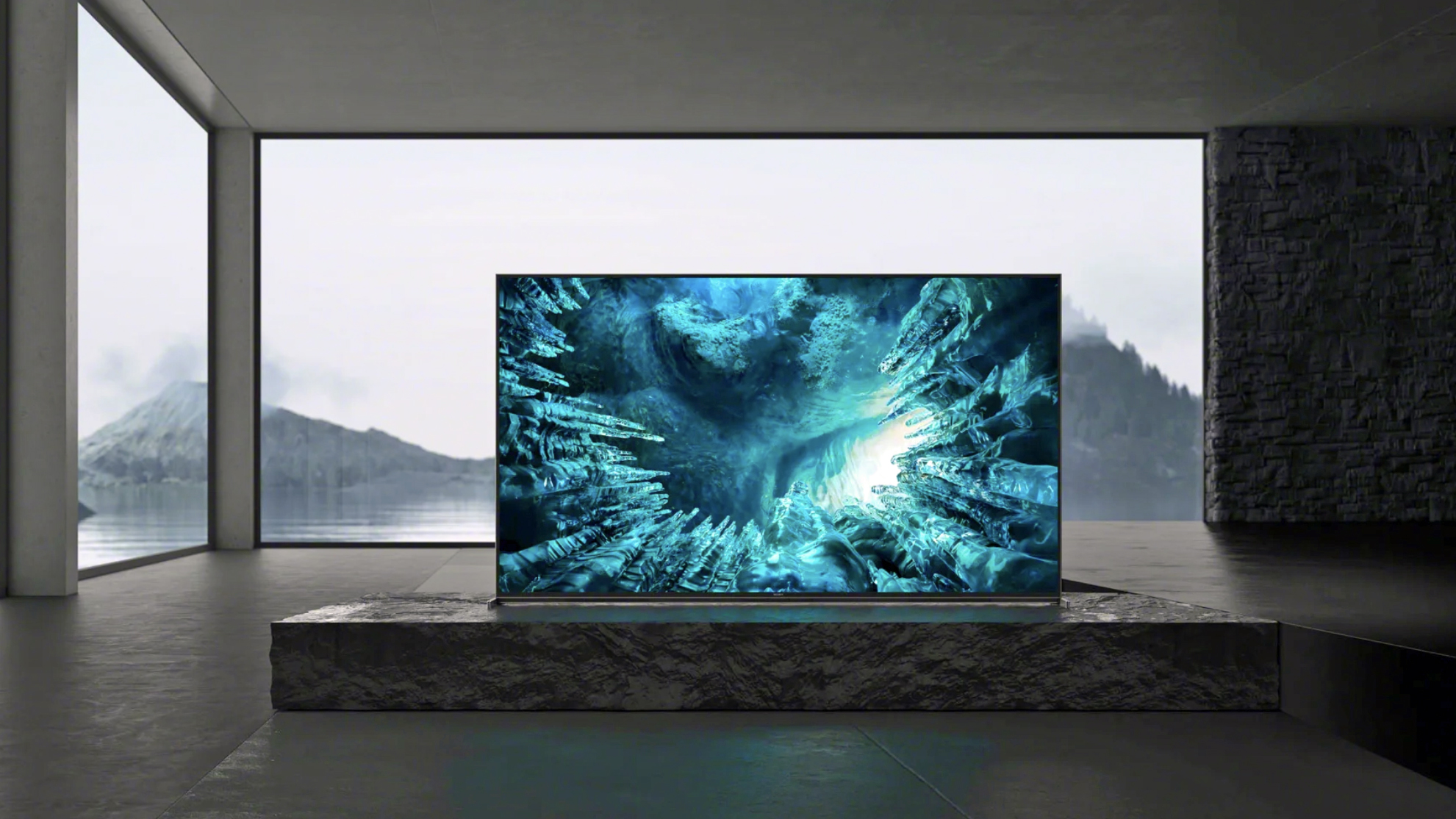
Sony Z8H 8K LCD (available in 75, 85 inches): Sony's flagship 8K display was one of two new sets shown off at CES this year, with an X1 Ultimate processor, 4K video at 120Hz, Dolby Vision / Atmos, Netflix Calibrated Mode, and even moveable feet for easy placement in your home. Its new 'frame tweeters' should enhance Sony's Acoustic Surface Audio+ tech, too.
Pricing starts at $5,999 / £5,999 for the 75-inch model, going up to $8,999 / £8,999 for the 85-inch – which is a good sight cheaper than last year's Z9G model. Buyers in Australia only get the larger size, which will set them back AU$18,999.
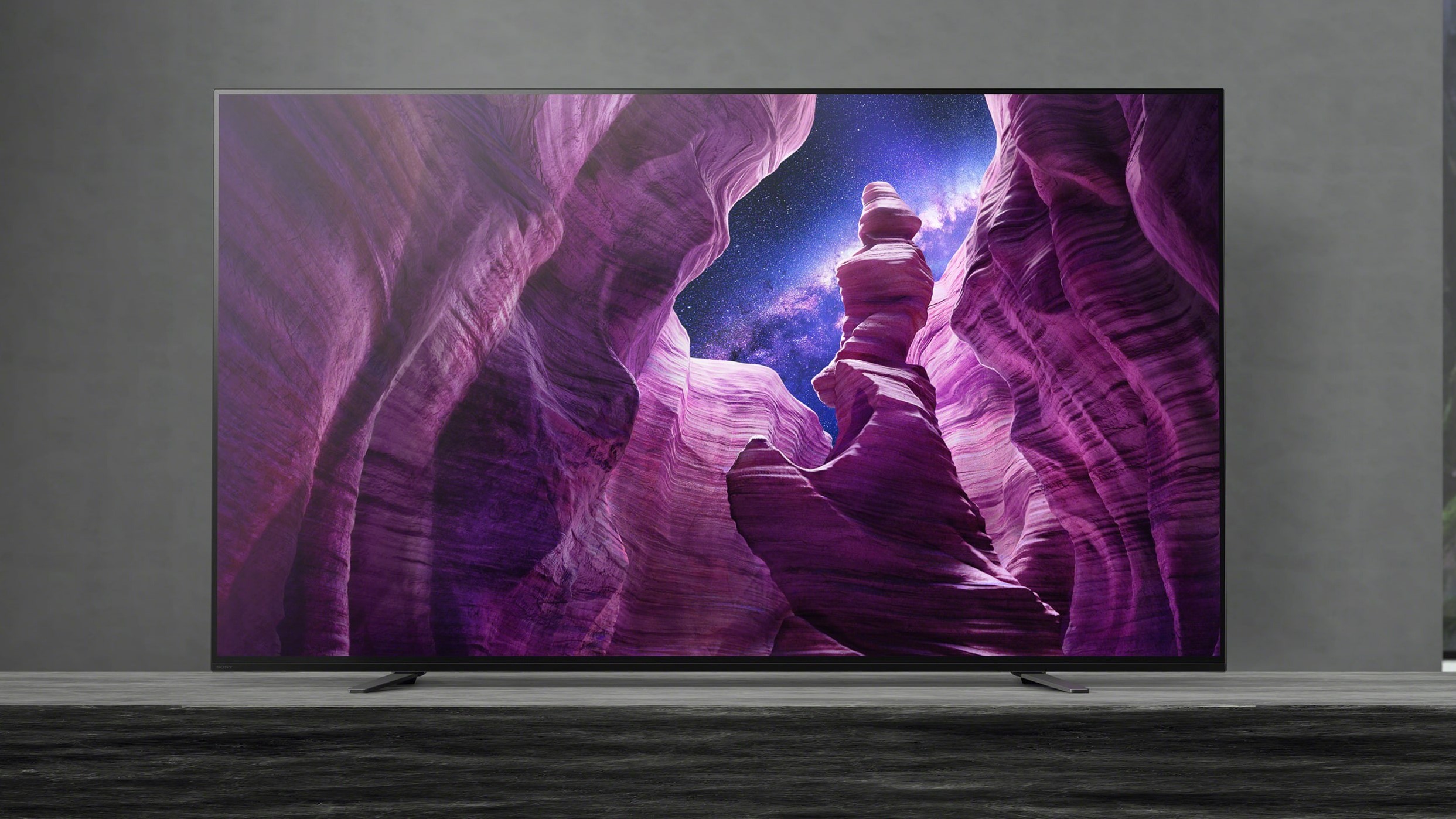
Sony A8H 4K OLED (available in 55, 65 inches): This 4K/HDR display may have lower specs than the Z8H flagship, but it's still a heavyweight in Sony's 2020 TV lineup. Its OLED panel will ensure deep blacks and incredible brightness control, with the X1 Ultimate processor, Dolby Vision / Atmos support, and Netflix Calibrated Mode to make it shine. This year's OLED also gets Sony's X-Motion Clarity technology for the first time, which should help smooth out fast-moving scenes.
The A8H retails at $1,899 / £1,799 for the 55-inch, and $2,799 / £2,799 for the 65-inch. It's now on sale, too.
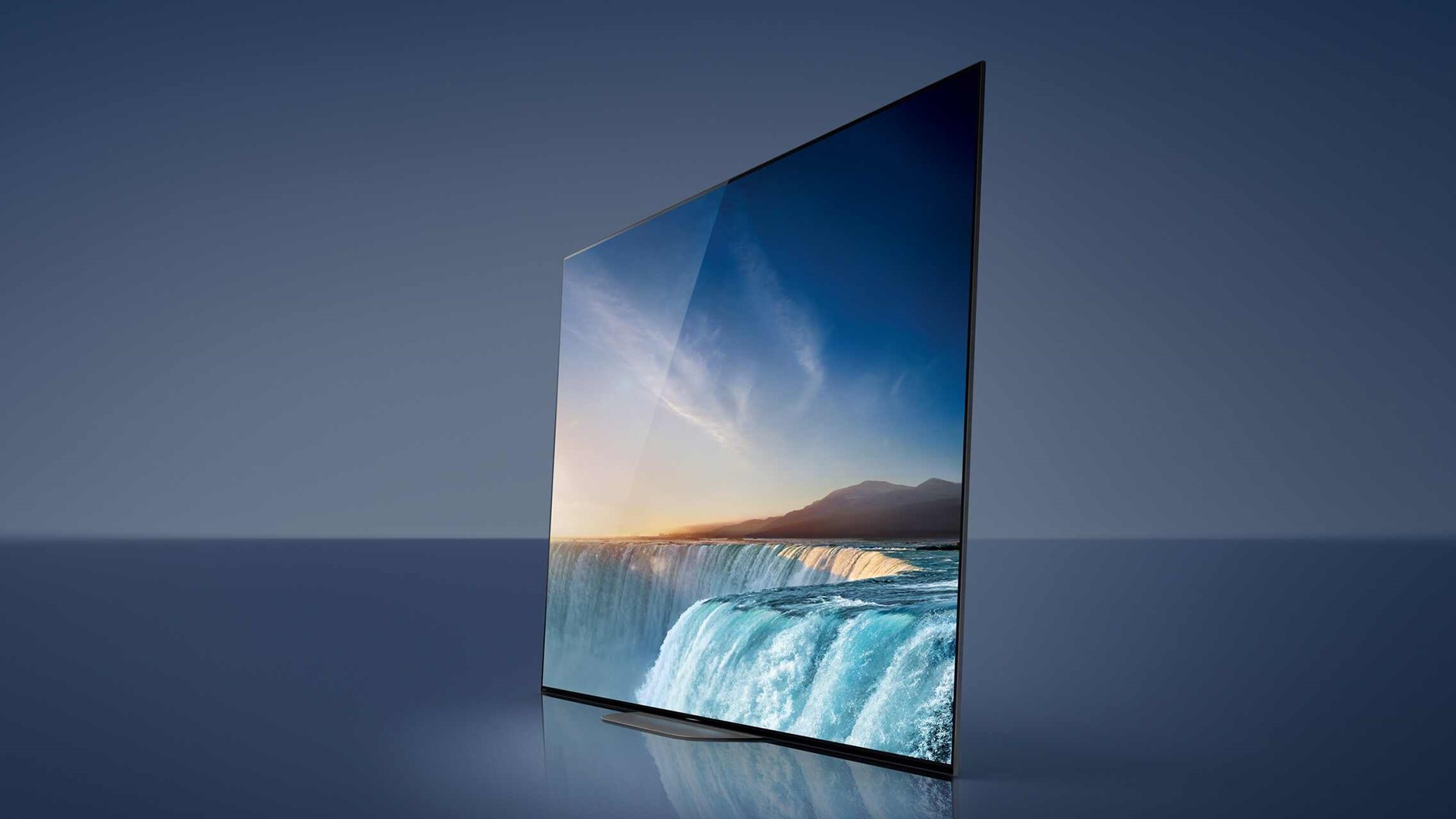
Sony A9G 4K OLED (new 48-inch size): Hold on, isn't this a 2019 model? Correct! But Sony is using the stellar A9G to introduce its first 48-inch OLED display. Other manufacturers such as LG will be doing the same in their TV ranges, but Sony will still be one of the first few doing so. It's now available to preorder for £1,799 in the UK, with a similar $1,799 pricing expected in the US shortly.
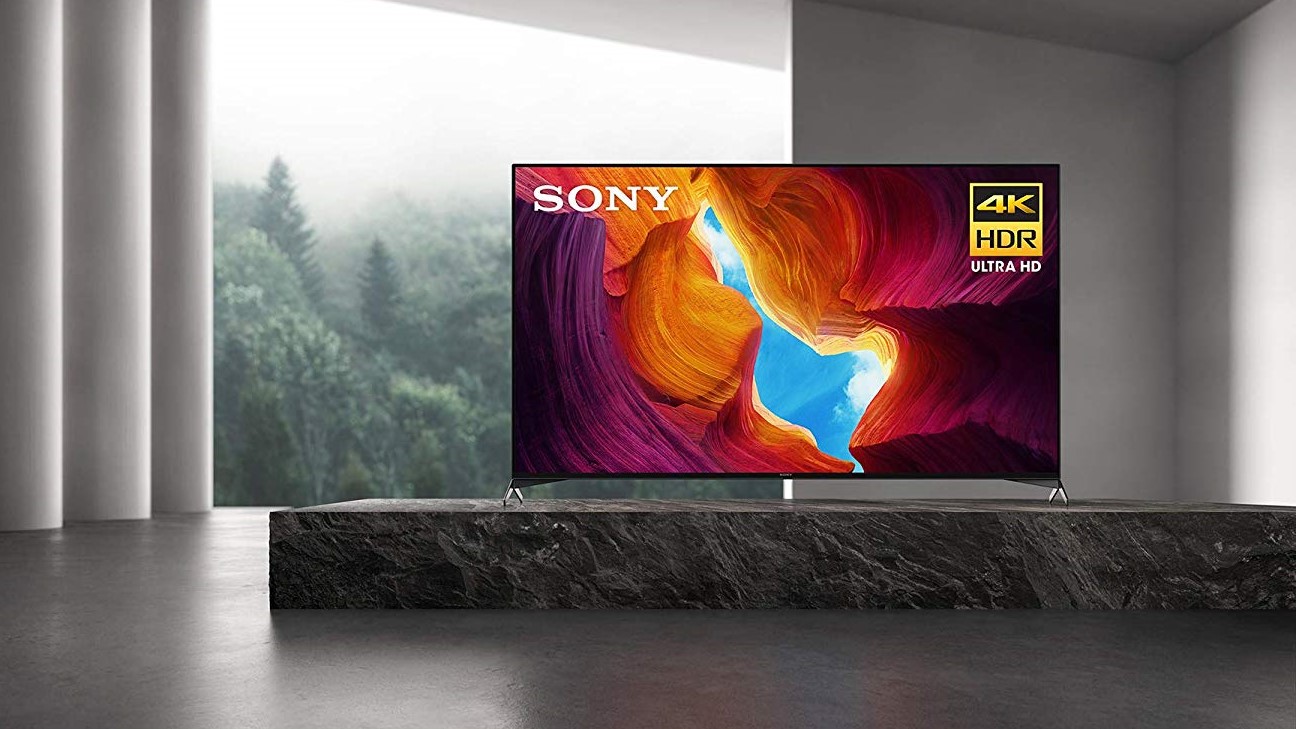
X950H 4K LCD (available in 49, 55, 65, 75, 85 inches): Another LCD set with the X1 Ultimate processor, Dolby Vision / Atmos, and the Sound-from-Picture Reality tech for pinning audio to its source onscreen. The 55-inch, 65-inch, and 75-inch models have a flush design with minimal bezel, too.
Pricing starts at £1,199 / $999 for the 49-inch size, with successive sizes costing £1,599 / $1,399, £1,999 / $1,999, and (a considerably higher) £3,199 / $3,499 respectively. The largest 85-inch model is priced at £3,999 / $4,499 too.
Sony is making a number of improvements this year like the expansion of X-Wide Angle technology to the 55- and 65-inch models and improved Acoustic Multi-Audio, one of the biggest issues we had with last year’s X950G.
X900H 4K LCD (available in 55, 65, 75, 85 inches): A 4K/HDR set that uses the less advanced X1 processor. You won't get as advanced picture processing, but you still get the same format support and full-array local dimming for detailed brightness control.
US models: XBR-55X900H, XBR-65X900H, XBR-75X900H, XBR-85X900H
UK models: KD-55XH9005, KD-65XH9005, KD-75XH9005, KD-85XH9005
(Image credit: Sony)
X800H 4K LCD (available in 43, 49, 55, 65, 75, 85 inches): Same X1 processor as above, but without the full array local dimming – meaning brightness won't be as consistent. UK shoppers will be able to choose between the XH80, XH81 and XH85, with each varying slightly in the design, feet, and sizing.
The 43-inch version will cost $699 / £649 (around AU$1,150), the 55-inch will come in at $999 / £949 (around AU$1,650) while the 65-inch and 75-inch come in at $1,199 / £1,099 (around AU$1,980) and $1,799 / £1,899 (around AU$2,970), respectively, and the range-topping 85-inch X800H at $2,699 / £2,499 (around AU$4,450). These prices are for the XH80 model, with the XH81 and XH85 varying only slightly.
US models: XBR-43X800H, XBR-49X800H, XBR-55X800H, XBR-65X800H, XBR-75X800H
X70 4K LCD (available in 49, 55, 65 inches): Likely the cheapest 4K/HDR set in the Sony 2020 TV lineup, this UK-only set ditches the Dolby Atmos and Dolby Vision support for simpler television offering. Expect lower-spec processing too.
The X70 starts at just £599 (around $740 / AU$1,220) for the 43-inch model, with additional 49-inch, 55-inch, and 65-inch sizes available – at £699 (around $860 / AU$1,430), £799 (around $990 / AU$1,630) and £899 (around $1,110 / AU$1,840) respectively.
UK models: KD-49X7052, KD-55X7052, KD-65X7052
Everything you need to know about the best TVs of 2021:
Best TV 2021: the best flatscreen televisions from the past year