Samsung has now gone live with its Black Friday sale, offering a host of big savings on smartwatches, headphones, handsets and more. But, for anyone after a new smartphone, it's a collection of discounts on the S21 series which are most interesting.
Samsung has heavily discounted all three Samsung Galaxy S21 devices, including multiple storage sizes on the regular model, Plus and Ultra devices. While they aren't the cheapest prices the handsets have ever fallen, they aren't far off.
For most people, it is the discount on Samsung Galaxy S21 deals which is most interesting. Samsung has brought the price down to £649 (£120 off) - only £30 off the lowest price ever.
Alternatively, the saving on the Galaxy S21 Ultra is really exciting. It's a rarely discounted device and the £180 saving brings it all the way down to just £969. Finally, you can also get £150 off the Galaxy S21 Plus as well.
You can also get these exact same discounts by going through Amazon. With stock issues affecting these devices pretty frequently, it might simply come down to which retailer has it available.
Samsung Galaxy S21 deals: Black Friday discounts
Samsung Galaxy S21 | SIM-free |£769£649 Samsung has a big early Black Friday sale price for the Samsung Galaxy S21, knocking £120 off the price tag. While this isn't the lowest price it's ever fallen, it isn't that far off. As the cheapest of three devices, this will likely be the most interesting for most people.
Samsung Galaxy S21 Plus | SIM-free |£949£799 The Samsung Galaxy S21 Plus has a slightly larger saving with £150 being knocked off the price. That makes this almost the same price that you would normally pay for the Galaxy S21. However, it is worth noting that there aren't that many differences between this and the S21. If you're not worried about having a slightly smaller phone, the S21 will probably be the better choice.
Samsung Galaxy S21 Ultra | SIM-free |£1149£969 One of Samsung's most powerful devices, the Galaxy S21 Ultra is rarely discounted. In this early Black Friday sale, you can get this flagship handset for just £969. That's a saving of £150 and one of the cheapest prices we've seen on the device since it launched at the start of this year.
Welcome to the madcap full trailer for the satire with Leonard DiCaprio, Jennifer Lawrence, Meryl Streep, Jonah Hill, Timothee Chalamet and Tyler Perry.
Welcome to part five of our series of articles designed to help you understand the flow of money through different types of crypto assets. Over the course of this series of articles, we’ve examined historical trends which appear to drive a predictable sequence of investor behaviours following a Bitcoin price rally. Read on if you’re new to the series, or skip directly to How to prepare for alt season if you’ve followed the series.
Part one of this series examined why Bitcoin tends to be the first to move, its power to usher first-time crypto investors into the fold and how that has been shown to trigger the flow of money we are discussing in this series.
Part two looked at why Ethereum tends to be next to move. We explained that this is primarily due to its sheer size (Ethereum is the 2nd biggest crypto asset by market cap) and because it supports an entire ecosystem of applications and services.
Partsthree and four examined how, in 2021, we saw several large-cap altcoins keep pace with Ethereum rather than rallying after Ethereum’s price spike, as they have in the past. This can mainly be attributed to the fact that the large-cap altcoin space is now a larger and more diverse sector, which includes several real competitors vying for Etheruem’s throne as the king of smart contracts.
Now, within the span of 2 weeks, we’ve seen Ethereum, Solana and Polkadot break their all-time highs and explore previously uncharted price ranges. Large cap altcoins moving together like this is considered a good sign that the next phase of the crypto price cycle may be upon us. This phase is called an alt season.
Given that an alt season is characterised by multiple altcoins simultaneously experiencing rapid upward price movements, how can the average crypto investor ensure that their portfolio is in a position to benefit? Let’s take a look.
How to prepare for alt season
Alt season is the crypto term for a period where alternative coins outperform Bitcoin, presenting a far wider range of investment opportunities than a focussed Bitcoin rally. For many, a winning strategy is simply going all-in on the one blockchain technology that they believe has the most potential. Making that decision requires a substantial amount of research and a deep understanding that extends beyond just Bitcoin and Ethereum.
If only there was a way to benefit from alt season without having to lock yourself away for weeks to research an expanding list of disruptive blockchain technologies.
Well, the good news is, there is.
It’s called diversification, and in this article, we’re going to look at why that’s not just a word that Wall Street bankers use.
What heralds alt season?
First-time crypto investors tend to buy Bitcoin because it’s the least volatile and best-known cryptoasset in the market. For many, moving money out of Bitcoin and into more volatile altcoins is scary. So it’s important to consider objective, verifiable data when deciding whether or not an alt season really is playing out.
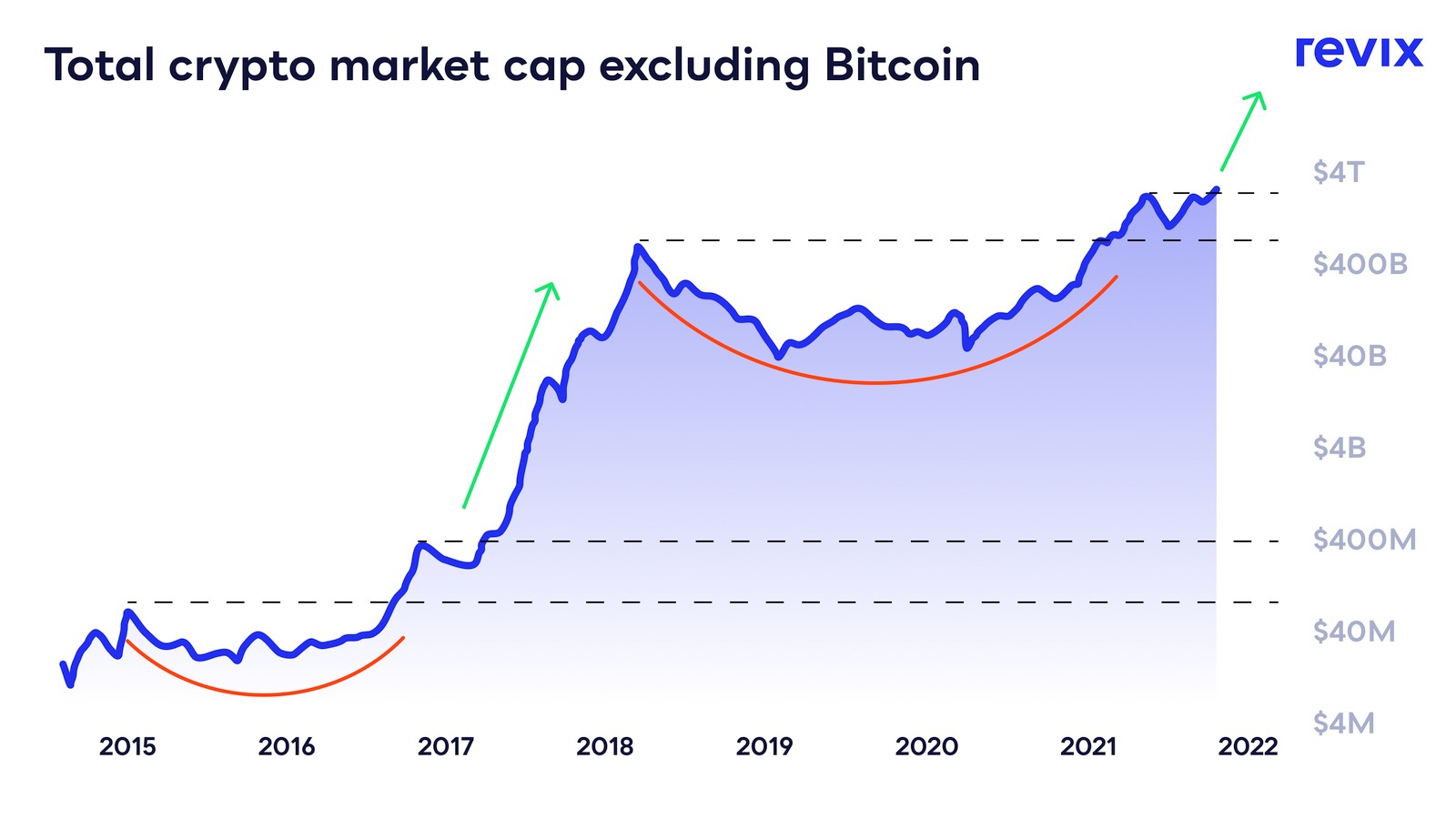
The graph below shows us the total crypto market cap - or the total value of all cryptoassets - excluding Bitcoin. In other words, the line shows the value of all altcoins combined over time.
(Image credit: .)
At first glance, it’s clear that this graph is following some sort of repeating pattern. We can see startling similarities between the two highlighted periods, namely, 2014-2018 and 2018-present.
The 2014-2018 period shows an accumulation phase (red line), followed by an alt season (2017 price rise). We can see from the above graph that a similar accumulation phase has taken place in the 2018-2021 period. What’s more, we are currently in the same stage of the crypto price cycle as we were when the 2017 alt season kicked off.
If the pattern continues to follow the shape laid out in 2014-2018, then it could mean that this is only the beginning of yet another alt season.
Why it’s hard to pick a winner
In just 4 months, Solana’s price has shot up 574%, while rival Cardano has grown by just 52%. While investors who bought into Solana before its epic price rally are no doubt overjoyed by their returns, they would invariably have had to buy in without any real certainty that Solana would outperform a close competitor like Cardano so resolutely.
Every alt season has seen a small number of altcoins set price growth records, while others see more moderate gains. The fact is, even for seasoned analysts and market researchers, predicting which altcoin is going to outperform all others involves some element of luck.
(Image credit: .)
What’s more, if a new cryptoasset manages to meet the criteria that Revix’s bundles are based on, Revix will automatically reweight the bundle, keeping your portfolio bang up to date with the fast-moving world of cryptocurrencies.
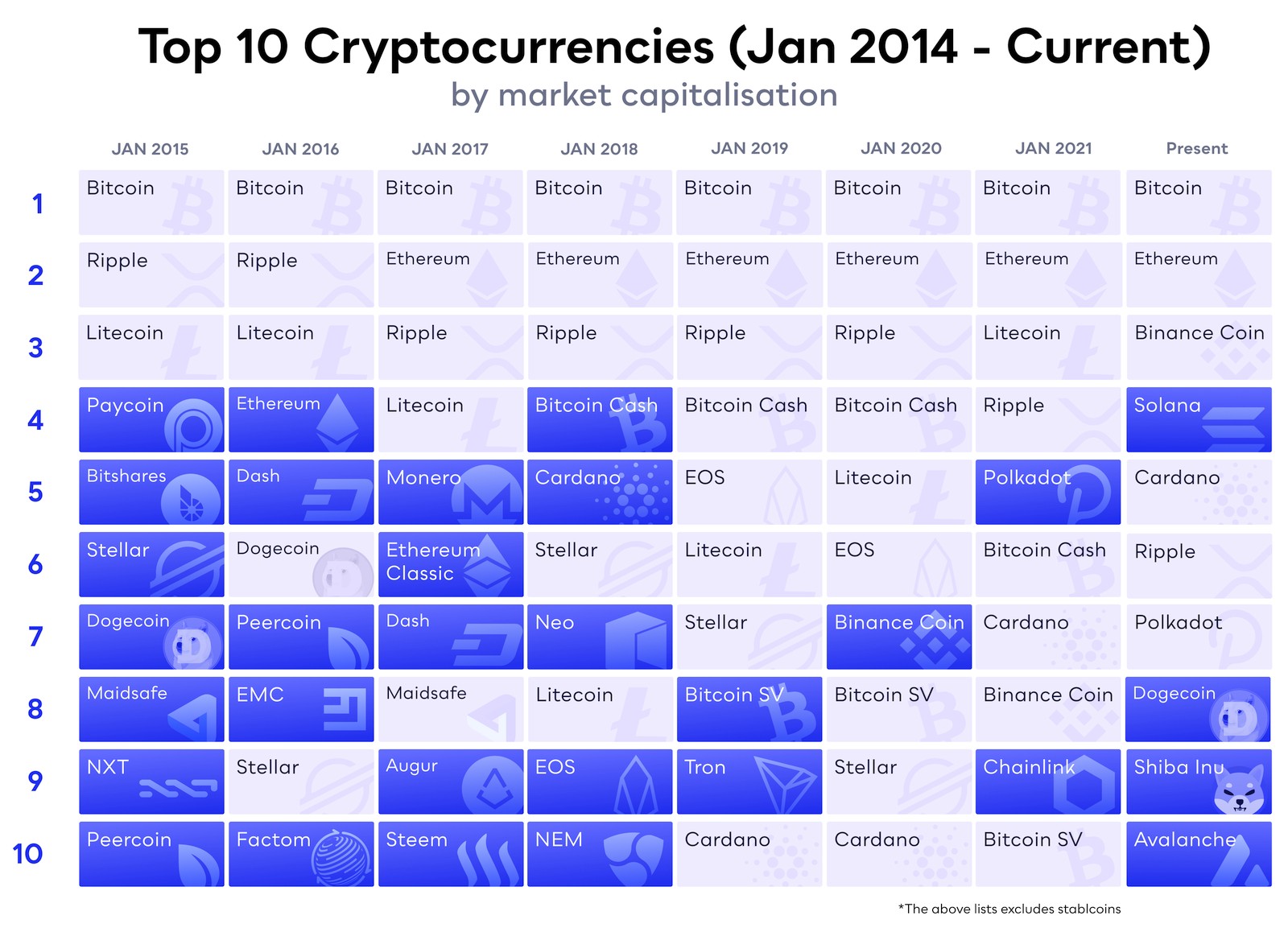
The table above shows the top 10 cryptoassets by market cap from 2015 to present day. The cryptoassets highlighted in blue represent the newcomers to the Top10 when compared to the previous year. It’s remarkable to see how significantly this list has changed year on year. This table shows a clear demonstration of just how difficult it is to accurately predict which cryptoasset will succeed or which will become a fly-by-night coin.
So how do we pick the winners? We don’t have to.
Diversification is easier than you think
In the world of cryptoassets, diversifying simply means investing in several different cryptoassets. By doing this, you are spreading your risk across multiple investments with exposure to various sectors rather than putting everything you have into a single cryptoasset.
The idea is that by exposing your portfolio to multiple cryptoassets, you’ll stand to benefit from uncorrelated returns.
Sure, you won’t realise the same returns as you would have if you went all-in on the highest performing cryptoasset, but on the flip side, you won’t risk having all your eggs in one basket. Instead, via diversification, you spread the risk and benefit from a far less volatile ride along the way.
Building a diversified crypto portfolio still requires that investors do their own comprehensive research, decide which cryptoassets are best to hold for exposure to certain market sectors, and constantly reweighting their portfolio to keep in line with the fast-paced nature of the crypto market. This is clearly neither a simple task nor a time-efficient task.
Revix, a crypto investment platform based in Cape Town, was founded to solve that very problem. In addition to making it easy and safe to buy individual cryptoassets, Revix’s claim to fame is its crypto Bundle offerings.
In the same way, you would buy into the JSE Top40, Revix bundles allow you to invest in a group of cryptocurrencies seamlessly.
Revix’s empowers users to invest in 3 different theme-based bundles:
The Top 10 Bundle is like the JSE Top 40 or S&P 500 for crypto and provides equally weighted exposure to the top 10 cryptocurrencies making up more than 75% of the crypto market. This bundle includes all the cryptocurrencies mentioned in this article and has significantly outperformed Bitcoin over the last 12 months.
The Smart Contract Bundle provides equally weighted exposure to the top 5 smart contract focused cryptocurrencies like Ethereum, Solana and Polkadot that enable developers to build applications on top of their blockchains, similar to how Apple builds apps on top of its OS operating system.
The Payment Bundle provides equally weighted exposure to the top 5 payment focused cryptocurrencies looking to make payments cheaper, faster and more global. These cryptos include the likes of Bitcoin, Ripple, Stellar and Litecoin.
Revix’s bundles have outperformed an investment in Bitcoin alone over a one-, three- and five-year time period.
(Image credit: .)
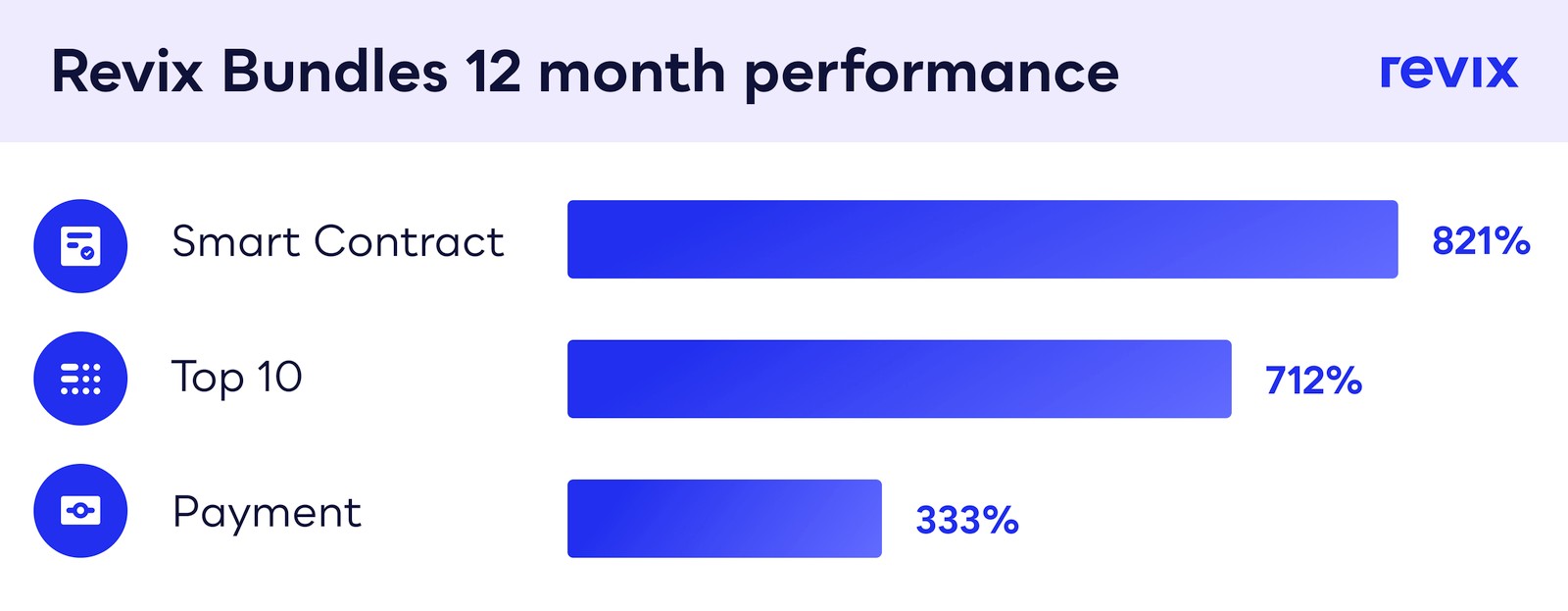
This graph shows the performance of Revix’s Bundles over the last year.
The Smart contract Bundle (+821%), Top10 Bundle (+712%) and the Payment Bundle (+333%) have all outperformed Bitcoin (+317%) over the past year without the investor having to do any research or rely on any guesswork.
And It gets even better!
Revix Bundles are built on a direct indexing model, which means, unlike an ETF, Revix purchases and holds the underlying assets on your bemillhalf. It was also the first crypto platform in South Africa to opt into and pass a third-party audit of these assets, conducted by Mazars.
So not only do you gain diversified exposure to alt season at the click of a button, but you also get the security that an audited company is looking after your assets.
Email has become an indispensable, valuable tool for marketers and cybercriminals know it, which is why it’s also become a favorite target. With an estimated 4.6 billion email users by 2025, email will remain an important marketing asset — its high ROI can generate $42 for every $1 spent.
About the Author
Seth Blank is the Chief Product Officer at Valimail, an identity-based, anti-phishing company. A serial entrepreneur and startup executive with multiple acquisitions under his belt, he brings 20 years of experience in building successful teams and scalable, profitable technologies. Seth chairs multiple industry committees building email authentication technologies.
As brands continue using email in their digital marketing campaigns, it’s never been more critical to address the challenge of protecting email from hackers. Without a robust security system and process in place, brands run the risk of incurring serious damage to their reputation — not to mention their bottom line.
The most effective way companies can protect themselves and their customers from cyber attacks, like malware, phishing scams and spoofing, is to incorporate email authentication into their marketing tech stack.
It’s time to up your email security game
Email marketers can tap into a number of strategies for:
Addressing and handling mailbox policy changes like the recent Mail Privacy Protection updates rolled out by Apple
Improving deliverability and increasing open rates
Maintaining consumer privacy via regulations such as CCPA and GDPR
The best strategy for keeping emails running smoothly? One protocol — the gold standard for strong email authentication — is Domain-based Message Authentication, Reporting & Conformance, or DMARC. This effective tool ensures only brand-authorized emails reach their intended recipients. It adds a layer of protection preventing unauthorized users and cybercriminals from targeting customers and employees with malicious emails that include phishing links, malware, spoofs, or suspicious attachments.
While all marketers believe their emails are secure and useful (and that their target consumers want to receive them),when brands adopt DMARC, they see an average 10% increase in email deliverability.
Using the power of DMARC to authenticate email
All brands, regardless of size, can attract unwanted attention from cybercriminals. In 2020, business email compromise (BEC) attacks impersonating trusted users within organizations cost businesses $1.8 billion in financial losses, according to the US Federal Bureau of Investigation’s Internet Crime Complaint Center.
By adopting DMARC, companies protect themselves from costly phishing attacks, spoofing, malware and other scams. DMARC enables mailbox providers to reliably assign a reputation to an unauthenticated identity — and treat this type of mail differently from authorized mail. By implementing DMARC, brands ensure authorized mail gets the treatment it deserves, whether it’s routed to the inbox or spam folder or rejected outright depending on sending habits.
The greatest benefit, though, comes from DMARC’s ability to improve reputation and deliverability by stopping malicious emails sent under the guise of a brand name.
(Image credit: Shutterstock)
DMARC stops BEC attacks
In 2020, 71% of IT and cybersecurity professionals said their organizations experienced a BEC attack. In this type of phishing attack, hackers spoof the business email accounts of company leaders and executives for financial gain. But it isn’t just individuals impersonated by hackers:
53% of phishing emails appear to originate from bosses or managers
66% of phishing emails display names of individual targets
68% of phishing emails show company names
Because it classifies as unauthenticated any cybercriminal’s attempt to use your domain, DMARC effectively blocks these untrustworthy emails from even arriving to intended recipients’ inboxes. The Department of Homeland Security (DHS) has mandated the implementation of DMARC for all US Civilian federal government agencies, in recognition of its effectiveness in stopping BEC attacks.
Build brand resilience when security and marketing collaborate
Collaborations between marketing and security leaders benefit the brands they support. Marketing teams bring insights into the strategies, tactics and tools they use to drive conversions and increase revenue. Security personnel shed light on the importance of using stricter security controls to comply with regulations, fend off phishing and BEC attacks, and avoid direct or indirect financial consequences of a successful email breach.
A multifaceted approach can empower each department to understand the other’s goals, motivations and priorities while also securing buy-in for adopting DMARC as an effective — and necessary — digital marketing tool.
DMARC offers tangible benefits
DMARC ensures emails’ legitimacy by filtering out phishing scams and malicious messages. By preventing hackers from co-opting and using domain names, risks to brands decrease. Organizations publishing a DMARC record for their domains — and actively enforcing that policy on inbound emails sent from external sources — are less likely to experience a breach which can:
Cost significant time and resources to resolve
Damage brand reputation
Erode customer trust
Prompt additional security or audit requirements
Trigger legal action or regulatory fines
The typical email recipient has likely never heard of DMARC or BIMI (Brand Indicators for Message Identification), an emerging email specification enabling the use of brand-controlled logos within supporting email clients and which leverages deployed DMARC protection.
BIMI is intended as a reward for domains publishing a DMARC policy at enforcement. The email community wants more domains publishing DMARC records because the ecosystem benefits. The organizations behind BIMI’s creation developed the email specification in the hope that logos would drive engagement, including open rates and clicks.
DMARC and other authentication technologies are the email equivalent of driver’s licenses and other government-issued identification. This tech offers a way to verify the claimed identity associated with the email address appearing in a message’s “From” field. Once verified, the identity has attributes reliably associated with it — and those attributes can lead to other benefits (arriving in the intended inbox) or punitive actions (sent to spam or not delivered at all).
DMARC marketers should use these security features to demonstrate their commitment to customer security and efficient communication. And when brands achieve enforcement, they’re assured that anyone sending emails under their name is legitimate.
Managing all of the subscriptions for the various SaaS applications used by SMBs can be a time consuming and tedious process.
To make matters worse, more than half of IT leaders still rely on dated internal tools and manual spreadsheets to track and monitor their subscriptions and renewals according to a survey from Productiv. Due to this, it can be challenging for IT departments to know when renewals will take place as well as how much is actually being spent on software licenses.
For this reason, HP has announced a subscription management service designed for small and medium-sized companies to enable them to make software investment decisions based on reliable workforce intelligence.
The new HP Subscription Management Service provides easy-to-use license management for Microsoft 365 as well as for the full list of Microsoft cloud subscription services.
HP Subscription Management Service
By using the new HP Subscription Management Service, IT teams gain online visibility of software analytics and usage trending by user, department or geography so they can easily shift and scale their subscriptions as needed.
Meanwhile for channel partners, the service offers a one-stop cloud-based solution that enables them to sell Microsoft 365 and the full Microsoft cloud subscription library to their customers along with licensing analytics and premiere partner support from HP.
HP Subscription Management Service also includes other features that help companies reduce cost and administration overhead while increasing security and compliance. For instance, HP customers can easily flex licenses up or down with simple pay-as-you-go subscription options to ensure that their software spend is the right size for their IT budget.
The new service can also be used by organizations to security their workforce whether employees are working from home or at the office with essential cloud security health checks optimized for hybrid working.
HP Subscription Management Service is expected to be available in France, the UK, Germany and Chile by the end of this year and it will launch in additional countries, including the US, in the first quarter of next year.
If you're to score an early Black Friday deal on Apple's latest and greatest smartwatch - then you're in luck. We've spotted the all-new Apple Watch 7 on sale for $389.99 (was $399) at Amazon. That's the lowest price we've ever seen and a rare discount on a brand new Apple device.
While the $10 discount might not seem like much, the Apple Watch 7 was just released in October, and price cuts on new Apple devices are typically reserved for the official Black Friday deals event. Black Friday Apple Watch deals are always hot sellers, so we'd take advantage of today's discount before it's too late.
Apple Watch 7 (41mm, GPS):$399.99$389.99 at Amazon
Save $10 - The all-new Apple Watch 7 was just released last month, and we've already spotted an early Black Friday deal on the smartwatch at Amazon. Right now, you can find the Apple Watch 7 on sale for $389.99, which is the cheapest deal we've ever seen. This discount applies to the Green and Red sport bands, which are the only colors that are currently in stock.
The all-new Apple Watch 7 was unveiled last month and includes a 70% brighter Always-On display, faster charging, and 20% more screen area, making it easier to use and read. The design also got a refresh with softer and more rounded edges and new sizes of 41mm and 45mm. The Apple Watch 7 still includes all the nifty features of the Series 6 smartwatch, such as blood oxygen monitoring, an ECG app, and activity tracking.
More Black Friday Apple Watch deals
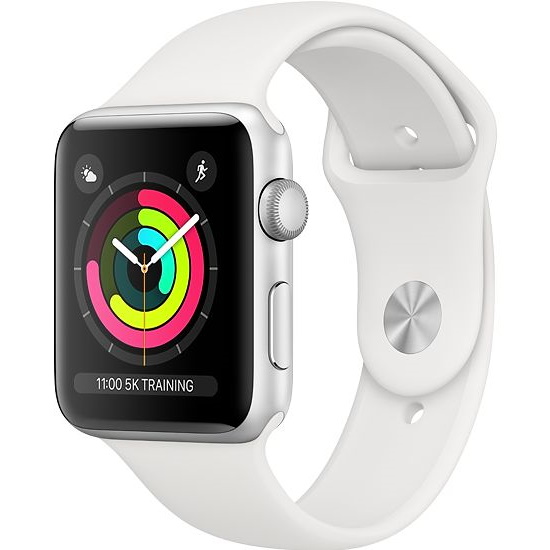
Apple Watch Series 3, 38mm:$229$169 at Walmart
Save $60 - The cheapest Black Friday Apple Watch deal is the best-selling Apple Watch 3 that's on sale for just $169 at Walmart. The smartwatch is currently sold out at Amazon, and this is the best deal you can find right now. Both sport band colors are currently available, so we'd take advantage of this rare deal now before it's too late.
Apple Watch SE (40mm, GPS):$279.99$269.99 at Walmart
Save $10 - Walmart also has the lowest price right now on the budgetApple Watch SE - a great choice if you find the Series 7 a little too expensive for your tastes. If stocks hold up this one could go a little lower. So far, however, this is the best Black Friday Apple Watch deal on this model. Note, this sale is on the Abyss Blue color only currently.
Apple Watch Series 6 (40mm, GPS):$399$349 at Amazon
Save $50 - The Apple Watch 6 has been difficult to find in stock as of late, but we've spotted the Series 6 on sale for $349 at Amazon's early Black Friday sale. That's the best deal you can find right now and just $25 more than the record-low price. Please note, this deal applies to the Red sports band model and is the only color currently in stock.