Sunday, October 10, 2021

Latest Tech News

Two-minute review

Back in 2018, we drove Toyota's first generation Mirai hydrogen fuel-cell electric vehicle (FCEV) alongside MrMobile, and while the technology was interesting, the car was uninspiring to drive, and refueling was a major challenge - even in hydrogen friendly California.

Basically, while the original Mirai got the job done, it was nothing more than an overpriced and compromised hydrogen-powered Toyota Corolla. 

Fast forward to 2021, and Toyota's second generation Mirai hydrogen FCEV is upon us, with sharp new looks, a lower price, a better platform, more range, and updated technology. 

So, does this new Mirai fix the old car's driving and packaging compromises, and - more importantly - has the dismal hydrogen refueling infrastructure improved over the past 3 years? We drove a 2021 Toyota Mirai for a week to find out.

The 2021 Mirai starts at $49,500 before incentives - that's $9,050 less than the previous generation - and it still comes with six years (or $15,000) of complementary hydrogen. 

It's now bigger, built on the same RWD platform as the Lexus LS sedan, with seating for five. Range is has increased 30% increase over its predecessor, while power is up slightly, with 182hp and 300ft-lb of torque.

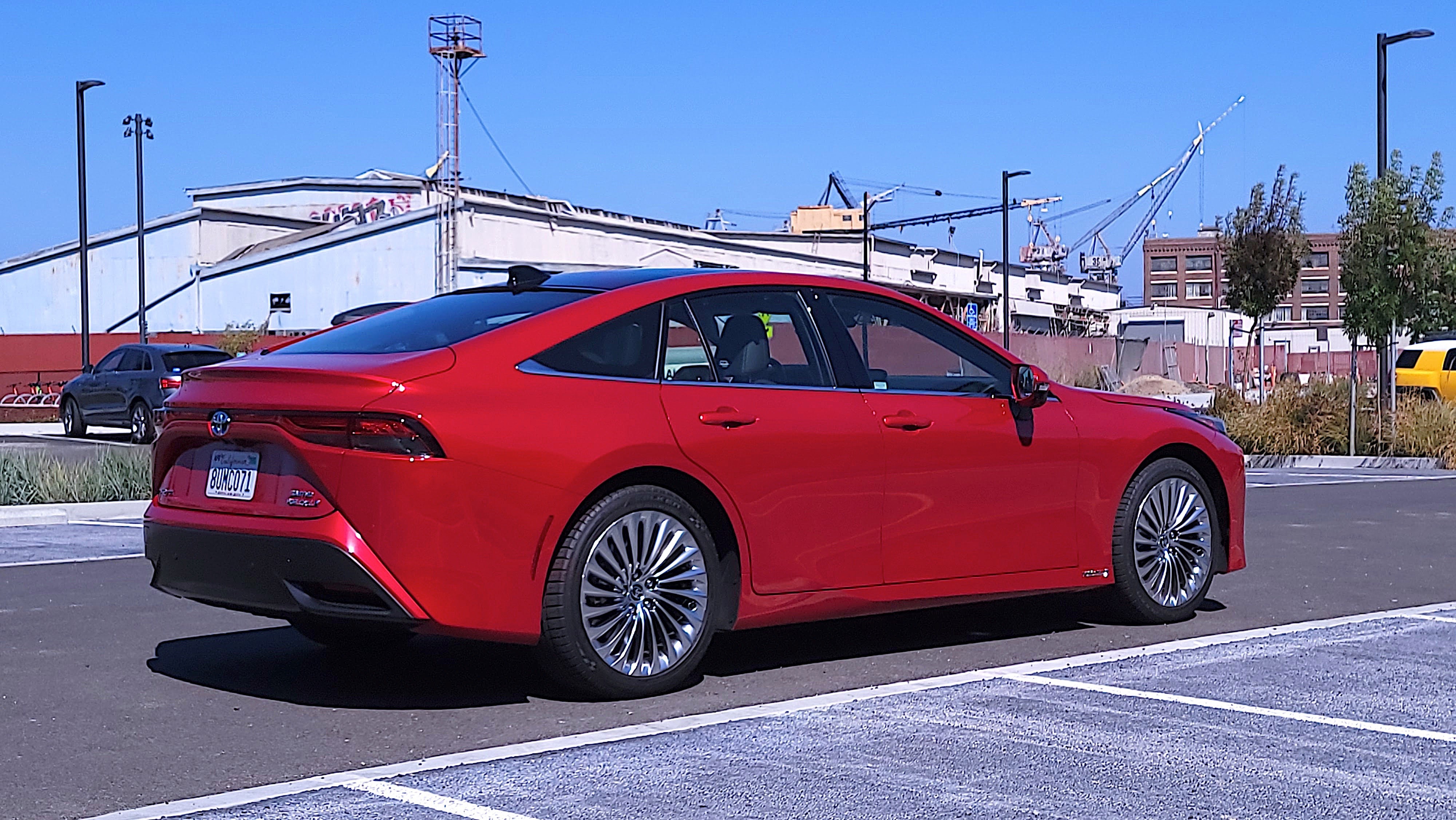
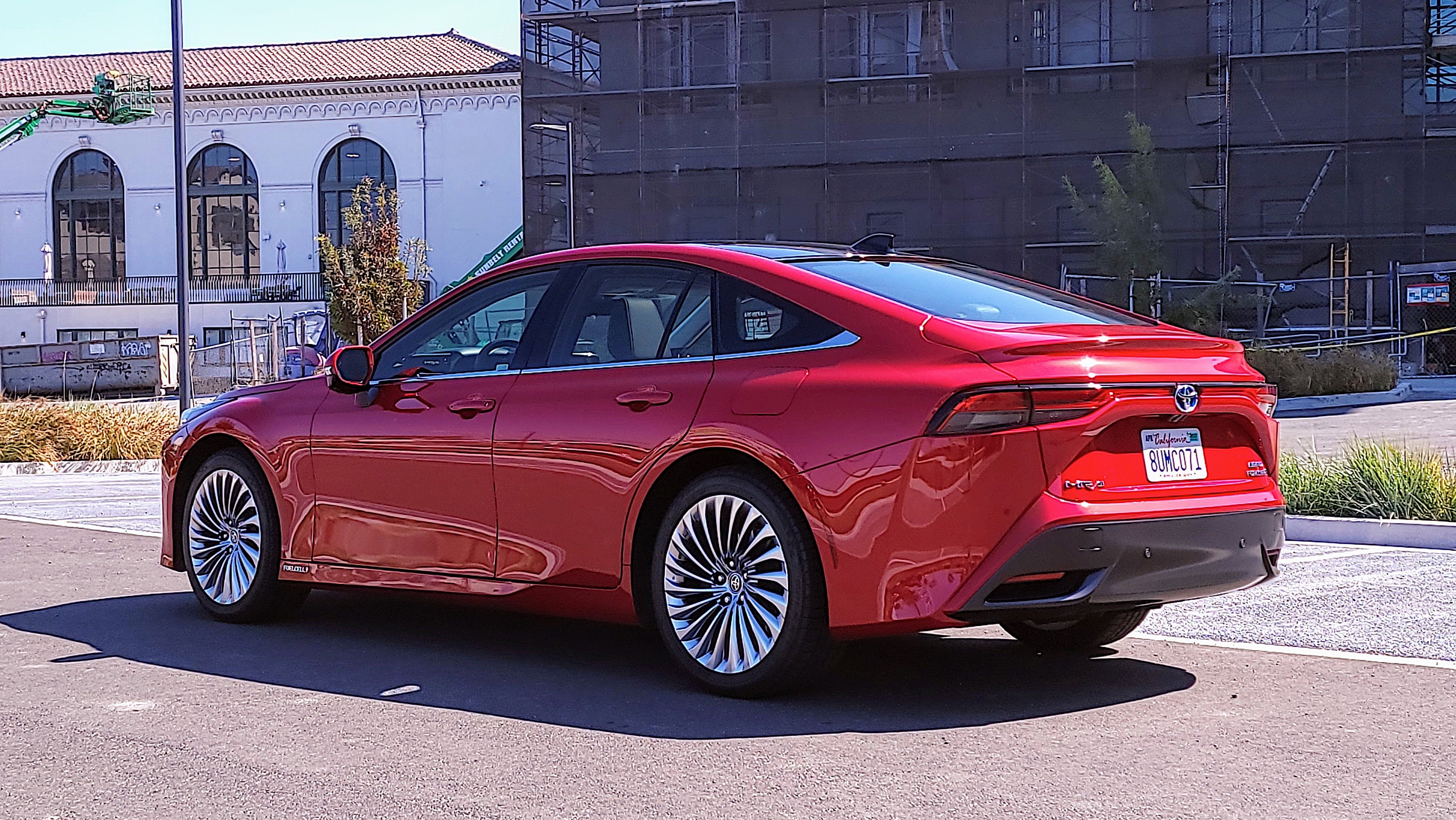
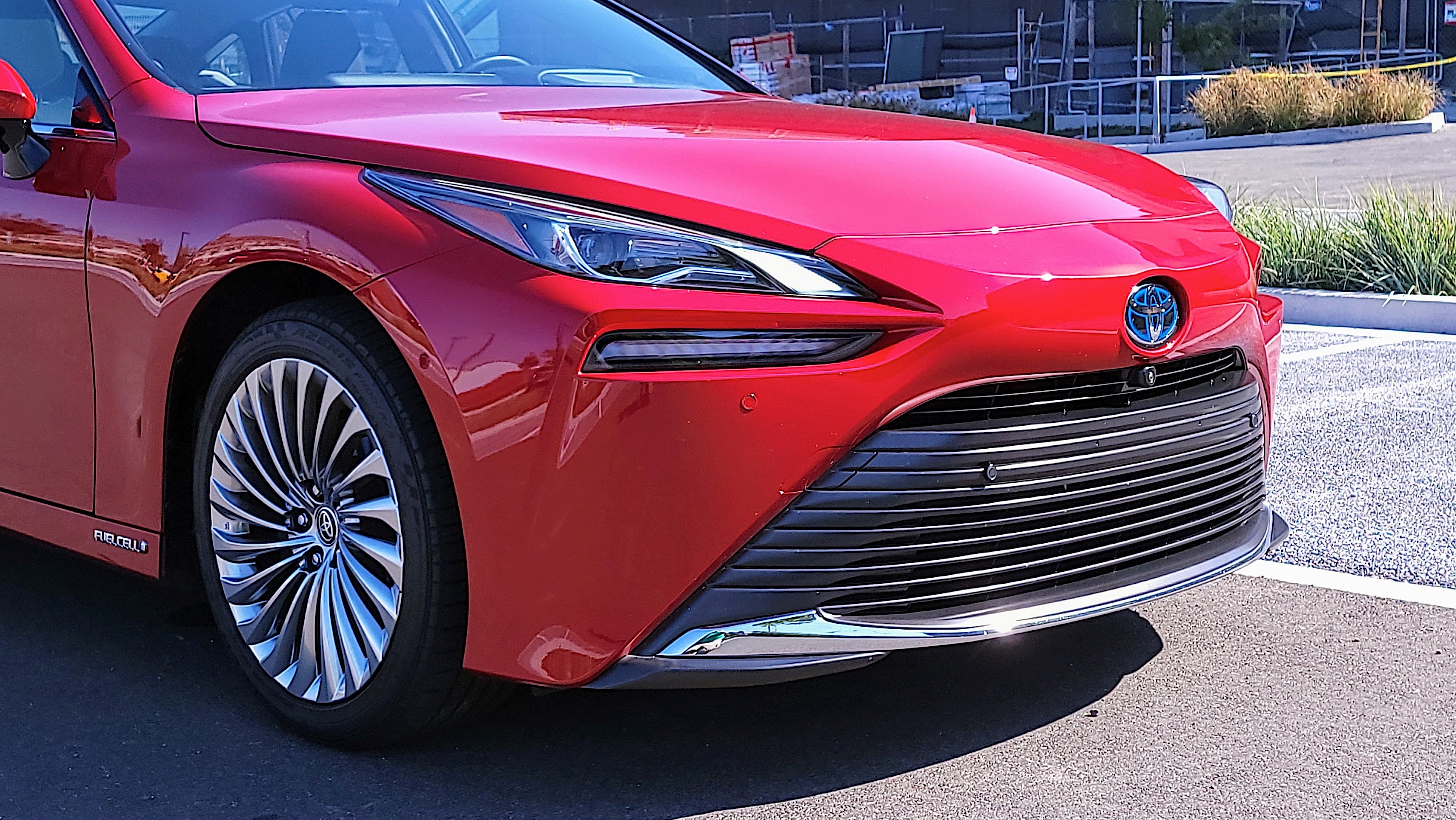
The exterior is modern and sophisticated, and the RWD proportions are outstanding. It’s a gorgeous car from every angle. You're basically getting a Lexus-like exterior without the ugly spindle grille.
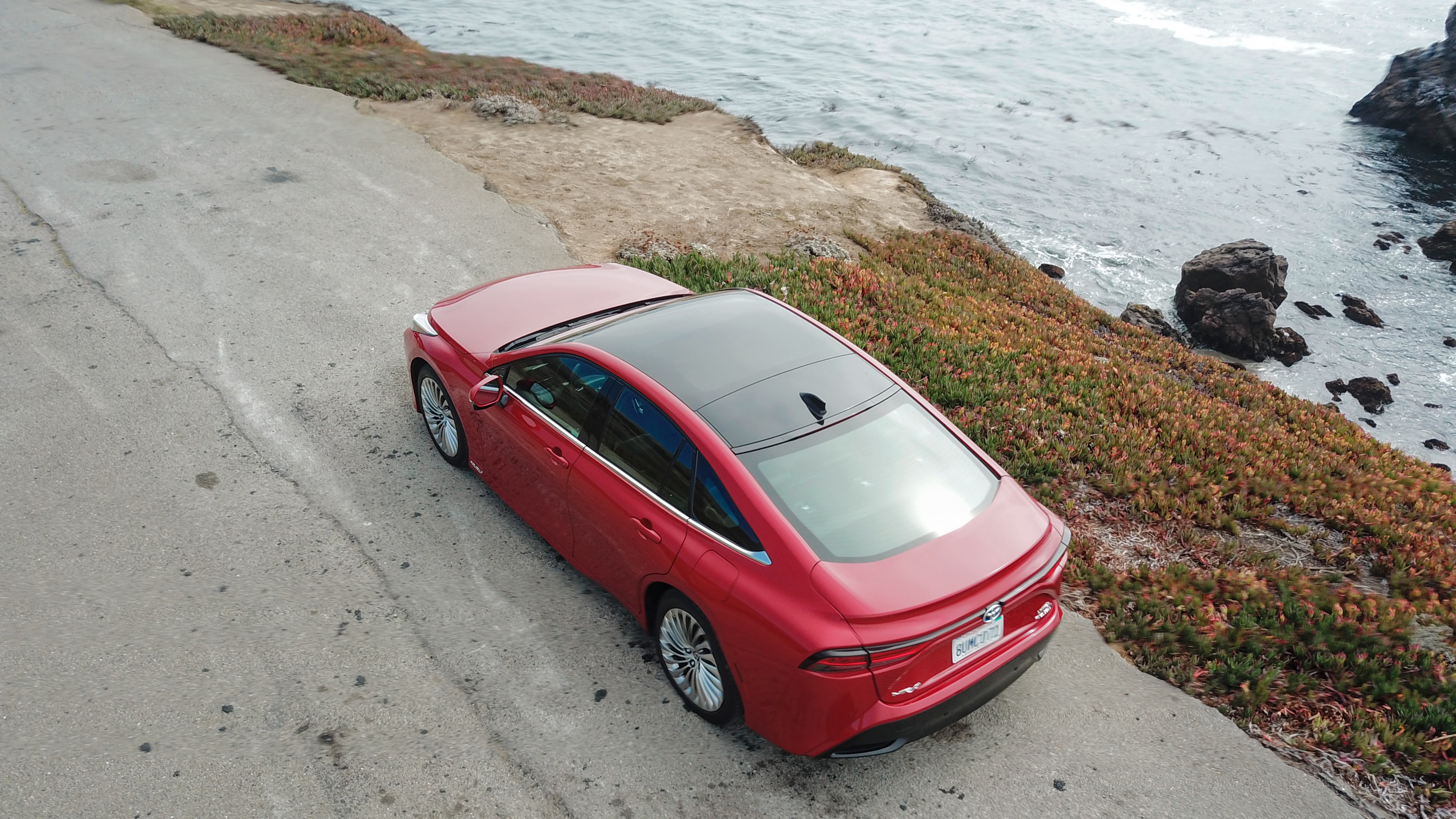
Top-down view of the Toyota Mirai (2021) parked on a coastal road

(Image credit: TechRadar / Myriam Joire)

Inside, it's a different story. There's nothing wrong with materials and build quality, but the interior's Camry-like appearance is busy and uninspired. Despite being whisper quiet, the cabin lacks the luxury of a modern Lexus.

The 2021 Mirai is reasonably spacious inside, but this sense of space is hampered by a high cowl, and by one of the hydrogen tanks, which takes up valuable real-estate, and makes the rear middle seat pretty cramped. 

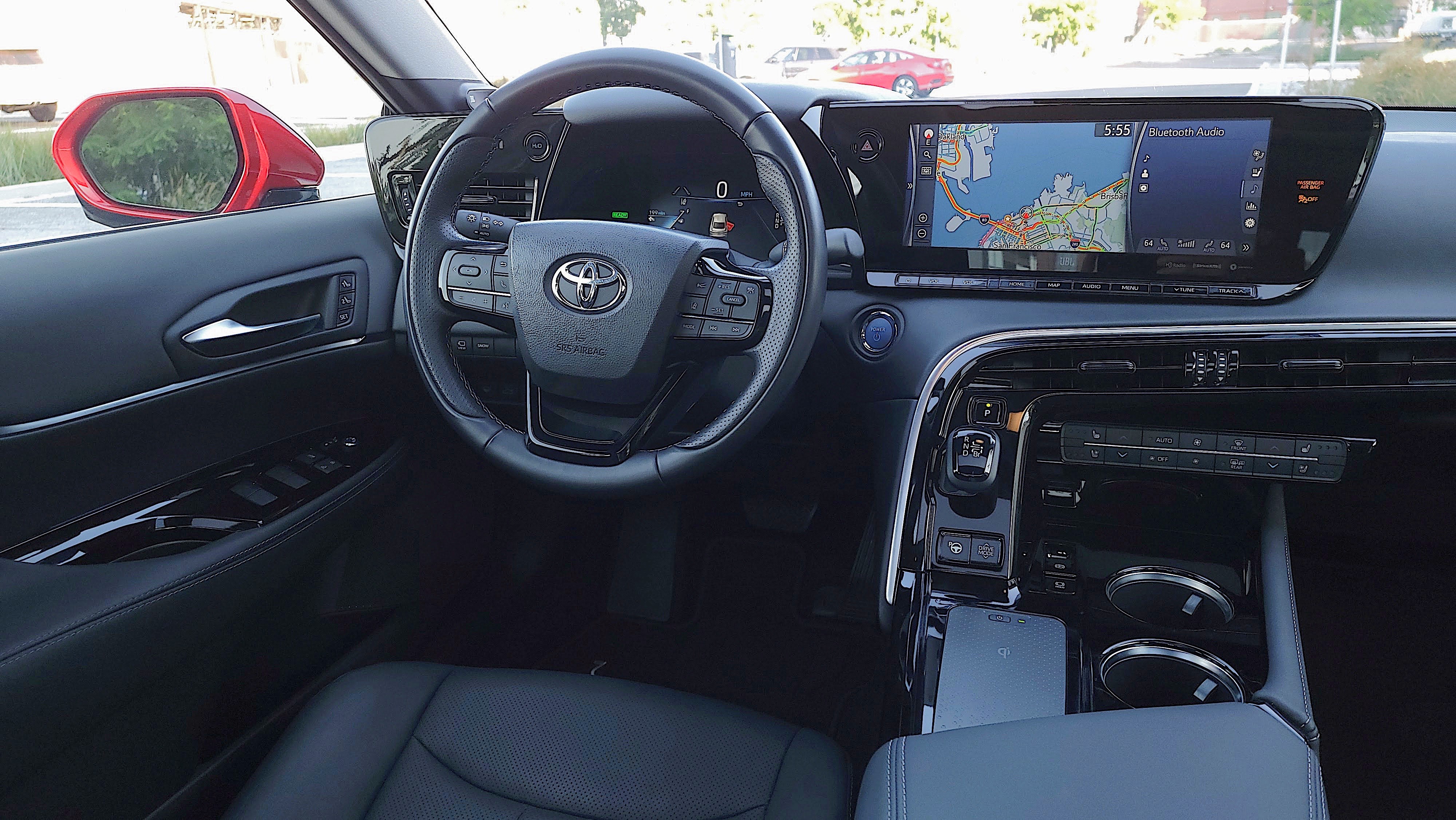
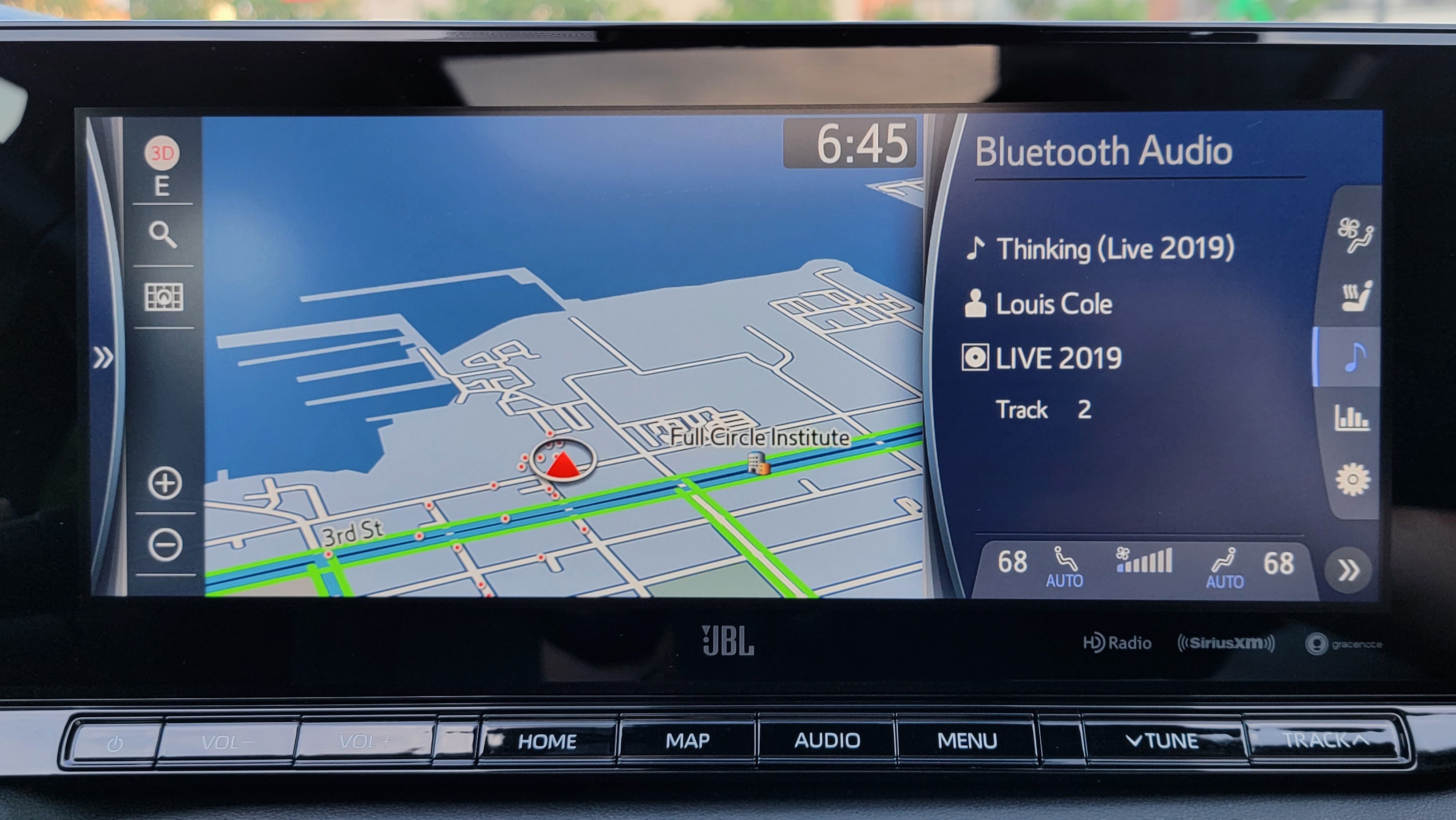
The infotainment system consists of a 13.2-inch touchscreen with navigation and a 14-speaker JBL-branded audio system. Unfortunately, the user interface feels quite sluggish, and looks like it’s from a decade ago.

Thankfully, the 2021 Mirai features Apple CarPlay and Android Auto (both wired), which are the perfect antidote to the built-in infotainment’s clunky user experience. Amazon Alexa integration is also available, along with a Qi-compatible wireless charging pad, and four USB Type-A ports.

The Mirai is definitely tuned for comfort. If that's what you're after, this Toyota delivers. Just don't expect much performance - 0 to 60mph happens in a leisurely 9.2 seconds.

But let's talk about the elephant in the room, and that's the hydrogen refueling infrastructure - or the lack thereof. Despite the San Francisco bay area having over a dozen hydrogen stations, most of them were out of fuel during the week we spent reviewing the Mirai. Hydrogen is also expensive: it costs about $100 to fully refuel. 

Overall, the Toyota Mirai is an extremely comfortable and competent vehicle that looks fantastic, but is let down by an abysmal hydrogen refueling infrastructure. 

While it's definitely interesting, it's simply not exciting. This is a car from an alternate reality where Tesla doesn't exist (or failed), battery EVs never took off, and hydrogen FCEVs are "the next big thing". Problem is, nobody - except Toyota it seems - lives in that reality.
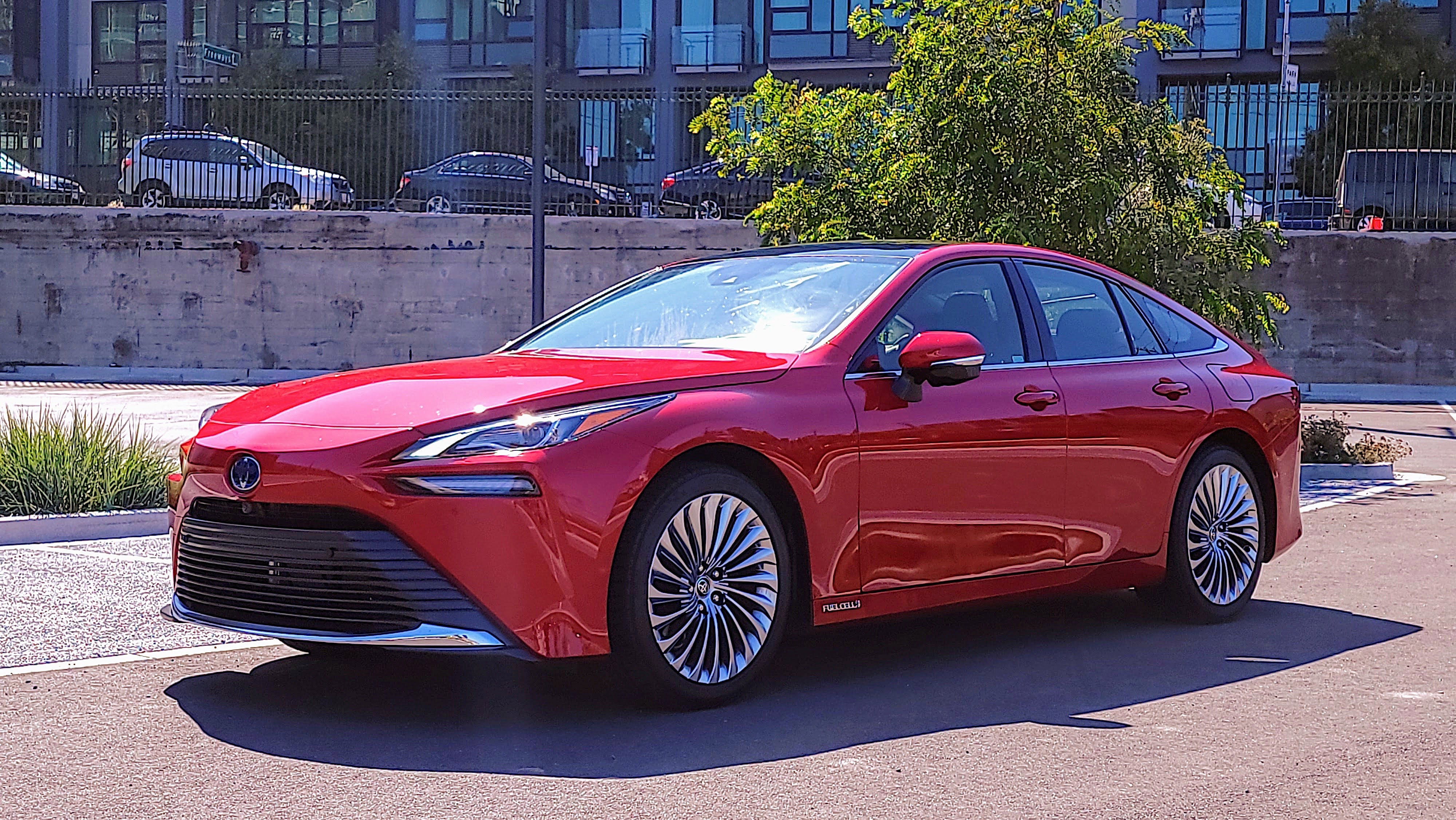
Front view, at an angle, of Toyota Mirai (2021)

(Image credit: TechRadar / Myriam Joire)

Toyota Mirai price and availability

  • $49,500 before incentives
  • XLE and Limited trims
  • 6 years (or $15,000) of free hydrogen

The 2021 Toyota Mirai prices start at $49,500 / £54,920 before incentives. It's only available as a three-year business lease in Australia, and costs AU$63,000. 

In the US, it comes in two trims: XLE ($49,500) and Limited ($66,000). Options include an advanced technology package ($1,410) on the XLE trim and 20-inch wheels ($1,120) on the Limited trim. Toyota also includes six years (or $15,000) of complementary hydrogen.

While the XLE trim is already well equipped, the Limited trim boasts several additional features. 

It adds a color HUD (heads-up display), multiple cameras for a 360-degree view, front and rear parking sensors, self-parking, a switchable digital rearview mirror with Homelink, rear climate, heated and ventilated seats all around, a fixed panoramic glass roof with a power sunshade, a rear window power sunshade, and rear side window sunshades.

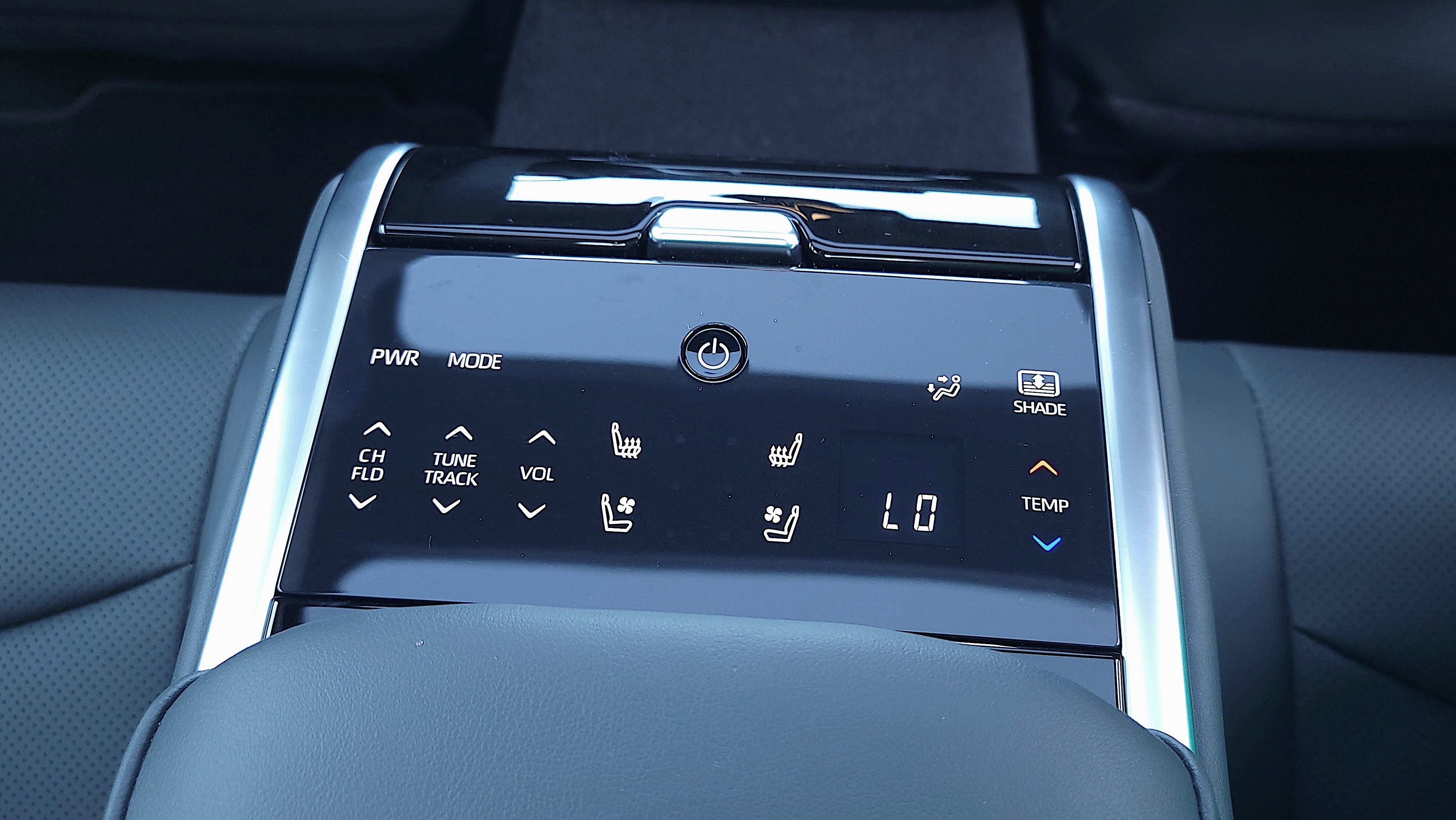
In addition, the Limited trim includes a control panel (with a display and capacitive buttons) in the folding rear armrest that lets rear passengers adjust the volume, rear climate, rear heated and ventilated seats, and rear window power sunshade. 

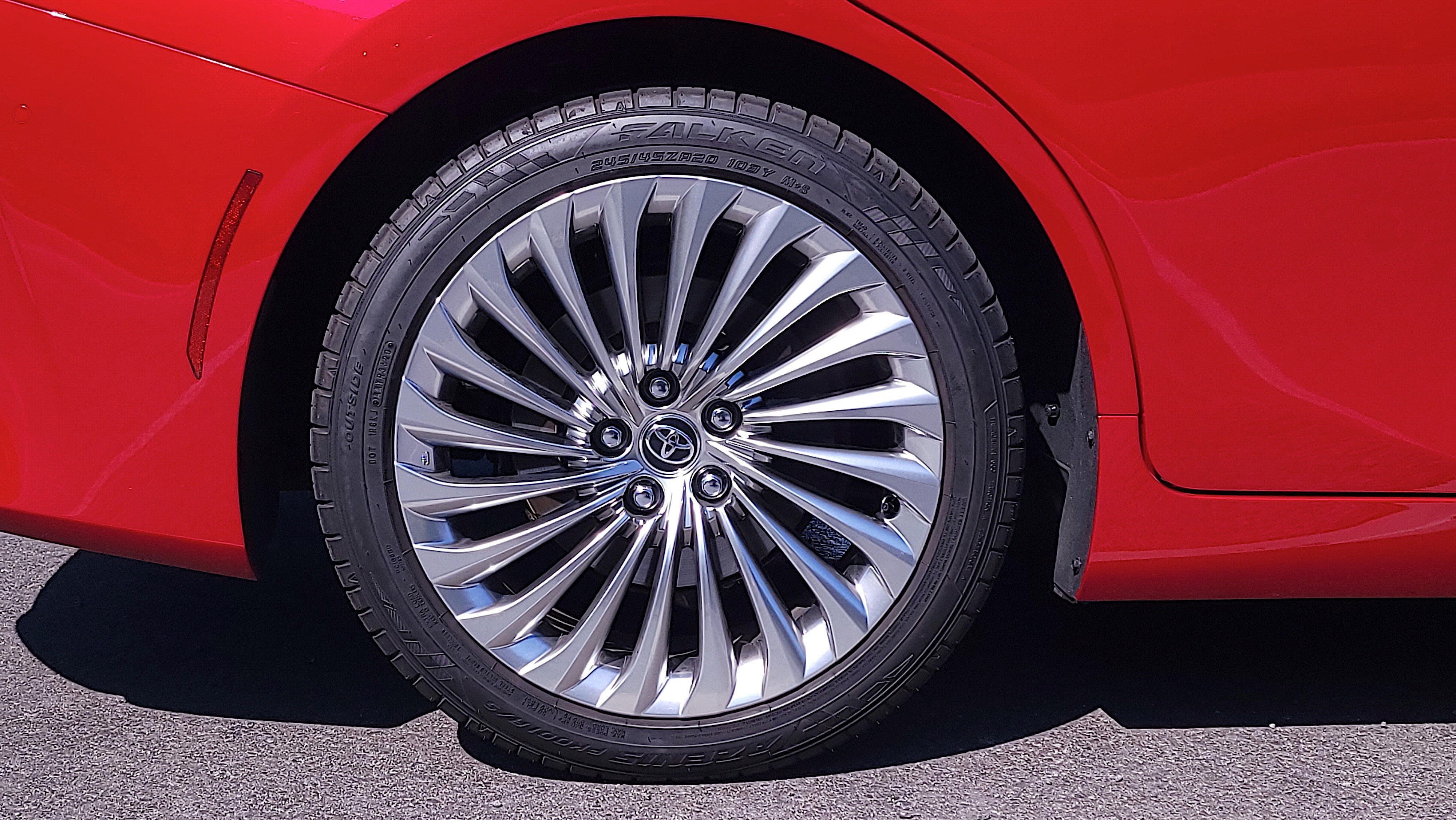
The 2021 Toyota Mirai we tested cost $67,545 and came with the Limited trim ($66,000), SuperSonic Red paint ($425), and the optional 20-inch alloy wheels ($1,120).
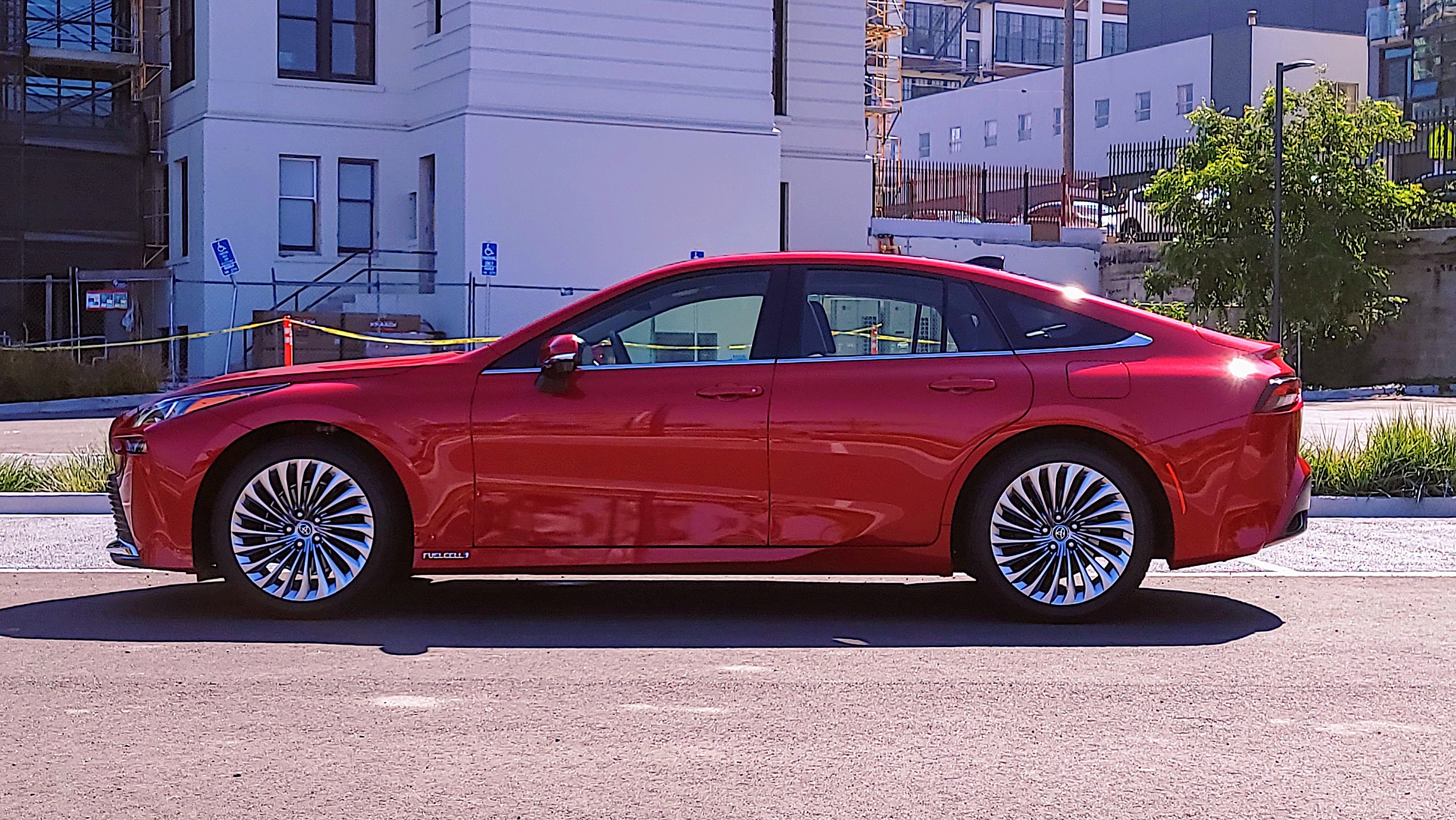
Side profile of the Toyota Mirai (2021)

(Image credit: TechRadar / Myriam Joire)

Toyota Mirai design

  • Striking exterior
  • Bland and generic interior
  • Limited trunk space

As we mentioned, the 2021 Mirai is now built on the same TNGA-L (GA-L) large RWD platform as the Lexus LS sedan, which is a massive upgrade over the original Mirai, which was built on Toyota's older MC compact FWD platform, shared with the Prius, RAV4, and Corolla. 

This means the 2021 Mirai is a bigger, more premium, and better looking vehicle. We're big fans of this new design - it's refined and striking, with beautiful RWD proportions.

While the optional 20-inch wheels on the Limited trim we drove really bring the Lexus-like exterior together, the interior is a bit of a letdown. 

Basically, it's standard issue Toyota inside - it's perfectly fine, but it doesn't elicit much joy or excitement. Obviously, materials and build quality are top notch, but you'd be forgiven to think you're sitting in a Camry or an Avalon. 

It's a busy cabin, with a lot of controls and piano black surfaces that attract fingerprints. 

Once you get past its slightly bland and generic design, you'll find this interior to be comfortable, spacious, and quiet. 

The dashboard features an 8-inch multi-information instrument display in front of the driver, plus a 13.2-inch center-mounted touchscreen, but the high cowl restricts forward visibility. 
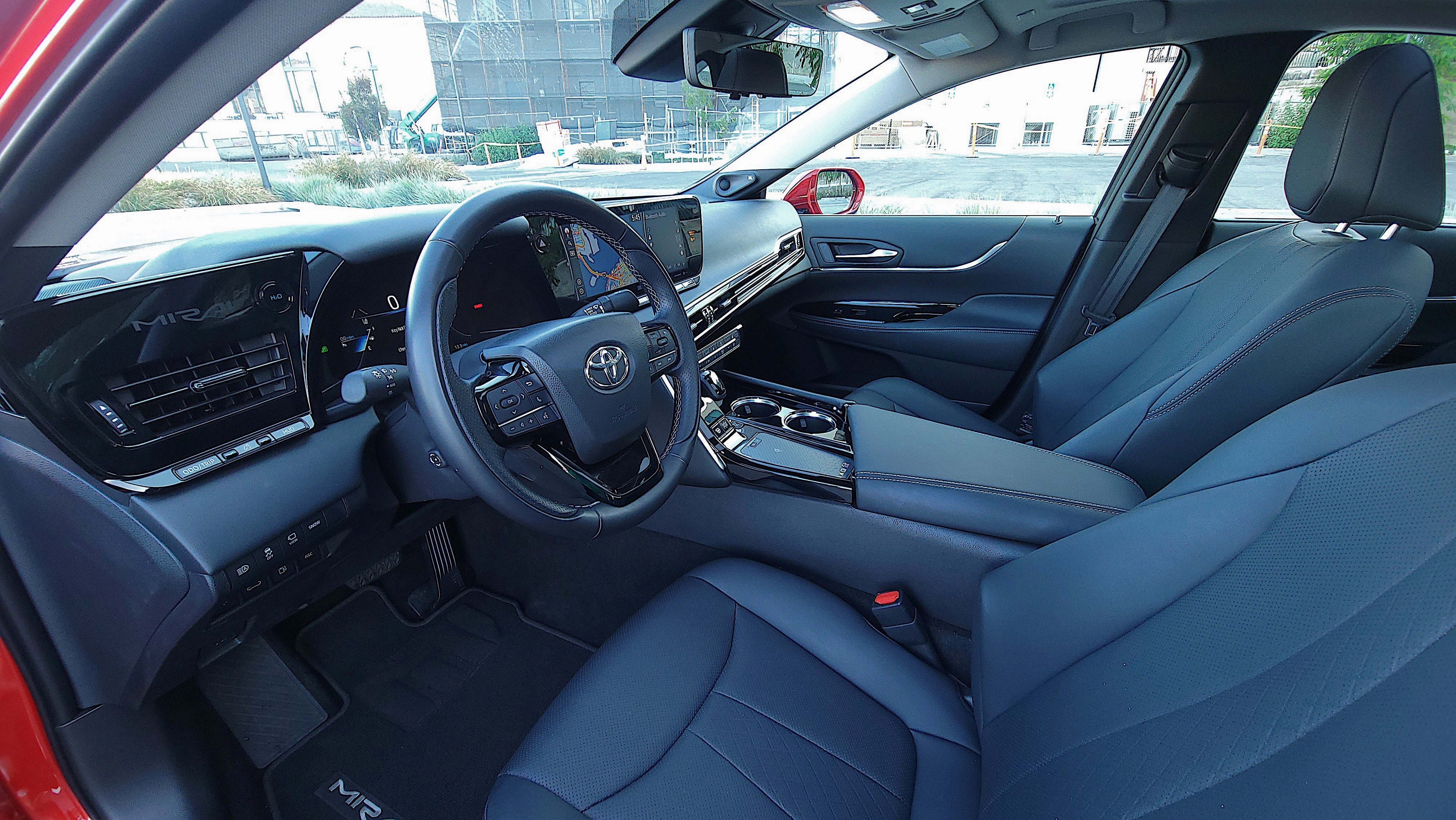
Image 1 of 3

View of dash and front seats in the Toyota Mirai (2021)

(Image credit: TechRadar / Myriam Joire)
Image 2 of 3

View of the driver's side of the cockpit in the Toyota Mirai (2021)

(Image credit: TechRadar / Myriam Joire)
Image 3 of 3

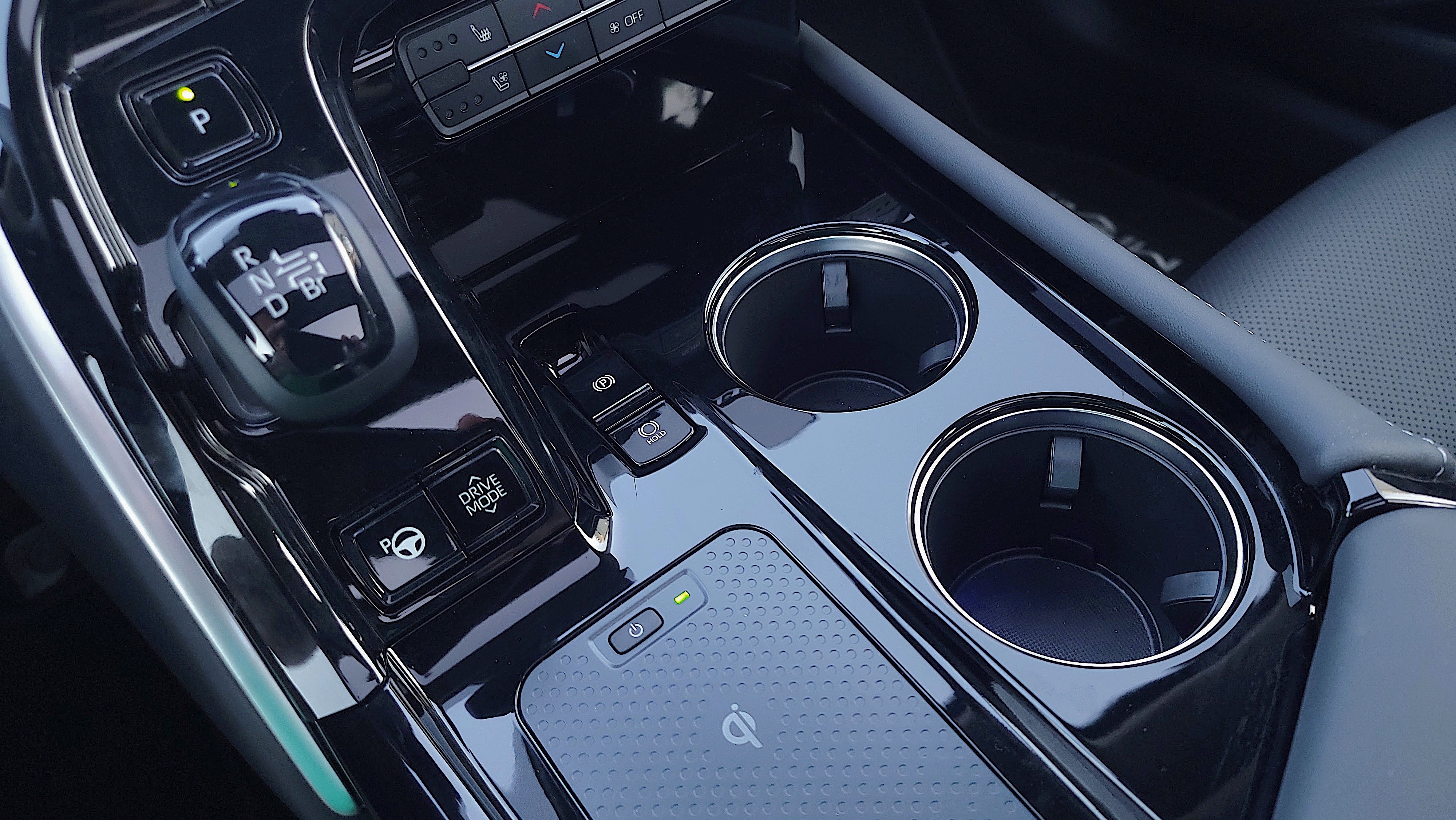
Center console including two cup holders in Toyota Mirai (2021)

(Image credit: TechRadar / Myriam Joire)

And while it's easy to adjust the power memory seats and steering wheel to compensate for this, it reduces the sense of space.

Since the 2021 Mirai is larger, it now seats five (vs four previously). Unfortunately, one of the hydrogen tanks resides where the transmission, diveshaft, and exhaust would be located in a RWD ICE (internal combustion engine) vehicle, splitting the floor longitudinally in half. 

The resulting 'hydrogen tank tunnel' limits center console storage, and severely compromises leg space for the rear middle seat passenger.

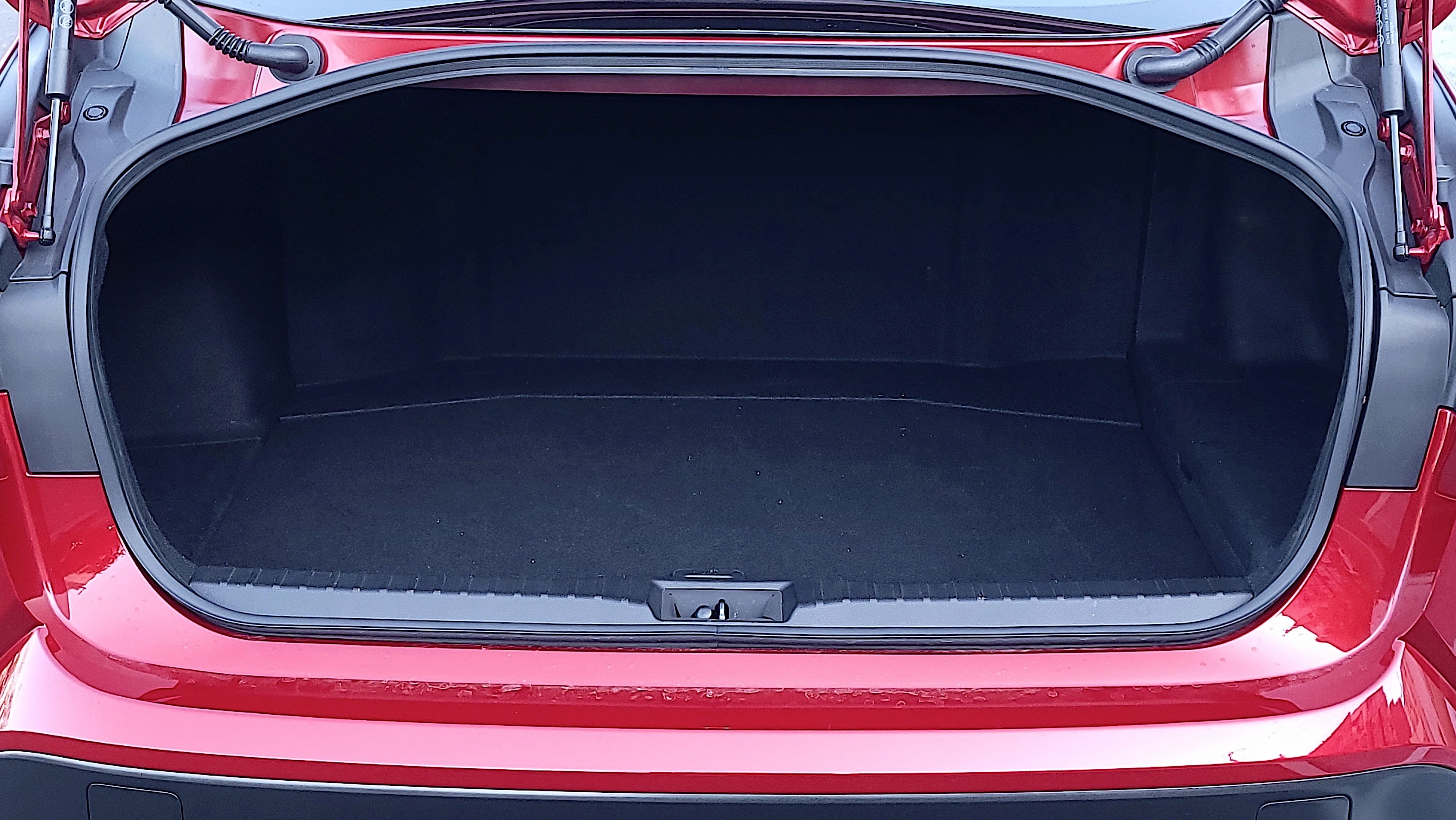
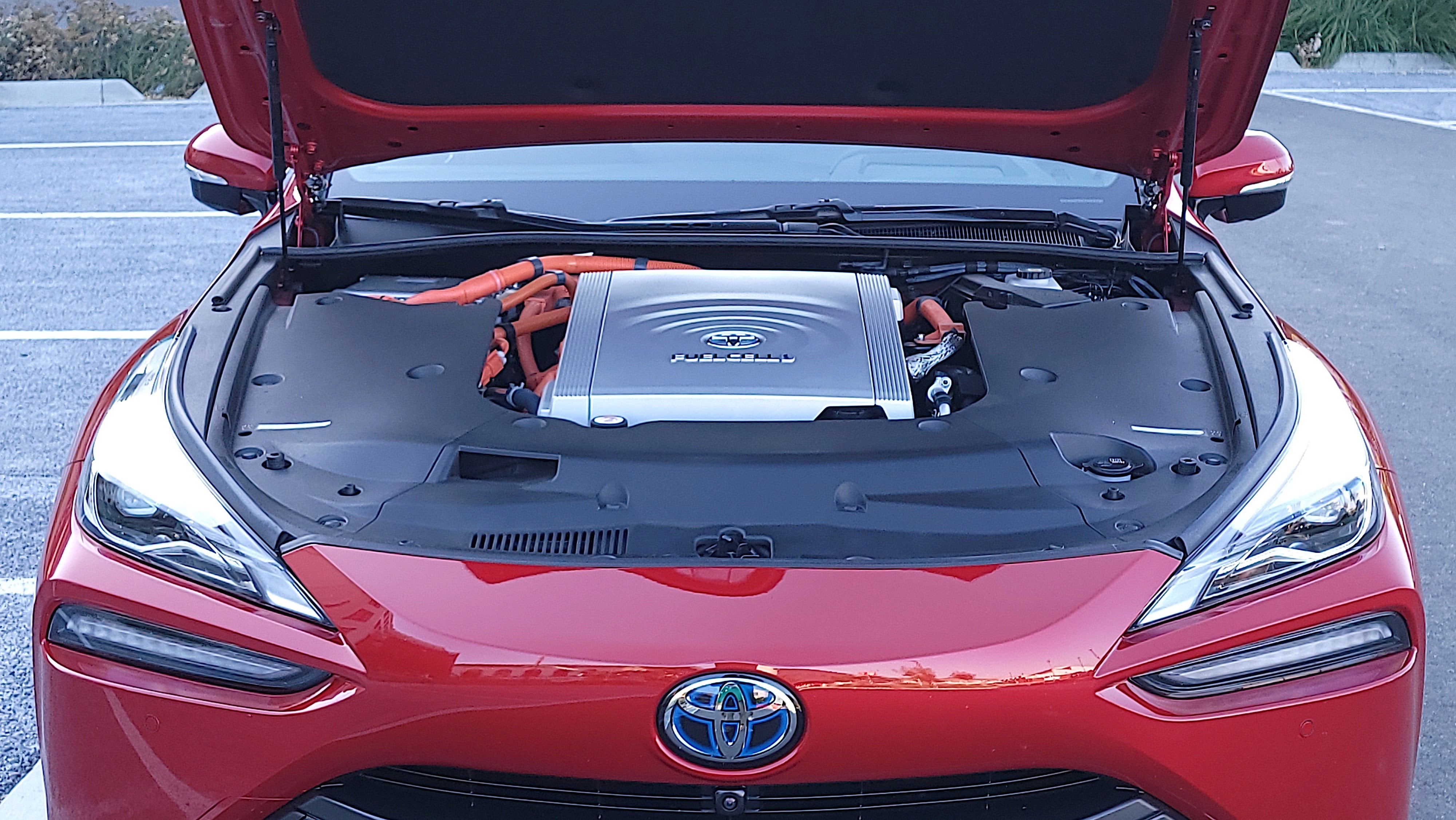
With the hydrogen fuel cell located under the hood, there's no room for a frunk. And with the battery pack positioned between the rear seats and the trunk, the rear seats don't fold. 

This also means trunk space is limited to just 9.6 cubic feet (321 liters). Speaking of the trunk, it features a soft close mechanism, but lacks power struts to fully open or close the lid. Also strangely missing here is a heated steering wheel.

Somehow, we expected both these features to carry over from the Lexus LS sedan the 2021 Mirai is based on. 

After all, the Limited trim inherits the fixed panoramic glass roof from its luxury cousin. It keeps the cabin feeling airy, and even includes a power sunshade. 

Finally, while the heated faux-leather seats (also ventilated on the Limited trim) match this vehicle's comfortable character, we'd have liked a little more support on longer drives.
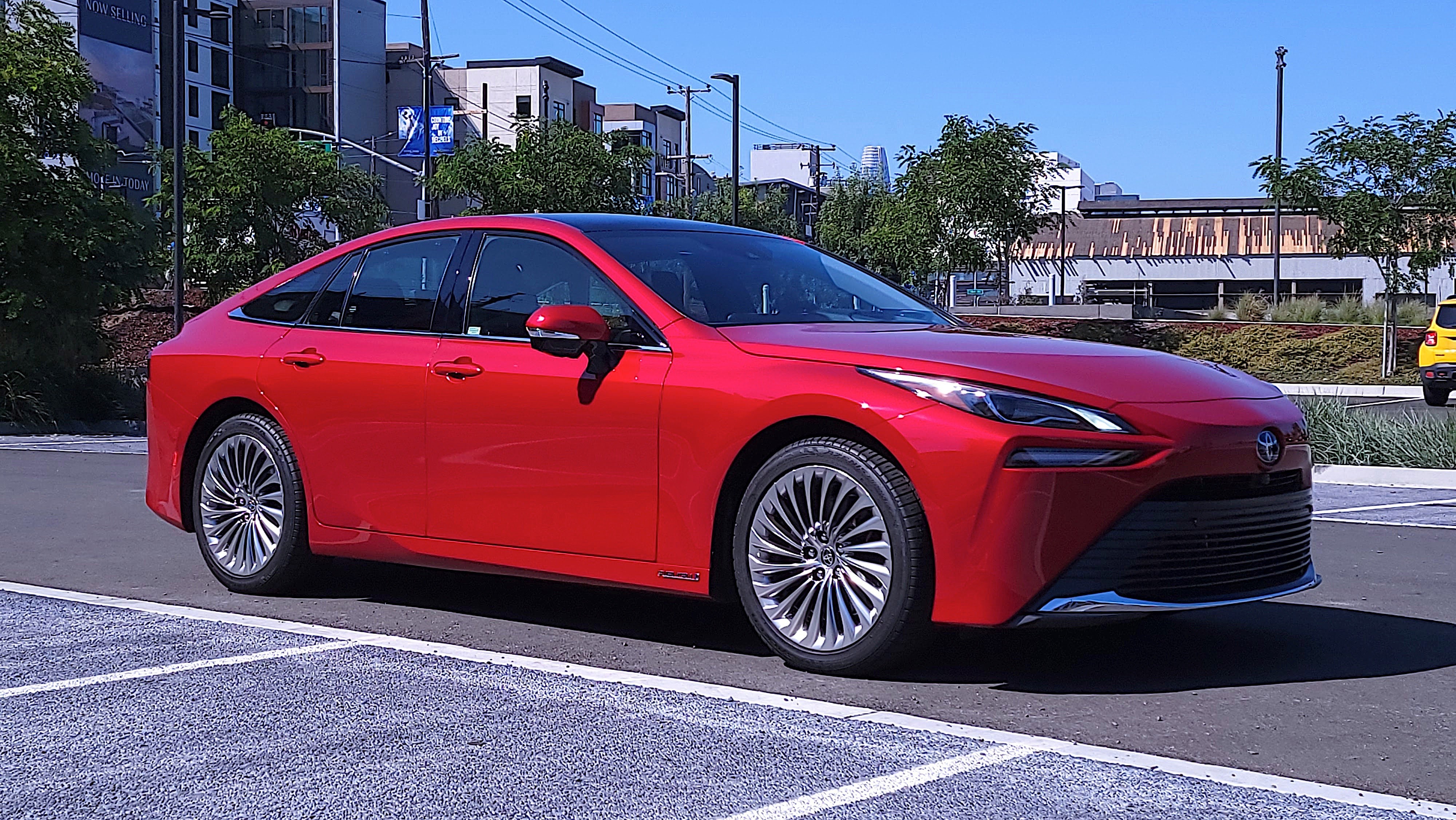
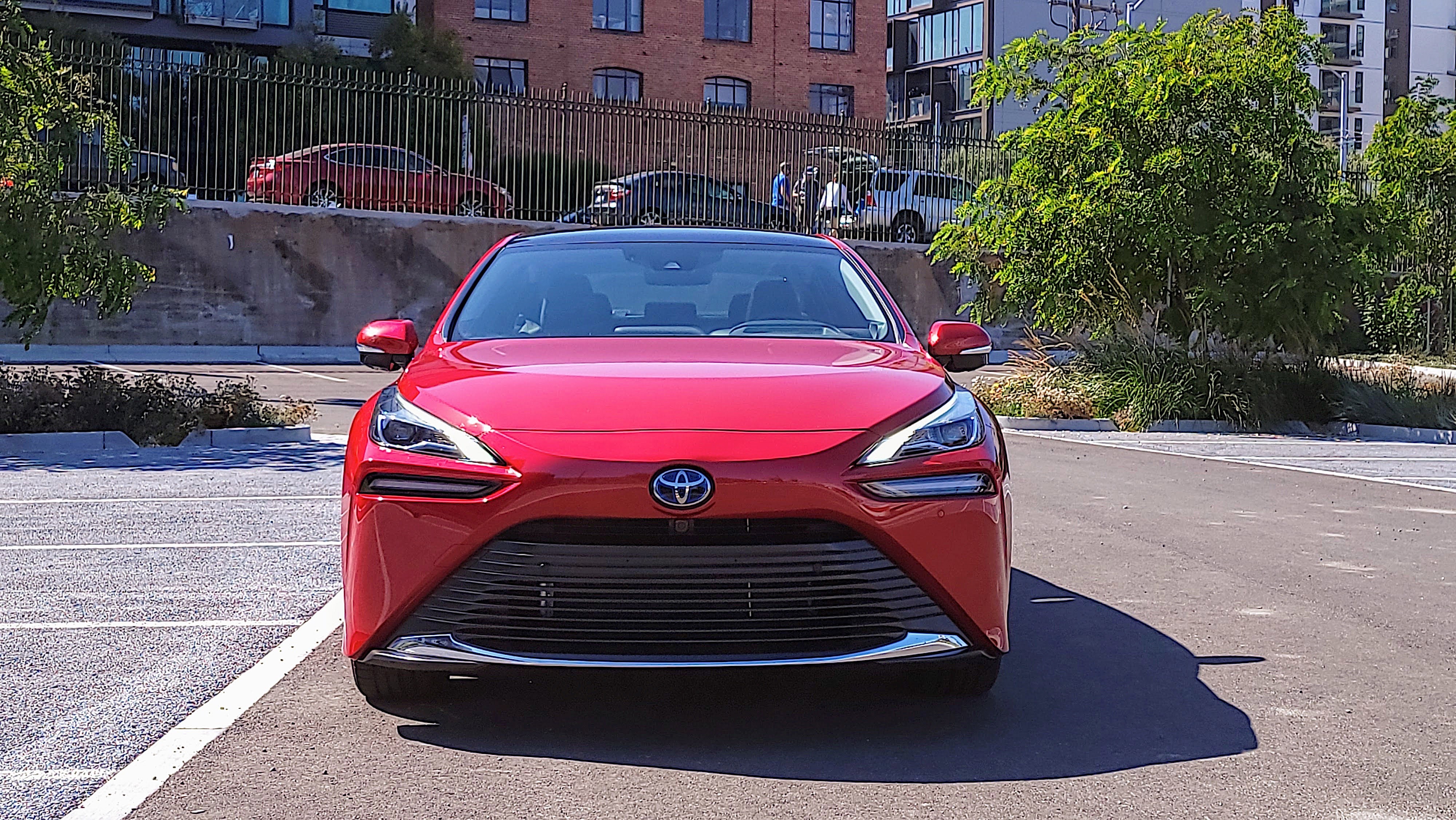
Image 1 of 17

Front view, at an angle, of Toyota Mirai (2021)

(Image credit: TechRadar / Myriam Joire)
Image 2 of 17

Front profile of Toyota Mirai (2021)

(Image credit: TechRadar / Myriam Joire)
Image 3 of 17

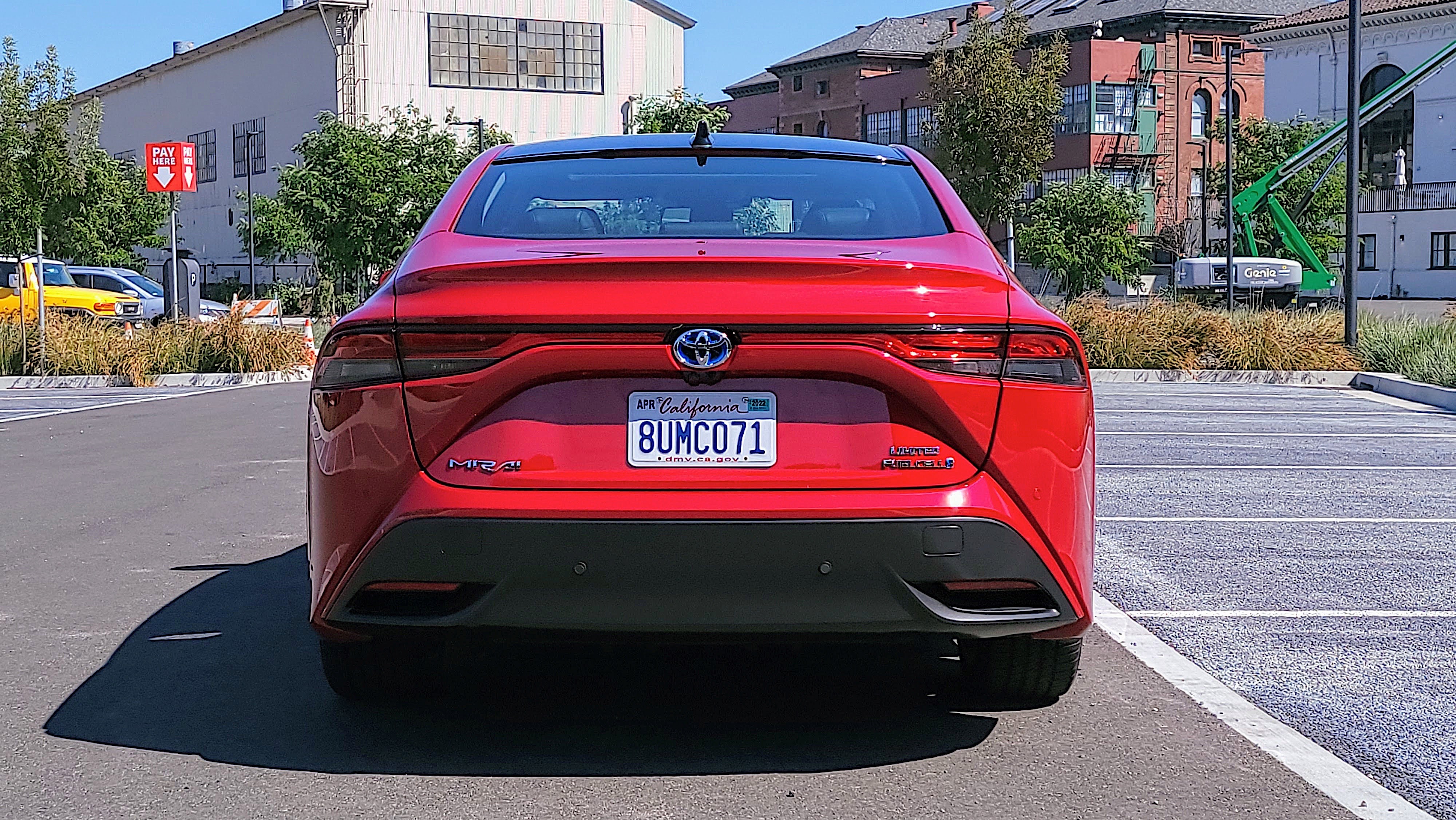
Rear profile of the Toyota Mirai (2021)

(Image credit: TechRadar / Myriam Joire)
Image 4 of 17

Front view, at an angle, of Toyota Mirai (2021)

(Image credit: TechRadar / Myriam Joire)
Image 5 of 17

Rear view, at an angle, of Toyota Mirai (2021)

(Image credit: TechRadar / Myriam Joire)
Image 6 of 17

Rear view, at an angle, of Toyota Mirai (2021)

(Image credit: TechRadar / Myriam Joire)
Image 7 of 17

Side profile of the Toyota Mirai (2021)

(Image credit: TechRadar / Myriam Joire)
Image 8 of 17

A view of one of the alloy wheels on the Mirai (2021)

(Image credit: TechRadar / Myriam Joire)
Image 9 of 17

Close-up of Mirai badge on rear of car

(Image credit: TechRadar / Myriam Joire)
Image 10 of 17

Close-up of FuelCell badge on Toyota Mirai (2021)

(Image credit: TechRadar / Myriam Joire)
Image 11 of 17

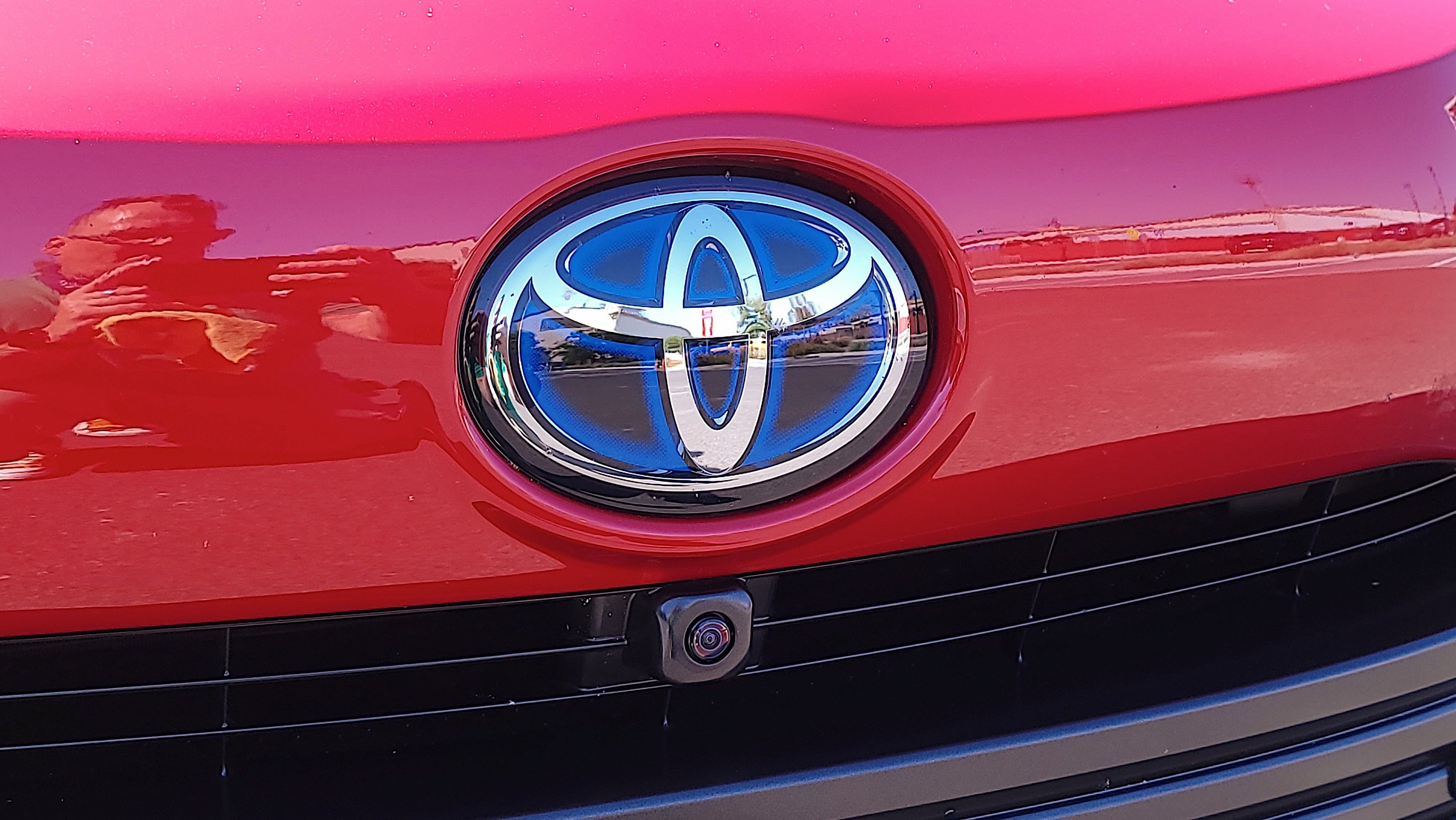
Close-up of Toyota badge and front camera on Mirai (2021)

(Image credit: TechRadar / Myriam Joire)
Image 12 of 17

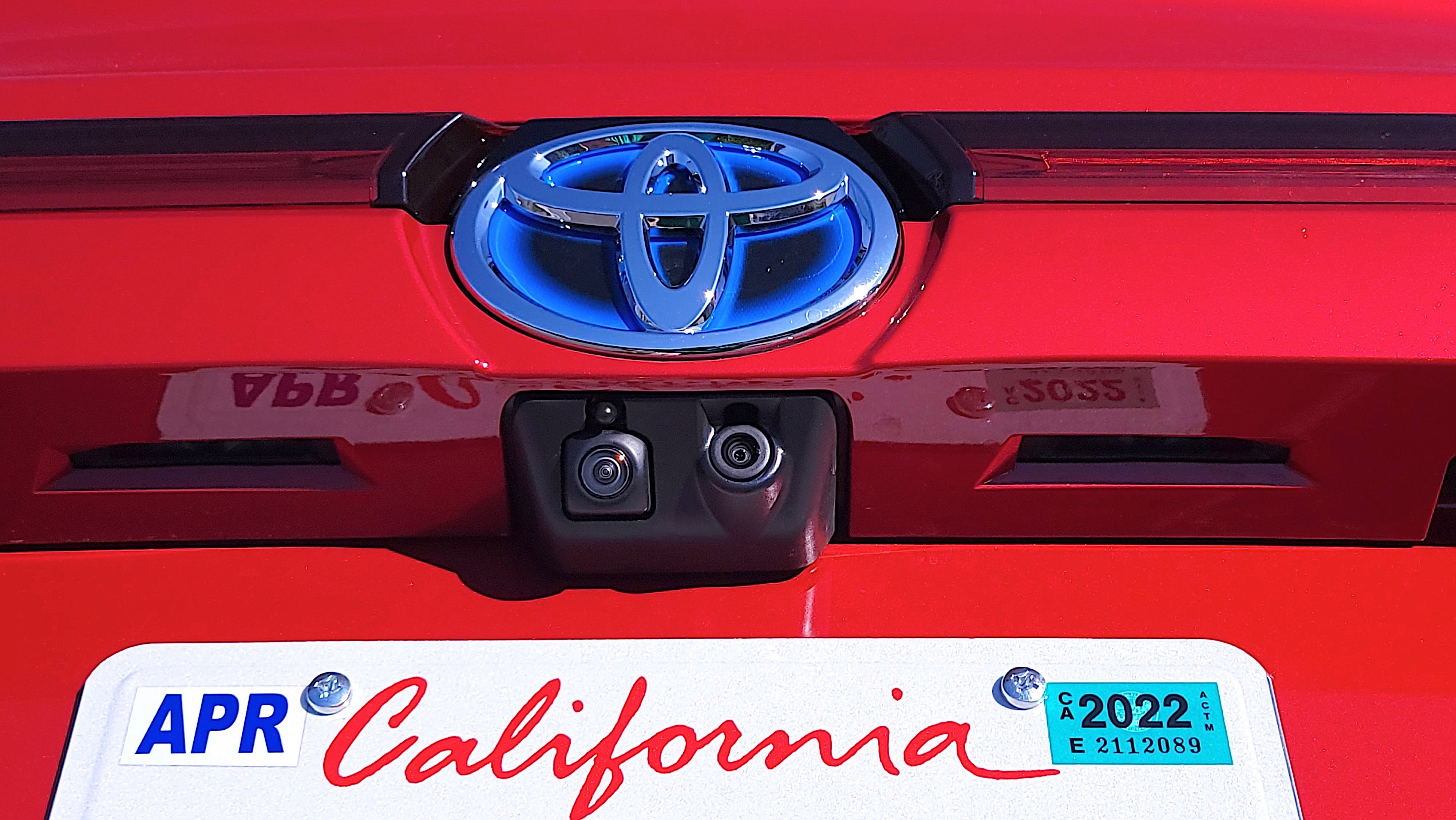
Close-up of two back-up cams on Toyota Mirai (2021)

(Image credit: TechRadar / Myriam Joire)
Image 13 of 17

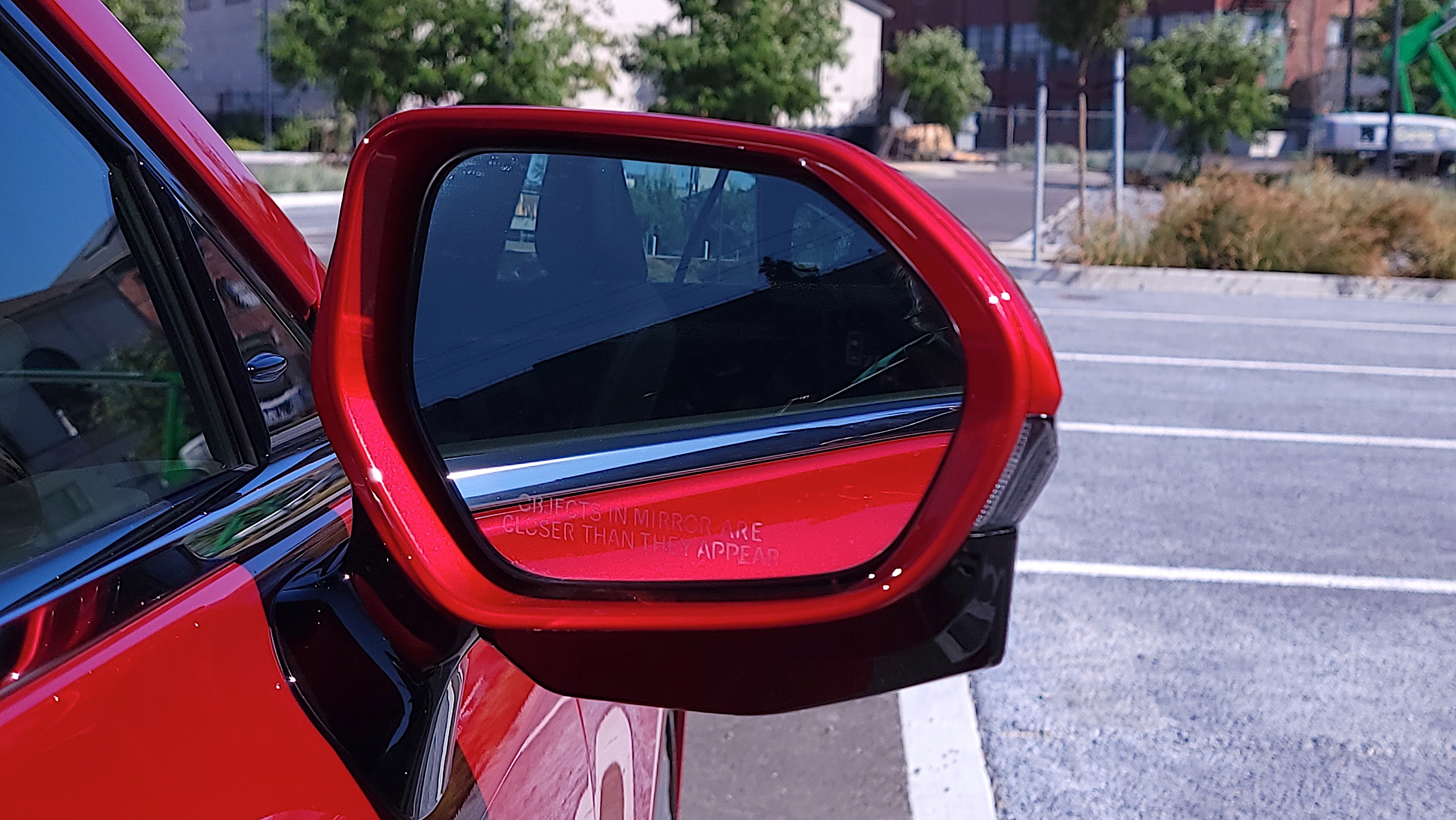
Rear view of the Toyota Mirai (2021) side mirror

(Image credit: TechRadar / Myriam Joire)
Image 14 of 17

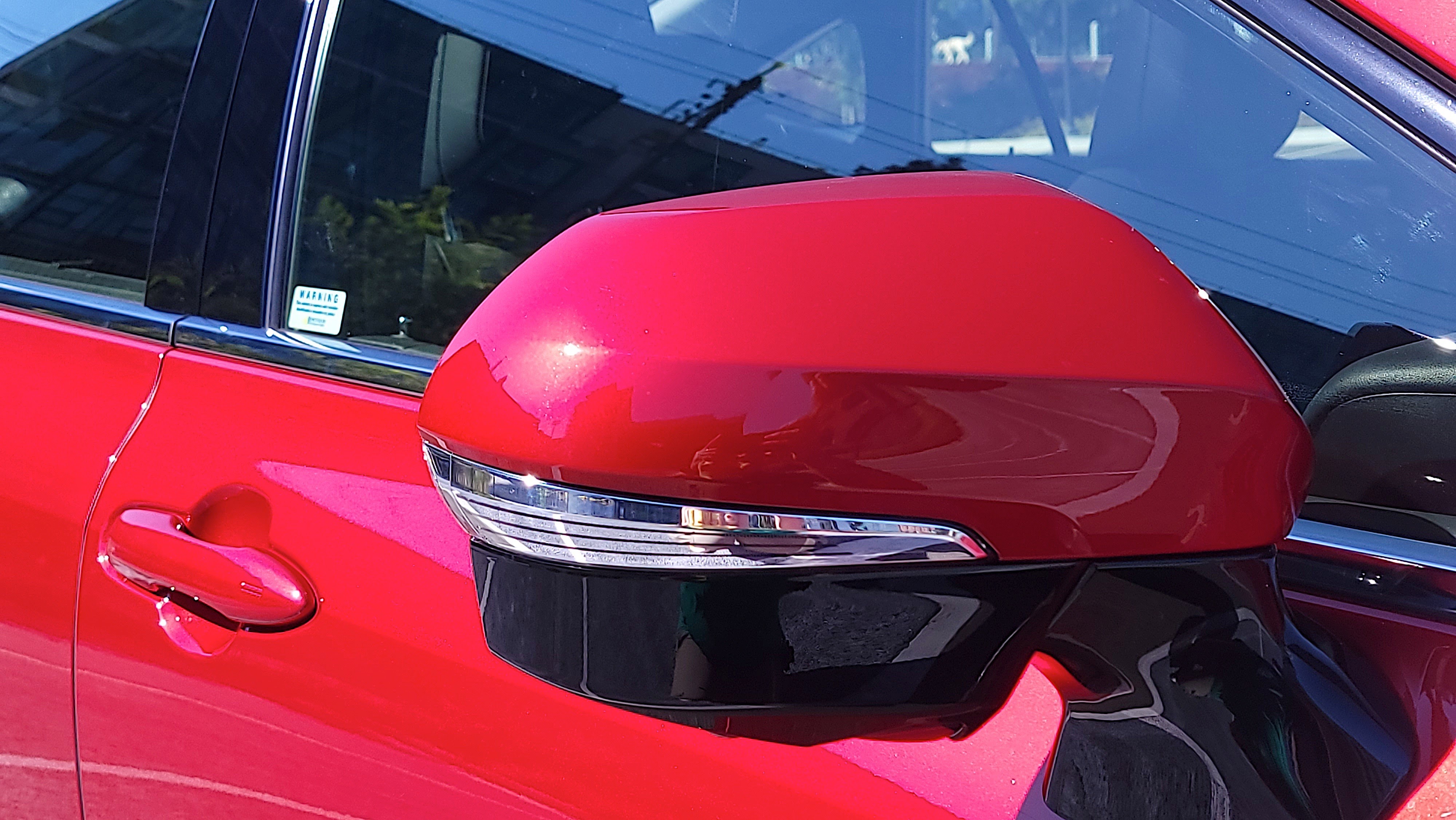
Close-up view of the front of a Toyota Mirai (2021) side mirror

(Image credit: TechRadar / Myriam Joire)
Image 15 of 17

Front bumper of the Toyota Mirai (2021)

(Image credit: TechRadar / Myriam Joire)
Image 16 of 17

Open tailgate showing the trunk of the Toyota Mirai (2021)

(Image credit: TechRadar / Myriam Joire)
Image 17 of 17

Under the hood of the Toyota Mirai (2021)

(Image credit: TechRadar / Myriam Joire)

Toyota Mirai drive, range and fueling 

  • Comfort over performance
  • Excellent range
  • Abysmal hydrogen refueling infrastructure

Like other hydrogen FCEVs, the Mirai combines hydrogen stored in high-pressure tanks on board the car with the oxygen present in the air to generate electricity on demand inside a fuel cell. 

This electricity is then stored in a small battery (about the same size as a hybrid vehicle battery), and used to power an electric motor. Water is the only byproduct (or 'waste') from this process, so hydrogen FCEVs have zero emissions.

The 2021 Mirai stores hydrogen in three tanks (vs two previously) for an increased range of 357-402 miles (vs 312mi previously) - depending on trim. 

In addition, it features a 1.24KWh Li-ion battery pack (vs 1.6KWh nickel-metal hydride previously) and a more powerful 182hp / 300ft-lb motor (vs 152hp / 247ft-lb previously), enabling the 0-60mph sprint in 9.2s. While that's not spectacular, there's plenty of torque, so it doesn't feel slow.

Behind the wheel, it's all about comfort over performance, and if that's your jam, Toyota's got you covered. 

Front profile of Toyota Mirai (2021)

(Image credit: TechRadar / Myriam Joire)

While the suspension is tuned for comfort - with a compliant and soft ride - handling is pretty decent. Toss the 2021 Mirai into a corner and that RWD platform actually delivers a rewarding experience. 

It's the same with the steering, which is quite light - making this car easy to drive - but provides more feedback than expected.

The 2021 Mirai's brakes are disappointing. Like with its hybrid cars, Toyota blends regen and hydraulic braking here, and while it works fine, it feels disconcerting. 

Basically, the brakes are hard to modulate because there's a slight delay between when you press the pedal and when the brakes activate. Also, while there's an auto hold feature, it turns off every time you restart the car, which is both annoying and unwarranted.

Speaking of which, you can boost the amount of regen braking by selecting the brake gear (B). But unlike other cars with this option, the 2021 Mirai always wants to return to the standard drive gear (D) after some time. 

We think this might have something to do with the state of charge of the battery pack or with hill detection. It's unfortunate since one pedal driving is one feature that really differentiates EVs from the ICE cars.

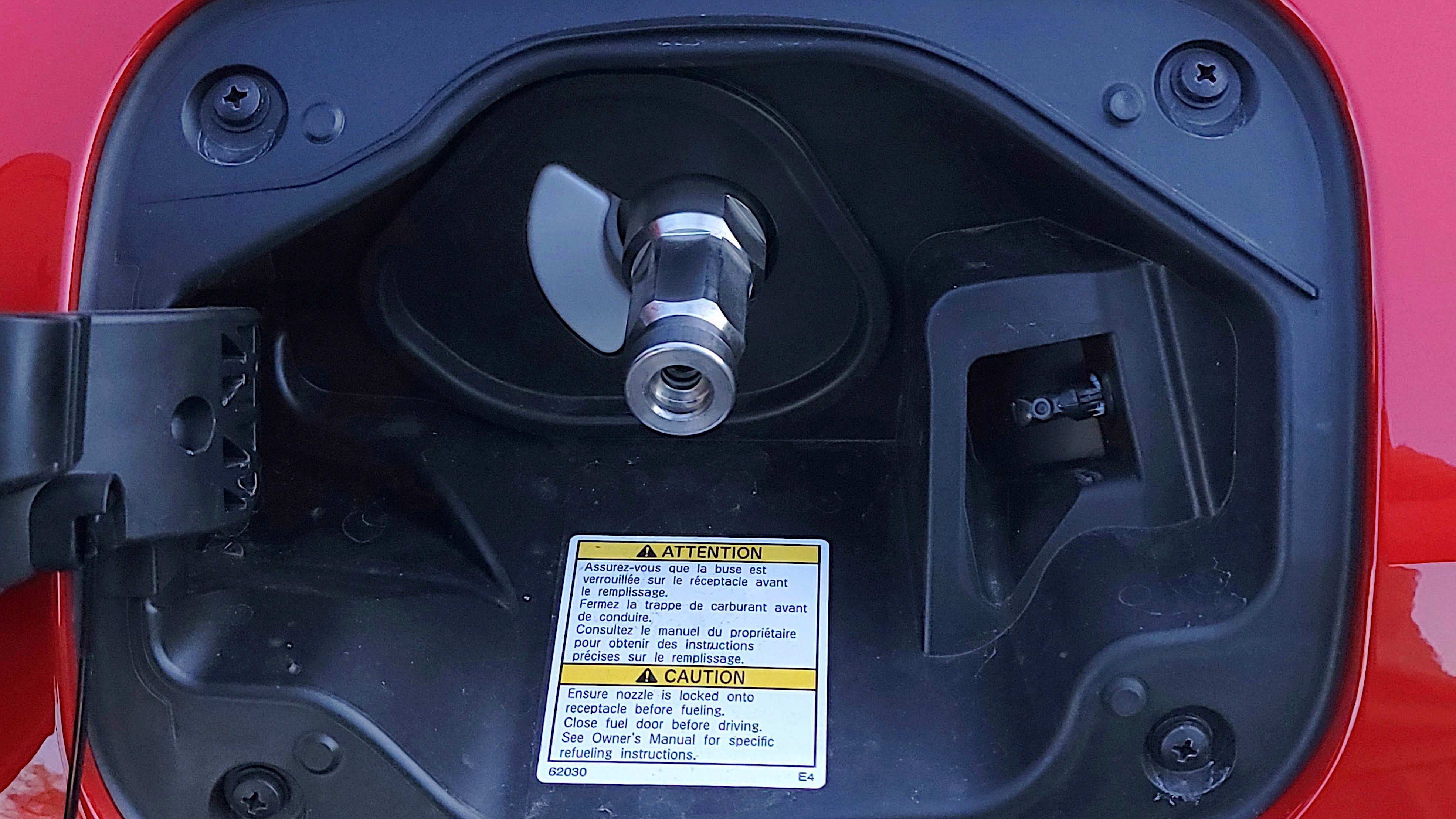
Refueling the Mirai is a significant challenge. In the US, there are only 45 hydrogen refueling stations, 43 of which are located in California alone, with an even split between the greater San Francisco / Sacramento and Los Angeles / San Diego areas. 
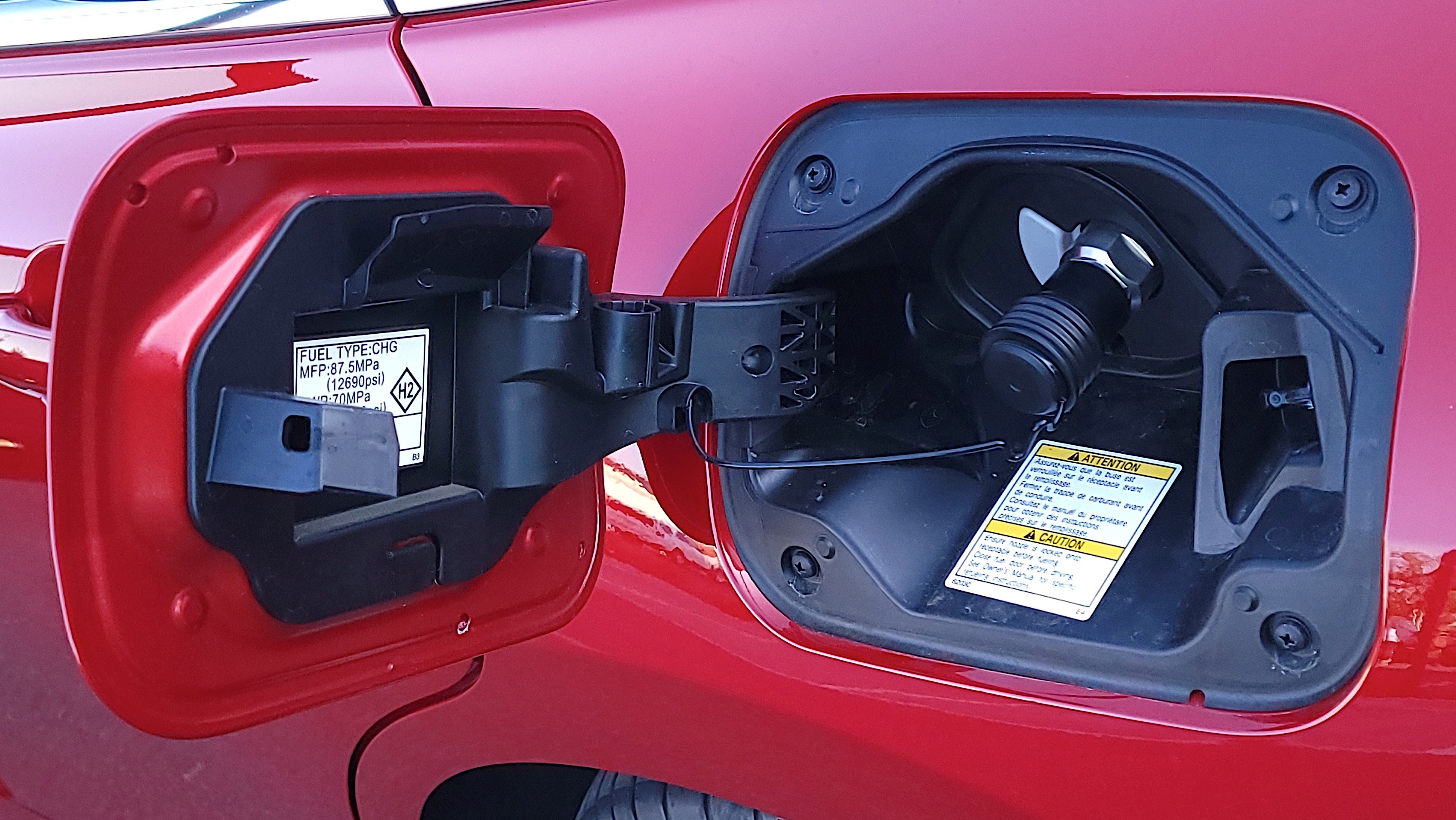
Image 1 of 2

Opened fuel cap on the Toyota Mirai (2021)

(Image credit: TechRadar / Myriam Joire)
Image 2 of 2

Hydrogen inlet for the Toyota Mirai (2021)

(Image credit: TechRadar / Myriam Joire)

During the week we spent testing the 2021 Mirai most of the dozen or so hydrogen refueling stations within a one hour drive from San Francisco were out of fuel.

Making things worse, the 2021 Mirai's navigation system kept suggesting hydrogen refueling stations that were closed because it wasn't receiving timely and accurate status data. 

The California Fuel Cell Partnership map was the only resource we found with timely and accurate status data on local hydrogen refueling stations. It directed us to the only working hydrogen refueling station close to us, 10 miles (16km) away.

We refueled twice, spending about $50 each time, and netting about half a tank each time. That's expensive, but it was definitely as quick and easy as refueling with gas or diesel. 

On our first refueling stop, we talked with an original Mirai owner and asked if these hydrogen refueling stations were often out of fuel. They said it's a common occurrence, and that they refuel as soon as their car's hydrogen level dips below half, "just in case".

Toyota Mirai specs and tech

  • Sluggish and outdated infotainment
  • Apple CarPlay, Android Auto, Amazon Alexa
  • Basic driver assistance

When it comes to infotainment, the 2021 Mirai packs a 13.2-inch touchscreen with navigation and a JBL-branded audio system with 14-speaker. Sadly, it sounds middling at best. 

While the display is large and reasonably high resolution, the user interface isn't very responsive. The entire system feels sluggish, and the UI design looks dated. 

Spec-wise, there's Bluetooth and USB audio support, along with FM / AM / Sirius-XM (satellite) radio functionality.

On the plus side, the 2021 Mirai offers (wired) Android Auto and Apple CarPlay. That's a huge relief considering the infotainment system's lackluster user experience. 

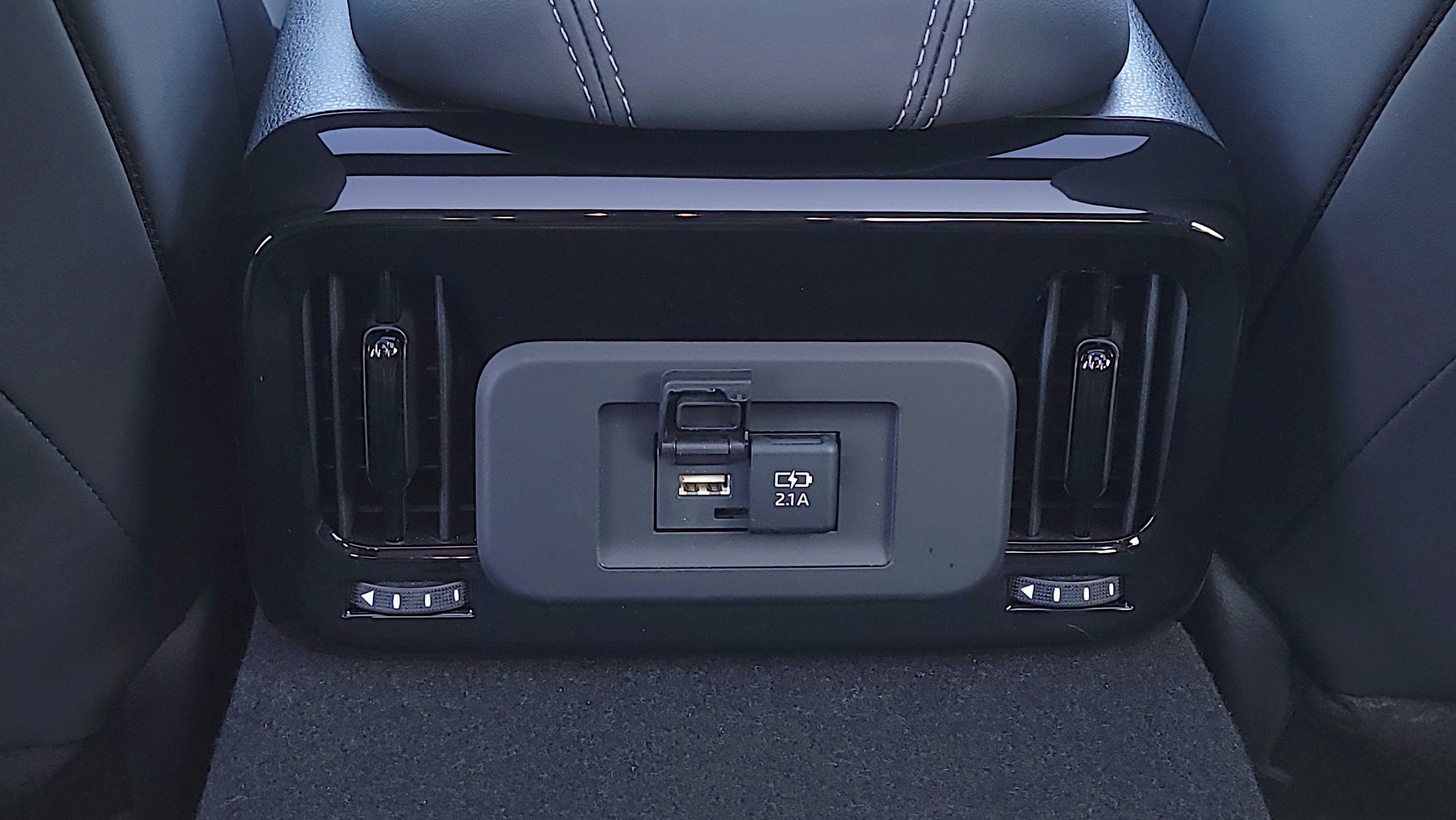
You'll also find Amazon Alexa integration, four USB Type-A ports (two in front, two in back), and a Qi-compatible wireless charging pad. 
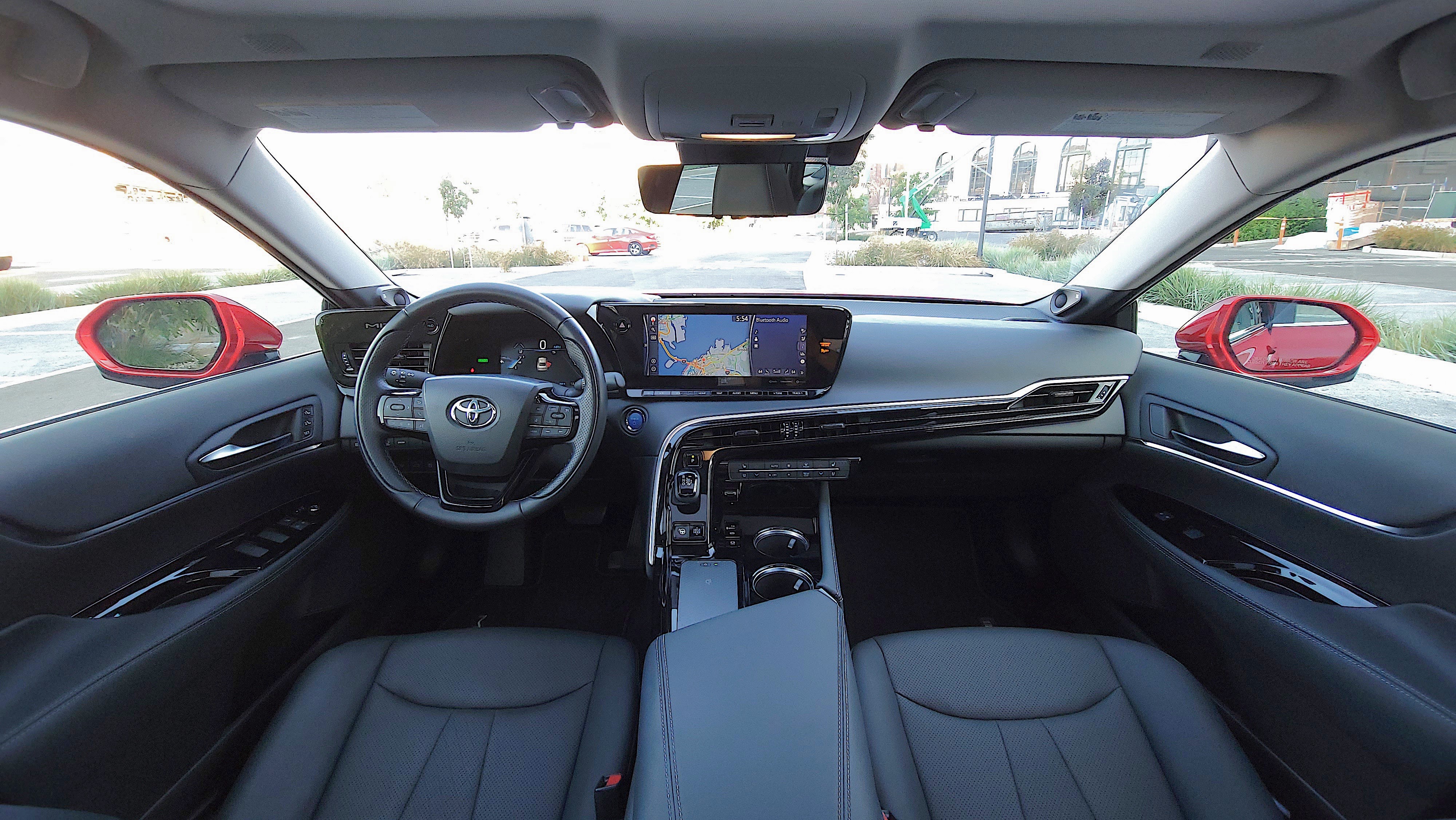
Image 1 of 3

View of full width of dash in the Toyota Mirai (2021)

(Image credit: TechRadar / Myriam Joire)
Image 2 of 3

View of dash and front seats in the Toyota Mirai (2021)

(Image credit: TechRadar / Myriam Joire)
Image 3 of 3

View of the driver's side of the cockpit in the Toyota Mirai (2021)

(Image credit: TechRadar / Myriam Joire)

Vehicle remote control - via Toyota's Remote Connect app - and WiFi hotspot functionality are also enabled thanks to built-in LTE connectivity.

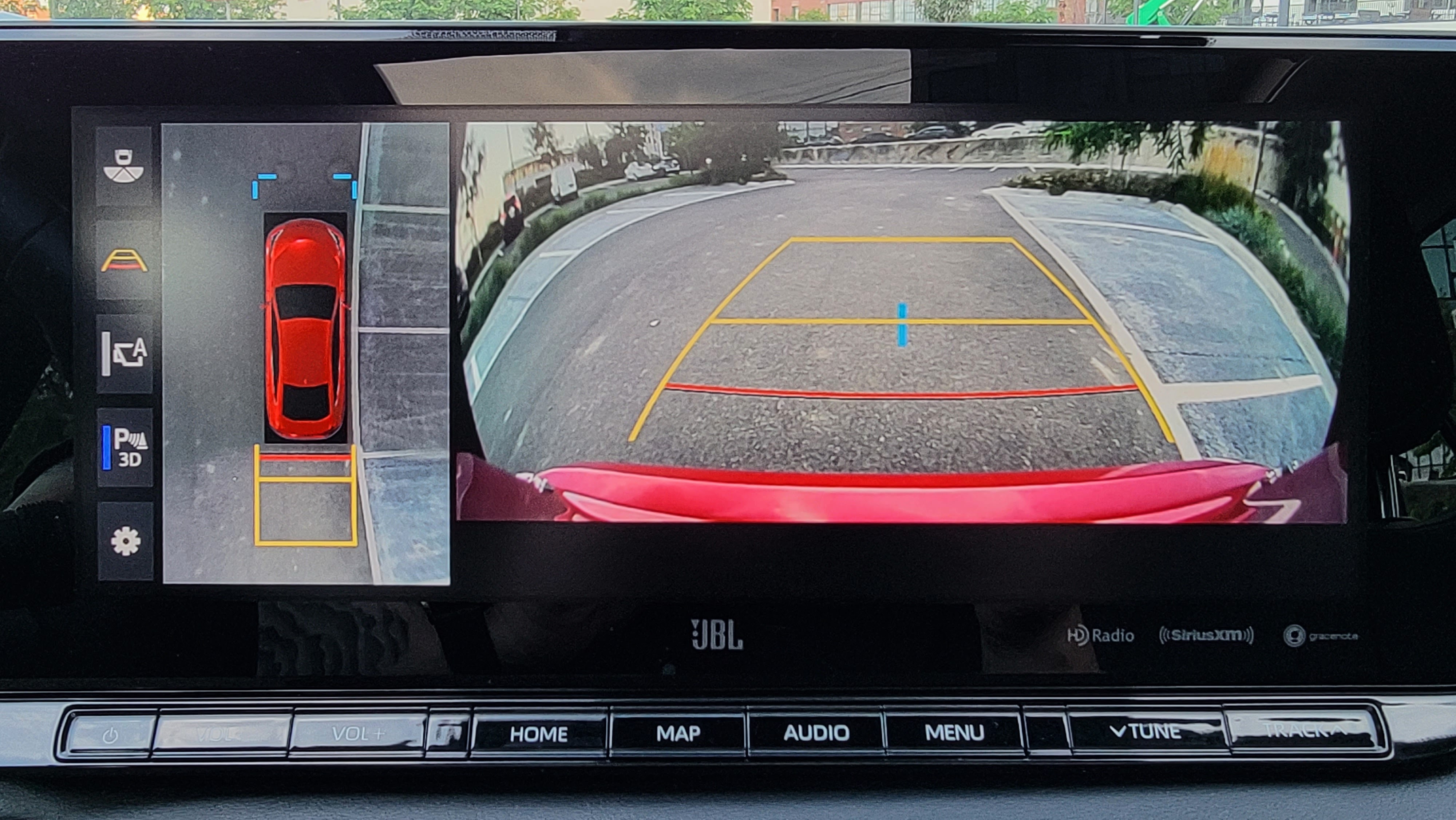
Additional features are available depending on trim and options. The advanced technology package adds a 360-degree view plus front and rear parking sensors to the XLE trim. 

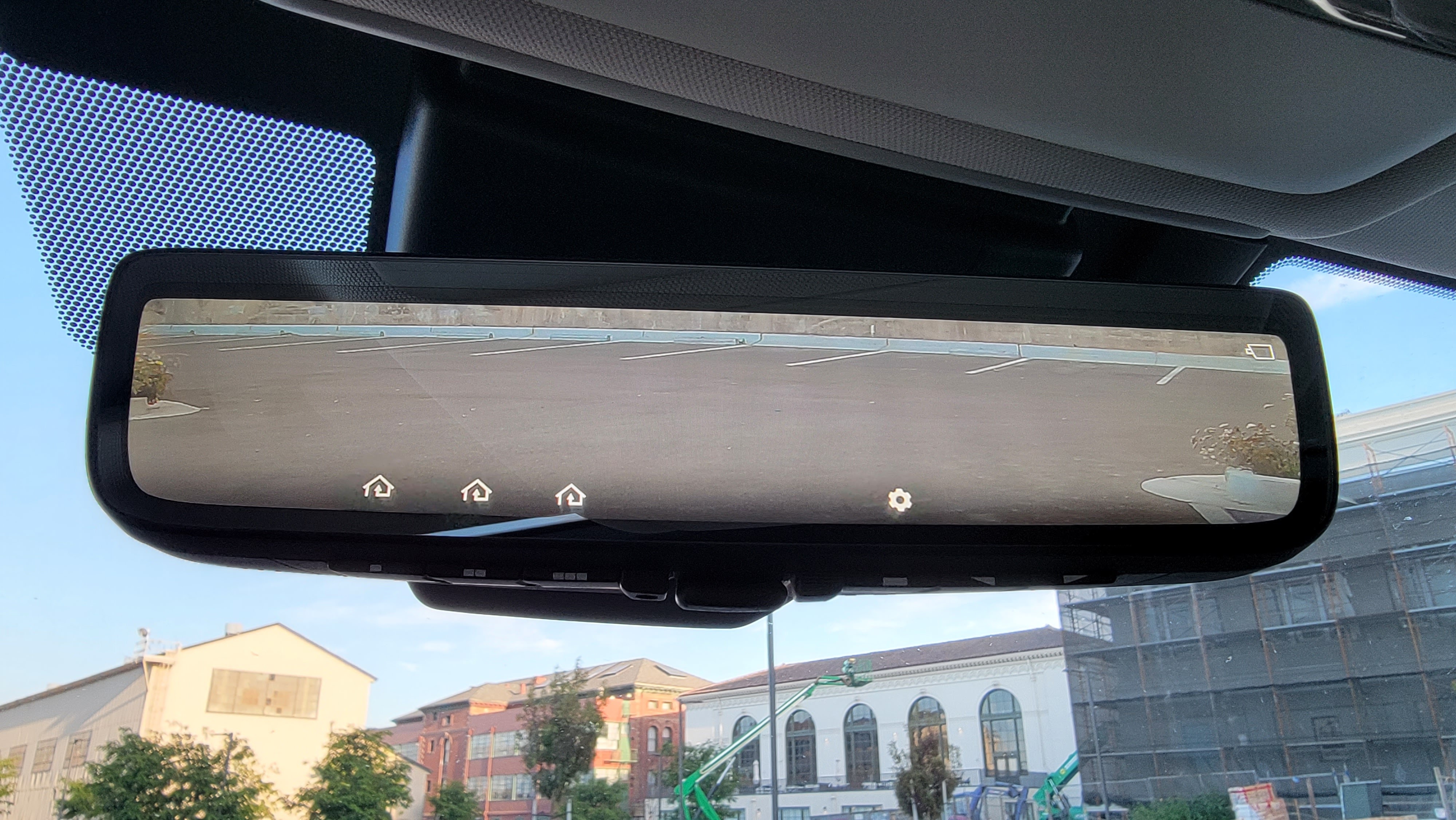
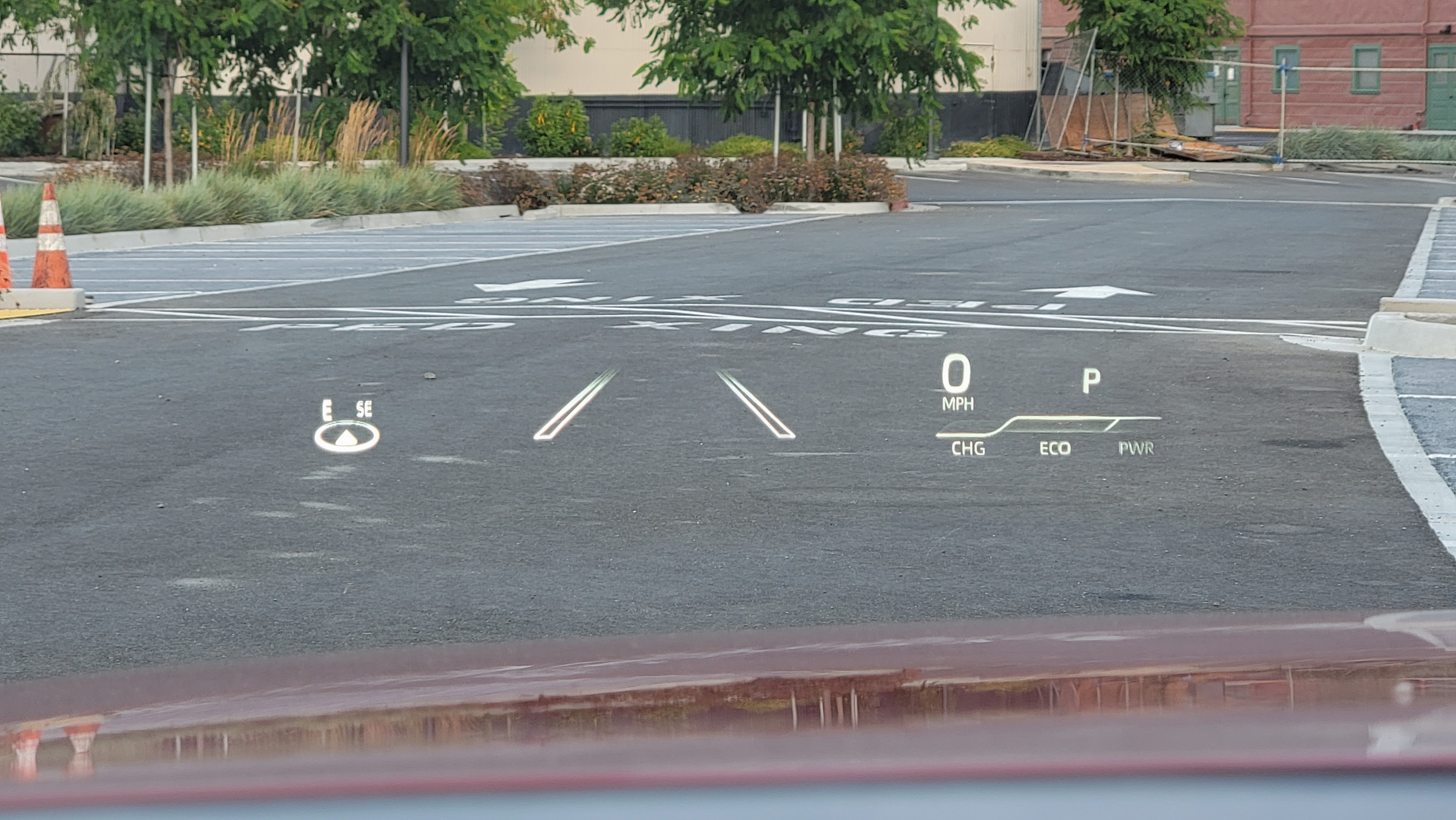
But the Limited trim comes with a 360-degree view, a color HUD (heads-up display), a switchable digital rearview mirror with Homelink, front and rear parking sensors, and self-parking. A backup camera is standard since it's mandatory in the US.

The 2021 Mirai features Toyota Safety Sense 2.5+. This driver assistance and safety package includes pedestrian warning, forward collision warning, automatic emergency braking, adaptive cruise control with automatic steering, traffic sign recognition, lane keeping assist, and lane departure warning. 

In addition, this vehicle comes with automatic wipers, headlights, and high-beams, plus blind spot warning and rear traffic alert.

On paper, these features give the 2021 Mirai level 2 ADAS capability. But in practice, the automatic steering feature didn't inspire much confidence. 

We found the implementation very basic, with the car often bouncing between lane markings. It's a far cry from Tesla's Autopilot, which glides down lanes with aplomb. 

Toyota's automatic steering also requires the driver to keep both hands on the wheel, instead of monitoring driver attention.
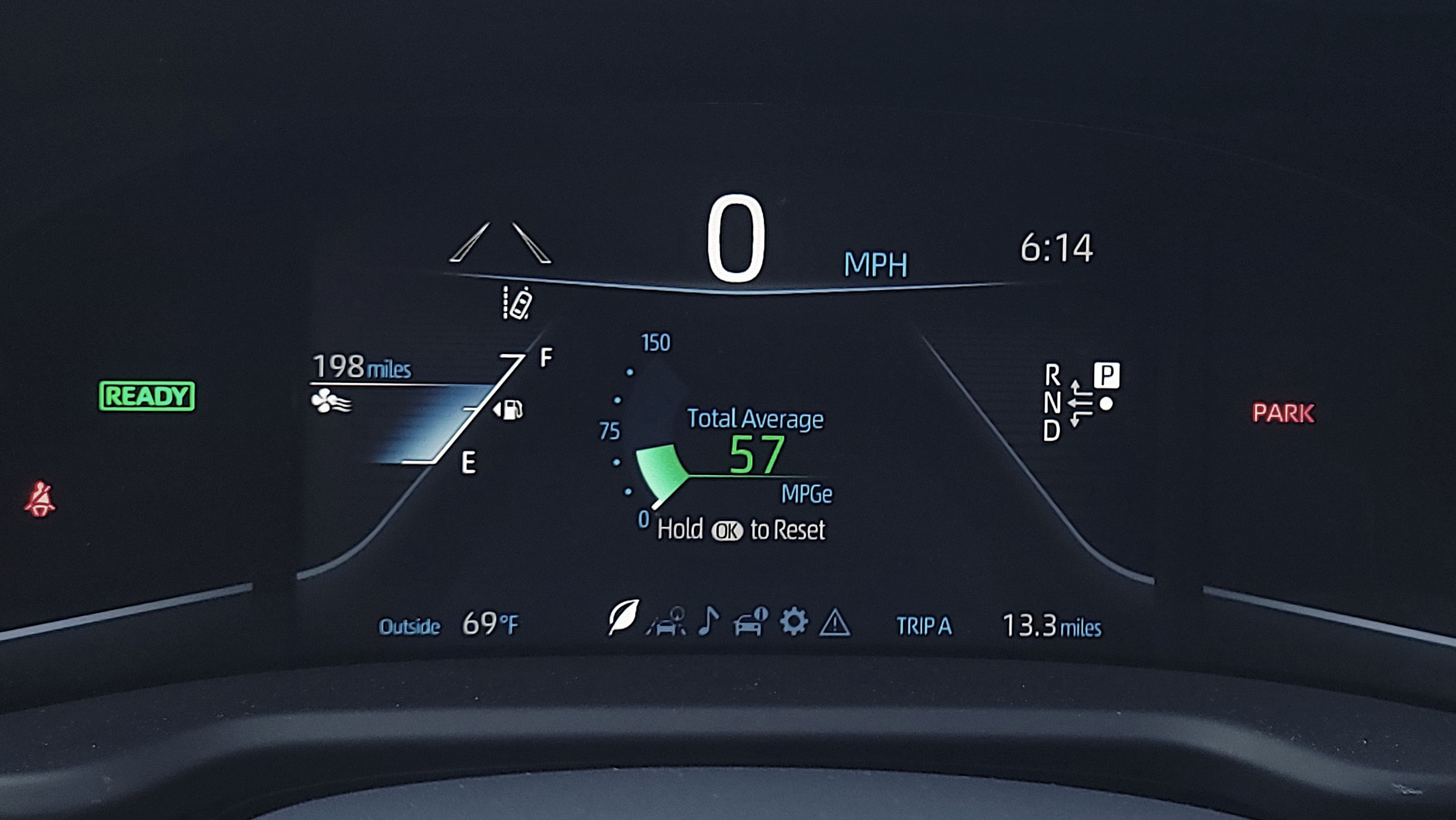
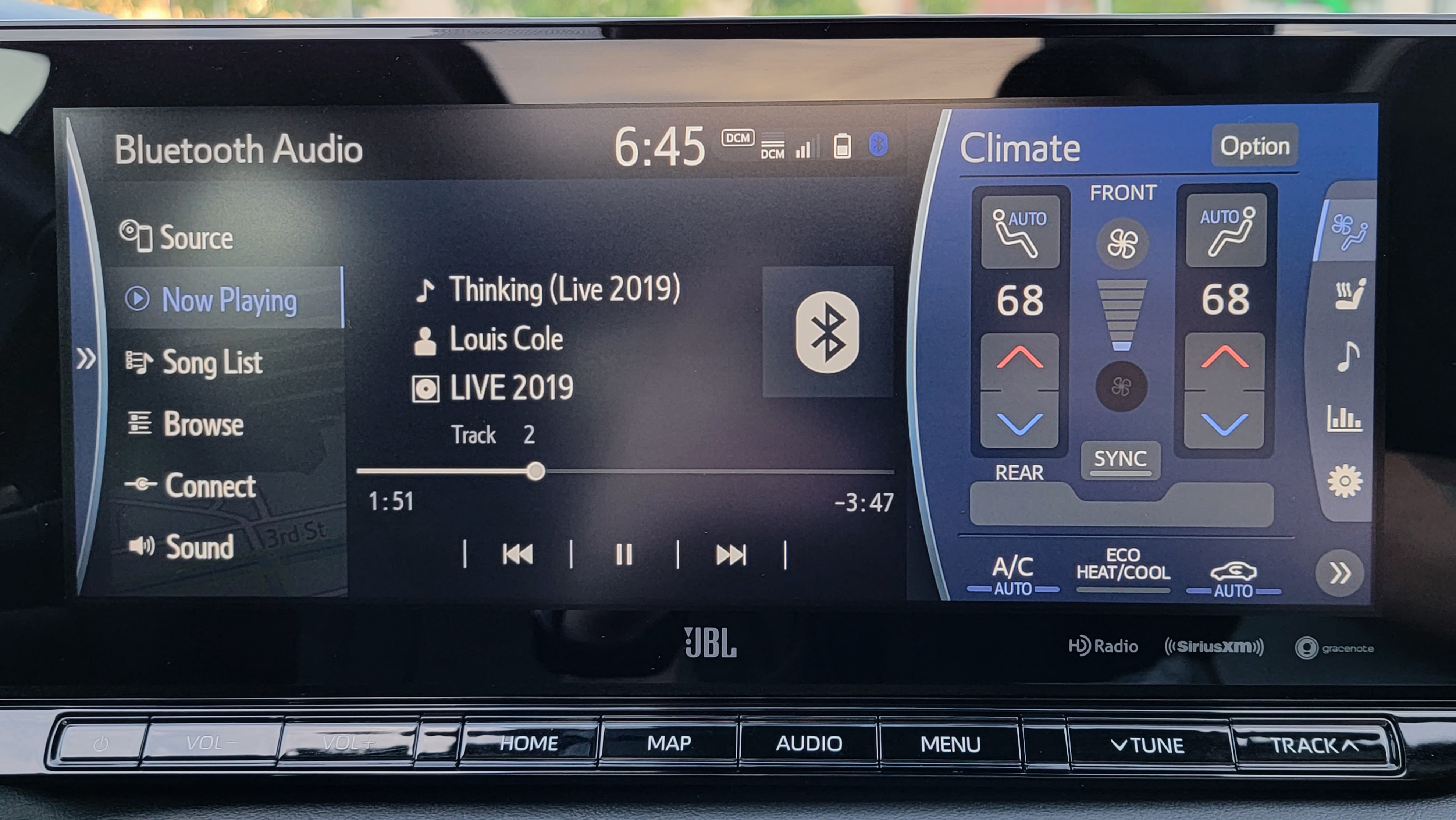
Image 1 of 9

Instrument cluster display in the Toyota Mirai (2021)

(Image credit: TechRadar / Myriam Joire)
Image 2 of 9

Music and climate controls on a touchscreen

(Image credit: TechRadar / Myriam Joire)
Image 3 of 9

Mapping on the main screen of the Toyota Mirai (2021)

(Image credit: TechRadar / Myriam Joire)
Image 4 of 9

View of the back-up cam from the main display in the Toyota Mirai (2021)

(Image credit: TechRadar / Myriam Joire)
Image 5 of 9

Rear view mirror in the Toyota Mirai (2021)

(Image credit: TechRadar / Myriam Joire)
Image 6 of 9

A view of the HUD from the driver's seat in Toyota Mirai (2021)

(Image credit: TechRadar / Myriam Joire)
Image 7 of 9

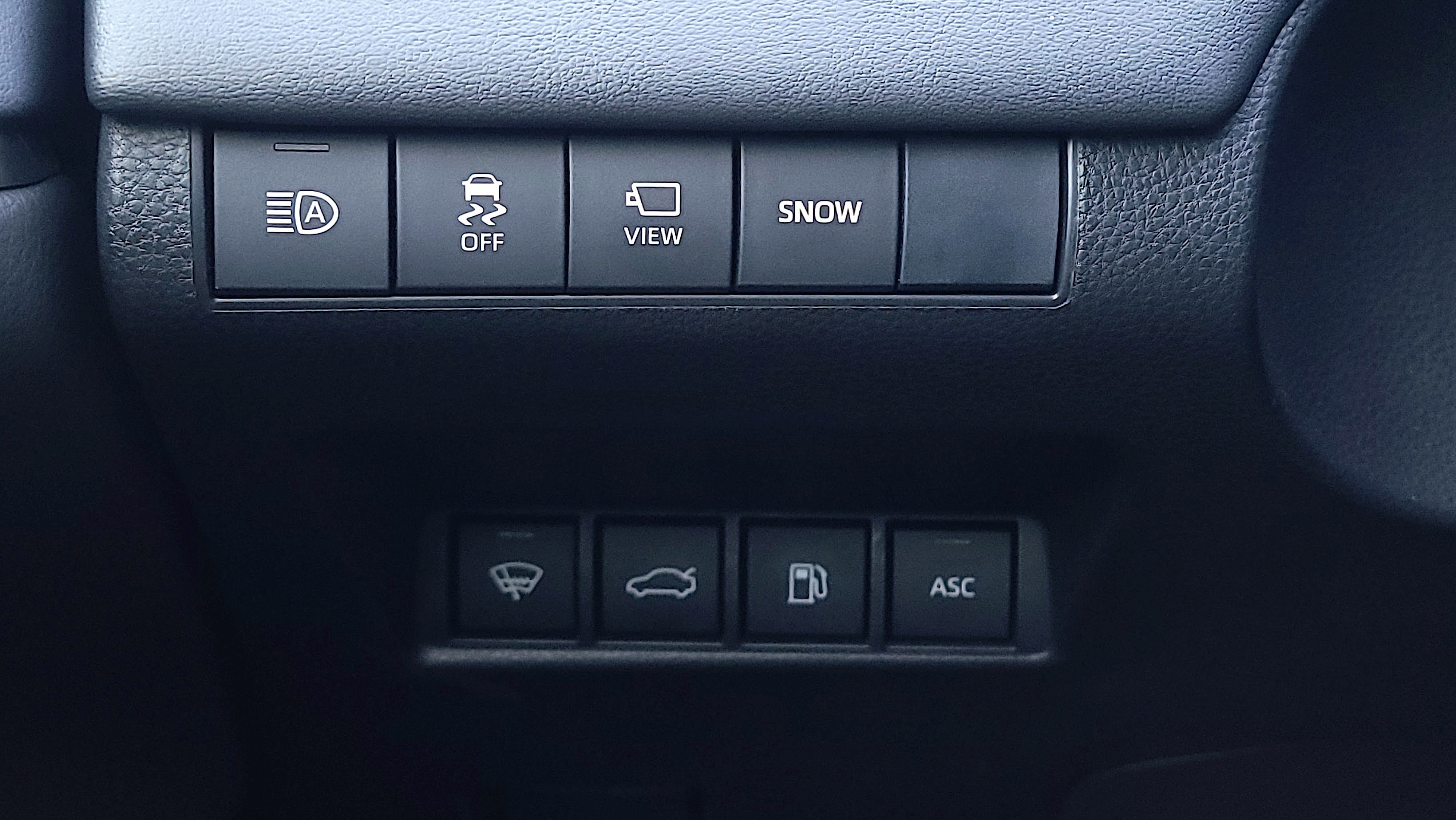
Buttons for Snow mode and more in the Toyota Mirai (2021)

(Image credit: TechRadar / Myriam Joire)
Image 8 of 9

Climate control panel for rear passengers in the Toyota Mirai (2021)

(Image credit: TechRadar / Myriam Joire)
Image 9 of 9

Two USB ports accessible to rear seat passengers in the Toyota Mirai (2021)

(Image credit: TechRadar / Myriam Joire)

Should I buy a Toyota Mirai?

Buy it if

You want a comfortable vehicle
The 2021 Mirai is an extremely comfortable and competent car that’s ideal for commuters. It’s easy to drive and familiar to refuel.

You want free fuel
While the 2021 Mirai starts at $49,500, that's before up to $12,500 in incentives. Toyota then sweetens the pot with six years (or $15,000) of free hydrogen.

You want to refuel in minutes
Unlike other EVs, refueling the 2021 Mirai is as quick and easy as refueling a gas or diesel car. The 402-mile range is the icing on the cake.

Don't buy it if

You don't live near multiple hydrogen refueling stations. Here in the US, the 2021 Mirai is best suited for people who live in the greater San Francisco and Los Angeles areas.

You want a fast car. The 2021 Mirai is all about comfort over performance, so don't expect this hydrogen FCEV to be as quick as similarly-priced battery EVs.

You want the best tech. While the 2021 Mirai includes a comprehensive set of tech features, these aren’t as advanced or polished as what other EVs have to offer.

First reviewed: September 2021


from TechRadar - All the latest technology news https://ift.tt/3lutGpY

Latest Tech News

Intel’s Core i9-12900K has been spotted in yet more Alder Lake leakage, with another spilled benchmark suggesting that we’ll get promising performance from the 12th-gen flagship.

This comes from Twitter-based hardware leaker HXL (again) who flagged up a couple of purported benchmarks on Bilibili, showing the 12900K put through its paces on Cinebench R20 and CPU-Z.

See more

As observed, the benchmarks were carried out under Windows 11 with DDR4 system RAM, using a QS or qualification sample (meaning it’s the final pre-release version and should be pretty much identical to the retail chip).

In Cinebench R20, the Core i9-12900K’s single-threaded performance proved to be almost 20% faster than the 11900K, and the same story was true in CPU-Z (actually the 12900K was 21% faster here).

In multi-threaded testing with Cinebench, the 12900K was 65% faster than the 11900K, and just a smidge faster than the AMD Ryzen 9 5950X. With CPU-Z, the Alder Lake flagship was 75% better than the 11900K, and very close to the 5950X (the AMD chip was 3% quicker here, so just marginally had the edge).


Analysis: Eye-opening performance once again

We must, of course, apply the usual caveats and caution around any leaked benchmarks, but this is yet another promising set of leaked results for Alder Lake. That single-core performance beating out current-gen Rocket Lake by 20% across two benchmarks is quite an eye-opener, and multi-core speeds roughly equalling the Ryzen 9 5950X are also seriously impressive (single-threaded performance is much better than the Ryzen chip, too, to the tune of 27% and 18% faster in CPU-Z and  Cinebench respectively).

Another point to bear in mind here is that the 5950X is a 16-core CPU bristling with 32-threads, compared to the 12900K’s purported configuration of 24-threads (it’ll run with 8 full-power performance cores, and 8 efficiency ones, with the latter not having hyper-threading). So the Ryzen chip has an 8-thread advantage here, and remember, the final retail 12900K chip could do better still, particularly if paired with DDR5 RAM (DDR4 is used in this round of testing as noted).

If there’s one area for a touch of concern at first glance, it’s the power consumption hitting 257W in the stress test here, and temperatures reaching 108C – but that’s to do with the apparently fudged cooling solution (it wasn’t properly mounted) the leaker had to employ here. In other words, take that with a whole lot of condiments, and the thermal performance of the actual finished product will be a whole lot better (likely in the same ballpark as the 11900K).

Overall, this is a very promising leak for Intel, and yet another one which seems to suggest that Alder Lake could be a real headache for AMD and its desktop Ryzen dominance.

Via Wccftech


from TechRadar - All the latest technology news https://ift.tt/3mHsrmQ

Latest Tech News

The Fitbit Charge 5, which launched just a few months ago, is a very impressive fitness tracker, but its predecessor, the Charge 4, might be better suited to your needs – particularly if you're on a tight budget.

The Charge series has always been workout-focused, and the Fitbit Charge 4 was a real game-changer when it arrived in 2020 thanks to its on-board GPS, which allowed wearers to track runs, walks and bike rides without carrying their phone.

It wasn't the first Fitbit with a GPS chip (the Fitbit Surge and Ionic also had their own), but it was by far the slimmest and lightest, making it a great choice for anyone starting to get serious about their running.

It was a tough act to follow, but the Fitbit Charge 5 has even more to offer. Not only does it keep the GPS chip (packed into a case that's 10% thinner), it also has an EDA (electrodermal activity) stress monitor, as seen in the Fitbit Sense, plus an ECG (electrocardiogram) sensor for checking your heart health.

There's also a new bright color AMOLED screen in place of the Charge 4's monochrome display, plus a smart new design that replaces the older watch's hard angles with smoother lines.

That doesn't necessarily mean that the Charge 5 is the best choice for everyone, though. Read on to find out all the key differences between the two fitness trackers, and choose the right one for you.

Price and release date

  • Fitbit Charge 5 more expensive
  • Fitbit Charge 4 often steeply discounted

The Fitbit Charge 4 launched in April 2020, priced at $149.95 / £129.99 / AU$229.95 (the same as the Charge 3's launch price). It can now be found much more cheaply though, particularly during sales events like Amazon Prime Day and Black Friday.

The Fitbit Charge 5 was released in September 2021, priced at $179.95 / £169.99 / AU$269.95.  we're not likely to see any significant price discounts for a while yet.

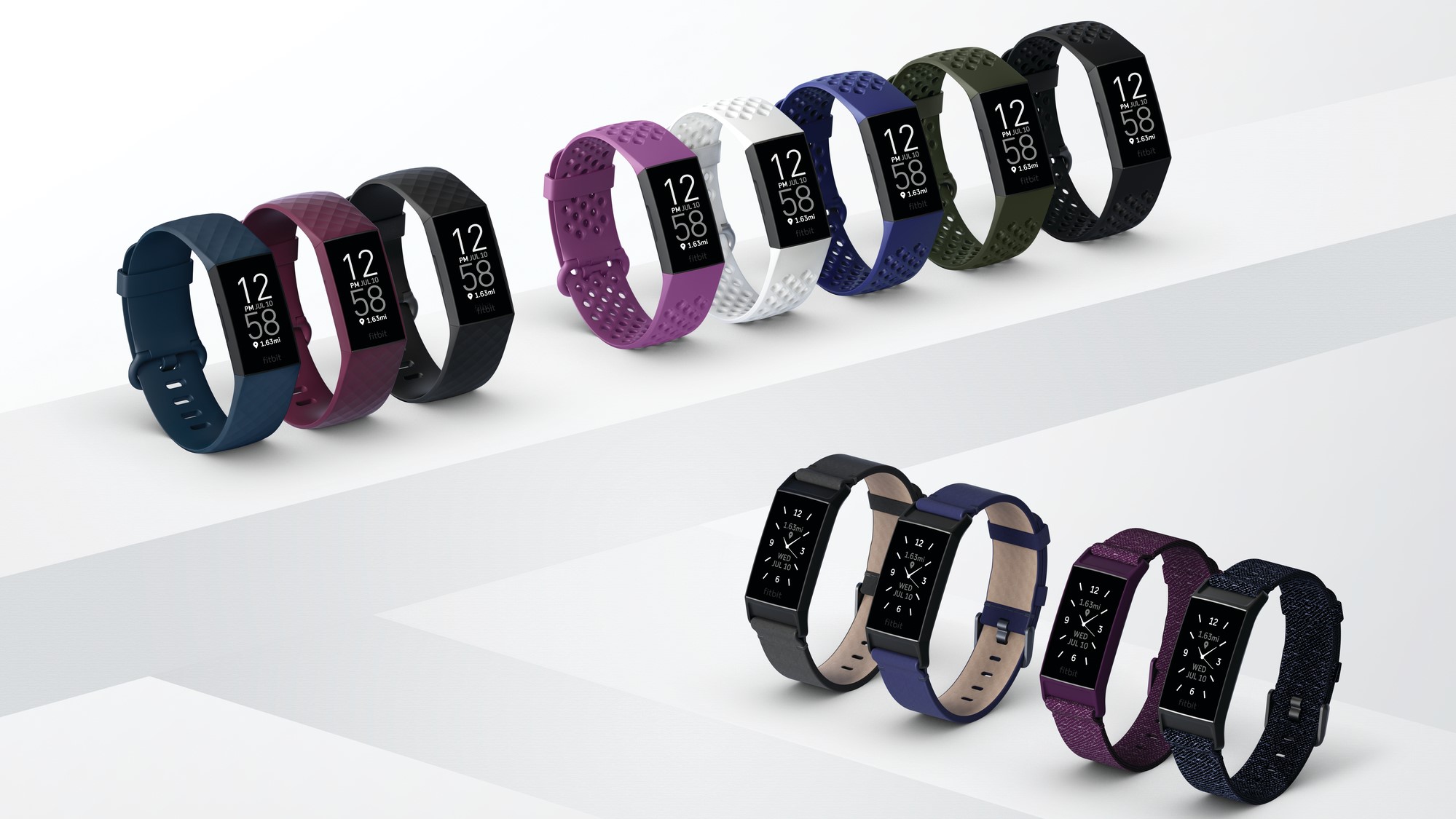
Full range of Fitbit Charge 4 case and band designs

The Fitbit Charge 4 had a plastic case, and was available with a variety of silicone, woven, and leather bands (Image credit: Fitbit)

In short, if you're on a tight budget, the Charge 4 is the cheaper option, and that's unlikely to change.

Design and display

Design

  • Charge 4 has plastic case; Charge 5 has stainless steel
  • Charge 5 has more modern, streamlined look
  • Extra bands available to buy separately

Both the Fitbit Charge 4 and Charge 5 are slender devices, with a narrow rectangular case that sits flush with the band. However, that's where the similarities end.

The Charge 4 has a plastic case with an angular design and a dark color scheme (black, dark blue, and deep purple). The standard edition has a silicone strap with a plastic buckle, and the special edition comes with an additional woven nylon band with reflective threads worked into the material.

Woman doing yoga wearing Fitbit Charge 5

The Fitbit Charge 5 has a soft Infinity Band strap, which makes it more comfortable to wear while sleeping and exercising (Image credit: Fitbit)

The Charge 5 has a stainless steel case, and is 10% thinner than the Charge 4. Its lines are smoother and softer (matching those of the Fitbit Versa 3, Sense, Inspire 2 and Luxe) and it's available in three colors: black, lunar white, and steel blue. All versions have a silicone Infinity Band, which uses a soft loop and tang rather than a hard buckle, which is more comfortable to wear while sleeping.

Extra silicone, fabric and leather bands for both watches are available to buy separately, but bear in mind that they use different fittings, so you can't use Charge 4 bands with a Charge 5, or vice versa.

Display

  • Charge 4 has monochrome display
  • Charge 5 has color AMOLED

One of our biggest complaints about the Fitbit Charge 4 is its display, which is perfectly serviceable, but doesn't really do the watch justice. It's a monochrome OLED touchscreen, with a relatively low resolution that limits the amount of workout data that can be displayed at once, and makes checking app notifications tricky as you can only see a small snippet of text.

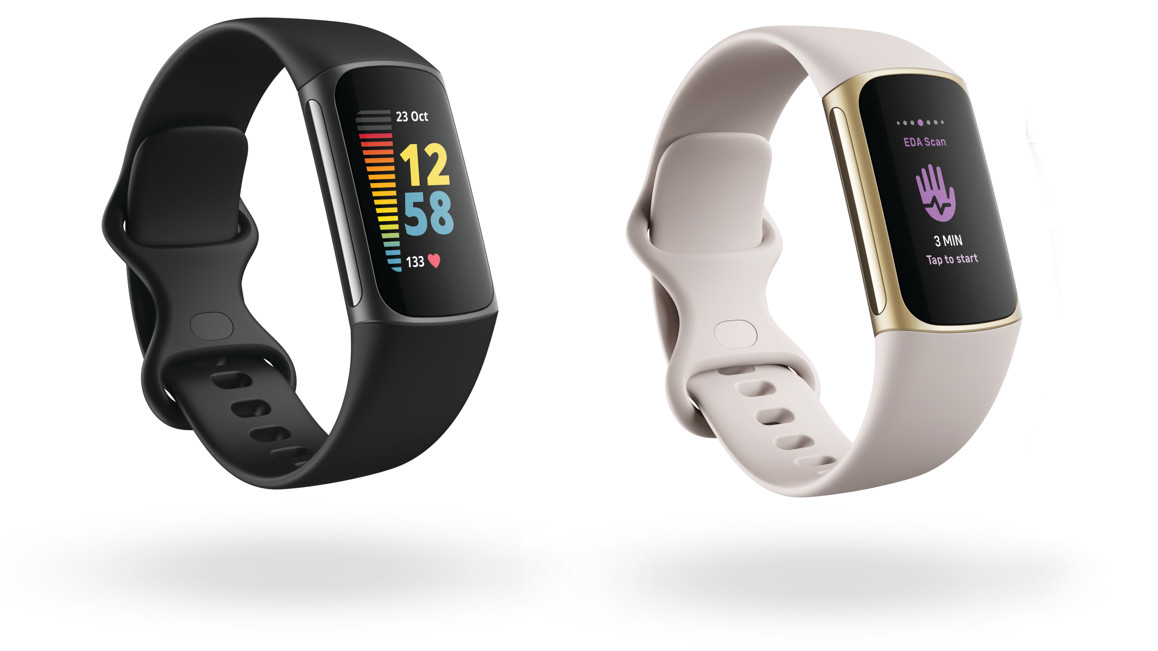
Fitbit Charge 5 in black and lunar white

The Fitbit Charge 5 has a color AMOLED display, with an always-on option to make it easier to see stats at a glance in the middle of a workout (Image credit: Fitbit)

The Fitbit Charge 5's screen is about the same size, but is a full color AMOLED, with crisp graphics and animations. It looks very much like that of the Fitbit Luxe, and may indeed be the same unit. It's a huge upgrade, and one that brings the Charge series in line with rival device from the likes of Xiaomi and Amazfit.

Features

Smartwatch features

  • Both watches display smartphone notifications
  • Both support Fitbit Pay
  • Charge 5 doesn't support Spotify playlists

Neither the Fitbit Charge 4 or the Charge 5 are fully-fledged smartwatches (for that, you'll want the Fitbit Sense or Versa 3), but they still offer a handful of useful features outside of fitness tracking.

For example. both watches can display smartphone notifications, and both feature NFC for making contactless purchases through Fitbit Pay (which could prove extremely handy for picking up a bottle of water during an unexpectedly hot run).

Both also have a 'smart wake' alarm, which makes the watch vibrate gently at the optimum point in your sleep cycle, so you wake feeling fresh and without disturbing your partner. 

If you're a Spotify Premium subscriber, you may be surprised to learn that while the Fitbit Charge 4 allows you to control your playlist from your wrist, this feature has been dropped for the Charge 5.

Fitness tracking

  • Both have on-board GPS
  • Charge 5 has ECG and EDA sensors
  • Charge 5 gives Readiness Score to Premium subscribers

Both the Fitbit Charge 4 and Charge 5 have a good suite of workout tracking modes, plus on-board GPS. That means you'll still be able to track your location and pace during outdoor workouts, even if you opt for the slightly older model. 

The Charge 5 has lots more health and fitness tools to offer, though – including an EDA (electrodermal activity) sensor, as seen on the Fitbit Sense. This uses your skin's conductivity to assess physiological changes brought about by stress. The Fitbit app then helps you understand the factors that affect your stress levels, and take steps to manage it.

Another feature borrowed from the Sense is an ECG sensor and app, which allow you to check for signs of atrial fibrillation. This can be an early sign of heart disease, and while the Charge 5 isn't a medical tool, if it detects something amiss, you can generate a report using the Fitbit app that you can share with your doctor.

Fitbit Charge 5

The Fitbit Charge 5 gives Fitbit Premium subscribers a daily Readiness Score, with recommendations for workouts or active recovery based on your activity levels, heart rate variability, and sleep patterns (Image credit: Fitbit)

If you're a Fitbit Premium subscriber, the Fitbit Charge 5 will also give you a daily a Readiness Score. Each morning, this tells you how energized and well recovered you are, based on your sleep, recent activity, and heart rate variability. It also uses this data to suggest some activities for you to try from the Fitbit app's catalog of workouts, meditation sessions, and breathing exercises. 

For example, if you're well rested and have lots of energy, the app may suggest a tough run, but if you're more tired it might suggest you try some active recovery with a gentle yoga session. The Readiness Score tool will only be available to Fitbit Premium subscribers though, so it's worth factoring this extra cost into your decision-making.


from TechRadar - All the latest technology news https://ift.tt/3sSd5yx

Latest Tech News

The first ever World Marathon Majors double-header takes us to Beantown from the Windy City in 24 hours. Both races had to be cancelled last year, snapping a 43-year streak for the Chicago event and a historic 123-year streak for Boston, home of the world's oldest annual marathon. So read on as our guide explains how to watch a 2021 Chicago and Boston Marathon live stream from anywhere in the world on Sunday and Monday.

Chicago & Boston Marathon live stream 2021

Chicago Marathon date and time: Sunday, October 10 - 8.20am ET / 7.20am CT / 5.20am PT

Boston Marathon date and time: Monday, October 11 - 8.02am ET / 7.02am CT / 5.02am PT

US live stream: NBCSN via FREE FuboTV trial or Sling TV in select markets (US)

Global live streams: FloTrack/TSN (CA) | FloTrack (AU) | Eurosport/Discovery+ (UK)

Watch anywhere: Try ExpressVPN 100% risk-free

The Chicago and Boston courses could barely be more different: the Chicago Marathon is run in a loop and on largely flat terrain, whereas the Boston Marathon's most famous feature is Heartbreak Hill - the last of the brutal Newton hills that come into play from the 16-mile mark and bring many races to a painful and premature end.

15 years on from Deena Kastor's American record-setting performance at the 2006 London Marathon, could Sara Hall be the woman to break it? The 38-year-old came within a minute of Kastor's time in London last year, and has a job on her hands closing the gap in Chicago.

Meanwhile, the elite names will be out in force in Boston, Des Linden, Edna Kiplagat and Mare Dibaba the headline names in the women's race, and Lemi Berhanu, Lelisa Desisa, Yuki Kawauchi and Geoffrey Kirui set to go toe-to-toe on the men's side.

Find out how to live stream Chicago and Boston Marathon action from anywhere in the world. 

usa flag

How to watch 2021 Chicago and Boston Marathons in the US with and without cable

Both the Chicago Marathon and the Boston Marathon are being nationally televised on NBCSN. If you have cable, that means you're all set and will also be able to watch the Chicago and Boston Marathons online via the NBC Sports website - you'll just need to log-in with details of your TV provider.

Coverage of the Chicago Marathon gets underway at 8am ET / 7am CT / 5am PT on Sunday morning, and coverage of the Boston Marathon starts at 7.30am ET / 6.30am CT / 4.30am PT on Monday.

If you don't have cable, in select markets you can access NBCSN via OTT provider Sling TV. And better still, you can get your first month for just $10, recurring at $35 a month. 

A more comprehensive (but more expensive) option is FuboTV which offers a FREE 7-day trial and includes a whole host more channels than Sling.

And both races are also being live streamed on Peacock TV. Plans start from $4.99 a month and can be cancelled any time.

Out of the US and want to watch your home coverage? No worries - just use a VPN as described below.


How to watch 2021 Chicago & Boston Marathons from outside your country

If you're abroad right now, you'll likely find you're unable to access your usual marathon coverage like you would at home. This isn't necessarily cause for alarm, but rather the result of geo-blocking – best understood as digital borders that restrict certain services and content to certain parts of the world.

Fortunately, there's a convenient way around this in the form of a VPN. This is a nifty bit of software that lets you whizz around these digital borders, thereby allowing you to globe-trot and still access your preferred Chicago & Boston Marathon live stream. It's a very affordable workaround that's super easy to use.

Use a VPN to live stream 2021 Chicago & Boston Marathons from anywhere

ExpressVPN - get the world's best VPN
We've put all the major VPNs through their paces and we rate ExpressVPN as our top pick, thanks to its speed, ease of use and strong security features. It's also compatible with just about any streaming device out there, including Amazon Fire TV Stick, Apple TV, Xbox and PlayStation, as well as Android and Apple mobiles.

Sign up for an annual plan now and get an extra 3 months absolutely FREE. And if you change your mind within the first 30 days, let them know and they'll give you your money back without a quibble.

- Try ExpressVPN 100% risk-free for 30 days

It's remarkably easy to use a VPN, too:

1. Download and install a VPN - our top choice for streaming right now is ExpressVPN

2. Connect to the appropriate server location - open up the app, choose the location that corresponds to your country, and hit the 'on' button

3. Go to the broadcaster's live stream - you'll now be able to watch on Sling or on Fubo on your USA server


canada flag

How to live stream Chicago & Boston Marathon in Canada

In Canada, the Chicago Marathon is being shown on FloTrack, which covers loads of track and field events and costs US$29.99 per month or US$210 for a year, which works out at US$12.49 per month. 

The Boston Marathon, meanwhile, is being shown on TSN. If you get it as part of your cable deal, you'll just be able to log in with the details of your provider and get access to a Boston Marathon live stream. 

If you don't have cable, then you can subscribe to TSN on a streaming-only basis from just CA$4.99 a day or (much better value) $19.99 a month.

If you decide to subscribe or already have, remember you can take your favorite sports streaming service with you wherever you go - just try our No. 1 overall rated VPN 100% risk-free for 30-days and follow the instructions above.

uk flag

Chicago & Boston Marathon live stream 2021: how to watch in the UK

It's a simpler affair in the UK, where both the Chicago Marathon and the Boston Marathon are set to be shown live by Eurosport and Discovery+.

The Chicago Marathon starts at 1.20pm BST on Sunday, and the Boston Marathon gets underway at 1.02pm on Monday afternoon.

A subscription to Eurosport costs £6.99 per month or £39.99 for a whole year, while the Discovery+ Entertainment and Sport package costs £6.99 per month or £59.99 per year.

If you’re out of the UK but still want to tune in, make sure you install a VPN so you can continue accessing UK streaming services from anywhere.

australia flag

How to watch the Chicago & Boston Marathon: live stream in Australia

Dedicated track and field streaming service FloTrack is live streaming both races Down Under.

The Chicago Marathon gets underway at 11.20pm AEDT on Sunday night, while the Boston Marathon starts at 11.02am on Monday night.

You'll need to sign up for a FloTrack subscription to tune in. There's a US$29.99 per month option, but if you fancy committing for the long term, you'll save US$210 if you plump for a 12-month subscription, which works out at $12.49 per month.

FloTrack covers loads of track and field events, live and on demand, and offers FloTrack Originals, all of which you can watch online or on your device with the FloSport app, which is compatible with iOS, Android, Apple TV, Roku, Amazon Fire TV, and Chromecast.

Abroad right now? A good VPN will help you tap into your home coverage no matter where in the world you are right now. 


from TechRadar - All the latest technology news https://ift.tt/3FB1mtU

Latest Tech News

With the Apple iPhone 13 now out and the Google Pixel 6 about to launch, it'll soon be all eyes on Samsung for the arrival of the Galaxy S22 series of phones – and a new leak gives us more evidence of the redesign that appears to be on the way for the Ultra model.

A dummy unit of the Galaxy S22 Ultra revealed by Italian outlet CoverPigtou and tipster @xleaks7 shows the P-shaped rear camera module that we've seen in previous leaks, as well as the flat design for the top and bottom of the phone.

As has been noted before when we saw some unofficial renders of this same device, it has a distinct Galaxy Note look about it. Remember that the Galaxy Note 21 never saw the light of day, and the S22 Ultra is now widely expected to be the Note replacement for 2022.

See more

Room for the S Pen

According to the same source that revealed this dummy unit, the Galaxy S22 Ultra will indeed have an integrated slot to house the S Pen. While the Galaxy S21 Ultra supported the stylus, you needed a special case to actually carry it along with the phone.

Nothing else that's new is revealed here: we've got the volume and power buttons down the right-hand edge of the handset as you look at it, as you would expect, with the left-hand side left free from any buttons or ports.

We've also seen unofficial case renders from a reliable source that show the same design for the Galaxy S22 Ultra, adding more weight to the idea that this model is going to look substantially different to the standard Galaxy S22 and the Galaxy S22 Plus.


Analysis: Samsung's 2022 plans come into focus

Samsung Galaxy Note 20

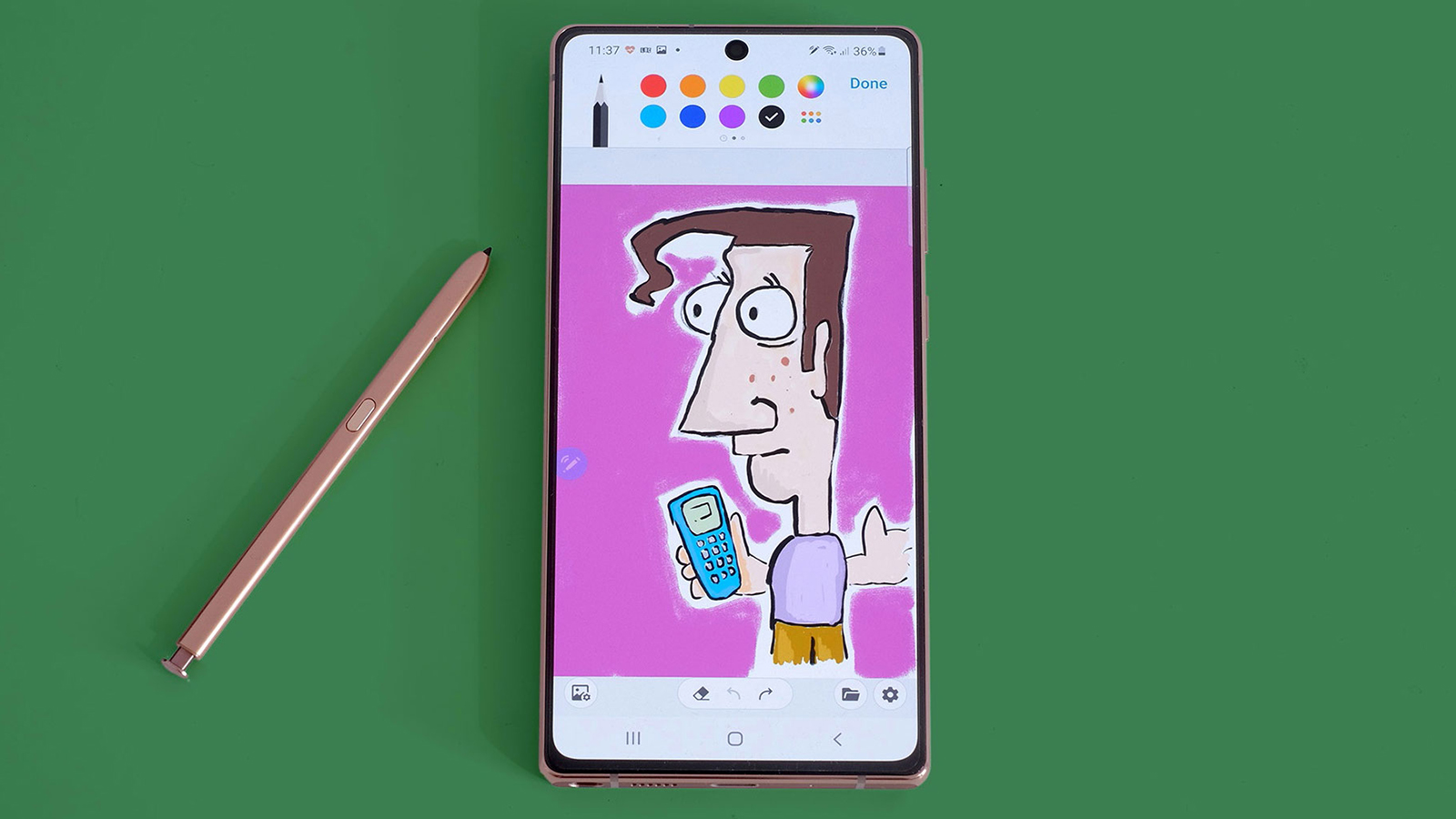
The Samsung Galaxy Note 20. (Image credit: Future)

We've seen a lot of speculation about Samsung's smartphone plans for 2022 – everything from when the devices will actually appear, to the question of whether or not the premium Galaxy Note series is going to make a dramatic return to the market.

As more and more leaks start to show up, it looks more and more likely that the Galaxy Note 22 will be making an appearance in the form of the Galaxy S22 Ultra. Whether Samsung actually gives it the Note moniker to confirm the switch remains to be seen, but it seems to be on the cards.

We've now seen this Note-style design with the P-shaped camera from several sources, which carries a lot more weight than a single rumor on its own. It's possible that Samsung has come round to the idea that three S series phones is one more than they need, especially as the effects of the pandemic continue to be felt.

There's still plenty that we're not sure about, however. We had been expecting the Galaxy S22 phones to launch in January, but that's now in doubt – the rumor is that the long-awaited Samsung Galaxy S21 FE could be the phone to arrive in January instead.


from TechRadar - All the latest technology news https://ift.tt/3DGY2vV

Pet safety guide: How to leave your pet at home with confidence - CNET

From foods that can make your pet sick to dangerous plants, your house is packed with potential hazards.

from CNET https://ift.tt/30cI1PL

NASCAR Playoffs 2021: How to watch the Bank of America ROVAL 400 today without cable - CNET

You don't need cable TV to watch the racin' and rubbin' at Charlotte on Sunday for the last Round of 12 race on NBC.

from CNET https://ift.tt/3Badek7

Google Pixel phones: 6 tempting reasons why you should buy one now - CNET

Google's Pixels are more enticing than ever with unlimited photo storage, robocall spam protection, quality cameras and more.

from CNET https://ift.tt/3oPFJ3g

Today's Wordle Hints, Answer and Help for May 10, #1786

Here are hints and the answer for today's Wordle for May 10, No. 1,786. from CNET https://ift.tt/FztnkY5