Sunday, March 21, 2021

Latest Tech News

For any tech lover or frequent traveller, a portable charger is a must-have accessory. There are loads of models available, and the latest all support fast charging. For the real road warrior, many power banks will also charge a USB-C laptop.

For best performance, the power bank needs to match your USB fast charge spec. Don’t worry though, any non compatible devices simply charge at normal USB speeds. Apple and many Android devices support the USB Power Delivery (PD) protocol (as do most USB-C laptops), while many other devices use QualComm Quick Charge (QC 2.0/3.0). Fortunately most new power banks make it easy and support both PD and QC fast charging. You can also get power banks with built in wireless charging. Keep in mind that PD charging uses USB-C only, while Quick Charge is usually via standard USB ports, though often is also available on USB-C.

We recommend a power bank with at least an 18W output, and a 10,000 mAh (37Wh) capacity. This is a great size to carry with you, and will take a dead phone to full charge twice over. 20,000 mAh power banks start to get too bulky to slip into a pocket, but are often the best value. Laptops on the other hand usually need 45W or more to charge at a reasonable rate. One thing to be aware of is that power banks over 100 Wh (27,000 mAh) need permission from the airline to be taken on board and over 160 Wh (43,000 mAh) is a no go at all.

Keep in mind that fast charging needs a compatible cable (most power banks come with one), and many extra long or older cables will not allow your device to charge at full speed.

How we test

There’s plenty of no-name power banks out there with dubious specs, so we make sure to thoroughly test all the power banks recommended here. Our regime involves multiple full discharges of each power bank to test the rated capacity, as well as to see how efficient the electronics are. We also make sure they can properly fast charge at the advertised output for a sustained period of time. To make life easy, we sum up our results into an efficiency score out of 100%. Keep in mind a lower score is not necessarily a bad thing, if the power bank itself is cheaper to compensate, and all our recommended models are great deals in different ways.

Best portable chargers in Australia at a glance

  1. Xiaomi ZMI PowerPack Aura 20K QB822
  2. Romoss 50W PPD20
  3. iMuto Smart Power X6SPD
  4. Kogan 10000mAh 18W PD
  5. Xiaomi ZMI Power Bank Pro QB823
  6. Cygnett ChargeUp Reserve 20K
  7. BlitzWolf BW-P12

ZMI PowerPack Aura 20K QB822 power bank

(Image credit: TechRadar)

1. Xiaomi ZMI PowerPack Aura 20K QB822

Sleek and powerful

Very affordable
27W output
Too big for a pocket

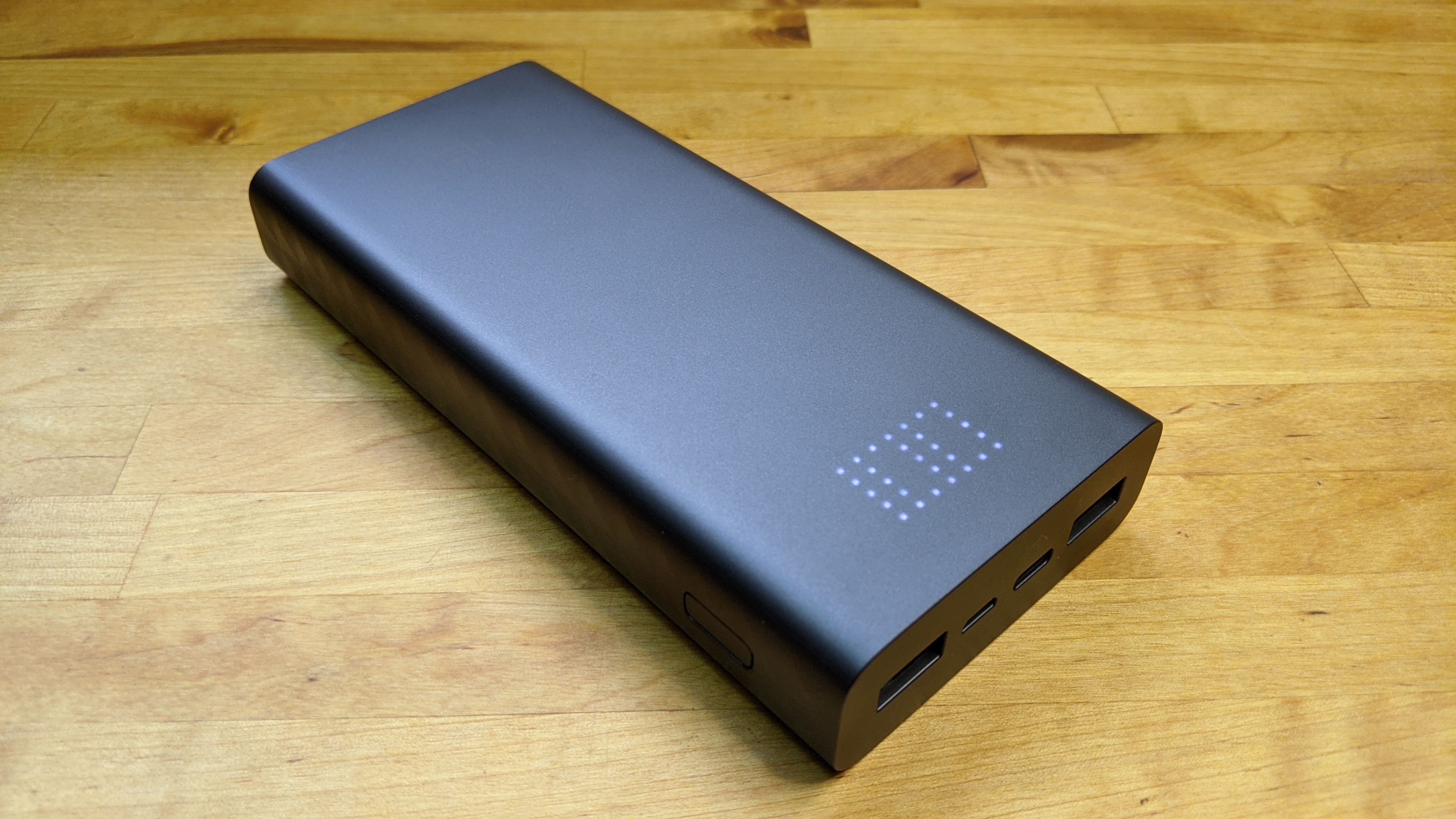
The Mi QB822 is our favourite affordable power bank right now. It’s pretty slim and light, has a tough plastic shell, plus a big 20,000 mAh capacity. It outputs 27W using Quick Charge or Power delivery on USB-C, which is a step above the 18W power banks and great for those with more capable devices. It comes with a USB-C cable, has a digital capacity readout, and can be charged via USB-C or MicroUSB. The two USB ports do Quick Charge at 18W, and overall it managed an excellent 88% efficiency rating. What’s not to love?
Romoss 50W PPD20 portable charger

(Image credit: TechRadar)

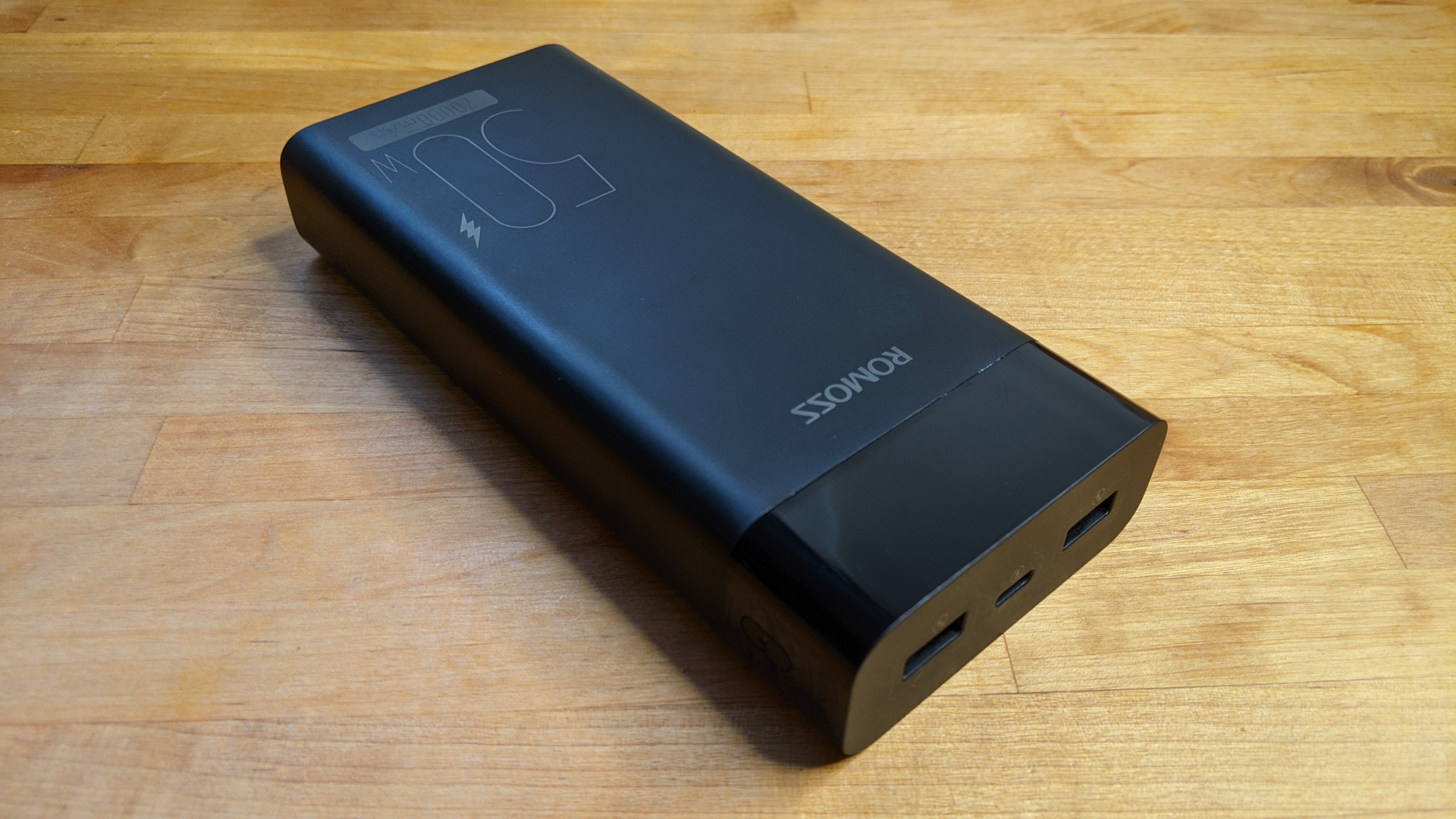
2. Romoss 50W PPD20

Great value

Power Delivery and Quick Charge
50W output
Slightly bulky
Lower efficiency

A big 20,000 mAh battery for a bargain price makes the Romoss 50W PPD20 one of the best value power banks on the market. It supports both Power Delivery and Quick Charge on the USB-C port, and Quick Charge on the two USB connections. Even better, it will output up to 45W via USB-C, and 50W total, which is enough for many laptops. It charges quickly too (at 45W), so can be topped back up in a hurry. The Romoss power bank tested at a decent for the price 78% efficiency rating. It also has a handy percentage display that shows exactly how much charge is left.
iMuto Smart Power X6SPD portable charger

(Image credit: TechRadar)

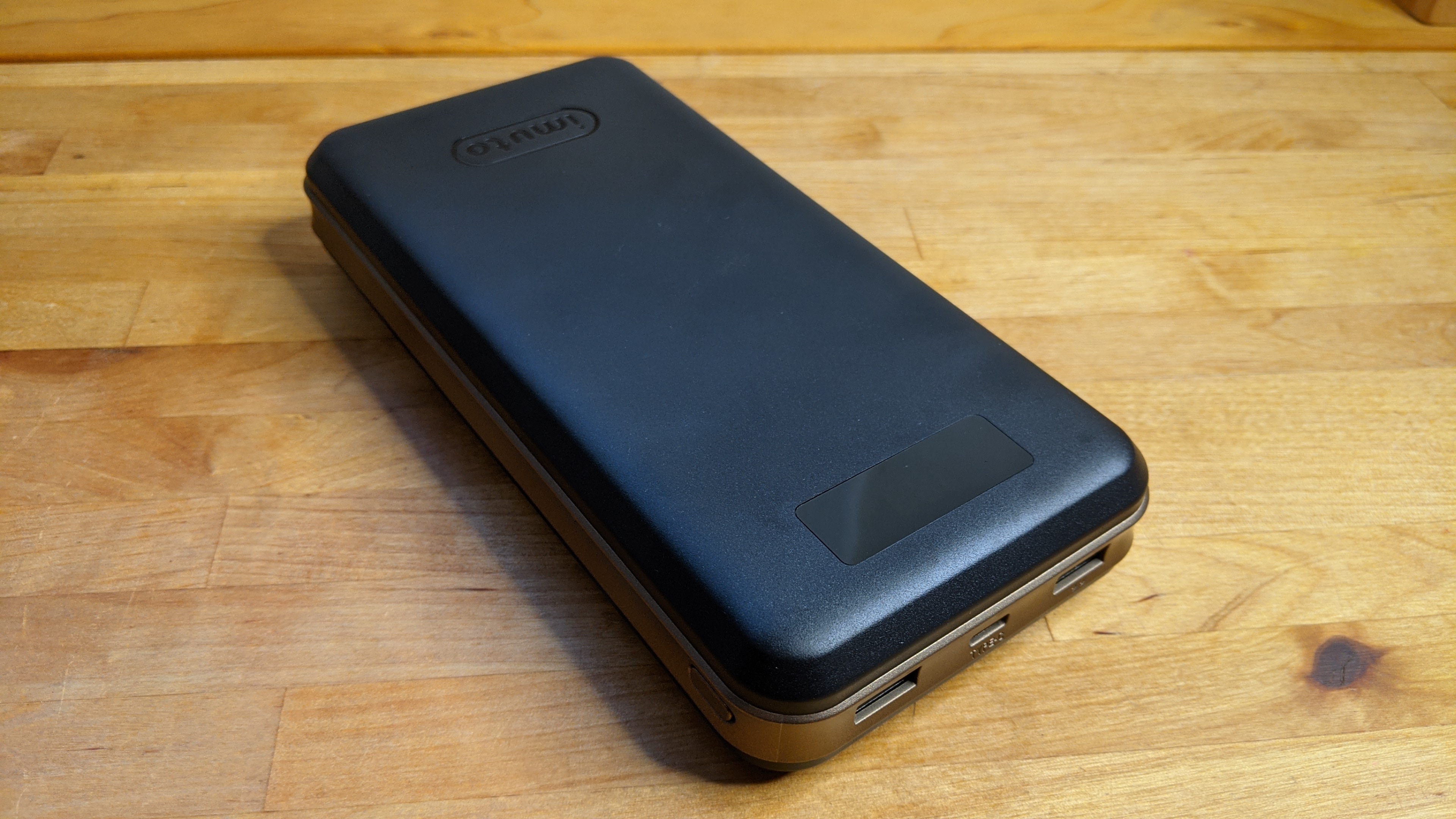
3. iMuto Smart Power X6SPD

High output fast charging

Great bang for buck
Large capacity
Large and heavy
No Quick Charge

The chunky black and gold shell on the iMuto Smart Power covers an extra large 27,000 mAh (99.9Wh) battery - the biggest you can take on a plane. It only supports PD spec fast charging via the USB-C input/output, but is rated for 45W and can handle topping up a laptop. The dual USB ports don’t have any fast charging, but the total output means you can charge multiple devices at once all at full speed. The power bank managed a solid 82% efficiency rating during testing, and had no trouble outputting the full 45W.
Kogan 10K power bank

(Image credit: TechRadar)

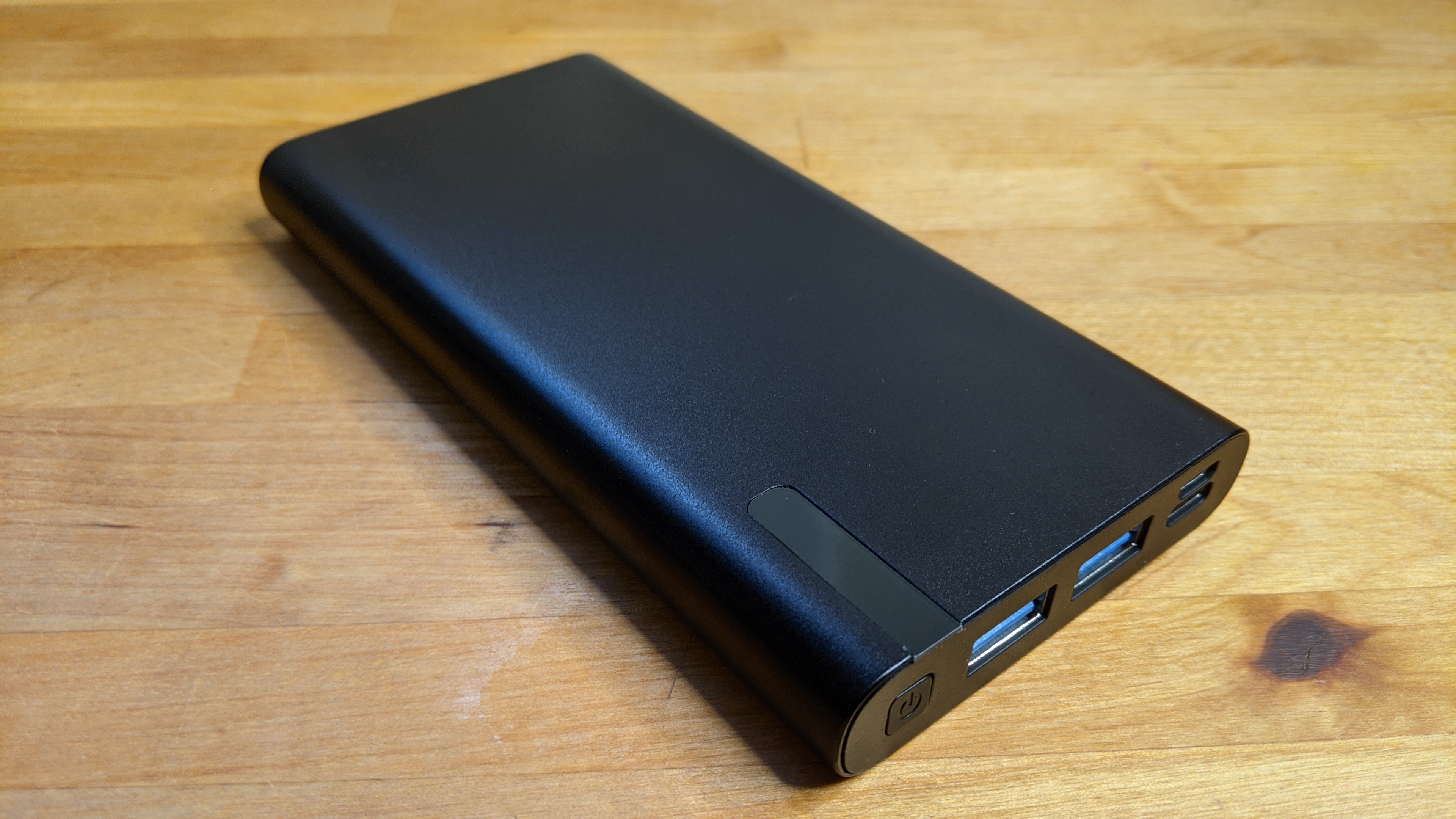
4. Kogan 10000mAh 18W PD

Simple and affordable

Affordable and slim
18W PD and QC fast charge
Lower efficiency

Compact and black with a metal shell, the Kogan 10K power bank is a great basic option. It’s quite slim and weighs in at a pocketable 276 grams. With a 10,000 mAh (37Wh) capacity and 18W PD and QC charging, the Kogan power bank is ready for almost all phones. It has dual USB ports, plus an USB-C input/output that handles both PD and QC fast charging. Handily it also has a second Micro USB input, which means you can charge using whatever cable is handy. Our testing gave it a reasonable 77% efficiency rating and it happily sustained 18W fast charging.
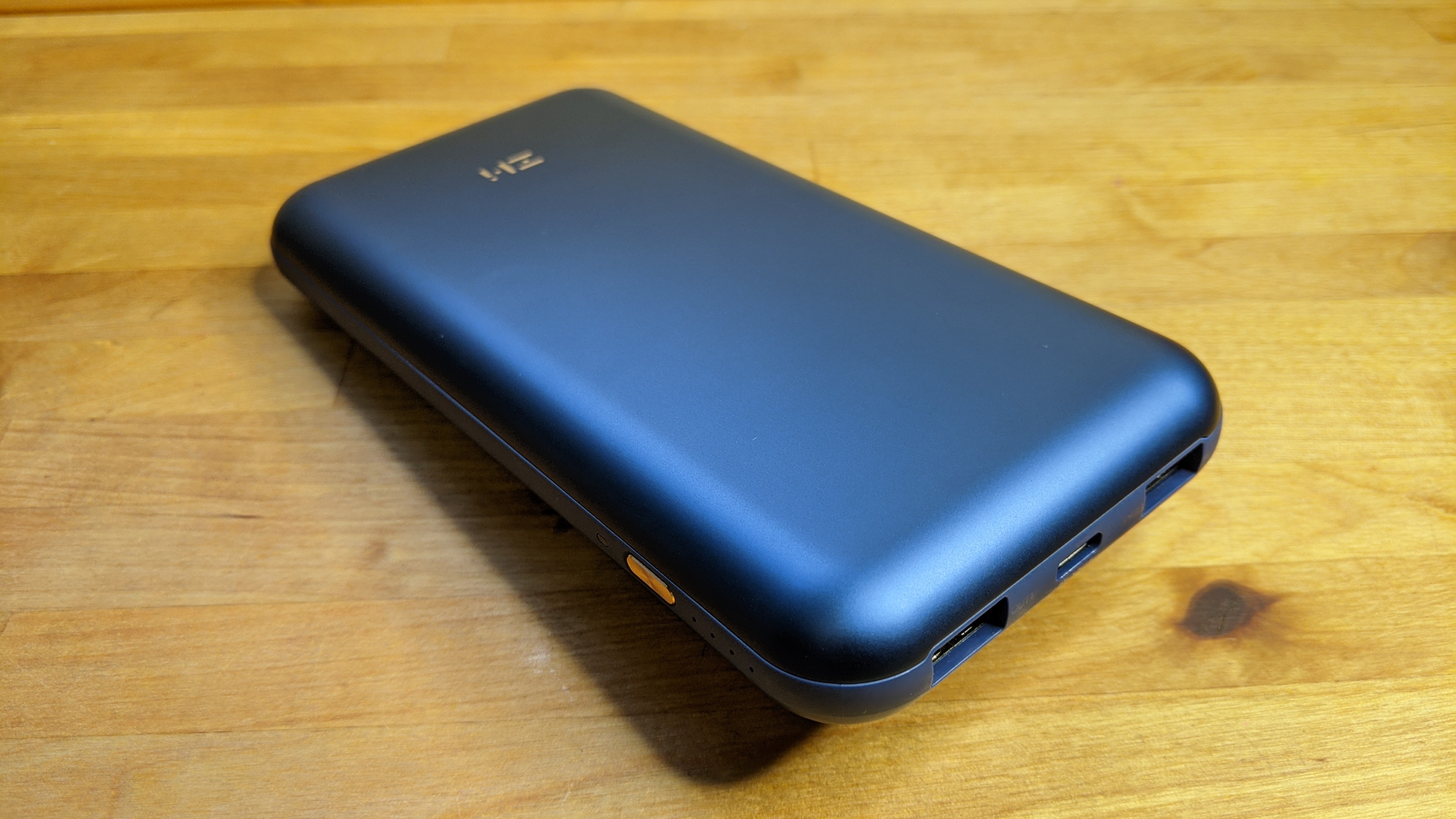
Xiaomi ZMI Power Bank Pro QB823

(Image credit: TechRadar)

5. Xiaomi ZMI Power Bank Pro QB823

Sleek and powerful

Massive 65W Power Delivery output
Excellent efficiency
Higher price
Overkill for phone charging

The Mi QB823 is a compact, aluminium clad slab of power bank goodness. While not the very cheapest, it is lighter (438 grams) and smaller than many other 20,000 mAh power banks, yet can output an impressive 65W via PD USB-C - enough for most laptops. It also supports up to 45W Quick Charge on USB-C, as well as the two normal USB ports. The QB823 achieved an impressive 94% on our efficiency test, which means more of the available power ends up in your device. If you need high power charging across a range of devices, this is a great choice.  
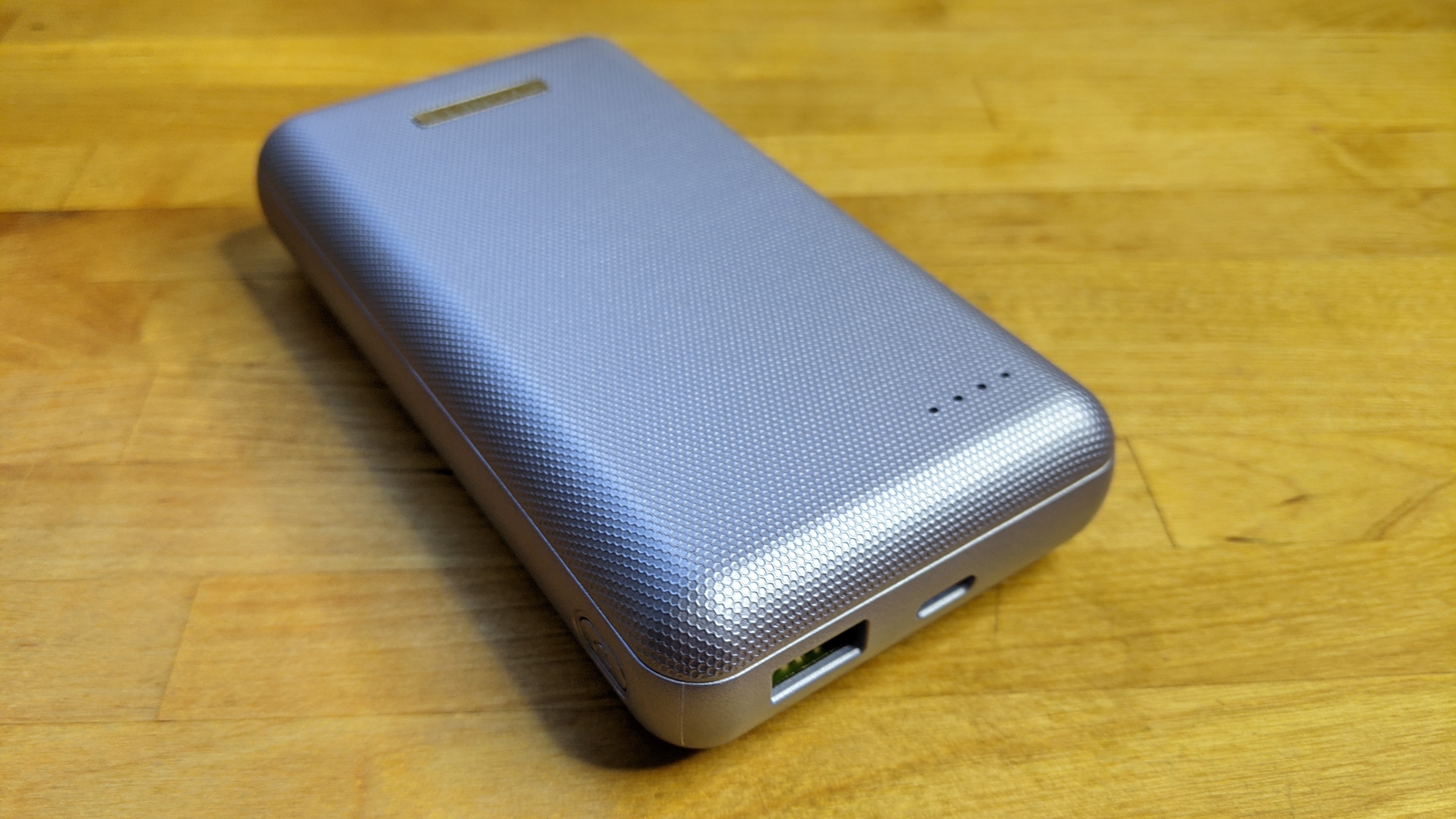
Cygnett ChargeUp Reserve 20K power bank

(Image credit: TechRadar)

6. Cygnett ChargeUp Reserve 20K

Big power in a small package

Compact and lightweight
18W PD and QC charging
Somewhat expensive
Limited USB ports

While more expensive for the capacity compared to some of its competition, the Cygnett power bank is one of the smallest and lightest 20,000 mAh (74Wh) models we have tested. The sleek purple plastic shell makes it very easy to slip into a small back, or even a pocket. It weighs a paltry 351 grams and feels not much bigger than most 10,000 mAh models. The power bank outputs and charges at 18W (PD and QC) via USB-C, or provides 18W QC charging using the single normal USB port. It also managed a better than average 85% efficiency, and had zero issues providing sustained fast charging.
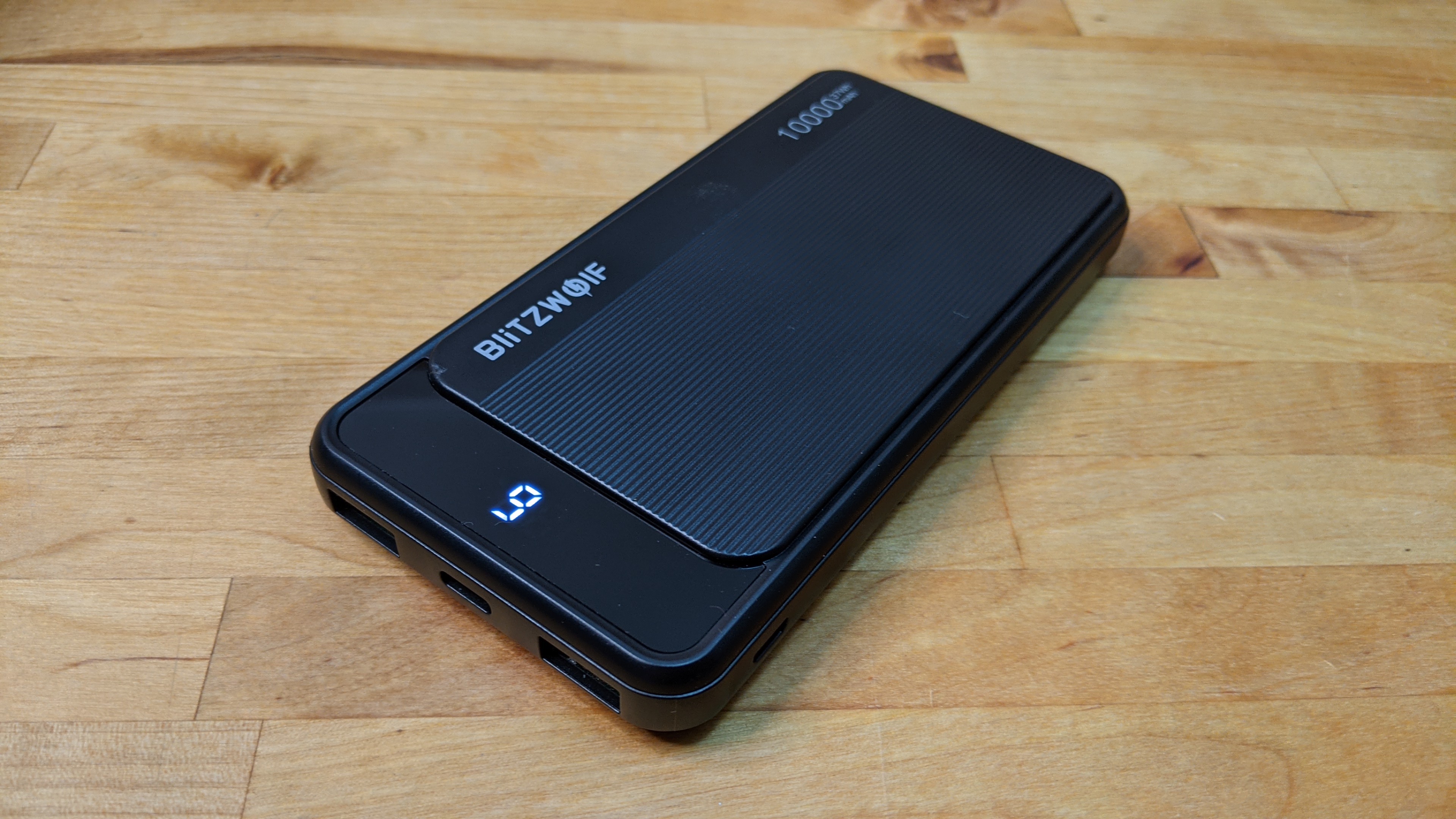
BlitzWolf BW-P12 portable charger

(Image credit: TechRadar)

7. BlitzWolf BW-P12

Very affordable

Great bang for buck
Slim and light
No USB-C cable in box
Smaller capacity

Sometimes you just want a dead cheap power bank to chuck in a bag and forget about. Blitzwolf might not be a brand you are familiar with, but the BW-P12 is a capable little 10,000mAh that is both slim and very lightweight. It does Quick Charge and Power Delivery at 18W via USB-C, and just the former via the two USB ports. Handily it charges via Micro USB or USB-C, and has an easy to read digital capacity display. The BW-P12 has a decent 78% efficiency rating, and will happily charge most devices once or twice over.

 Portable backup batteries buyer’s guide

  • Capacity: A 5,000mAh is a good starting point to get up to two full recharges from a smartphone, but a larger 10,000mAh model is best for tablets.
  • Passthrough charging: This handy feature allows you to plug the power bank between your charger and device, and charge both at once.
  • USB ports: Most larger-capacity models have two ports, which is very important if you need to charge more than one device at a time.
  • Input charge rate: Typically, 1A or 2A (higher is better), this determines how quickly your power bank can charge itself back up again.
  • Fast charge: Power banks supporting currents over 1A helps charge your device quicker, and is needed by some power-hungry tablets.
  • Charger not included: While they all come with a cable, power banks generally need to be plugged into an existing charger or USB port to charge.
  • Qualcomm quick charge: Only supported by some new phones, this tech allows devices to be charged up to four times faster than normal 5V USB.
  • Form factor and weight: With many different shapes, some power banks are better suited to use in bags, or being carried around.


from TechRadar - All the latest technology news https://ift.tt/3j3hmZo

Latest Tech News

Smart displays combine the handy features of a smart speaker with the flexibility of a screen, so you can see and hear the information you’re asking for, whether that's the news, a recipe or even just what the weather is like. 

Both Amazon and Google offer several smart displays with varying screen sizes, but now Google has added the Nest Hub 2 to the mix. This 7-inch smart display, which is available to pre-order now, is priced at $99.99 / £89 / AU$149. Going on sale on March 31, it’s the first smart display that can track your sleep as well as everything you’d expect such as acting as a digital photo frame, displaying recipes, and letting you watch streaming services such as Netflix and Disney+.

If you’re considering investing in a smart display, but are wondering which one will suit you best, then we’re comparing the Google Nest Hub 2 and the popular Amazon Echo Show 8 – a similarly priced rival – to help you decide which model is right for you. 

Best Google Nest Hub 2 and Amazon Echo Show 8 deals

If you’ve already decided which of the two you wish to buy, check out the best prices right now for both products below:  

 FAQ

What is a smart display?
A smart display is effectively a smart speaker with a screen attached to it, so you have a visual way of accessing the information the built-in voice assistant provides, rather than just listening to it. 

What can they do?
Smart displays have a voice assistant built in; that’s Google Assistant on Google’s Nest Hub range, and Alexa on Amazon’s Echo Show range. These assistants can do everything from providing a weather report and an overview of your appointments for the day, to playing music and videos for you and answering your burning questions by finding information from the web. 

They can even be used to make audio and video calls, as well as controlling your smart home gadgets, such as home security cameras, smart lights or smart plugs if you have them in your home. Smart displays can also be used as digital photo frames or alarm clocks. 

How do you use it?
Like smart speakers, smart displays have microphones built in that are listening for you to utter the wake word (the phrase that sees them spring into life). With the Google Nest Hub range this is ‘Hey Google’ or ‘OK, Google’ while for Amazon Echo Show devices, the default wake word is “Alexa” but you can change it to ‘Echo’ or ‘Computer’ using the Alexa app. 

Once you’ve said the wake word, you can then ask your question or say your command. You can also use the touchscreen to access some functions and apps. 

Where can you use smart displays?
You can use smart displays anywhere in your home where there’s a power socket - these are mains-powered devices. They can be handy when used in the kitchen, as the screens can show recipes for you to follow, while many people use them as bedside alarms clocks. 

Amazon echo show 8

(Image credit: Amazon)

 Design

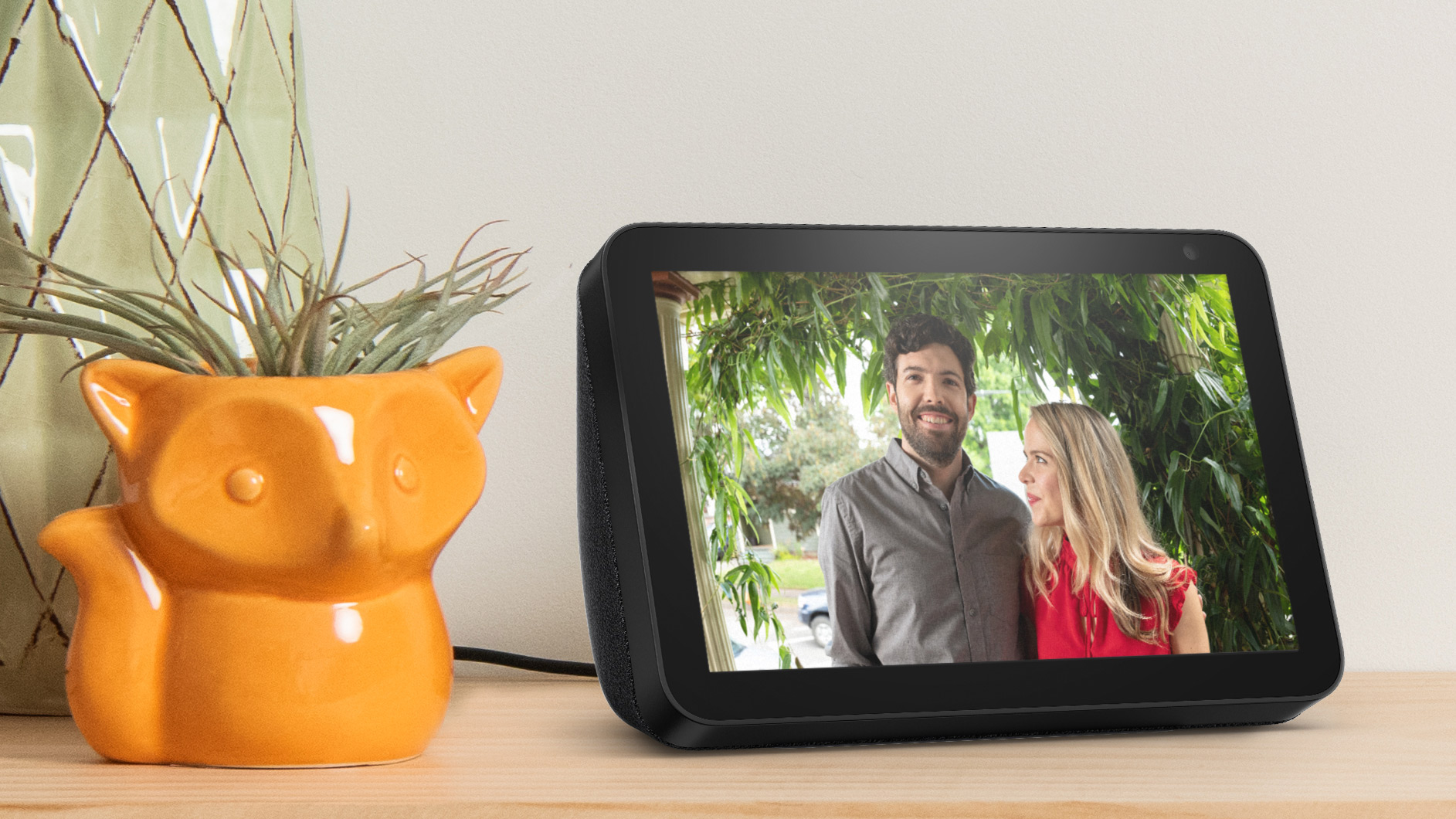
Both the Google Nest Hub 2 and the Amazon Echo Show 8 are relatively compact smart displays. The Google Nest Hub 2 measures 12 x 17.74 x 6.96cm while the Amazon Echo Show 8 has an overall footprint of 20 x 13.59 x 9.91cm  - making it slightly larger than the Google Nest Hub 2.

In terms of  display size, the Google Nest Hub 2 has a 7-inch screen with a 1024 x 600 resolution, where the Echo Show 8 has an 8-inch display, with a 1200 x 800 resolution.

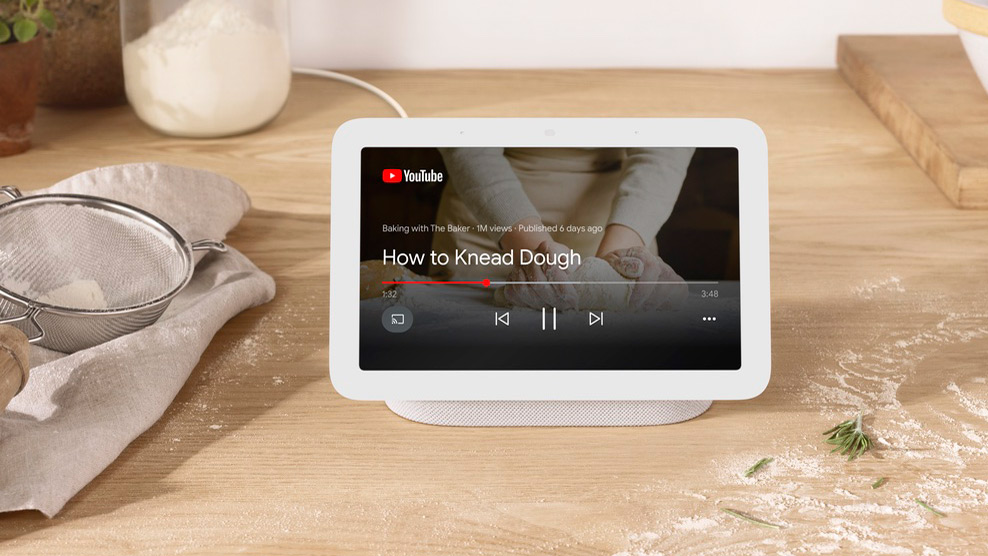
The Google Nest Hub has a ‘floating screen’ design that almost looks as though the display is suspended in the air, with the rounded base housing the full-range speaker with a 1.7-inch driver. It’s available in four colours; chalk, charcoal, sand, and mist  - a soft pastel blue. 

Meanwhile, the Amazon Echo Show 8 has a wedge-shaped design that can also be found on the Echo Show 5, it’s smaller sibling, and comes in a choice of charcoal or sandstone. Once again the fabric covered section houses the two-inch speaker with passive bass radiator. Both smart displays come with Wi-Fi and Bluetooth connections too.  

Google Nest Hub 2

(Image credit: Google)

Microphone and camera

Both smart displays use microphones to listen for their relevant wake word and when they’re being used to make calls. The Google Nest Hub 2 has three microphones, while the Amazon Echo Show 8 has four. 

The Amazon Echo Show 8 also has a front-facing 2MP camera which can be used to make video calls to other Echo Show smart displays. Just like Google’s original Nest Hub, which was initially called the Google Home Hub, there’s no camera built-in to the smart display so it can’t be used for video calling. 

Amazon Echo Show 8

(Image credit: Amazon)

Handy features 

As we’ve already mentioned, there are several uses for smart displays, and the Google Nest Hub 2 and Amazon Echo Show 8 are pretty equal here. They can both play music and videos, with the Google Nest Hub 2 supporting Netflix, Disney+ and YouTube and the Amazon Echo Show 8 supporting Netflix and Prime Video. The built-in voice assistants can control the playback of music, find information on the web and automate your smart home gadgets. 

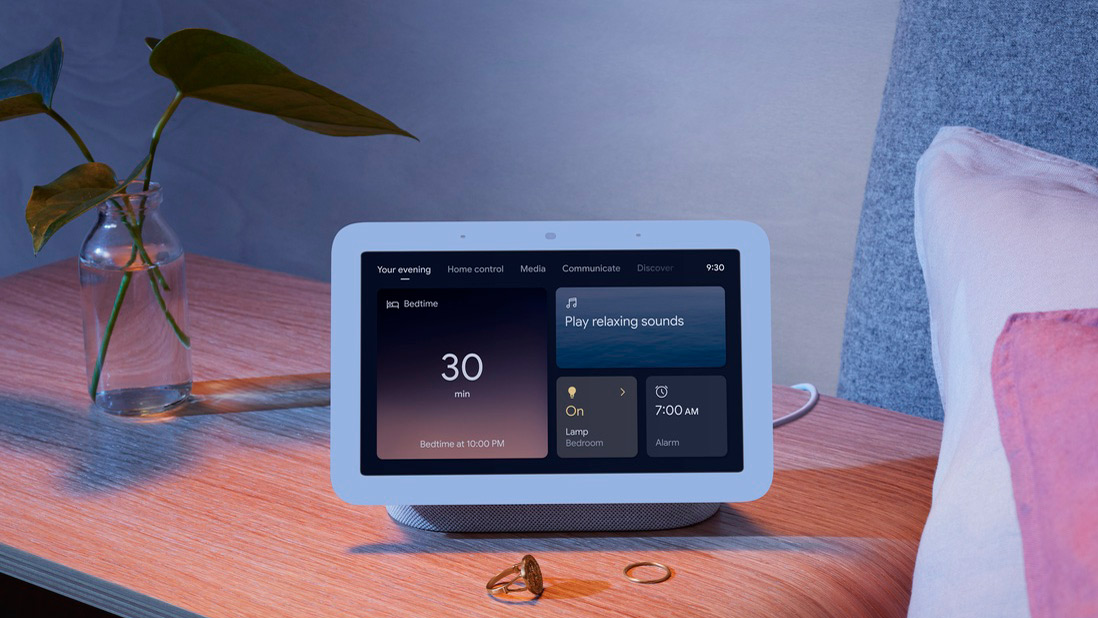
However, the Google Nest Hub 2 trumps the Amazon Echo Show 8 as it can track your sleep, if you use it in your bedroom. It has Soli radar technology built-in, which can already be found in the Google Pixel 4 smartphone and Google’s newest Nest smart thermostat, to analyze your movement through the night and create a report that can details how much sleep you had, and any interruptions caused by coughing, snoring or temperature or light changes in the room. This isn’t something the Amazon Echo Show 8 can do.

Google Nest Hub 2

(Image credit: Google)

Privacy

Both Google and Amazon have taken privacy seriously with these smart displays. You can ask the built-in voice assistant to stop listening for the wake word at any point, and it’s possible to ask for recording the devices make, when you say the wake word, to be deleted. Alternatively you can erase them from their companion apps too. There’s also a physical switch that cuts the power to the microphones to prevent them listening. The Amazon Echo Show 8 includes a shutter for the smart display’s camera too.  

Price

 The Google Nest Hub 2 is priced at $99.99 / £89 / AU$149 are available to pre-order now. It will go on sale on March 31. The Amazon Echo Show 8 is available now and is slightly more expensive costing $129 / £119 / AU$229, but it’s frequently discounted and likely to be on sale during Amazon Prime Day and Black Friday later in the year.  

amazon echo show 8

(Image credit: amazon)

Verdict

The Google Nest Hub 2 and Amazon Echo Show 8 are evenly matched when it comes to design, the big difference lies in the lack of camera on the Google Nest Hub and the fact the Amazon Echo Show 8 can’t track your sleep. 

If you already have a smart speaker or smart display from either brand in your home, then it makes sense to opt for the same manufacturer as they’ll work together, for example creating a multi-room music system. 

If this is your first smart speaker or display, then it comes to what you value most; a device that can make video calls on, then plump for the Amazon Echo Show 8, while if sleep tracking without the use of a wearable appeals, then the Google Nest Hub 2 is your best bet. 


from TechRadar - All the latest technology news https://ift.tt/3lzSg7j

Unemployment fraud skyrocketed in 2020. Were you affected? 4 things victims must do - CNET

Thousands of taxpayers could receive IRS forms for unemployment income they never received. Here's what to do if it happens to you.

from CNET https://ift.tt/3r90XGR

QAnon -- what to know before watching the HBO doc Q: Into the Storm - CNET

The new series tries to uncover Q.

from CNET https://ift.tt/3tJgzCO

Foldable iPhone in 2023? Here's everything we've heard - CNET

All the rumors about the expected release date for the foldable iPhone and the roadblocks that could still stand in its way.

from CNET https://ift.tt/393hzcN

Best car wash sponges for 2021 - Roadshow

Sure, there are lots of microfiber wash mitts and sponges, but we have our top recommendations down below.

from CNET https://ift.tt/2OR9Yak

Best grills for 2021 - CNET

Turn up the heat! Your steak nights just got a lot tastier, thanks to these top-rated gas, charcoal and kamado style grills.

from CNET https://ift.tt/2OORk2Y

Child Tax Credit for $3,600: When will payments come and how often? - CNET

If you're eligible for the 2021 Child Tax Credit, you could start receiving payments in just months. Here's what you need to know.

from CNET https://ift.tt/2OUGhoP

Got Zoom anxiety? 6 tips for making video calls suck less - CNET

We've got practical tips for lowering your stress levels, now that video calls appear to be here to stay.

from CNET https://ift.tt/3r4AlH6

Latest Tech News

In a year where our collective attention spans have been obliterated by the ongoing global pandemic, and where we’ve all been stuck at home and scrolling on our phones way too much, TikTok’s cultural influence has continued to grow.

This is most apparent in the music industry – in recent months, TikTok has produced some of our most compelling music industry success stories. Take Nathan Evans, an unknown folk singer, whose TikTok recording of himself singing 19th century sea-shanty ‘The Wellerman’ (of all things) went stratospherically viral, winning him a major label record deal and a string of TV appearances.  

Or Fleetwood Mac, whose classic 1977 album Rumours skyrocketed back into the charts after a relatively unknown TikTok user posted a remarkably chill clip of himself skateboarding while sipping cranberry juice and vibing to the band’s classic, ‘Dreams.’ 

For music industry experts, one of the key, disruptive elements of TikTok is that it’s hard to predict which songs will go viral on the app. To a large extent, streaming services and commercial radio stations still push a predictable range of pop behemoths – your Swifts, your Grandes, your Biebers – but TikTok is a different ball game. Huge pop hits frequently won’t register on the app, while older tracks, tracks by unsigned artists or esoteric remixes reign supreme on the TikTok algorithm. 

How does TikTok compare to other social media apps? 

While TikTok is often presented in the media as a kind of challenger app, this isn’t reflected in the numbers it can rack up. As Dylan Pasqua, Music Partnership Manager at social media marketing company Fanbytes told us: “TikTok is actually on another level to Instagram or YouTube. It’s much easier to get tonnes and tonnes of views on TikTok – it has a much higher growth rate.”

Pasqua works with artists signed to labels like Universal, Sony and Warner on building their TikTok presence. He tells us of a client who has “three million views on YouTube, and about 17.4 million views on TikTok” – seemingly, this is a fairly standard ratio. 

However, unlike streaming services like Spotify or Apple Music, TikTok is primarily a video-sharing app, and was not specifically engineered for music sharing. Consequently, the process of how music actually ends up on TikTok has become contentious. Historically, while TikTok offered users a commercial library of free-to-use music tracks, it also gave users the option to upload their own audio clips. Once an audio clip is uploaded onto the app, it becomes freely available to other users. Industry insiders have estimated that 50% of all music used on TikTok is unlicensed. This has, of course, resulted in a string of DMCA takedowns, and threats of legal action from the major labels. 

@420doggface208

Morning vibe #420souljahz #ec #feelinggood #h2o #cloud9 #happyhippie #worldpeace #king #peaceup #merch #tacos #waterislife #high #morning #710 #cloud9

♬ Dreams (2004 Remaster) - Fleetwood Mac

What's changed?

In the last few months, TikTok has announced a string of licensing deals with all three of the major labels – Warner Music, Sony, and most recently, Universal Music Group

Notably, press statements around the deals make it clear that this heralds a wider collaboration between TikTok and the major labels. For example, Universal’s EVP of Digital Strategy, Michael Nash, said that the deal “has the shared objective of developing exciting new music experiences and features”, while Sony Music’s President of Global Business & US Sales, Dennis Kooker, said the company is “pleased to partner with TikTok to drive music discovery, expand opportunities for creativity and support artist careers.” 

Details of what these collaborations might entail haven’t been divulged yet, but statements have hinted at everything from new in-app tools and features to A&R or talent-scouting services. 

What about artists?

One obvious benefit of labels striking up licensing agreements with TikTok is that it will create a new revenue stream for artists. This is a significant development: 2020 was an unprecedentedly difficult year for the music industry, and many labels and artists will have seen entire revenue streams wiped out, as the pandemic made live events and touring impossible. The industry is still struggling in 2021. 

However, as Naomi Pohl, Secretary General of the Musician’s Union tells us, the problems posed by TikTok are the same problems artists face with streaming in general: artists simply don’t get a fair cut. “It’s great news that artists who have their songs featured on TikTok will be properly licensed, but if the deal has been made with a major label, the already tiny payment will have be filtered through the record label – meaning that ultimately, the artist will only get around 10-15% of the total profit.” 

Pohl explains that a particular issue with TikTok is that there’s a lack of transparency involved in their payments: “If you’re an artist, and you go viral on TikTok, it can be very difficult to work out how much you’re being paid, and what the deductions are for.” 

This issue is compounded if your payments are collected through a record label: “The record labels can carefully choose how much information they want to share with the artist.” 

What does this mean for the music industry? 

While TikTok might not be the saviour of the music industry, it looks like it's here to stay – and it’s changing how music sounds. While there have been a number of wildcard success stories, Pasqua tells us of the distinct ‘TikTok effect’ taking place in pop music: “There are some elements that just ‘work’ on the app. We look for a 15-second vocal hook, often with clear, actionable words – a call to action, of sorts. Something the user can riff on, or apply to their own life.” 

From ‘Savage’ to ‘Say So’, many of the biggest hits of the last 12 months have arrived packaged with an accompanying TikTok challenge. In a few years time, we could be looking at a media landscape where singles are accompanied by a TikTok challenge as default, in much the same way that music videos have become a standard part of the release process. 

As well as changing how music sounds, TikTok offers fans new avenues to engage with music. During the pandemic, technology has stepped in to recreate live music experiences. Live-streams and virtual concerts have flourished: Travis Scott pulled in over 27 million viewers to his virtual Fortnite concert, Lil Nas X attracted 33 million views to his series of Roblox shows, and a livestream of a BTS concert attracted nearly 1 million viewers. It’s important to note that while the Travis Scott and Lil Nas X shows were free to attend, the BTS show was a paid livestream – suggesting that a significant number of music fans are willing to pay for virtual experiences.

@lilnasx

ROBLOX CONCERT THIS WEEKEND!

♬ Holiday by Lil Nas X - lil nas x

As a highly visual platform with a growing fanbase made up primarily of younger users, TikTok is a prime candidate for virtual concert experiences. It’s already been used successfully – a Justin Bieber concert streamed on Valentine’s Day this year pulled in 4 million viewers, making it the most-watched single artist livestream ever seen on TikTok. 

Not everyone is convinced, though. Naomi Pohl for example, feels that streaming economics is “bad for the entire music ecosystem”.

“If payments were shared more fairly with musicians, it would boost creativity, there would be a much more diverse range of music shared with consumers – which would ultimately be better for platforms, as there would be more music out there,” she says. In the meantime, we’ve seen government inquiries across the world into whether music streaming services pay artists fairly, so the dynamic between artists, streaming services, and social media platforms like TikTok could continue to evolve over the next few years.  


from TechRadar - All the latest technology news https://ift.tt/3142Jyw

Latest Tech News

Intel’s incoming range of Tiger Lake-H processors for laptops have had their full spec details leaked, with three 8-core models spearheading the attack on AMD, backed by a duo of 6-core mobile chips.

The specs were spilled in what appears to be an official Intel document posted on Twitter by hardware leaker @9550pro, although as ever with this kind of rumor, we must be careful about assuming that the material depicted is genuine.

However, it does match up with the previous buzz we’ve heard from the rumor mill, including that a trio of 8-core models will lead the charge with these new Tiger Lake processors for laptops (previously, these 11th-gen chips topped out at quad-core CPUs).

The star player is the Core i9-11980HK which runs 8-cores (16-threads) at a base clock of 2.6GHz at the default 45W power usage, but that can be increased to 3.3GHz if the chip is configured to run at 65W (as previously rumored). Boost is to 5GHz, and that’s not just single-core boost, as we’ve already seen, but the speed that can be achieved across two cores. The max boost speed across all 8-cores is 4.5GHz.

The other Core i9 model, the 11900H, is a similar 8-core chip but with slightly slower clocks, plus it isn’t unlocked (and there’s no option to run at 65W for even greater speeds – instead, this chip can be run at 35W rather than 45W, to tame its heat output). The base clock is 2.5GHz, and boost runs up to 4.9GHz (again with Turbo Boost Max 3.0, which only these top two CPUs support) over two cores. The all-core boost is 4.4GHz, so basically this is notched down 100MHz from the 11980HK across the board (assuming these specs are all correct, of course).

The third 8-core CPU is the Core i7-11800H which ditches Turbo Boost Max 3.0, meaning its max boost is 4.6GHz (on one or two cores) and 4.2GHz all-core, with a base clock speed of 2.4GHz.

Hexacore backup

These processors are backed up by the Core i5-11400H and Core i5-11260H, which are 6-core (12-thread) chips capable of boosting up to 4.5GHz and 4.4GHz respectively, with base clocks of 2.7GHz and 2.6GHz.

According to the leak, these Core i5 CPUs will support DDR4-2933 memory, and faster DDR4-3200 support will be reserved for the higher tier 8-core processors.

Intel has already been showing off the flagship Tiger Lake-H processor (even though the company didn’t name it, we can now be pretty sure it’s the top dog Core i9, at least if this leak is right) running Total War, and doing an impressive job of smooth rendering.

These mobile chips are shaping up nicely, then, from what we can tell from the rumor mill – but we can’t get too carried away at this point, obviously, until we’ve actually seen them in action (and these specs are confirmed for that matter).

What Intel has confirmed is a Q2 launch for these new Tiger Lake models, so we shouldn’t have to wait long before we find out exactly how these CPUs are going to pan out.

Via VideoCardz


from TechRadar - All the latest technology news https://ift.tt/3cRNGgJ

Latest Tech News

It looks as though the 'undo send' feature that is apparently being tested behind closed doors at Twitter is going to be a paid-for extra – so you'll only be able to access it if you sign up to be a premium member of the social network.

Well-known tipster Jane Manchun Wong has uncovered a screenshot that lists the undo tweet option as part of a subscription package, though as yet there's no indication of when this Twitter VIP level might actually launch.

The discovery neatly combines two of the rumors that we've heard lately: that Twitter will soon let you bring back a tweet if you're having second thoughts about it, and that it's preparing to put some advanced features behind a paywall.

Users have been clamoring for an edit tweet button for several years now, but it seems as though we're going to have to settle for undoing tweets for the time being: you'll get a few seconds to recall a message before it actually gets posted.

As for what else Twitter might hold back for its paying customers, there has been talk that live video could be one of the features that only subscribers would be able to access in the future, once the new plans launch.

Profile badges, auto responses, social analytics, extra customization options, and the ability to post content at a higher resolution are other features that have been mentioned as perhaps becoming paid-for exclusives in the near future.

There's also speculation that he supercharged Twitter client TweetDeck – which Twitter itself develops – could be used as another incentive to get people to pay up. The idea is, of course, to squeeze more revenue out of the service.

None of this is official or confirmed yet, and a lot of questions remain, but the source is a reliable one. It seems that Twitter does have something in the pipeline, though we'll have to wait and see exactly what a premium subscription looks like.


from TechRadar - All the latest technology news https://ift.tt/3tFehV5

WWE Fastlane 2021: How to watch, Peacock, start times and match card - CNET

Reigns vs. Bryan headlines the last pay-per-view on the WWE Network.

from CNET https://ift.tt/30ZeiqG

15 iPhone settings you'll wonder why you didn't change sooner - CNET

From Face ID working with a facial covering to Do Not Disturb and longer battery life, all are instantly achievable on your iPhone with some quick settings changes.

from CNET https://ift.tt/2ORWsDv

NASCAR 2021: How to watch the Folds of Honor QuikTrip 500 today without cable - CNET

You don't need cable TV to watch the racin' and rubbin' this Sunday on Fox.

from CNET https://ift.tt/3r3UlJL

Panama vs. England: Stream FIFA World Cup 2026 Group L Match Live for Free

The Three Lions look to close out the group on a winning note in New Jersey. from CNET https://ift.tt/iC4Qt9r