We've been hearing a lot about a DJI FPV (first-person-view) drone over the last few months, with leaked images and news of its US registration in December sparking rumors that DJI is making a new kind of drone.
It seems those rumors may now well be true after an unboxing video of the DJI FPV drone leaked on Twitter, spilling a lot of its design secrets. The only thing we don't know is how well the upcoming quadcopter flies and what its exact specs are.
The video confirms the design leaks revealed earlier, showing off a rounded quadcopter body with a front-facing camera on a gimbal. Also clearly seen are two smaller downward-facing cameras which, according to the video, don't appear to be for capturing footage but are potentially obstacle-avoidance sensors.
The drone itself appears compact, with the accompanying FPV goggles looking just as large as the flying machine itself. However, as the unboxing video notes, the newly designed goggles are "lighter" than DJI's existing FPV headset.
The FPV controller also seems to have been redesigned, looking more like a gamepad than before and featuring better hand grips and triggers.
The battery that fits into the back of the drone is much larger than what you'd find in one of DJI's current line of consumer drones, which is what we'd expect as FPV drones are essentially used in racing that need better flight times. Also included in the box is a portable power bank, but it's unclear where that would plug in.
Ready for take-off
Everything else about the DJI FPV Combo would be familiar to drone users, although it does feel like DJI's first FPV quadcopter would be user-friendly and not too intimidating for beginners.
That said, FPV drones are very different beasts from the consumer fliers that we use for aerial photography. They're usually harder to maneuver, are much faster in the air and quite sensitive to control – meaning they need some amount of expertise to fly. They can also be used to carry heavy filming rigs.
Whether DJI is targeting professional drone racers and filmmakers is as yet unclear, but we doubt there's long to wait before we find out exactly what the upcoming DJI FPV Combo can do. Earlier rumors suggested DJI would debut the drone after the Chinese New Year – if true, we're likely just days away from an official reveal.
Sonos is one of the best-known audio companies in the world, and it could be on the verge of launching a new wireless speaker.
An FCC filing (Federal Communications Commission) spotted by The Verge describes a device that uses a wireless charging base; but it requires less power than the company's Move speaker, suggesting a similar portable smart speaker that's more compact.
The compact form could mean the device is a cheaper version of the Sonos Move, in the same way that the Apple HomePod mini is a cheaper version of the original HomePod smart speaker.
And it could be launching soon – Sonos CEO Patrick Spence divulged in a call with investors that the brand would be releasing a new product in March (although there is a chance that this new product could easily be the first Sonos headphones, too).
While details of the next Sonos speaker are thin on the ground, there are a few things we can glean from the FCC filing – as well as lots of features we’d love to see from the Sonos Move follow-up.
Cut to the chase
What is it? A new Sonos wireless speaker.
When will it be released? TBC, but possibly as soon as March 2021.
How much will it cost? Probably less than the Sonos Move ($399 / £399 / AU$649).
New Sonos speaker release date
Sonos has yet to confirm the existence of a new wireless speaker, but the company’s CEO has revealed that a new product is coming in March.
That’s according to a conference call between Spence and investors. In the call, which was transcribed by Seeking Alpha, Spence said that the company remains committed to launching "at least two new products per year", and that "we are excited to introduce our newest product next month".
Saying that, it’s possible that Sonos’ next product won’t be a speaker at all. Rumors of the first Sonos headphones have been circulating since 2019, picking up steam in recent months after Sonos was awarded a patent for a pair of over-ear headphones, giving us an intriguing glimpse at the long-rumored cans.
New Sonos speaker price
So far there have been no solid rumors or leaks pertaining to the price of the new Sonos speaker, but based on the specs described in the FCC filing, the device looks like it will be a smaller version of the Sonos Move – and that means it will probably be cheaper, too.
The Sonos Move currently costs $399 / £399 / AU$649 – a price that puts it firmly at the top end of the Bluetooth speaker market; but it earns this price tag with its array of Sonos smarts and powerful audio.
We’d expect a more compact version of the portable speaker to cost less than this, perhaps sitting around the $200 / £200 / AU$300 mark.
However, we’d love to see Sonos bring the price down even further. Sonos products are usually very expensive, and while that’s often justified as a result of their fantastic audio performance and multi-room capabilities, it means joining the company’s ecosystem is out of reach for many.
If Sonos could price its latest Bluetooth speaker at around $100 / £100 / AU$150, it could make owning a Sonos sound system far more accessible, with the ability to add as many or as few products as you wish – much like the Apple HomePod mini has made it cheaper to join Apple’s audio ecosystem.
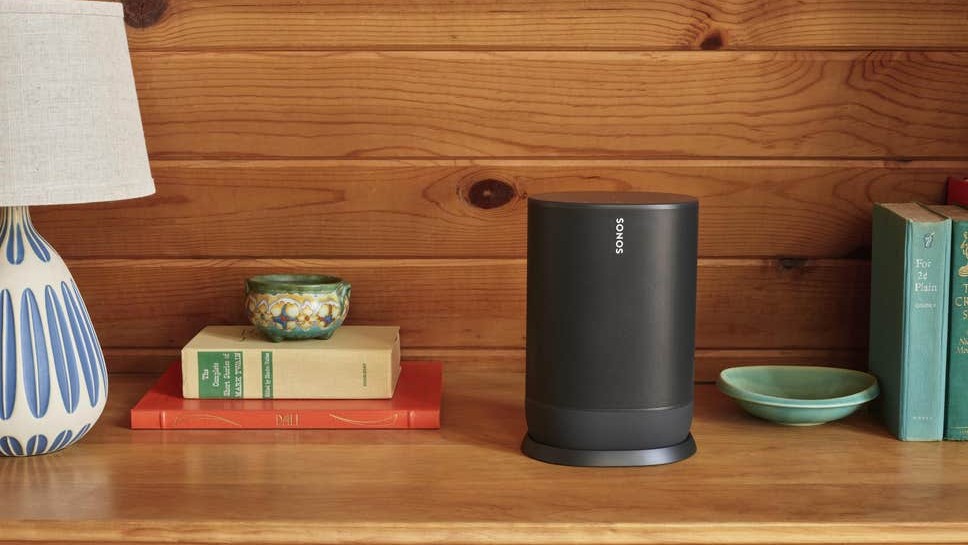
The new Sonos speaker could be cylindrical, unlike the original Sonos Move (pictured).(Image credit: Sonos)
New Sonos speaker features
All of the information we have about the new Sonos speaker comes from the FCC filing that was released recently.
Testing diagrams within the filing show that the speaker will be accompanied by a wireless charging dock, and will offer Bluetooth and Wi-Fi 5 (802.11ac) connectivity. This suggests that the new speaker will double as a portable Bluetooth speaker, and a connected smart speaker, just like the Sonos Move – and it will be the first speaker to support Wi-Fi 5.
The filing also reveals that the new speaker will use less power than the Sonos Move, suggesting that it will be smaller. Another clue as to the look of the new Sonos speaker is the inclusion of a circular label that’s "laser etched around the perimeter of the bottom surface of the device", which implies that the unit will be cylindrical, akin to the popular UE Megaboom 3.
Making a smaller version of the Sonos Move makes much sense. At close to 3kg, while it is possible to lift the current Move speaker with ease, you wouldn’t want to carry it around for too long. However, the size is a necessity due to the large driver magnets that power the sound, and it’s a fair trade to make for the audio quality delivered. You can expect a smaller version to include smaller drivers and, perhaps, a less powerful sound as a result.
Nevertheless, we’d expect to see Sonos’ chic design aesthetic transfer to a more compact Sonos Move, featuring simple control buttons, a wraparound grille, and perhaps a carry handle built into the speaker’s frame.
The new Sonos speaker could be a rival for the JBL Flip 5 (pictured).(Image credit: JBL)
New Sonos speaker: what we want to see
While details of the new Sonos speaker are still hazy, we can still present a list of a a few features we’d love to see from the Sonos Move successor.
To start, we'd welcome an improvement to the water- and dust-resistance rating, particularly if the new speaker is to be more easily portable than its predecessor.
The original Sonos Move is IP56 rated, which means it can withstand a coating of sand or dust, as well as a drop into a swimming pool. Boosting this to an IP67 rating would make it a serious competitor for waterproof speakers such as the UE Wonderboom 2 and the JBL Flip 5.
We’d also love to see a new Sonos speaker that can be used as part of a home cinema system, particularly if it’s on the cheaper side. It isn't possible to use two Sonos Move speakers as rear channels for you system, which Sonos claims is down to sync issues and the potential for a directional soundtrack to lose its focus if the speakers are placed incorrectly in a room.
This a shame, since having a wireless speaker that’s both portable and can be used to boost your TV’s audio is certainly compelling – and we’d have thought that Sonos’ Trueplay technology, which uses onboard accelerometers to detect movement, would be capable of addressing this.
Another feature that we'd welcome is an upgrade to Bluetooth 5, which would allow for pairing over longer distances and a more stable connection. The current Sonos Move only supports Bluetooth 4.2, which is slightly outdated now.
Finally, we’d love to see a few more color options for the new Sonos speaker. Releasing a mini portable speaker is a great opportunity for Sonos to play around with different color palettes and finishes – although, based on the company’s preference to date of a black and white aesthetic, we’re not sure that this is likely.
Having a bunch of smart devices in your home, whether that’s smart speakers like the Amazon Echo, smart displays like the Lenovo Smart Clock, or the many security cameras and video doorbells out there, is an increasingly common part of living in a connected modern home. We can use voice commands to dim the lights, turn up the thermostat, or even change channels on our smart TVs – and we’re seeing an explosion in the number of ways we can interface with our various gadgets and toys.
When you’re a technology journalist, though, the smart meter goes up to 11 – and there’s a personal cost when you’re living with people who don’t share your level of ease around intelligent devices.
I’ve reviewed a number of smart speakers, like the Amazon Echo Plus, or (my personal favorite and ongoing music buddy) the Pure DiscovR – and I have to keep a bunch of associated smart plugs and security cameras on site, too, just to make sure different devices work in tandem. So the number of wires, plugs, and speakers packed into my shelves and cupboards is, at times, a bit embarrassing, especially when I’m only ever going to have one or two devices set up at any one time.
My previous flatmate made it clear when I moved in that “the Alexa” wouldn’t be allowed in communal spaces, out of privacy concerns. Not that two geeks in their 20s were saying much worth listening to between sessions of Halo and anime binges, but the principle still stood: why would anyone be ok with being constantly overheard, when it’s not even a device they plan on using?
My partner prefers to use a ‘dumb’ Bluetooth speaker unable to eavesdrop on us, too, and it means any testing periods or new device setups have to be carefully arranged, so as not to compromise someone else’s feeling of safety in their home.
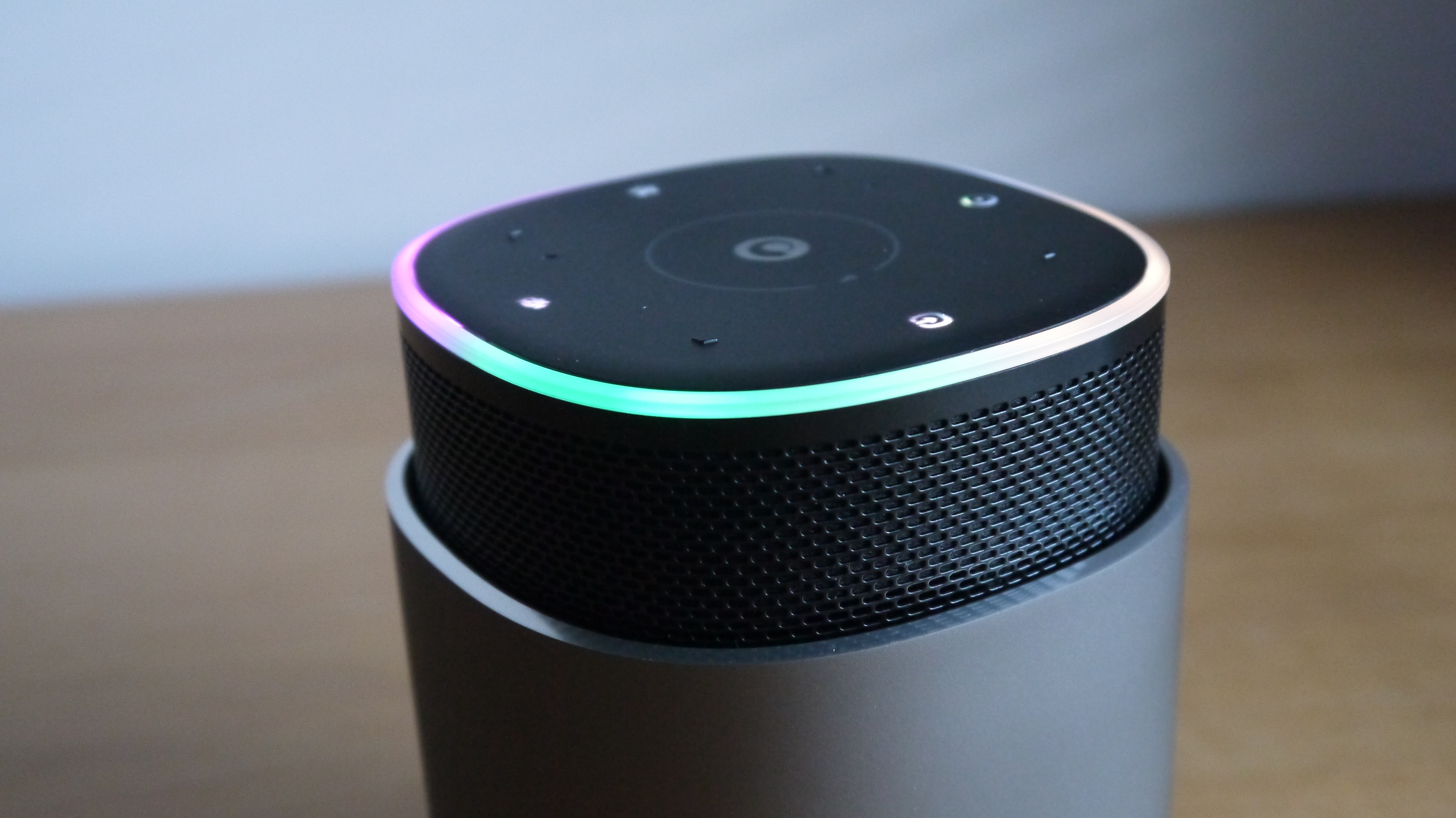
The Pure DiscovR smart speaker lights up to take our commands(Image credit: TechRadar)
In order to pick up voice commands, Alexa speakers and the like have to be ‘listening’ all the time anyway, and a study by researchers at Northeastern University and Imperial College London found that they can activate by mistake up to 19 times a day.
When it comes to smart speakers, devices that by design are meant to sit in the background until they’re needed, it is worryingly easy for me to forget they’re in the vicinity. (Waiting, listening, plotting, and the like.)
Having used so many of them in a professional capacity means I can forget the unease surrounding their presence in personal spaces. And it’s hard to feel precious about my own data or privacy when I have to sign up to countless technology platforms with my personal details in the name of testing and reviewing.
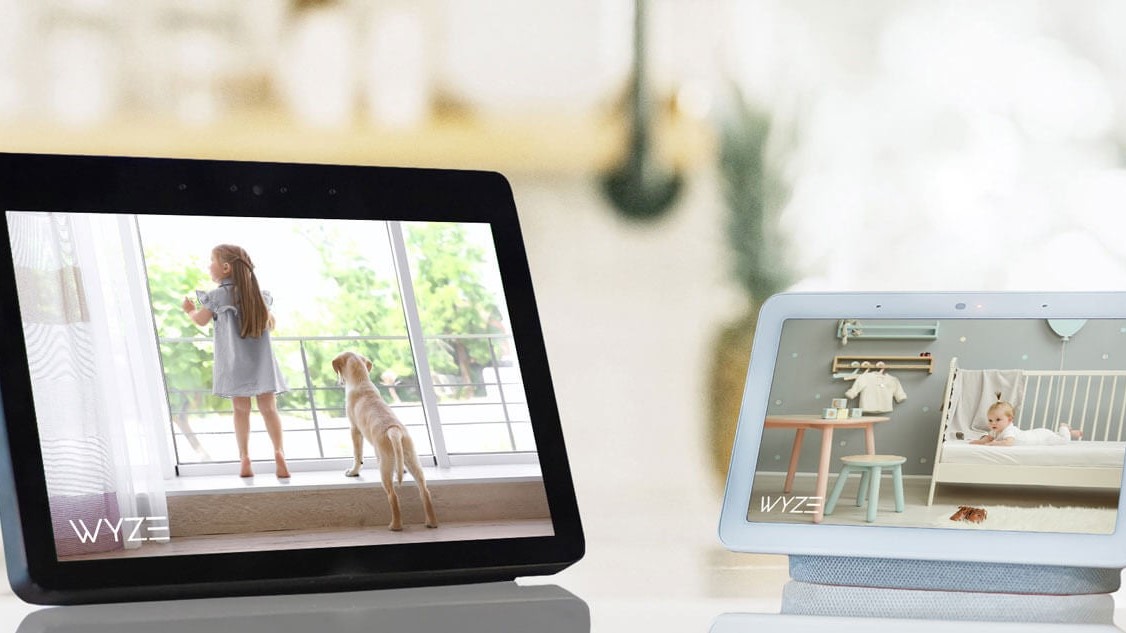
(Image credit: Wyze)
The compromise I often end up making is only using smart speakers with the microphone muted – something that’s relatively easy to do, though culls their most convenient feature, that being the voice commands. If I have to go and unmute to talk to it, why not just search it on my phone, or use a less advanced Bluetooth speaker?
The Pure DiscovR comes with a physical way to disconnect the microphone, though it also limits the volume and bass frequencies – meaning I have to choose between audio quality and personal privacy when considering the feature.
Being wary of our devices, and the companies that make them, always seems sensible. Amazon, Google, and the like are inevitably serving their own interests, even if they're offering convenient products and services at the same time – and user data is a big part of how these companies monetize their products.
But given how prolific smart devices are now, there’s a growing pressure to accept the potential for privacy invasion – and that’s a pressure I end up exerting on the people around me, just by proximity. When we choose to let smart devices and voice assistants into our lives, it’s very easy to end up making that decision on behalf of your families, friends, and flatmates – and it’s very hard to see our collective acceptance going backwards at this point.
Not convinced? Head to our best smart speaker guide and start chatting to your devices
from TechRadar - All the latest technology news https://ift.tt/2OEEFiH
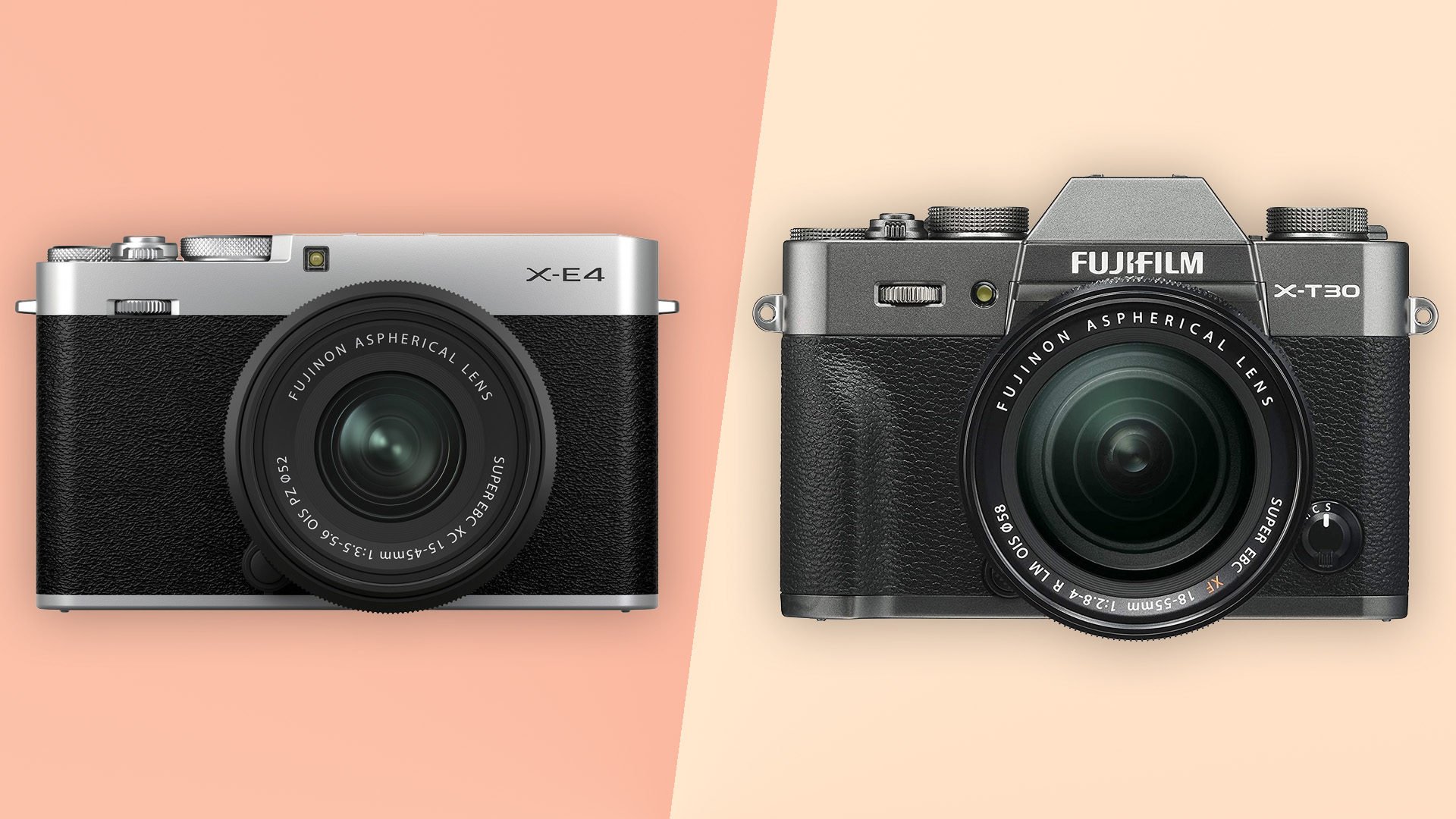
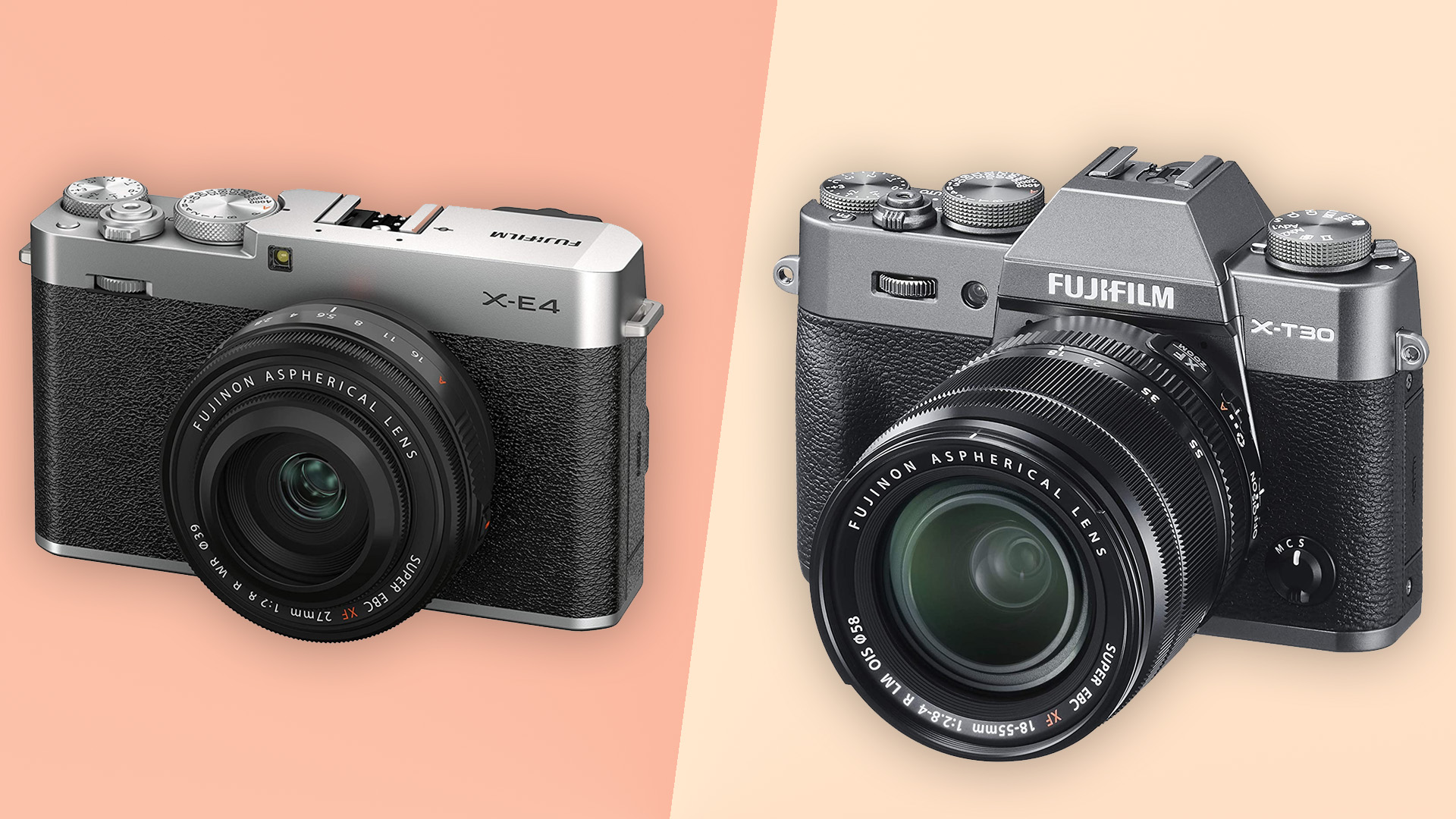
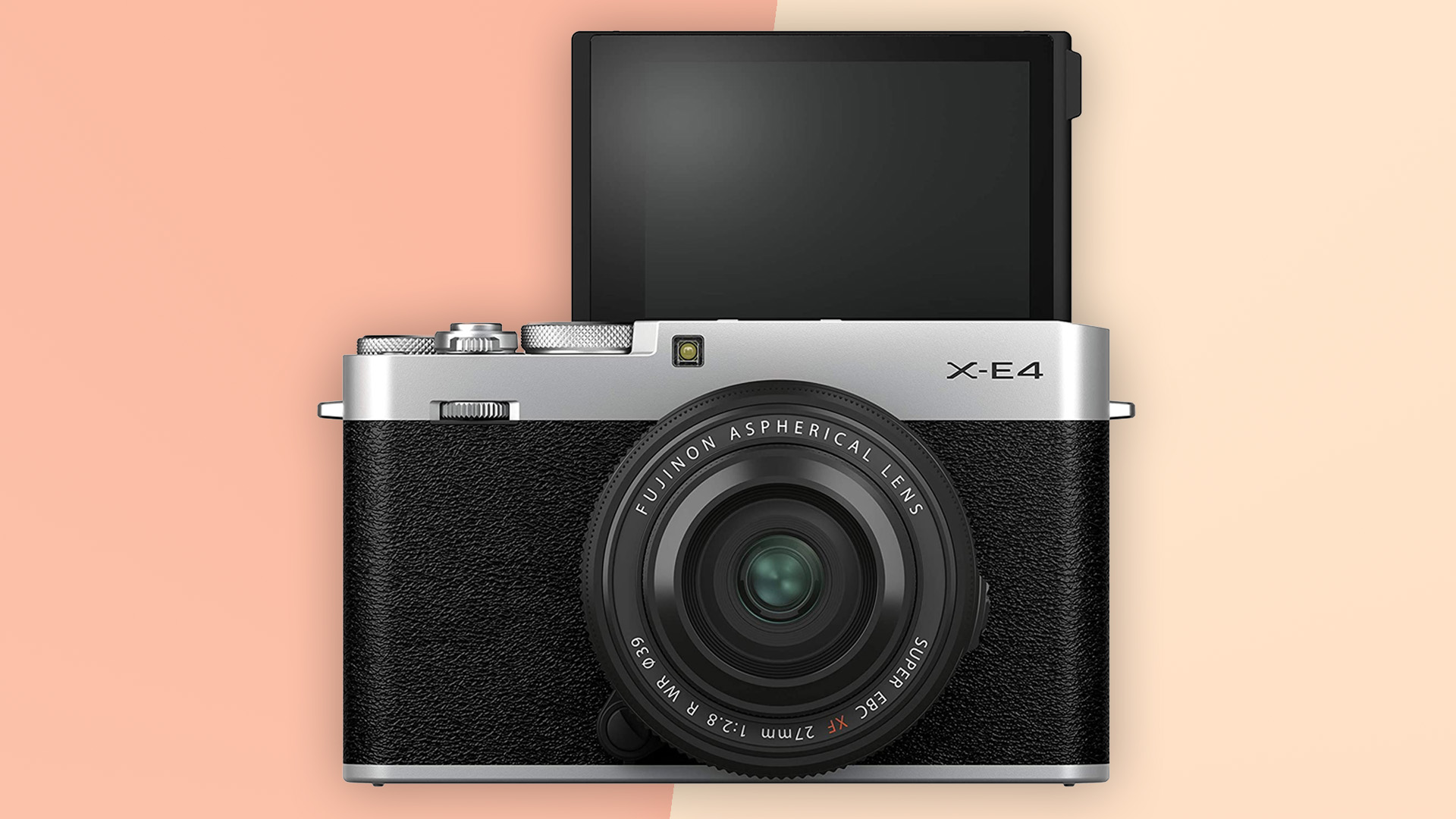
Fujifilm makes some of the most charming compact mirrorless cameras around –and the new Fujifilm X-E4 is another fine addition to its vintage series.
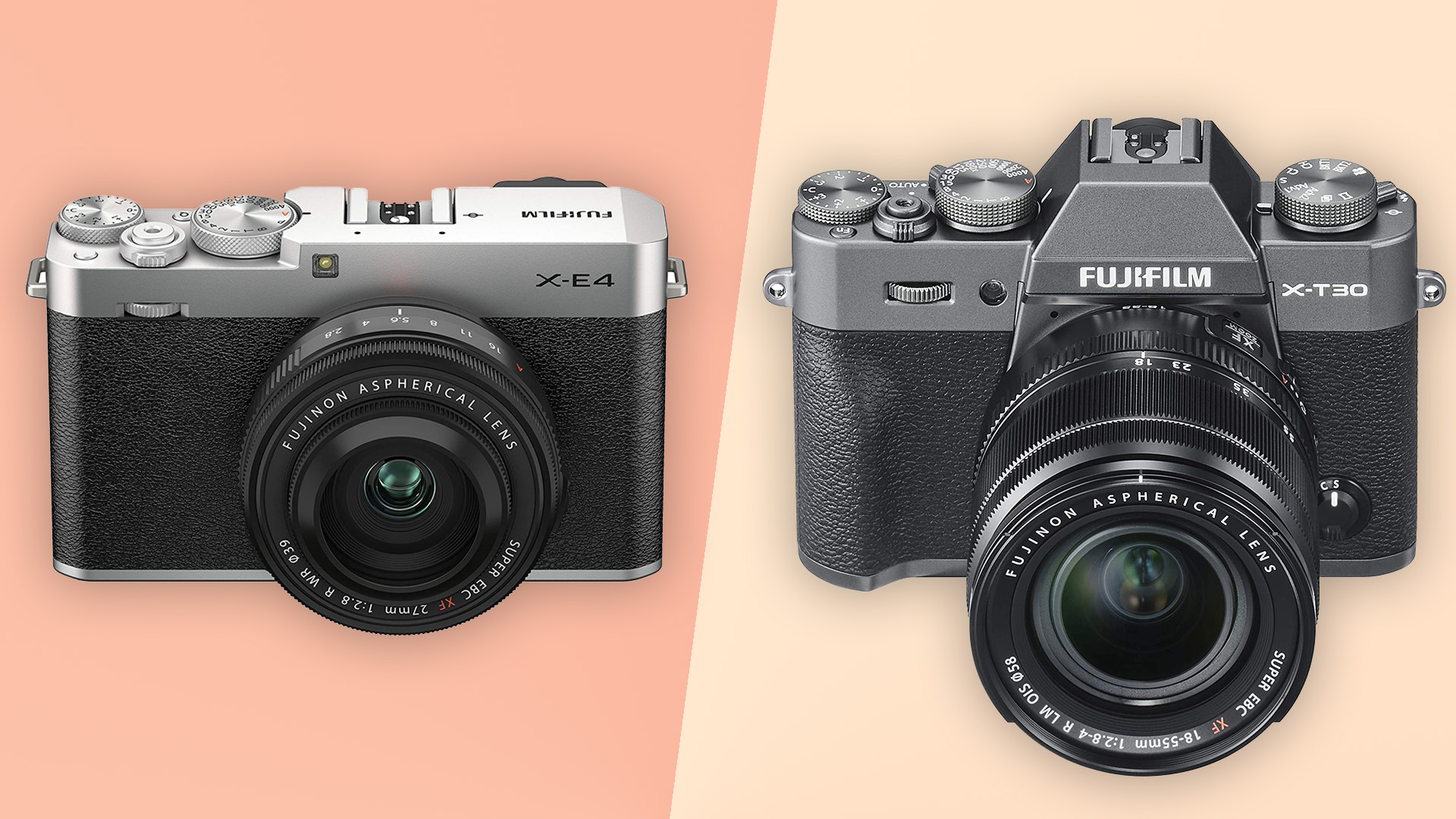
Like the Fujifilm X-T30, the design is modern retro without anachronism, while its combination of Fuji sensors and image processing promises some of the prettiest images in its class.
But buying a mid-range mirrorless Fujifilm camera just got more complicated with the X-E4's arrival. A newer and slightly cheaper alternative to the established Fujifilm X-T30, both cameras offer a very similar, travel-friendly proposition.
In the last generation, we routinely recommended the T-series model over the E-series one. But this time the decision is not so simple.
The Fujifilm X-T30 and X-E4 have the same sensor and the same processor. And while some may prefer the T-series’s more enthusiast style controls, there are major benefits to the X-E4 if you’ll shoot a lot of video or want the most compact camera you can get, without sacrificing image quality.
Here's how to decide between the two beginner-friendly mirrorless cameras...
Comparing cameras in the same ballpark often boils down to the stuff inside, and whether a company’s lens selection suits your needs and budget. This time a quick look at the outside tells you much of what you need to know.
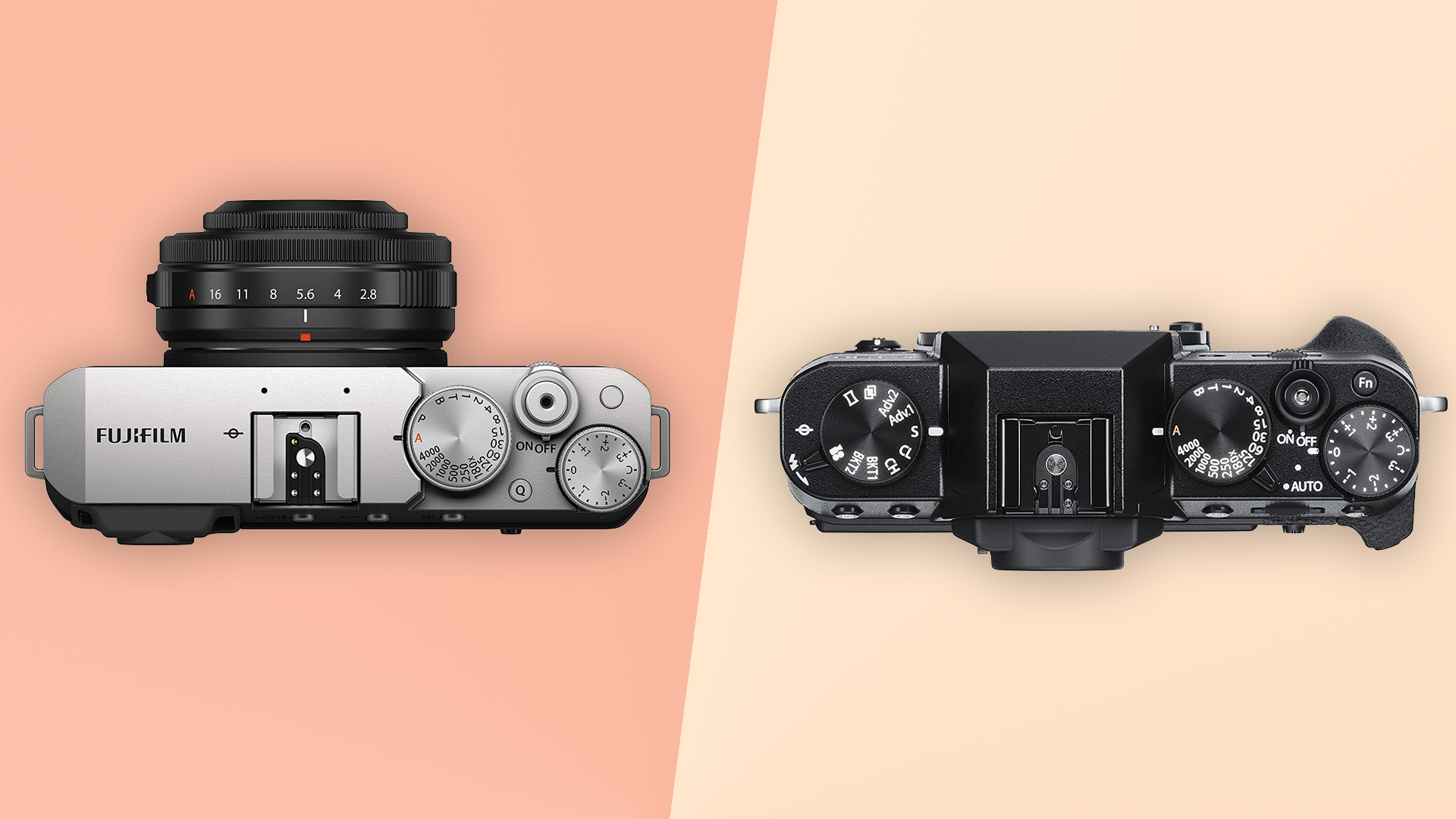
A compact shell is the main draw of the FujiFilm X-E4. It is just 32.7mm thick, compared to the 46.8mm depth of the X-T30. Fuji achieves this by using a display that sits flush with the back, trimming down the eyepiece of the EVF and nixing the grip entirely.
Sure, the latter is a sacrifice. But match the X-E4 with the new 27mm pancake kit lens and you have a dream team for breezy street photography.
(Image credit: Fujifilm)
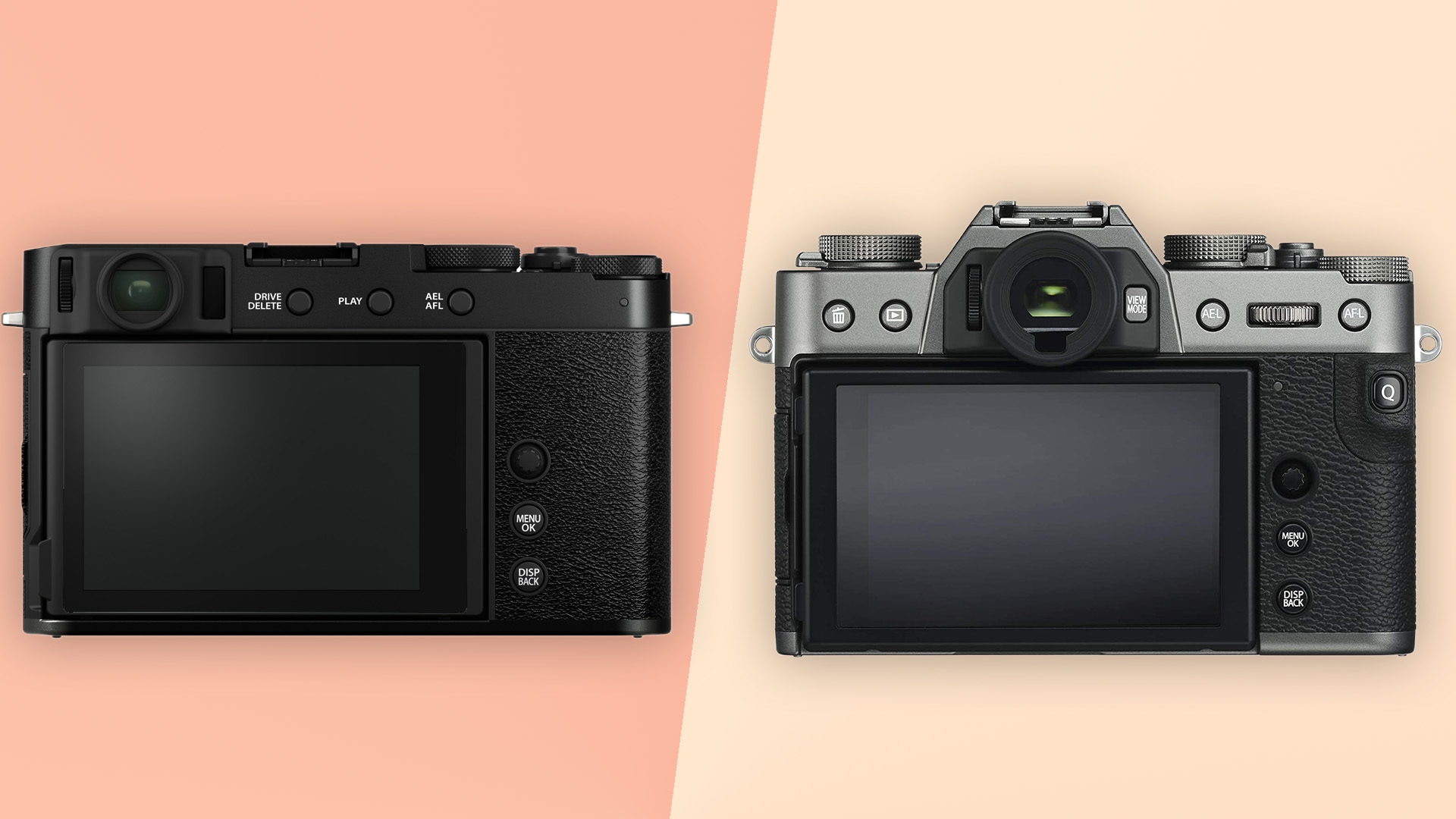
The X-E4 also has fewer controls than the FujiFilm X-T30. You lose a mode dial up top, plus a control dial on the back.
However, anyone accusing the X-T4 of being a 'baby' camera is wrong. There’s still a dial on the front, and a shutter speed control up top. It seems made for the manual 'priority' modes that many of us photography enthusiasts use by default. And, of course, for full 'auto' shooting.
There’s only a slight weight disparity here. The X-E4 weighs 364g with battery and card, the X-T30 383g. You buy an X-E4 if you want it to slip into a coat pocket, but it still has a tough magnesium inner frame.
Sensor
The FujiFilm X-E4 and X-T30 have the same sensor – it’s the fourth-generation X-Trans chip, with a 26.1MP resolution.
Aside from potential for some minor differences in processing algorithms in their respective firmwares, these cameras should offer the same image quality. And that is certainly no bad thing.
(Image credit: Fujifilm)
Their standard ISO range is 160-12800, but this can be extended down to ISO 80 and up to ISO 51200. There’s nothing to see here. You can expect more-or-less the same images from each.
Neither body is stabilized either, so buy your lenses carefully if you want the benefits of stabilization – like having the flexibility of slower shutter speeds while shooting handheld.
Screen and EVF
The FujiFilm X-E4 and X-T30's EVFs are very similar, too. They have 2.36-million-dot resolution, equivalent to 1024 x 768 pixels, and 0.62x magnification.
Some will prefer to use the X-T30’s EVF, though, as the design gives the eyepiece more clearance from the back of the camera. The X-E4’s viewfinder is positioned in rangefinder style, sitting at the corner so your nose won’t bump against the camera back.
(Image credit: Fujifilm)
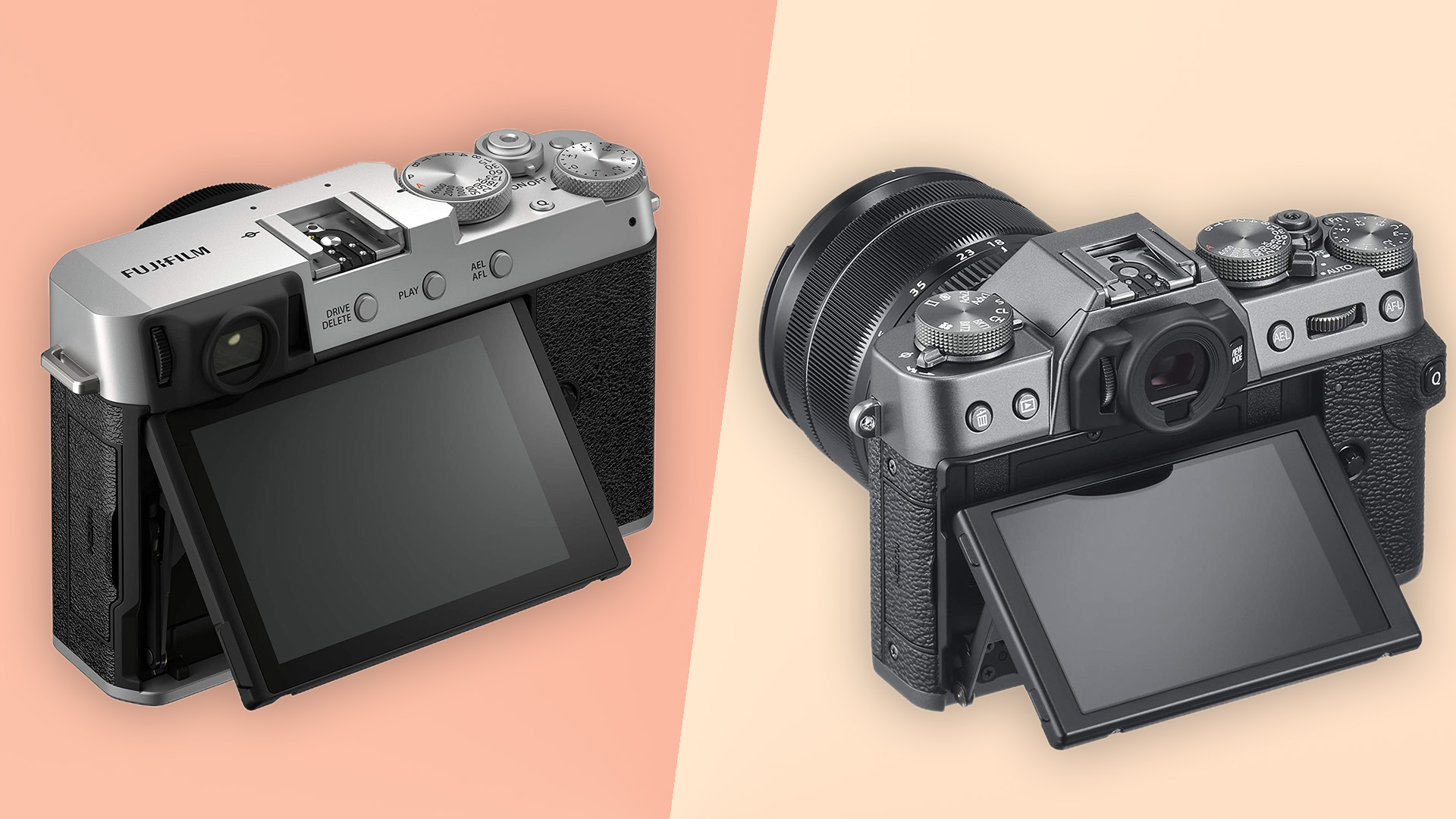
The two cameras' rear screens are in lock step with these cameras’ intended audiences. The FujiFilm X-T30 has the two-way tilt style screen Fuji has used in several other models. It angles plenty for below-head shooting, but only a little the other way.
The FujiFilm X-E4’s screen mechanism lets it flip all the way up, above the camera’s top so you can use it as a vlog monitor. It’s not just for video fans, of course — this setup is also perfect for holiday selfies, and is better for the purpose than a fully articulated monitor. As you'd expect in 2021, both screens are touch-sensitive, too.
AF and burst shooting
Once again, there’s almost nothing to separate the FujiFilm X-E4 and X-T30 in autofocus performance and burst speed departments.
Both cameras have 425 phase-detection AF points, and there’s both eye and face tracking. It would be stranger if their capabilities were different. After all, they both have the X-Trans 4 sensor and X-Processor 4 CPU.
(Image credit: Fujifilm)
Burst speeds reach 20fps using the electronic shutter. Or 30fps if you use the 1.25x crop mode, which may be useful in some action or nature shoots.
There is one slight difference according to FujiFilm. Use the top 8fps mechanical shutter burst mode and the buffer runs out after 90 JPEGs on the X-T30, or 105 shots on the X-E4.
This suggests an improvement to the way the buffer is offloaded to the SD card. And it lets the X-E4 shoot endlessly at 4fps (JPEG), whereas the X-T30 gives up after 209 frames. This may be due to a difference in hardware, but if it is not, the X-T30 may get an update to bring it up to X-E4 speed. But that's by no means certain.
Video
The cameras' respective video modes provide more evidence that the FujiFilm X-E4 is better at handling a large amount of data in a short amount of time.
The FujiFilm X-E4 can shoot 240p slo-mo at 1080p – that is an 8x slow-down. But the older X-T30 can only reach 120 frames per second, again at 1080p.
FujiFilm had already developed the 240p video mode for the X-S10, which is slightly more expensive than either of these cameras and has in-body image stabilization.
(Image credit: Fujifilm)
The X-E4 can also shoot for far longer than the X-T30, too. It can capture 4K or 1080p for 30 minutes continuously, up from just 10 minutes of 4K in the X-T30, or 15 minutes of 1080p. There’s clearly a big efficiency change here, or at least a different approach to heat dispersal.
Other video modes are largely the same. You can shoot 4K/30p footage with either, but there’s no 4K/60p shooting here. And color depth is 4:2:0 8-bit in-camera, or 4:2:2 10-bit over HDMI. It’s hard to imagine too many people buying an X-E4 for use with an external recorder, though.
Both cameras’ 4K modes also cap out at a solid 200Mbps bitrate. Bear in mind that, as neither camera has IBIS, you’ll likely need to apply additional software stabilization in the edit for the best results when shooting handheld.
Connections and battery life
There’s another video shooter benefit for the Fujifilm X-E4 in its connectivity. The camera has a 3.5mm jack for an external microphone – and despite its small size, there’s still a hotshoe up top for accessory mounting.
Want to monitor audio on the X-E4? No problem. You can use the USB-C port for that, and a USB-to-3.5mm adapter comes in the box.
(Image credit: Fujifilm)
The X-T30 uses the smaller 2.5mm socket for an external mic, which likely means you’ll need another adapter. And while you can again use the USB-C to monitor audio, a USB-C-to-3.5mm cable is not included. Fujifilm seems to have learned from complaints leveled at the earlier camera. Both also have a micro HDMI connector.
These cameras use exactly the same battery, an NP-W126S. However, while the X-T30 is rated for 380 frames, the X-E4 can capture 460 frames per charge, according to Fujifilm’s figures. Once again, it seems there’s some efficiency improvement here.
Video claims are the same, though. Fujifilm says you’ll get 60 minutes of 4K capture, or 75 of 1080p, off a charge with either camera.
The wireless specs haven't changed either – the X-T30 and X-E4 both have 2.4GHz Wi-Fi and Bluetooth 4.2, but there's sadly no 5GHz Wi-Fi.
Fujifilm has a tough job stratifying the prices of its mid-range cameras. We have the Fujifilm X-E4 at $850 / £799 / AU$1,399, while the X-T30 originally arrived for $899 / £849 / $1420 (although you can now find it for less).
It is probably this closeness to the T-series model that gave the last X-E3 such trouble. Fujifilm offers the X-E4 with a 27mm kit lens this time around, a pancake with a solid F/2.8 aperture. This highlights the (large) pocket-ready appeal of the camera.
(Image credit: Fujifilm)
Takeaway
Last time around, our usual advice was to buy the Fujifilm X-T20 over the Fujifilm X-E3. But things have changed a bit with the X-E4.
It’s a smaller camera with a selfie and vlogging-friendly flip up screen, and several features that are handy for those more keen on video than stills. Slo-mo skills are increased from 120fps to 240fps (1080p), while the restrictive time limits on 4K and 1080p video have been raised to 30 minutes.
There’s less to choose between them on the stills front, though. These cameras will take similar photos, but the X-E4 does have slightly better burst performance, with a buffer that never runs out at 4fps and below.
That said, if you're not planning to shoot much video, your choice will likely come down to whether you prefer the corner-mounted EVF of the X-E4 or the X-T30's central viewfinder.
from TechRadar - All the latest technology news https://ift.tt/3qkw16J
Smart home tech doesn't stand still for very long, and it would seem that the Amazon-owned Ring is getting ready to push out a new version of its top-tier Pro video doorbell – one that significantly boosts the resolution for a clearer picture.
A product listing, apparently published in error on the Best Buy Canada website, was spotted by Zatz Not Funny before it got pulled, and a video resolution boost from 1080p to 1536p is clearly mentioned in the specifications for the device.
On top of that, pre-roll recording has been added (see also the Ring Video Doorbell 3 Plus), and it looks as though Ring has also taken the time to improve audio performance and motion detection on this new version of the Pro doorbell.
The design doesn't look to have changed much, but the new model is reportedly a little taller and a little thinner. The doorbell is listed with a price of CA$324.99 (about $255 / £185 / AU$330), which puts it at a similar price as the existing Pro doorbell.
Coming very soon
The final little tidbit of information that we can clean from this early product listing is that an on-sale date of March 31 is expected, which means that an official announcement from Ring, together with all the product details, can't be too far away.
It's fair to say that the Ring video doorbell range can get a little confusing, but the Pro model needs a wired connection and can't run on batteries. It doesn't have the Ethernet connectivity of the Elite model, but has more features than the budget Ring doorbell.
The Pro model is also the only one that currently supports automated smart greetings from Alexa. If that sounds like the video doorbell for you then you might want to hold off on buying the existing model, and wait for the new version.
Of course competing companies continue to step up their game, which will be another reason why Ring is keen to push out a new product sooner rather than later: both Arlo and Nest have some appealing video doorbell products on the market as well.
Google has released an update to its email service Gmail that should help users locate specific messages more efficiently.
In a blog post, the company details a tweak to the Gmail search function, which will now also collect results linked with email aliases, often used to create shared inboxes.
“When you search for an email address in Gmail, we’ll now show all emails associated with that specific email address and any aliases it’s part of,” Google explains. “These results will be pulled from the to, from, cc, and bcc fields, or anywhere in the email.”
The update has already been rolled out to all Google Workspace customers, but it is unclear whether users of the free Gmail service will benefit. The firm has not yet responded to our request for clarification.
Gmail search update
As Google describes it, “an email alias is an alternate address for receiving mail, used in addition to a user’s primary address”. And there are a number of different ways users might put this feature to use.
For example, aliases allow for messages to be delivered to multiple people at once; all members of a specific business department, for instance. They also provide a way for anyone that has married into a new name or whose company has undergone a rebrand to switch their address without creating a new account.
However, searching for emails sent to or from email aliases was previously a little difficult, often requiring the user to run searches for each individual alias associated with the person whose email they are trying to locate.
According to Google, the Gmail update will make search results more comprehensive, minimizing the chances that multiple searches will need to be performed, which anyone with a particular overcrowded inbox will celebrate.
Users that would prefer to receive a more concise set of search results, meanwhile, can enclose the query or specific email address in quotation marks.
Xiaomi is rapidly establishing a name here in the West as the provider of high quality, generously-specced yet competitively-priced Android smartphones. Did you know that the Chinese manufacturer is the third biggest smartphone maker in the world by some estimations, placing it above the mighty Apple?
If you want to check out a signature Xiaomi phone, you need look no further than the mainline Mi range. The Xiaomi Mi 11 is the latest flagship handset in the series, following in the footsteps of 2020’s Xiaomi Mi 10. For mid-range kicks, meanwhile, the cheaper Xiaomi Mi 10T would be a great place to start.
With so many Mi handsets doing the rounds, a little comparative clarification might be in order. Here’s how these three highly capable and desirable phones stack up.
Xiaomi Mi 11 vs Xiaomi Mi 10 vs Xiaomi Mi 10T price and availability
Xiaomi Mi 11(Image credit: Xiaomi / TechRadar)
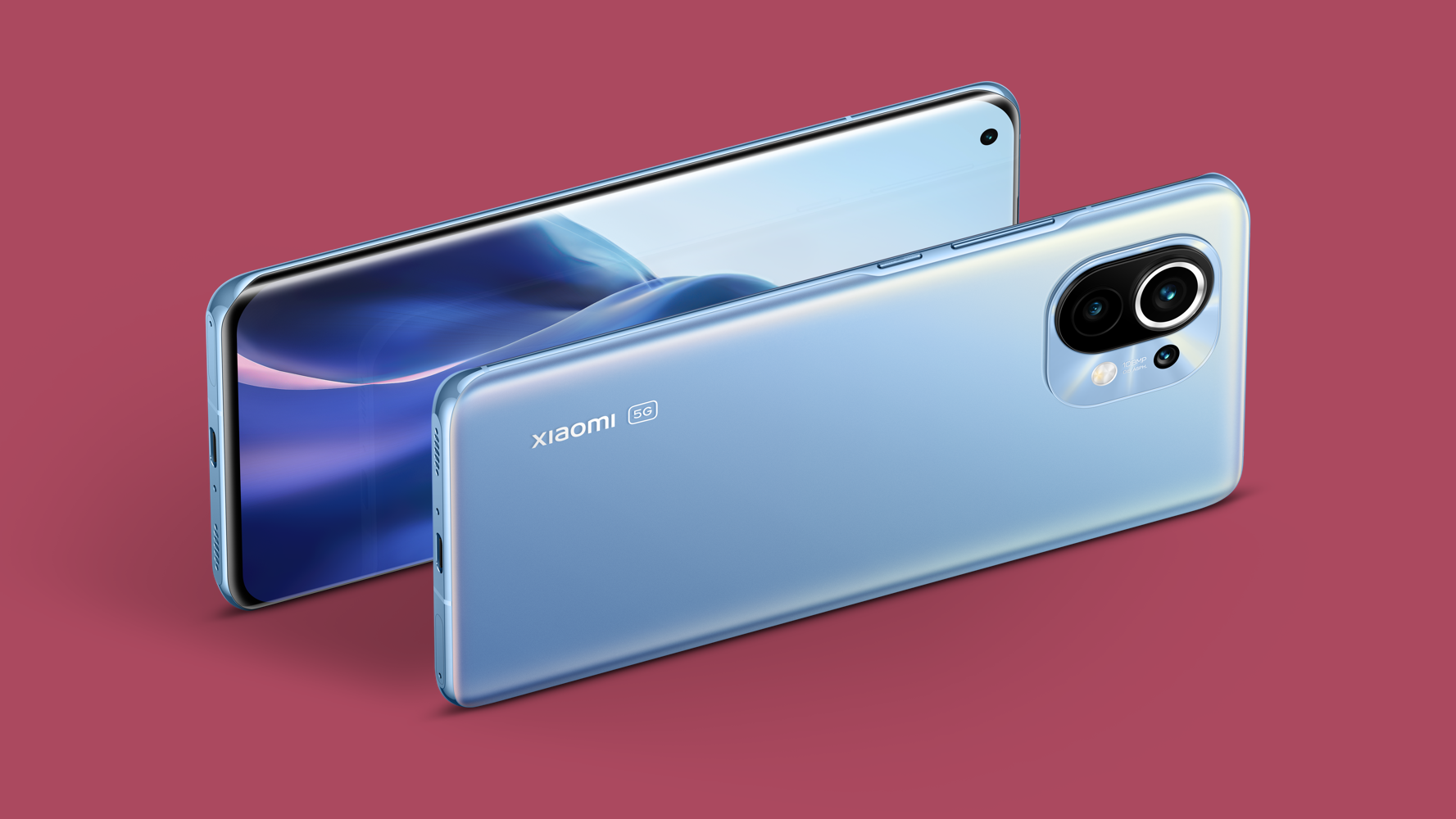
As numerical convention dictates, the Xiaomi Mi 11 is the newest phone of the three. It was announced in China in December 2020, received a second global announcement in February 2021, and started landing in European markets in the same month. Prices start from €749 (around $900, £660, AU$1,175).
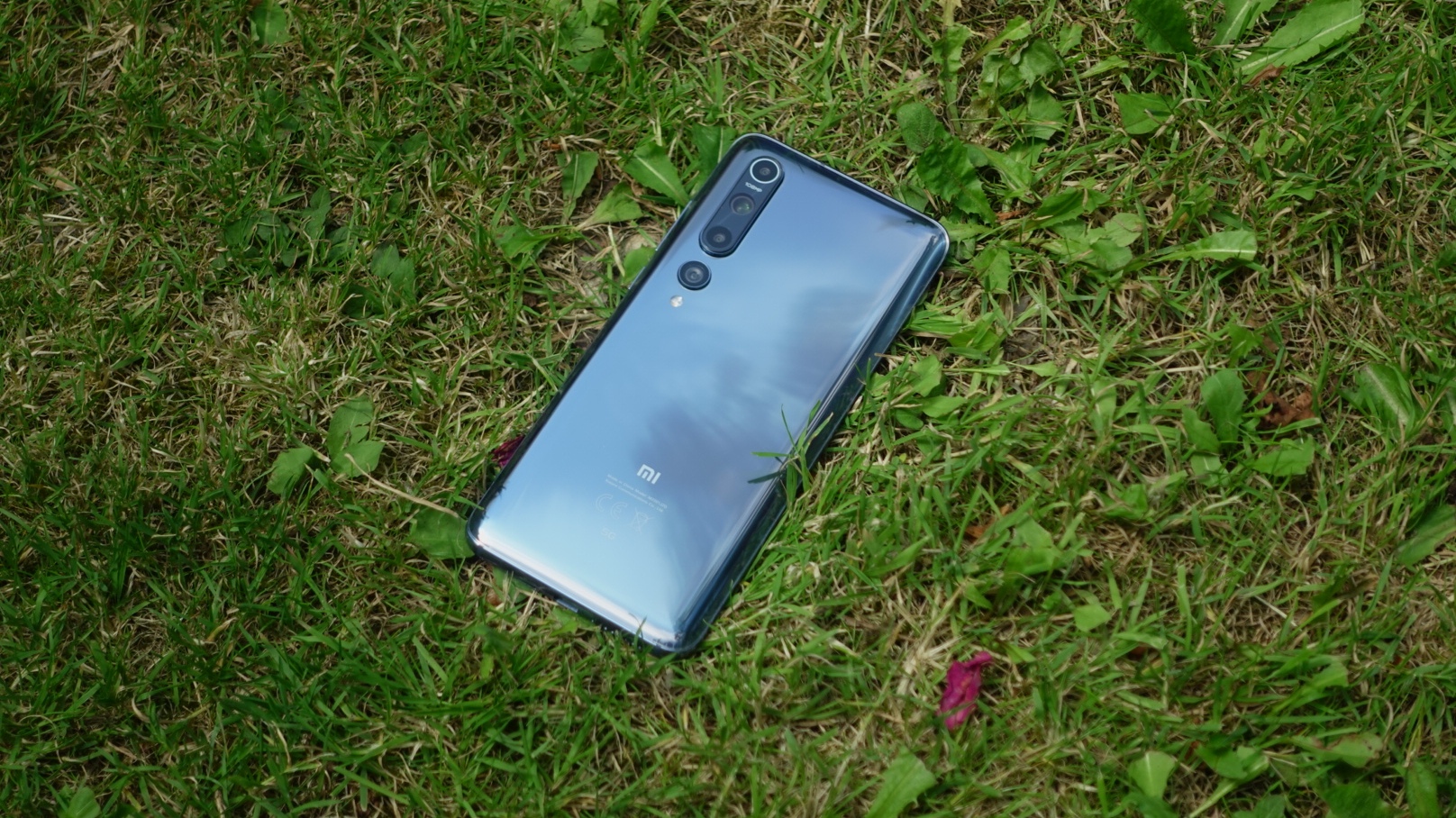
The Xiaomi Mi 10 was announced in its home country in February 2020, which was followed by a global launch in March. It then received a staggered global rollout, with prices starting from £799 / AU$1,699 (roughly $990).
In many ways the Xiaomi Mi 10T is the odd one out among this trio. It launched globally in late September 2020 and rolled out to Western markets in October. This is more of an upper mid-ranger than an outright flagship, and it’s priced accordingly at just £469 (about $600 / AU$820).
One other important note: while we’ve stated the RRPs above, the Xiaomi Mi 10 can currently be had for much cheaper thanks to its age. At the time of writing, you can pick one up for less than £500 (around $690) on Amazon, which is about the same price as the newer but technically inferior Xiaomi Mi 10T.
Xiaomi Mi 10(Image credit: TechRadar)
Design
All three phones sport similar glass-and-aluminum constructions, and similar all-screen fronts with hole punch selfie cameras. But there are subtle differences everywhere you look
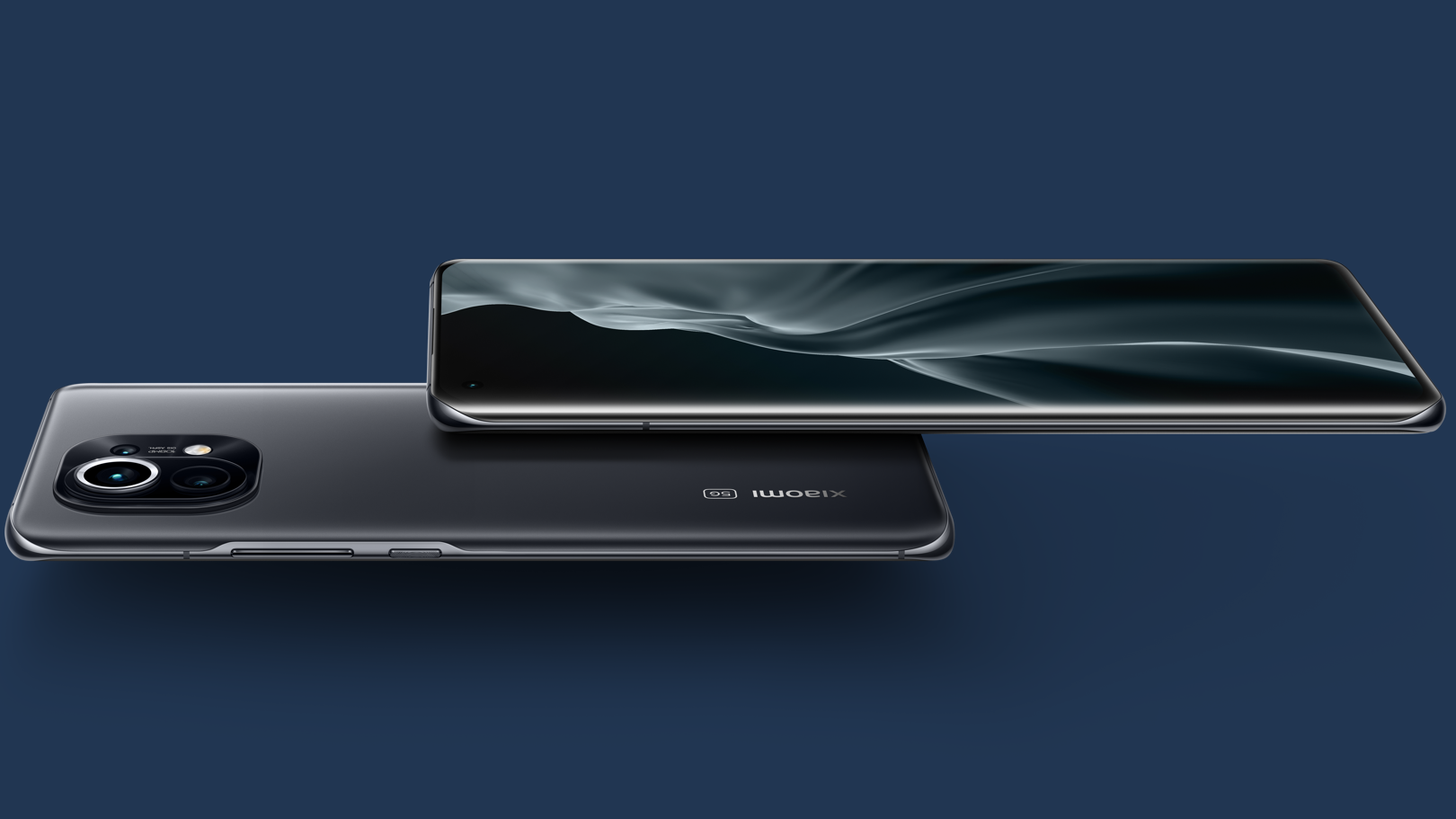
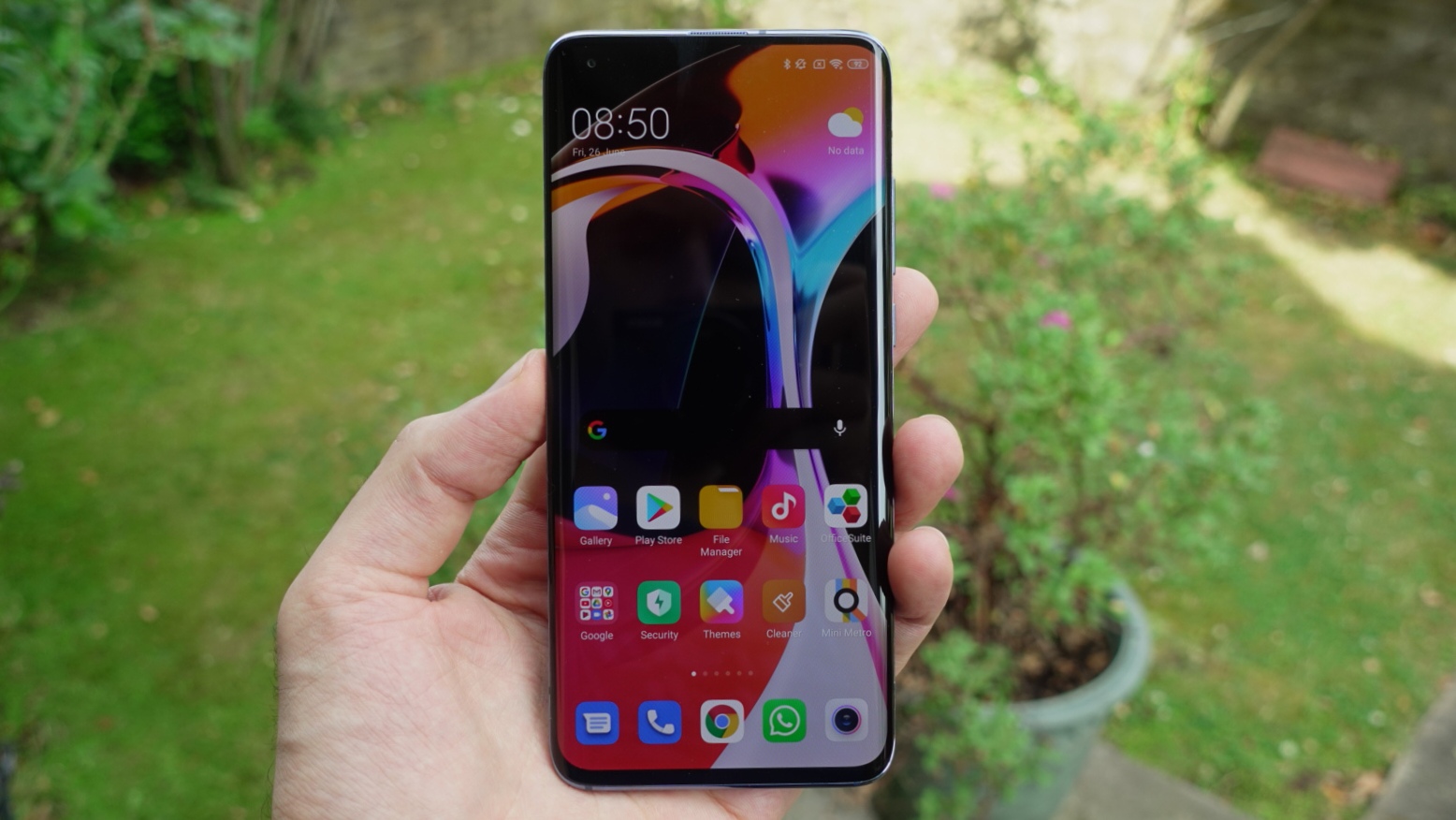
The front of the Xiaomi Mi 11 represents an evolution of the Mi 10 design, with both sporting slightly curved displays. However, the Mi 11’s screen also tapers away on the top and bottom edges for a more premium effect.
One of the first ways in which the Mi 10T shaves off some of the expense of the other two is by providing a dead flat display. It’s less ‘premium’, sure, but it’s arguably an improvement when it comes to practical matters such as watching landscape video content. There’s also a slightly more pronounced chin here, which is always a good signifier that you’re not quite dealing with a flagship.
Xiaomi Mi 10T(Image credit: Future)
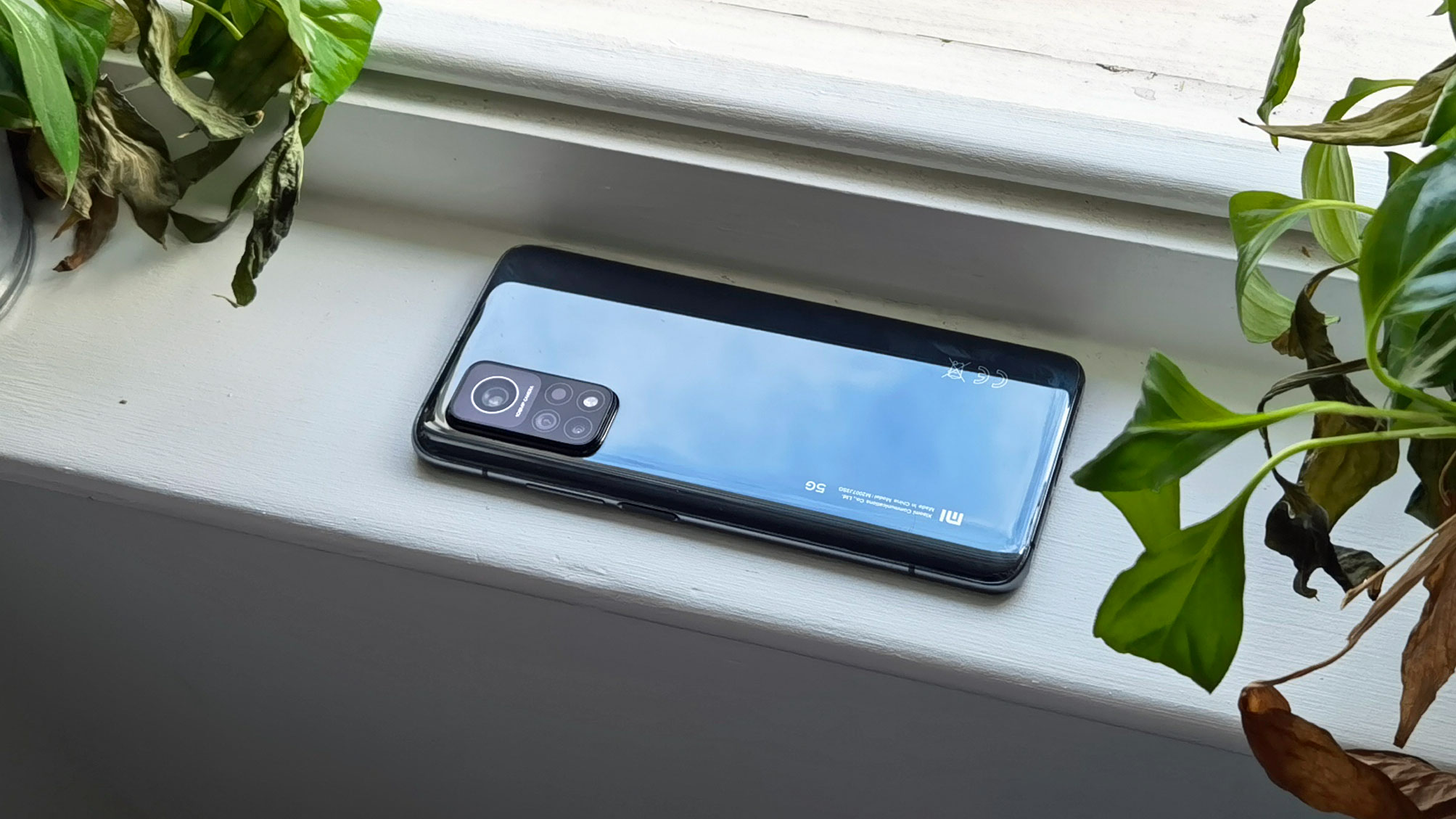
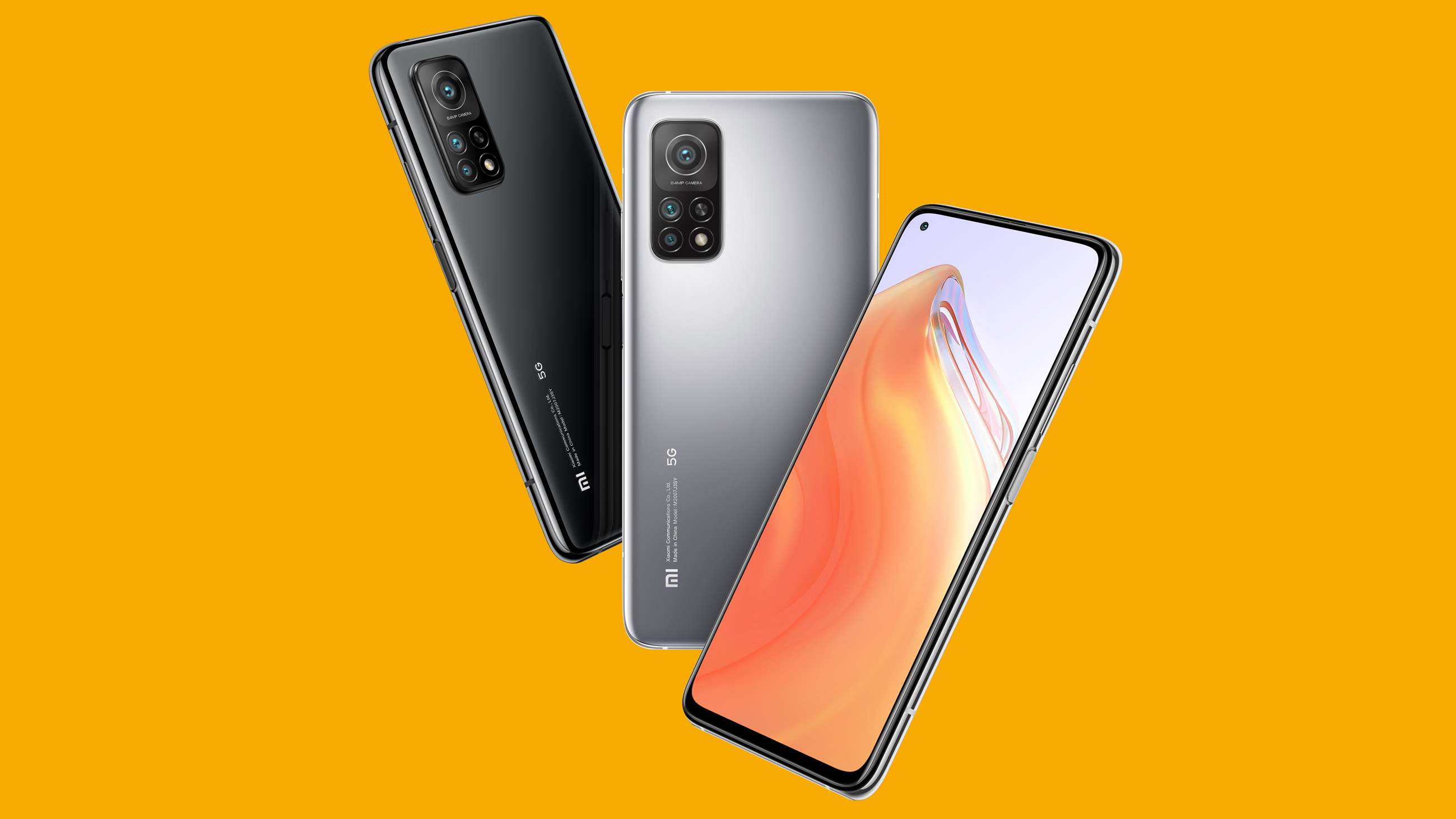
Flip all three phone around to the back, and the main differentiating factor is the camera module. The Mi 10’s is arguably the dullest of the three, with a long vertical lozenge-shaped that was very late–2019/early–2020.
The Mi 10T feels far fresher, with a sharp industrial-looking oblong module that clusters its sub-lenses in a way that screams (or rather gently whispers) ‘cool pro camera’ - even though it’s actually the least impressive of the three in terms of performance.
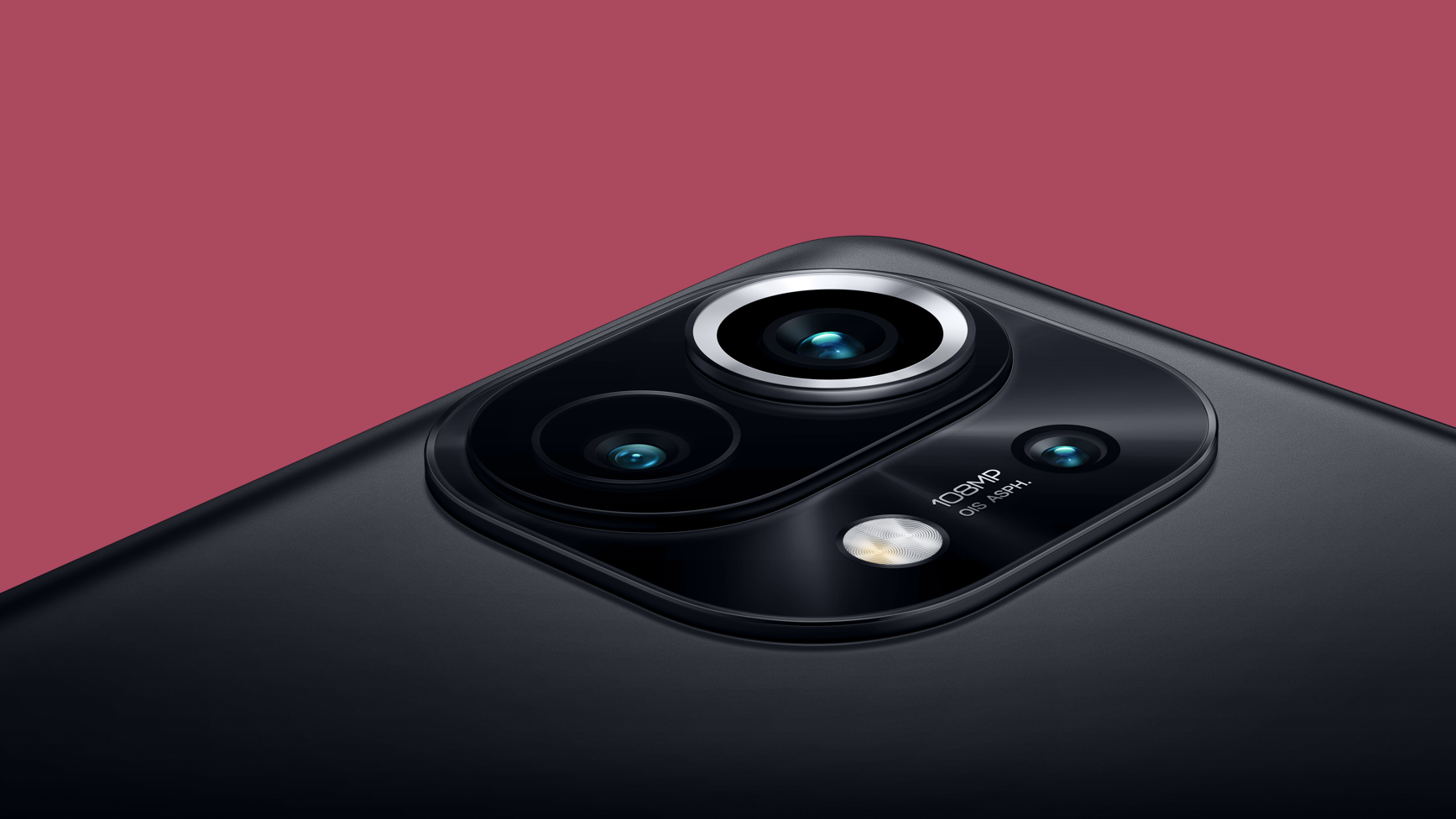
As for the new Xiaomi Mi 11, it takes an altogether rounder, smoother and more artistic approach. Its camera module has the kind of rounded square look that’s vaguely reminiscent of the iPhone 12 Pro’s, but with its own distinctively rounded lens mounting.
They all sport similar dimensions, but the Xiaomi Mi 11 is the lightest of the three at 196g, coming in well short of the Mi 10 (208g) and Mi 10T (216g). The Mi 11 is also much thinner than the other two at 8.1mm, with both the Mi 10 (9mm) and Mi 10T (9.3mm) feeling quite chunky by comparison.
Display
Xiaomi Mi 11(Image credit: Xiaomi / TechRadar)
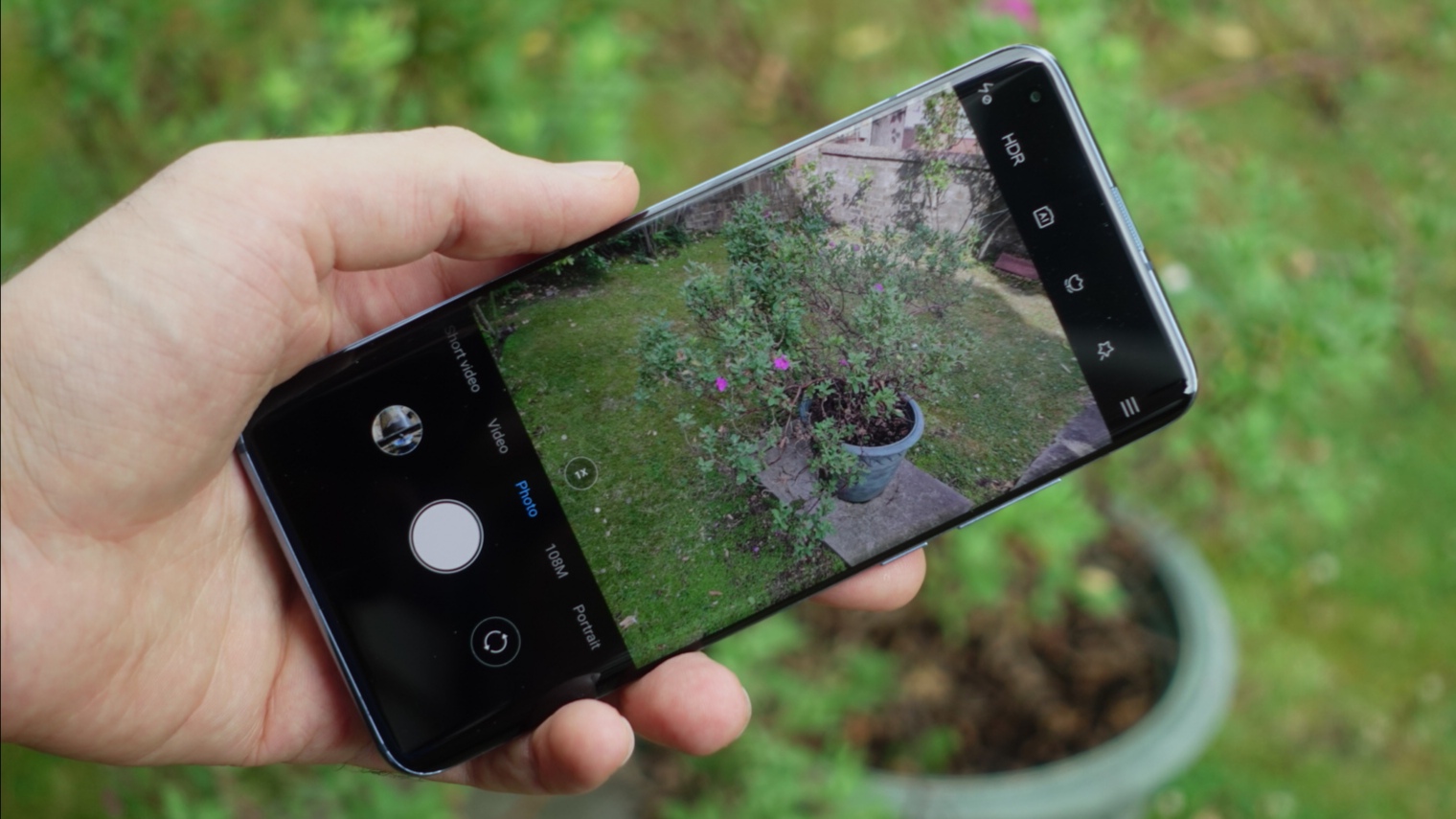
Both the Xiaomi Mi 10 and the Xiaomi Mi 10T pack 6.67-inch displays, with similar Full HD+ resolutions. The Xiaomi Mi 11 screen is much bigger than both at 6.8-inches, and its a good deal sharper too at WQHD+.
The Mi 10 and the Mi 11 use vibrant AMOLED panel technology, whereas the Mi 10T cuts costs by going with a more traditional IPS LCD approach. This means that the two pricier flagship models output richer, contrast-ier pictures with superior dynamic range and deeper blacks.
On the other hand, it might surprise you to learn that the Xiaomi Mi 10T screen is the smoothest of the three, with an impressive 144Hz refresh rate. The Xiaomi Mi 11 is just a little behind on 120Hz, while the Xiaomi Mi 10 brings up the rear with a still-respectable 90Hz.
We liked the Mi 10’s display back when we reviewed it, appreciating its HDR10+ credentials and all-round balance, but the Xiaomi Mi 11 promises to take things to the next level. With its ability to run at 120Hz and QHD simultaneously, it’s potentially right up there with the Galaxy S21 Ultra and the OnePlus 8 Pro.
Xiaomi Mi 10(Image credit: TechRadar)
Camera
All of these phones bring meaty numbers to the table when it comes to camera specs, though all miss out on top notch zoomed shots thanks to the lack of a dedicated telephoto lens.
The Xiaomi Mi 11 and Xiaomi Mi 10 go an extra step in an attempt to compensate for this. The cheaper Xiaomi Mi 10T runs a 64MP wide sensor, while the Xiaomi Mi 10 and the Xiaomi Mi 11 both go with huge 108MP equivalents, which opens the possibility of cropping in for digital zoomed shots without a massive drop in quality.
Interestingly, the Mi 10 has the fastest main lens of the three at f/1.7, while the Mi 11 and Mi 10T have to make do with f/1.9.
That 108MP figure is a dead give away as to the source of those image sensors: Samsung. That said, these are actually two different sensors, with the Mi 10 taking the ISOCELL HM2 from the Galaxy S20 Ultra, and the Mi 11 borrowing the ISOCELL HM3 sensor from the Galaxy S21 Ultra. The newer sensor features larger 0.8μm pixels (as opposed to 0.7μm), among other enhancements.
Xiaomi Mi 10T(Image credit: Xiaomi)
All three camera systems feature 13MP f/2.4 ultrawide sensors. Both the Xiaomi 11 and the Xiaomi 10T back their two primary cameras with a 5MP macro camera, while the Xiaomi 10 goes with a pair of 2MP sensors - one for macro, one for depth.
Specs and performance
There’s no contest when it comes to the fastest phone out of these three. The Xiaomi Mi 11 uses Qualcomm’s latest top-end chip, the 5nm Snapdragon 888, which represents a sizeable 25% performance leap over the 7nm Snapdragon 865 that powers both of the others.
Breaking things down a little, the Snapdragon 888’s Adreno 660 GPU can render graphic 35% faster than the Snapdragon 865’s Adreno 650, whilst being 20% more power efficient.
Qualcomm also claims that the Snapdragon 888 packs a much faster AI Engine than its predecessor, one that’s capable of 26 tera operations per second next to the Snapdragon 865’s 15 TOPS for a performance improvement of more than 70%. Its ISP is 35% faster than before too, which greatly bolsters the potential camera performance of the Xiaomi Mi 11.
There’s no context at the top, but it’s worth reiterating that the Mi 10T is just as fast as the more expensive Mi 10 - with one minor caveat. While both the Xiaomi Mi 10 and Xiaomi Mi 11 come with 8GB of RAM in their base configuration, the entry level Xiaomi Mi 10T packs 6GB.
Xiaomi Mi 11(Image credit: Xiaomi / TechRadar)
All three offer starting storage capacities of 128GB, but certain regions will offer 256GB options for the Xiaomi Mi 10 and Xiaomi Mi 11. None of them offer the potential for storage expansion.
On the connectivity front, all three phones boast 5G connectivity. However, the Xiaomi Mi 11 packs a newer X60 modem, which has slightly higher potential download and upload speeds, and improved carrier aggregation across sub–6GHz and mmWave spectrums.
None of which will make much difference to most people, but it does make the Mi 11 the more future-proof of the three. Hopefully its more power-efficient nature will also make it less of a battery hog. Speaking of which…
Battery life
The Xiaomi Mi 11 runs on a 4,600mAh battery, which is a little concerning when you consider that its predecessor the Xiaomi Mi 10 packed in a 4,780mAh cell. Meanwhile, the Xiaomi Mi 10T tops them both with a chunky 5,000mAh battery.
It’s not just the relative size of the Mi 11’s battery that would appear to hamper it in a straight face-off, but the fact that the phone has to drive a sharper QHD display at a rapid 120Hz refresh rate.
Xiaomi Mi 10(Image credit: TechRadar)
Counteracting that somewhat is the aforementioned Snapdragon 888 SoC, which should prove to be a much more power-efficient chip. We’re particularly hopeful that the newer 5G modem will sip the juice rather slower than its older brother.
When it comes time to recharge, the Xiaomi Mi 11 definitely has the edge. Its 55W wired fast-charging comfortably beats the other two, with the Mi 10 capable of 30W and the Mi 10T capable of 33W.
The newest handset is also capable of impressively rapid 50W wireless charging, whereas the Mi 10 can only hit 30W. The Mi 10T doesn’t support wireless charging at all.
Takeaway
Xiaomi Mi 10T(Image credit: Xiaomi)
It’s early, days, but the Xiaomi Mi 11 looks set to be a strong upgrade on its predecessors in almost every regard. Its display is bigger and sharper than both the Mi 10’s and the Mi 10T’s, while being more responsive than the former and more vibrant than the latter.
The newer handset also benefits from a considerably faster processor and the most advanced camera module of the three phones, not to mention a new generation of 5G modem.
Just about the only area of concern is the Xiaomi Mi 11’s battery, which is smaller than both of the others. That said, with more efficient internal components, we have faith that Xiaomi won’t leave us short at the end of the day. And even if we do need a top-up, it supports much faster charging - both wired and wireless.
Of course, you’ll pay a premium for having the latest and greatest. The Xiaomi 10T represented great value at launch with its combination of top-end components and mid-range price, but the Xiaomi Mi 10 is arguably even better value now that it’s been heavily discounted owing to age.
Intel could have a new top dog Comet Lake processor waiting in the wings, namely a fresh variant of the flagship 10900K, according to a new report.
Tom’s Hardware spotted a Core i9-10900KS processor mentioned in an Intel Software Advantage Program document listing qualifying CPUs for a Crysis Remastered game bundle.
The 10900KS is listed alongside the existing 10900K (vanilla unlocked model) and 10900KF (with no integrated graphics) versions of Intel’s top-tier Comet Lake chip, suggesting that this is a new variant that might be launched soon. Remember that Rocket Lake is set to take off in March, and if Intel does have a new spin on the 10900K, it’ll very likely be coming out before the next-gen chips.
Prime CPUs
The theory is that this will be a special edition of the 10900K CPU, a specially binned model – meaning Intel will select the choicest silicon for the chips – which means it can be pushed with slightly higher clocks, much like the 9900KS before it (that offered an all-core 5GHz boost – it remains to be seen what avenue Intel might take with the 10900KS).
Of course, just because it has popped up in a document, doesn’t mean this processor is inbound – the listing could be some kind of a mistake (maybe Intel previously planned to deploy the CPU, but has changed its mind since). A number of scenarios could apply here, so we certainly can’t take anything for granted – but that said, it’s definitely a possibility that there is a 10900KS on the horizon.
If it does eventually emerge, the 10900KS will seemingly come bundled with a copy of Crysis Remastered, as per the aforementioned Intel document.
The IRS is officially accepting tax returns now. This is the perfect year to take advantage of setting up direct deposit banking information with the IRS, for more reasons than one.
It's no secret that Sony phones don't sell too well anymore - the company reported selling only a million mobiles in the financial quarter ending 31 December 2020, which is down 22% from the previous year. While sales figures for the whole year aren't in yet, that paints a sour picture of phone sales for the Japanese tech company that reportedly sold 100 million phones in 2007.
So why aren't people buying Sony phones anymore? The burgeoning abundance of phone brands doesn't help, with myriad Chinese companies taking bigger and bigger bites of the market pie, but another big issue is the price.
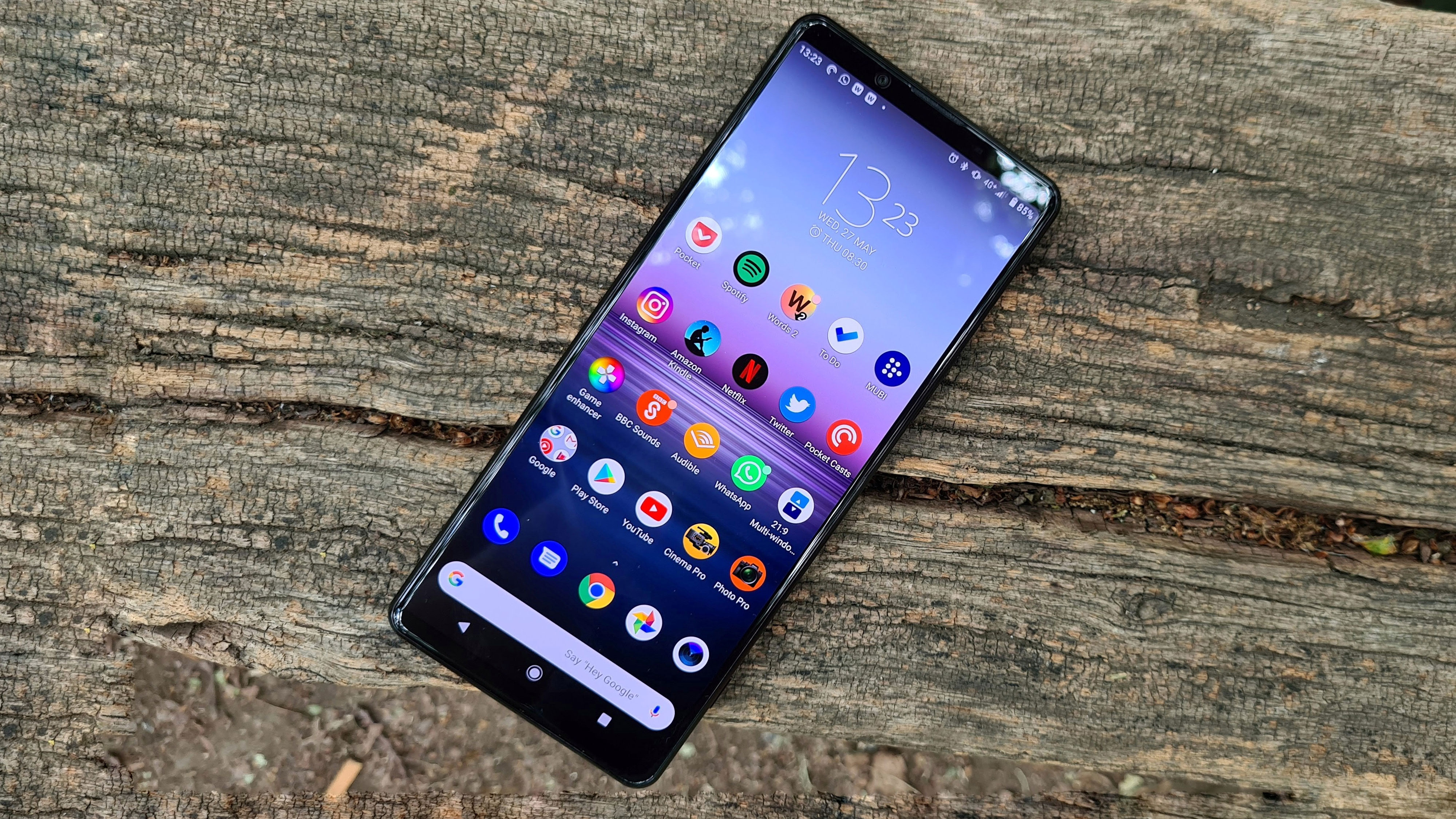
In our reviews of the Sony Xperia 1 and Xperia 5, the brand's top-end and mid-range entries respectively for 2019, we called out the high costs of each phone; for our Xperia 1 II and Xperia 5 II reviews, we went so far as to list the high prices in the 'cons' list of the reviews, signifying the high price was a major issue for the smartphones.
While Sony phones can be great, with powerful processors and good-looking screens, smartphone fans are always after value for money, something you're not necessarily getting if you're shelling out huge amounts for a device. That's something Samsung realized, and it's something Sony needs to figure out too for its upcoming Xperia 1 III.
Samsung Galaxy S21 sales are in
Samsung Galaxy S21(Image credit: TechRadar)
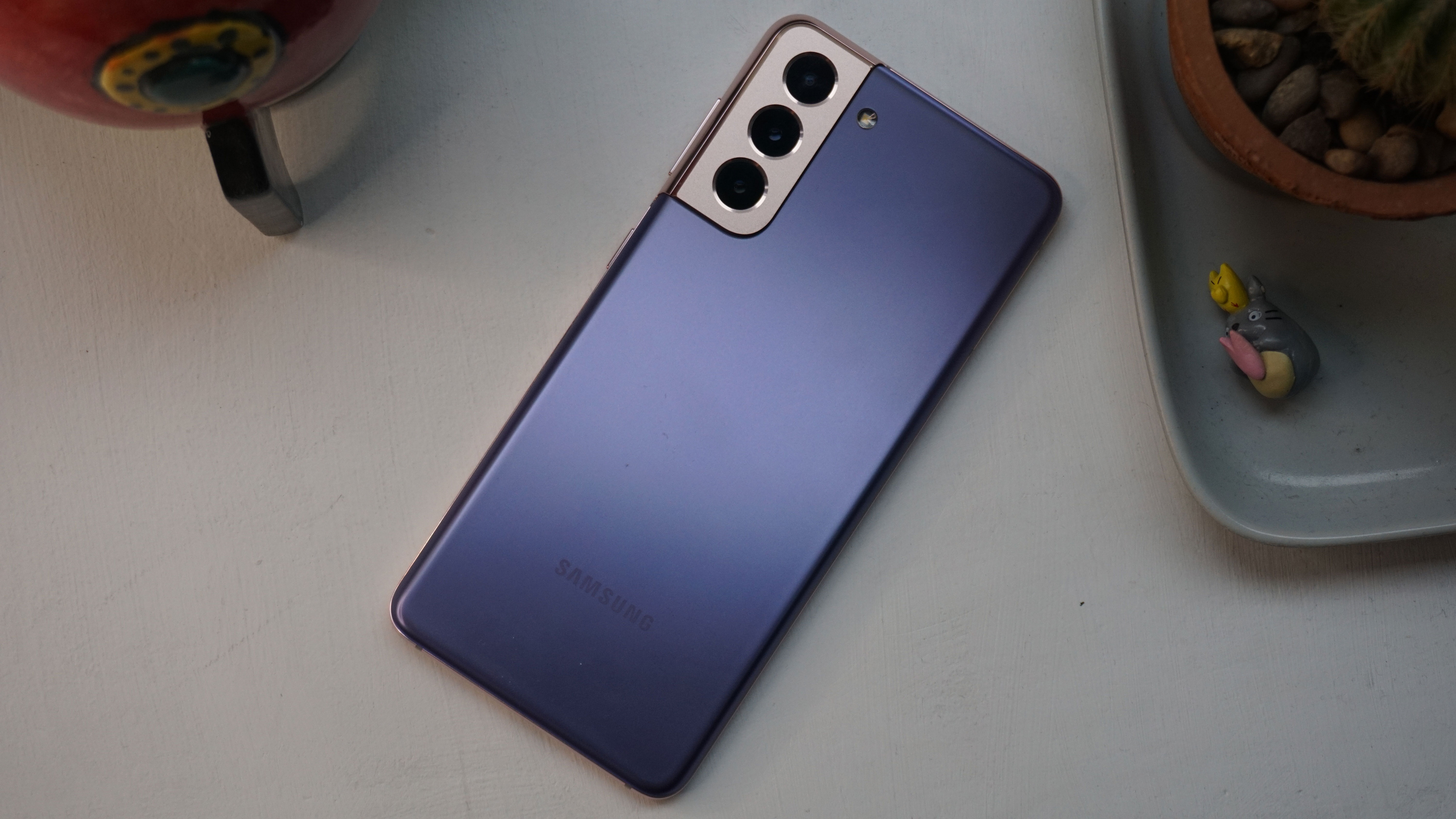
When you compare the Samsung Galaxy S20 and Galaxy S21 on paper, you realize the company's newest flagship for 2021 doesn't offer many upgrades on its 2020 predecessor. The big change for the newer device was a lower asking price, and that seems to have made all the difference.
Speaking to the Korea Herald, Samsung reports that its Galaxy S21 sales are up 30% year-on-year in South Korea - the company was specifically talking about sales in the phone's first two weeks of existence, suggesting there is a lot more initial excitement for the newer, more affordable devices.
Furthermore, a statement from Samsung UK confirms the S21's sales have also beaten those of the Samsung Galaxy S10 from 2019, at least in the UK. Over half the series' pre-orders were for the Galaxy S21 Ultra, but that too is cheaper than its predecessor.
So, Samsung's new, more affordable smartphone sells better than its predecessors, despite not bringing many changes? It seems hard to deny, then, that the lower price is directly responsible for these improved sales.
What Sony can learn
Sony Xperia 1 II(Image credit: TechRadar)
Samsung's success with selling lower-cost smartphones should send a message to all phone makers, but particularly to Sony, which is seemingly struggling with phone sales at the moment.
Hypothetically, if Sony's focus for the Xperia 1 III wasn't in making a movie-watching and game-playing powerhouse, as it seems the brand's focus was for the previous Xperia devices, but instead on making a similar phone to the Xperia 1 II but at a lower cost, it could win customers over.
There may be reasons the company has shied away from such a move in the past - Sony products in many categories tend to be high-priced ones, with its Alpha A1 camera, PlayStation 5 games console and WH-1000XM4 headphones all costing top dollar. However, there's no point in the company single-mindedly putting out top-price products if no-one's going to buy them, no matter how premium the resultant phone.
Lots of the older smartphone brands are giving up the ghost - reports suggest LG will stop making smartphones, HTC pumps out about one phone a year, Blackberry has been gone so long it's primed for a nostalgic revival, and even Nokia, though still putting out devices (albeit through HMD Global), has become rather spotlight-shy.
Sony needs to make some changes to ensure it doesn't go the same way as its contemporaries, and while putting out more affordable smartphones wouldn't totally save it, it would be a good first step.