Thursday, February 11, 2021

Latest Tech News

By Filipe Oliveira, senior market analyst, Futuresource Consulting

Smart home had another year of fabulous growth in 2018, with Futuresource estimating that shipments grew by 39 percent last year.

This consumer electronics category is now worth more than $12 billion globally and shipped over 100 million devices in 2018. The industry is tackling some important challenges like interoperability, but still lags in addressing issues that concern consumers and deter mass adoption, such as data safety.

Improved interoperability and ease of use can be counted among the industry’s more important successes, and voice assistants have been key to progress in this area. Smart speakers have become the seamless hub that directly controls a myriad of devices and appliances around the home. The quick adoption of smart speakers also matters for the wider industry because they are a common first step for consumers into the smart-home ecosystem.

See also: What Is A Smart Home?

This year, it is difficult to find a smart-home device that does not work with Amazon Alexa or Google Assistant. The widespread use of voice assistants in the home has occurred while the main smart-home use cases remain broadly unchanged: monitoring, diagnostics, remote control and automation, which have promised (and mostly delivered) convenience and security to consumers who have installed Cloud-connected security, climate control, lighting and power in their homes.

Where to next? The industry sees AI as the next big development. More than controlling the devices in their homes, consumers will be surrounded by technology that learns their routines and moods, and adapts accordingly. Another route for development is to continue to integrate connectivity to more areas of the home from living room and bedroom furniture to the kitchen and bathroom.

Futuresource believes there will be plenty of room for growth within the key established categories of security, climate control, lighting and power categories. We estimate that only 4 percent of global households own smart-home devices (excluding smart entertainment and smart speakers). The saturation rate is higher for the U.S. (19 percent) and Western Europe (6 percent), but even in those markets the runway is long.

Security and monitoring is the most established area of the smart home, and in the U.S. saturation is expected to pass the 50-percent mark this year. This is due to two key sub-categories: smart security cameras and video doorbells, the success of which is now spreading to other parts of the world, with video doorbell shipments more than doubling in Europe in 2018.

Climate control is the second most successful area of the smart home. Fourteen million smart thermostats shipped in 2018, with more than two-thirds in the U.S. and Europe. China, the leading market for smart appliances, including smart air conditioners, offers potential in smart thermostats, not least because unit prices are about half of those in the U.S. and Europe.

Lighting is less established than security and climate control but growing faster than either category. It also sells for lower unit prices and bundles well in retail with smart speakers, which have led to a new wave of smart lighting that does not require hubs or bridges.

Despite fast growth and a strong forecast (a 38 percent compound annual growth rate, or CAGR, through 2022), smart lighting has lost its fastest-growing smart-home category status, which it held in 2017, to power, which includes smart sockets and switches. Smart sockets are an easy and relatively cheap way of making any home a smart home and to control any electrical device remotely via a smartphone or a voice assistant.

The success of smart power is a symptom of one of the development branches in the smart home: settled use cases permeating new areas of the home helped by a decline in unit prices. CES is the right venue for big players to showcase their new connected devices. It is also the right place to see what possibilities AI can open for the industry in 2019.

Filipe Oliveira is a senior market analyst at Futuresource Consulting.


from TechRadar - All the latest technology news https://ift.tt/3u0ogFA

Latest Tech News

In just a year and a half since it launched, Disney Plus is already on the verge of reaching 100 million subscribers – half of what Netflix gained in over a decade – in a tenth of the time.

According to Disney, its streaming service now has 94.9 million subscribers around the world, a number the company predicted it would hit sometime in 2024. 

That figure was announced today as part of Disney’s 2021 Q1 earnings report where the company said Disney Plus had gained around 8 million new subscribers in just the last two months, since its investor day event held in December.

Part of that, most likely, came from the season finale of The Mandalorian and release of WandaVision, as well as the Disney/Pixar hit, Soul. With more big-budget shows and films just on the horizon, Disney has some strong momentum and is closing the gap to Netflix quickly. 

Are more subscribers a good thing or a bad thing?  

This is a tricky one to answer, but basing it off of popular streaming services the answer is, well, both. More subscribers puts more money into the pockets of the streaming service company, who – more than likely – invests a good portion of that back into content. 

More content is, without a doubt, a good thing. 

The downside to all this is that, as streaming services get more subscribers, they tend to raise the cost of the service. That’s happened with Netflix repeatedly over the years, and is now happening to Disney Plus – which will soon cost $7.99 per month (£7.99 / AU$11.99) or $79.99 / £79.90 / AU$119.99 per year starting on February 23 in the UK and Australia, and March 26 in the US. 

Gaining even more subscribers could tempt Disney into raising the prices again sooner rather than later, especially now that the company has a half-dozen new Star Wars and Disney series in production.


from TechRadar - All the latest technology news https://ift.tt/3adcaBa

Latest Tech News

By Jaime Sorcher

The category of the year in consumer electronics is the smart home—but it’s hardly something new. It’s actually been around for decades. Think microwaves and remote-controlled garage doors. But today’s options are more tech-driven and expansive, affording consumers exciting new ways to automate, control, and manage aspects of their daily lives.

The connected home includes smart speakers, entertainment products, connected lighting, smart thermostats, and home monitoring and security systems which are all expected to experience double-digit growth by 2022. By then, the smart home is forecast to total nearly 1.3 billion devices.

See also: What Is A Smart Home?

[Learn more about projected Consumer Technology revenue around the smart home and other key categories in CTA’s 2019 outlook release.]

It all starts with voice assistant technology powered by smart speakers like Amazon Alexa and Google Home and then extends out to a wide range of accessories and appliances in a constantly evolving ecosystem. From refrigerators that advise when foods are expiring to washing machines that can start a load during the most cost-effective time of day or night, to thermostats or lighting that can be adjusted from remote locations, the possibilities are limitless. The benefit is getting things done more efficiently, leaving more time to enjoy life.

Looking ahead, even advanced small home robotics are on the horizon. Many consumers are already familiar with household helpers like Roomba’s iRobot vacuum which can be operated by voice to clean up on command. Beyond domestic chores, robots may find other applications—entertainment, education, even companionship—but it’s still early on for this trend.

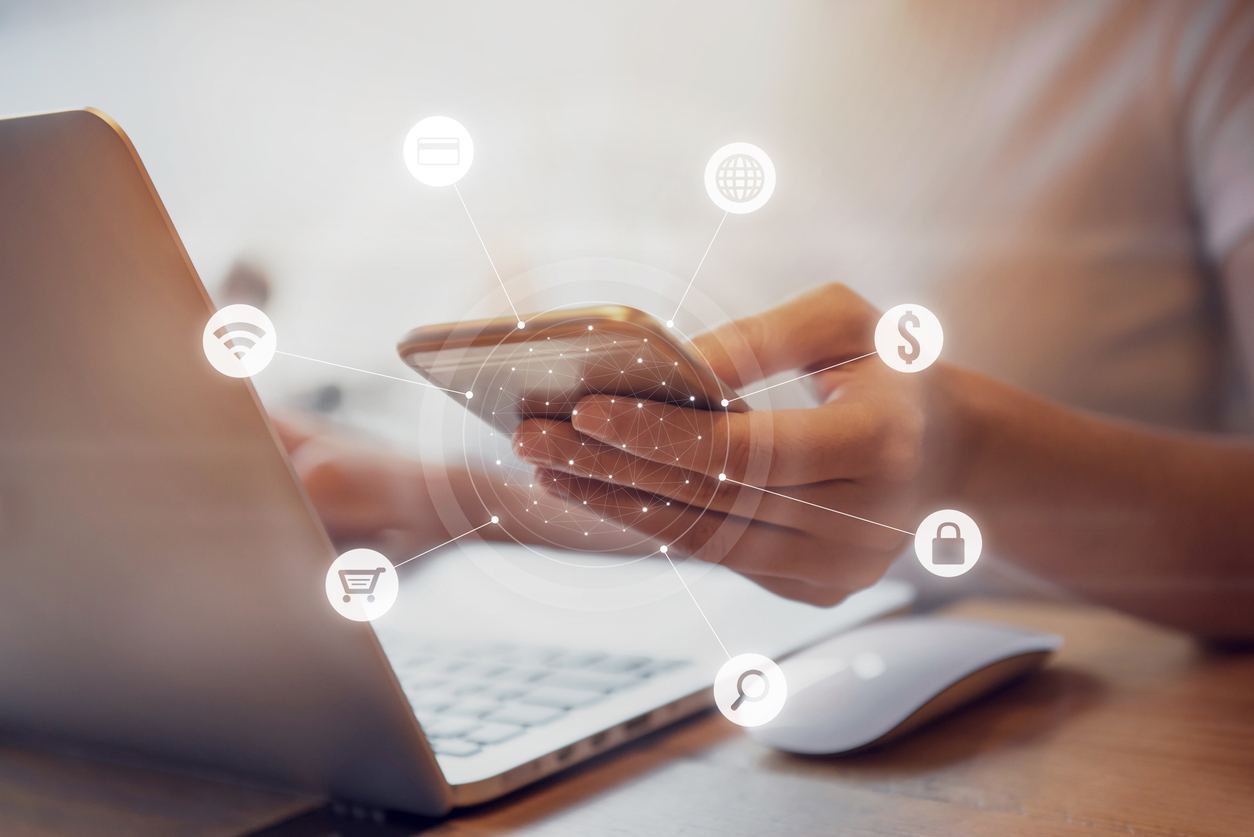
smart home phone

(Image credit: Pixabay)

At the forefront of consumer demand for smart homes are millennials—the largest segment of the population. This generation has grown up with technology and appreciates the convenience and connectivity it provides. Smart homes are also appealing to those who favor a “green” lifestyle since the technology can help save energy and costs on heating, cooling, lighting and water. Then there are boomers with elderly parents who are seeking smart home solutions to assist older folks with aging at home.

As more consumers seek out information, demos and deals for the smart home, retailers must be proactive to communicate the ease and functionality of this booming category. The goal is to put consumers in control of their home by helping them to evaluate their options, eliminate any frustrations, and identify products that offer efficiency, convenience and comfort.

The key is bundling solutions to simplify the smart home which is why New Age Electronics offers the robust program that it does. It includes exclusive SKUs, custom packaging, full home automation solutions, and more. Whether it’s a unique case or popular digital downloads, New Age has the offerings that consumers are hoping to find. Best of all, as a retailer, there is the freedom to mix and match brands and products to create customized solutions to set any business apart.

As the category of the year, there truly is no place like home. [For more information, visit https://www.synnexcorp.com/newageelectronics/build-a-box/]

Path To Success

Start with the home assistant The cornerstone of the smart home, Amazon Alexa and/or Google Home, powers a smart speaker that serves as the command center for connectivity. From there, it extends out to a wide range of accessories and appliances in a constantly evolving ecosystem.

Work in peripherals
Home automation hubs, smart plugs, smart light bulbs and dimmers, wall switches, smart front door locks, smart coffee makers, alarm clocks, routers, thermostats, smart faucets, garage door openers—and more. These are all complements to major investments like the smart TV, smart refrigerator and smart washers and dryers.

Don’t be afraid to mix and match vendors
Building the best smart home possible is about being free from constraints. With the bundling program from New Age Electronics, you’re encouraged to mix and match brands for the ultimate smart home system to satisfy your consumers.

Solve the problem—show your customers how you can make their lives easier
The smart home gives the consumer the opportunity to run their home differently than they ever have before. It means more efficiency so there is more time to enjoy life. From refrigerators that can prepare a shopping list, to the ability to turn off the thermostat on the way to the airport, to preheating the oven on the way home from work—the options are endless.

Presented By:

New Age Electronics logo

(Image credit: New Age Electronics)


from TechRadar - All the latest technology news https://ift.tt/3qhdZ5t

Wednesday, February 10, 2021

Tourists reportedly missing in Russia's infamous mystery hiking site - CNET

"[T]hey have not returned yet and there is no contact with them," a local source said.

from CNET https://ift.tt/2Z4WpFV

Latest Tech News

Hot on the heels of Aussie Broadband discounting its fastest NBN plans, Telstra has come to the table with a very similar offer.

Telstra is now serving up its premium NBN 250 plan for AU$100 a month, making it the same price you’ll pay for the telco’s NBN 100 plan (which is also currently discounted).

You can expect a typical download speed of 215Mbps on Telstra’s NBN 250 tier, which is a significant leap up from its NBN 100 plan which maxes out at 100Mbps.

The discounted offer is only available for your first six months with Telstra, and after the reduced rate ends, your monthly bill will go back to the standard pricing of AU$140 a month.

Still, it’s a competitive offer that will see you save AU$40 on the plan each month, or a solid AU$240 in total.

It’s not just its NBN 250 plan that’s been discounted though – if you want absurdly-fast download speeds, and are prepared to pay the price, then Telstra’s 1Gbps plan has also seen a price cut taking its NBN 1000 plan down to AU$140 a month.

As with the NBN 250 plan above, this lower price is only available for your first six months with Telstra, and afterwards it will bump up to a fairly high AU$180 each month.

We think it’s worth noting that the standard price of Telstra’s NBN 1000 plan makes it the most expensive in the market, but if you’re dead-set on an ultra-fast Telstra connection, this is a decent offer that will save you some dosh (AU$240 to be exact).

As you’ll see in the price comparison above, Aussie Broadband’s current offer makes its NBN 250 and 1000 plans the cheapest plans available in their speed tiers, so consider your options before signing up.

To sign up Telstra’s NBN 250 or 1000 plans, you will need a fibre-to-the-premises (FTTP) connection, while a limited number of hybrid fibre coaxial (HFC) locations are also eligible – check your address on Telstra’s website to see if you can sign up.

Both plans are available with no contract term, though you will have to pay out the cost of your modem if you decide to leave early, which is AU$216. Signing up online will also get your AU$99 start-up fee waived.


from TechRadar - All the latest technology news https://ift.tt/3qbTFSS

4 reasons you should file your taxes as early as possible, starting Friday, Feb. 12 - CNET

Trust us, 2021 isn't the year you want to put off filing your tax returns. You may have until April 15 to turn them in, but here's why you'll want to act as fast as you can.

from CNET https://ift.tt/371PCRw

How to tell when it's time to upgrade your router - CNET

Experts recommend getting a new router every couple of years. Here's how to get the most out of your next upgrade.

from CNET https://ift.tt/3a2ra4G

Fortnite creators Epic just revealed the potential future of video game faces - CNET

Hello uncanny valley!

from CNET https://ift.tt/3aQ3yiY

NASA's Perseverance Mars rover landing will be must-see TV - CNET

The next robot on Mars will touch down next week, and the views will be truly otherworldly.

from CNET https://ift.tt/3d7ipbz

Best iPhone VPN of 2021 - CNET

These are the best virtual private networks for protecting your privacy on Apple iPhones.

from CNET https://ift.tt/2WCrlvL

Google Doodle celebrates Mexican singer and composer MarĂ­a Grever - CNET

She wrote more than 800 songs but is perhaps best known for penning What a Difference a Day Makes.

from CNET https://ift.tt/2OuKjUF

3 great VPNs for Xbox in 2021 - CNET

Gaming can have a little privacy. As a treat.

from CNET https://ift.tt/2Wtwu9p

Tom Brady credits tequila for wobbly Super Bowl party video - CNET

Super Bowl? More like Stupor Bowl as the Tampa Bay Bucs celebrate in the Florida sun.

from CNET https://ift.tt/3jCZTc1

Pokemon cards in such high demand, the company is racing to print more - CNET

There's been a spike in popularity for Pokemon TCG products as the company celebrates 25 years.

from CNET https://ift.tt/2Z2c2Ok

Best wrench set for mechanics in 2021 - Roadshow

Wrenches ain't sexy, but they sure are useful. Here are the ones to get for your tool box.

from CNET https://ift.tt/3ppJslR

Today's Wordle Hints, Answer and Help for May 10, #1786

Here are hints and the answer for today's Wordle for May 10, No. 1,786. from CNET https://ift.tt/FztnkY5