Your federal tax returns play an important role in your stimulus payments -- for the first check as well as a possible second. Here's what you need to know.
F(x)tec has announced a rather unique smartphone that combines a slider form-factor, a physical keyboard, and a choice of operating systems a rare combination for 2020.
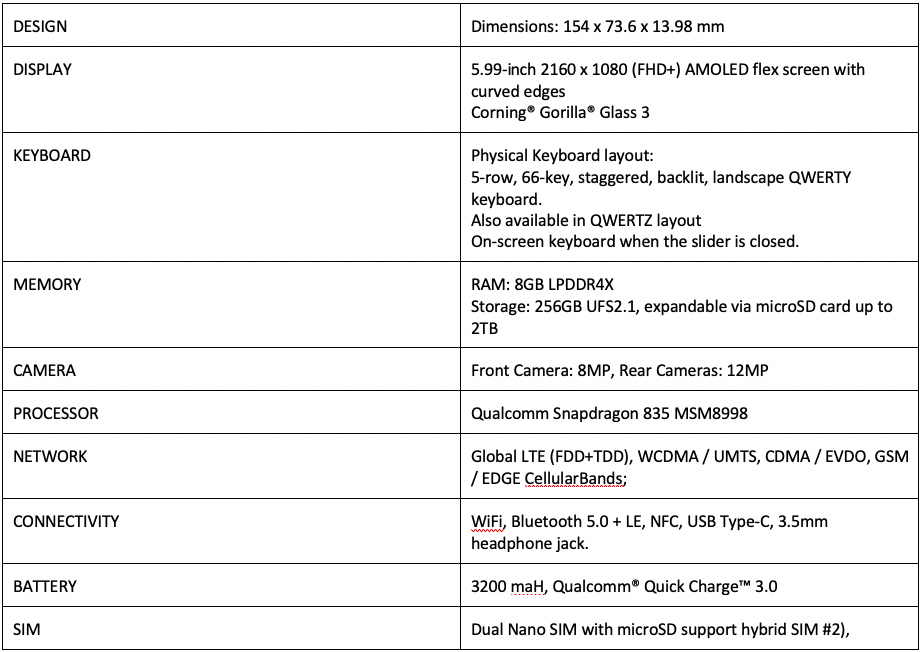
The F(x)tec Pro1-X is an angled slider smartphone equipped with a 5.99-inch AMOLED monitor featuring a 2160×1080 resolution as well as a five-row 66-key landscape QWERTY keyboard.
The handset is powered by a relatively outdated Qualcomm Snapdragon 835 system-on-chip that is accompanied by 6GB or 8GB of LPDDR4X memory as well as 128GB or 256GB of UFS 2.1 storage that can be expanded using a microSD card.
The rise of Google Android-based handsets in candy bar form-factors to a large degree halted development of competing form-factors, such as sliders and clamshells, as well as smartphones with physical QWERTY keyboards.
Unique
The F(x)tec Pro1-X is certainly not your typical Android smartphone, as it offers the choice of LineageOS or Ubuntu Touch operating systems out of the box.
The LineageOS is essentially a refined Android that has advanced controls and privacy permissions, whereas the Ubuntu Touch offers users capabilities of a fully-fledged Linux PC. The smartphone has a landscape-optimized launcher and supports customizable shortcut, but since far not all Google Android applications are optimized for hardware keyboards, not all programs will be able to take full advantage of the device.
The F(x)tec Pro1-X can be connected to a display using a USB Type-C cable and be used like a regular Linux personal computer. The touchscreen display can act like a trackpad, whereas the keyboard can be used to input text.
(Image credit: F(x)tec )
By today’s standards, imaging capabilities of the F(x)tec Pro1-X are rather modest: the smartphone is equipped with 12MP (Sony IMX363) main sensor, a 5MP fixed focus sensor, a LED flash, and an 8MP sensor for selfies. For a business-oriented smartphone, imaging may not be the most important quality. But connectivity certainly is.
(Image credit: F(x)tec )
The handset supports global 4G/LTE (FDD+TDD) as well as WCDMA, UMTS, CDMA, EVDO, GSM, and EDGE networks. In addition, the smartphone supports Wi-Fi 6, Bluetooth 5.0 + LE, and NFC.
(Image credit: F(x)tec )
The F(x)tec Pro1-X is an impressive device, but unfortunately it will not be available immediately, with the company saying it aims to ship in March 2021.
Super early birds will be able to obtain a 8GB/256GB version of the smartphone for $499 from Indiegogo, but the rest will have to pay $799, which is not exactly cheap considering this is a handset based on an SoC from 2017.
The only Australian streaming platform dedicated to sports is set to change things up next year, with the Foxtel-owned Kayo Sports planning to introduce a new free subscription tier in 2021, according to CEO Patrick Delany.
A specific date when this "freemium" option will be available hasn't yet been confirmed, but it will only include some on-demand games, clips and shows at launch.
The biggest drawcard for this free tier will be the availability of select live sports, starting off with the 2021 V8 Supercars season – the calendar for which is yet to be confirmed.
Delany says more sports will be available to watch live down the line, but only a few races or matches of each season will be available for free. All you will need to get streaming for free will be the app and to create a free account. Customers who have paused their Kayo subscription will also be able to access the free tier.
Kayo has a huge number of features that cater to the die hard sports fan – SplitView to stream several games at the same time, interactive stats, a match centre and multiple camera angles, to name a few. Whether these will be available on the "freemium" subscription tier is as yet unclear.
Kayo Sports currently has about 600,000 subscribers, and it's hoping this strategy to pull in more sports fans will be a winning one, allowing prospective subscribers to sample the platform before giving them the option of paying for the full service.
Find out more about what the service can offer in our in-depth Kayo Sports review.
from TechRadar - All the latest technology news https://ift.tt/2HA79Xj
Heat Assisted Magnetic Recording (HAMR) is literally one of the hottest new developments in the storage industry.
The HAMR technology significantly enhances the amount of data that can be stored on a magnetic device such as hard disks. It works by temporarily heating the disk material during the writing process, which allows a lot more data to be written in the same area.
While standard disks based on conventional magnetic recording methods have a recording density of approximately 1.14 Tb/in2, HAMR-based media can achieve recording density of 5-6Tb/in2. To put that into perspective, the standard 3.5-inch HDD created using HAMR could potentially store between 70-80TB of data, which is up to four times more than the current largest hard disk drive, Seagate’s 20TB Exos.
Best NAS devices: top Network Attached Storage for the home and office
Best NAS hard drive: Network attached storage for home office and small business
Pushing the envelope
Now, even before this hard disk drive (which is built using HAMR) hits the shelves in December 2020, a team of three researchers at the Tohoku University, in Sendai, Japan have devised a novel approach to squeeze in even more data.
The team of Simon John Greaves, Hikaru Yamane, and Yoichiro Tanaka have used a couple of bit patterned media (BPM) dots with two magnetic structures to store two bits of information in each dot.
Storing the two bits by writing at high and low temperatures, the researchers were able to achieve a storage density in excess of 7Tb/in². Thanks to their research, 100TB disks are no longer a pipe dream and closer to reality than ever before.
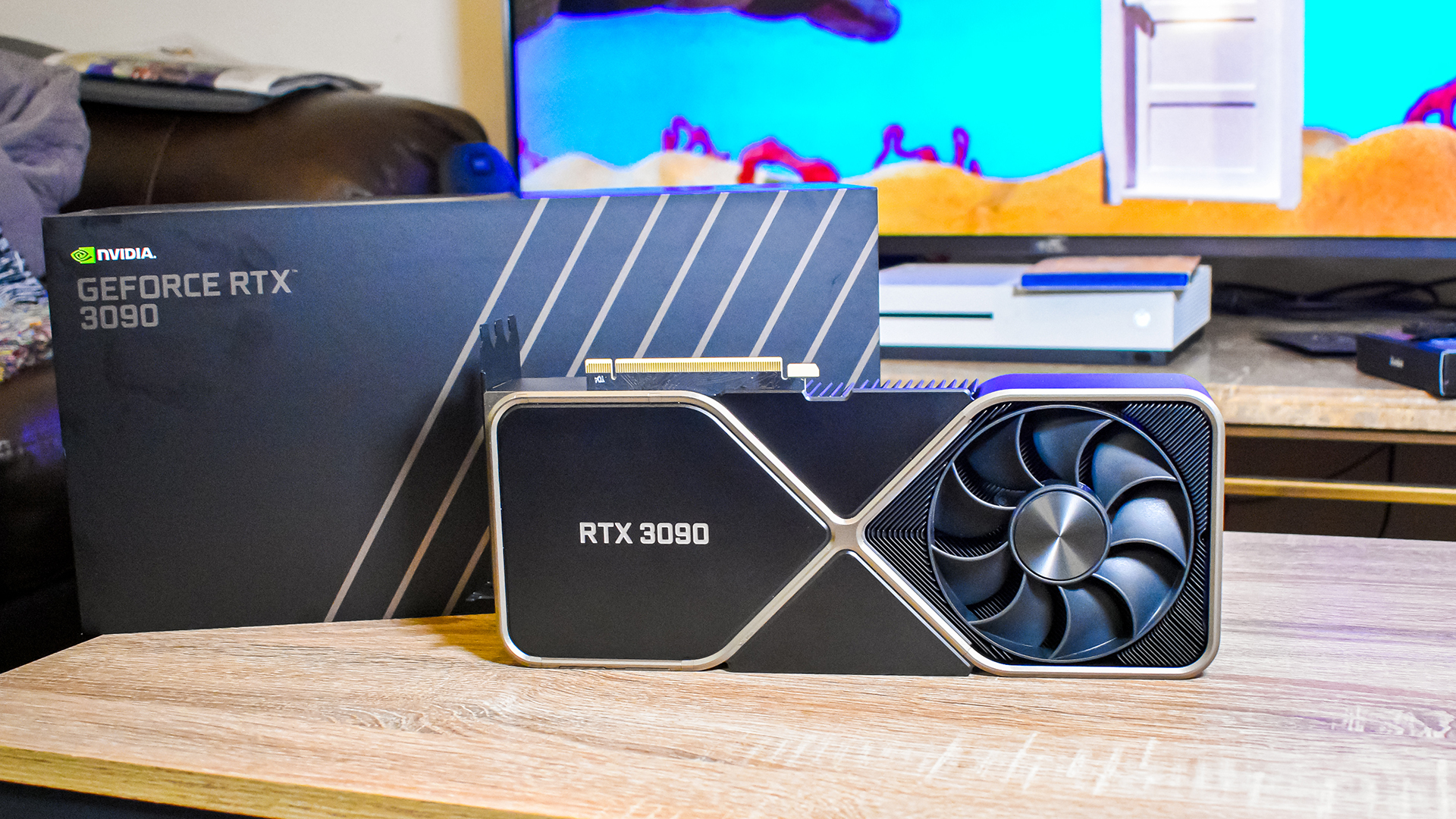
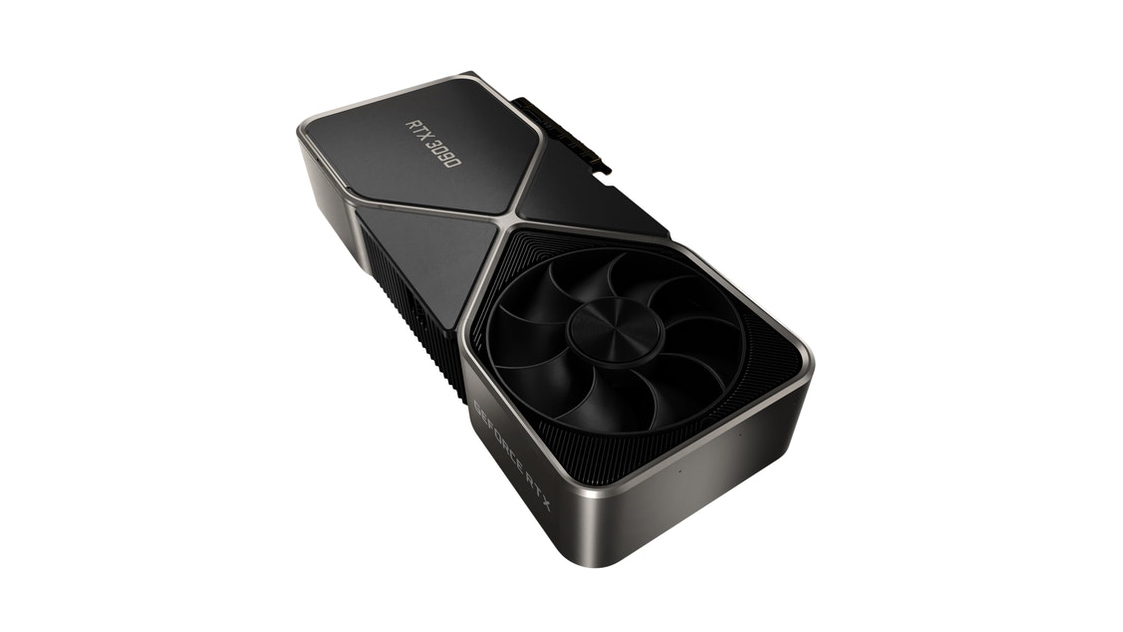
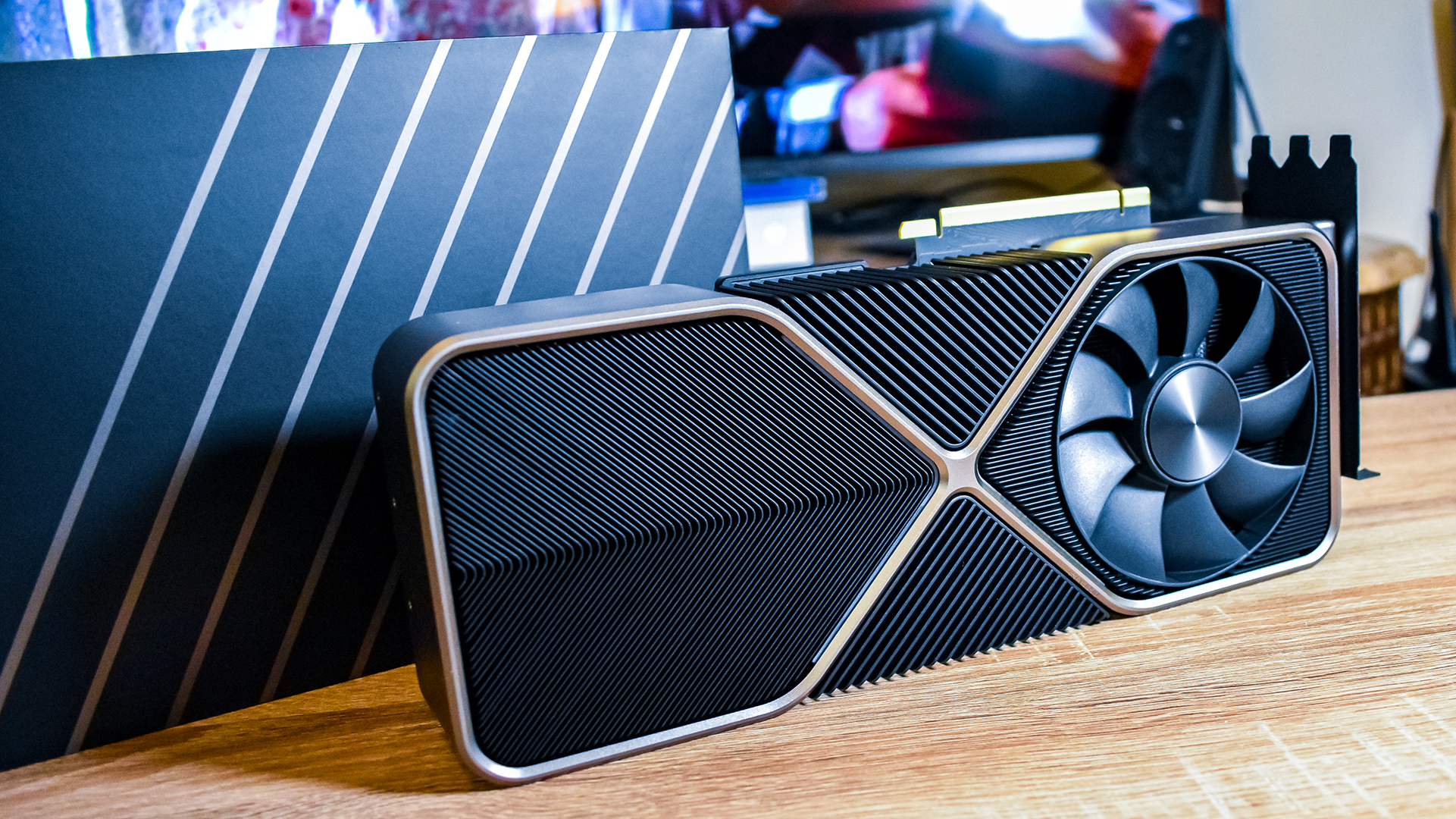
The Nvidia RTX 3090 is the new performance king. Until we see Super or Ti variants, it’s the best that Team Green is offering, and it’s not throwing a Titan label on it to classify it outside of the mainstream. So, while Nvidia seems to want to claim that this flagship-level graphics card isn’t a follow-up to the Nvidia GeForce RTX 2080 Ti, that’s still effectively what it is – it’s just more expensive.
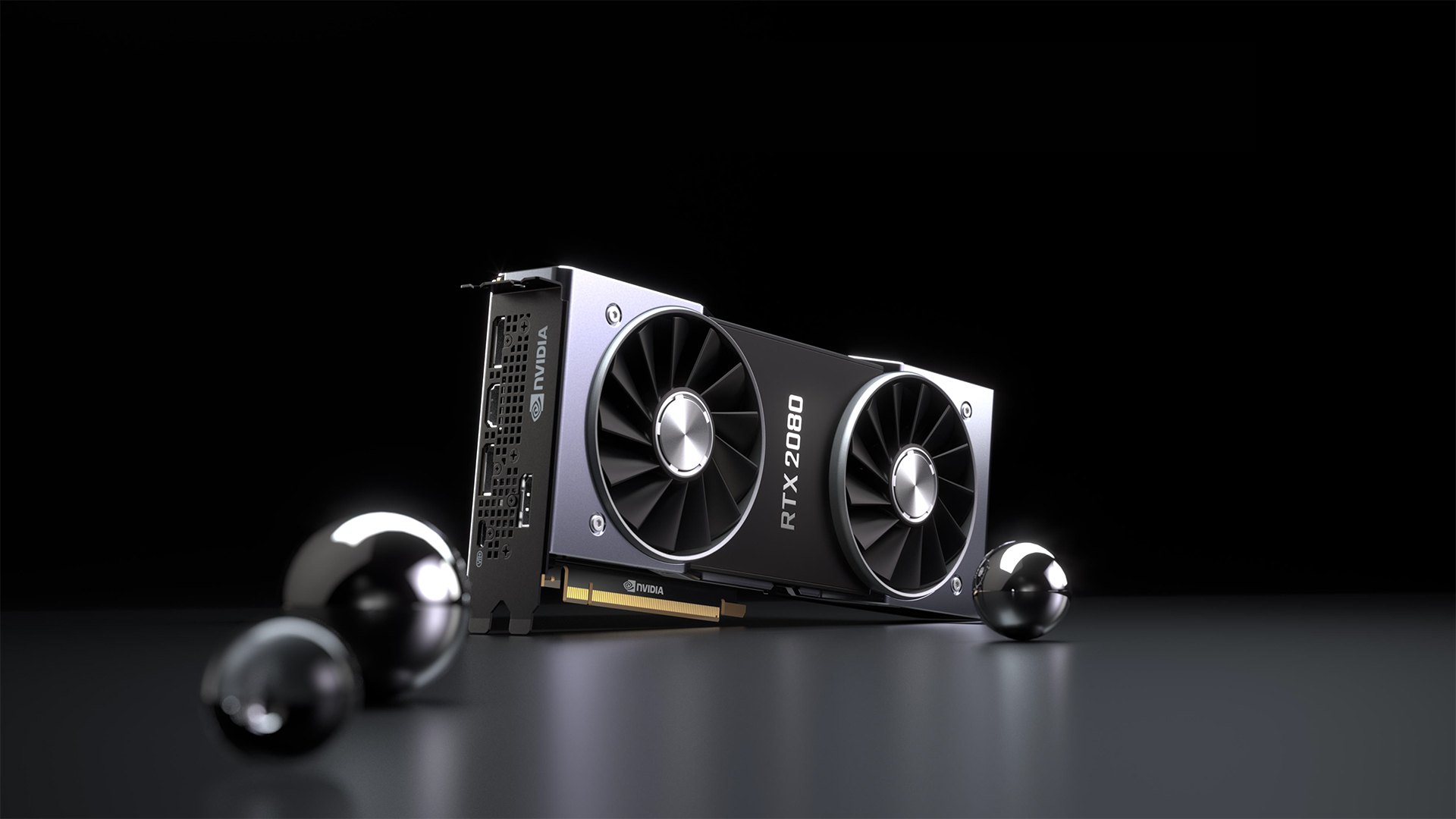
And while we probably won’t see any Black Friday deals around the Nvidia GeForce RTX 3090 (or even the RTX 2080 Ti), there will likely be a lot of buzz around this top-end graphics card throughout the holiday season. So, we thought it would be a good idea to see how it stands up against its Turing predecessor, the Nvidia GeForce RTX 2080 Ti.
(Image credit: Nvidia)
Nvidia RTX 3090 vs RTX 2080 Ti: Price
Unlike the rest of the Nvidia Ampere cards, the RTX 3090 actually costs more than the RTX 2080 Ti. The RTX 3090 costs $1,499 (£1,399, around AU$2,030), whereas the RTX 2080 Ti launched at $1,199 (£1,099, AU$1,899). Neither card is exactly priced where it should be, though.
High demand for Nvidia’s new Ampere graphics cards have made it hard to find them for sale at their retail prices, and a quick look around the market shows the RTX 2080 Ti still selling for more than its retail price in many cases. So, while the RTX 2080 Ti should be cheaper than the RTX 3090, it’s uncertain when or if you’ll be able to find either appropriately priced.
In any case where the RTX 2080 Ti costs more than the RTX 3090, we’d say to go with the 3090.
(Image credit: Future)
Nvidia RTX 3090 vs RTX 2080 Ti: Specs
The RTX 3090 doesn’t leave much hope for the RTX 2080 Ti when it comes to specs. The new card features 10,496 CUDA cores compared to the older card’s 4,352 CUDA cores. That’s more than double, and still stands out even when considering the new design sees its cores split between FP32 (Floating Point 32)-dedicated cores and cores that can tackle either FP32 or INT32 (Integer 32) operations. So, even if the split-duty cores were all focused on INT32 operations, the remaining FP32-based CUDA cores would still outnumber those found on the 2080 Ti by a wide margin.
The RTX 3090 may have fewer Tensor cores at 328, but they are a newer version than the RTX 2080 Ti’s 544 Tensor cores. And, when it comes to ray-tracing, the 3090’s 82 RT cores have an edge over the 2080 Ti’s 68 RT cores. The new card even runs at higher clock speeds with a 1,395MHz base clock and a 1,695MHz boost compared to the 1,350MHz base and 1,635MHz boost of the RTX 2080 Ti.
The gap only widens when looking at the memory. The RTX 2080 Ti features a respectable 11GB of GDDR6 on a 352-bit bus for 616GB/s of memory bandwidth. But, the RTX 3090 jumps up to Titan territory with 24GB of GDDR6X on a 384-bit bus for a whopping 936 GB/s memory bandwidth.
All that power in the RTX 3090 does come at a price. The card has a 350W power draw, meanwhile the RTX 2080 Ti has what now seems like a modest power draw of 260W.
One other spec gamers shouldn’t overlook is the HDMI port. If you’re planning to game on a 4K/120Hz or 8K TV, the RTX 3090’s HDMI 2.1 port will be a must-have. The RTX 2080 Ti features HDMI 2.0, which can only get you to 4K/60Hz without dumping HDR, and color depth. That said, you can mostly ignore this if you’re using the best gaming monitors, since DisplayPort on either card can deliver substantially more bandwidth for high resolution and frame rates.
(Image credit: Nvidia)
Nvidia RTX 3090 vs RTX 2080 Ti: Performance
Let’s just get this out of the way: The RTX 3090 probably shouldn’t be on your shopping list if you’re not planning to do some serious creative work or game at 4K. It shows its muscle in the higher resolutions far better than it does at lower resolutions, and you don’t want to leave any performance untapped when you’re paying a serious premium to get it.
So, we’re only going to focus on 4K performance here. And, when it comes to that, the RTX 3090 trounces the RTX 2080 Ti. Across our gaming benchmarks in everything from Metro Exodus and Horizon Zero Dawn to Total War and Grand Theft Auto V, the RTX 3090 showed at least 38% higher average frame rates, and overall it had 42% higher performance. It outclassed the RTX 2080 Ti by 45% in our synthetic benchmarks, which consisted of Time Spy Ultra, Fire Strike Extreme, and Port Royale.
And, even though the RTX 3090 drew 81W more power from the wall at its peak, its temperature topped out at 69C, whereas the 2080 Ti ran hotter at 84C.
(Image credit: Nvidia)
Nvidia RTX 3090 vs RTX 2080 Ti: Which should you buy?
The choice between the RTX 2080 Ti and RTX 3090 will largely depend on how you plan to use it. If you’re hoping to game on a 4K/120Hz TV with HDR, you’ll need the RTX 3090. For gaming in 4K, the RTX 3090 hits averages over 60fps more frequently than the 2080 Ti, and future support for DLSS in more games will likely give it even more of a lead.
Assuming the price of the RTX 2080 Ti starts to come down some to actually sit below the RTX 3090’s price, it could be the better option for gamers looking to get strong value in esports where 4K isn’t as big of a draw. But, if the RTX 2080 Ti still costs over the $699 (£649, about AU$950) price tag of the RTX 3080, it won’t be as compelling.
Outside of gaming, the RTX 3090 will likely easily earn its keep with the substantial increase in VRAM capacity and speeds.
So, while the RTX 2080 Ti could still offer value in a matchup with the RTX 3090, its matchup against the RTX 3080 doesn’t leave it much of a place in the market.
from TechRadar - All the latest technology news https://ift.tt/34wEcog
Only the best graphics cards can dramatically improve your gaming experience. If you want to get the most of your gaming PC, getting one should be your first order of business. If you’re planning on playing the best PC games, you can’t really go without one. Likewise if you expect your desktop PC to handle graphics-intensive work like 3D design and video editing.
Does this mean that you have to go out and buy the priciest and most powerful graphics card you could find? Not necessarily. These days, the term “best graphics card” could mean different things, depending on your need. And, the ongoing GPU war between AMD and Nvidia (with Intel about to join in) has been driving prices down, giving consumers plenty of powerful choices for much less.
From the best AMD GPU and the AMD Big Navi that’s set to launch on October 28 at 12pm EST to Nvidia’s all-powerful RTX 3080 and the RTX 3000 line, not to mention the upcoming Intel Xe, there are a few contenders to consider. We’ve gathered them all in one place. Whether you want to experience 4K from above in Microsoft Flight Simulator, just need decent 1080p performance in Horizon Zero Dawn, or need something to handle creative tasks in Premiere Pro, you’ll find the best graphics card for you on this list.
Best graphics cards on Black Friday
With Black Friday coming soon, many of the best graphics cards are expected to get some massive price cuts, much like they did last year. This means that you might be able to purchase a powerful graphics card for much less, saving you more money to use for something else on your shopping list.
Whether you’re buying one for your gaming PC you’re building or planning on gifting one during the holiday season, it would be wise to wait until the major deal event of the year. Luckily, with Black Friday rolling around the end of November, you won’t have to wait for long.
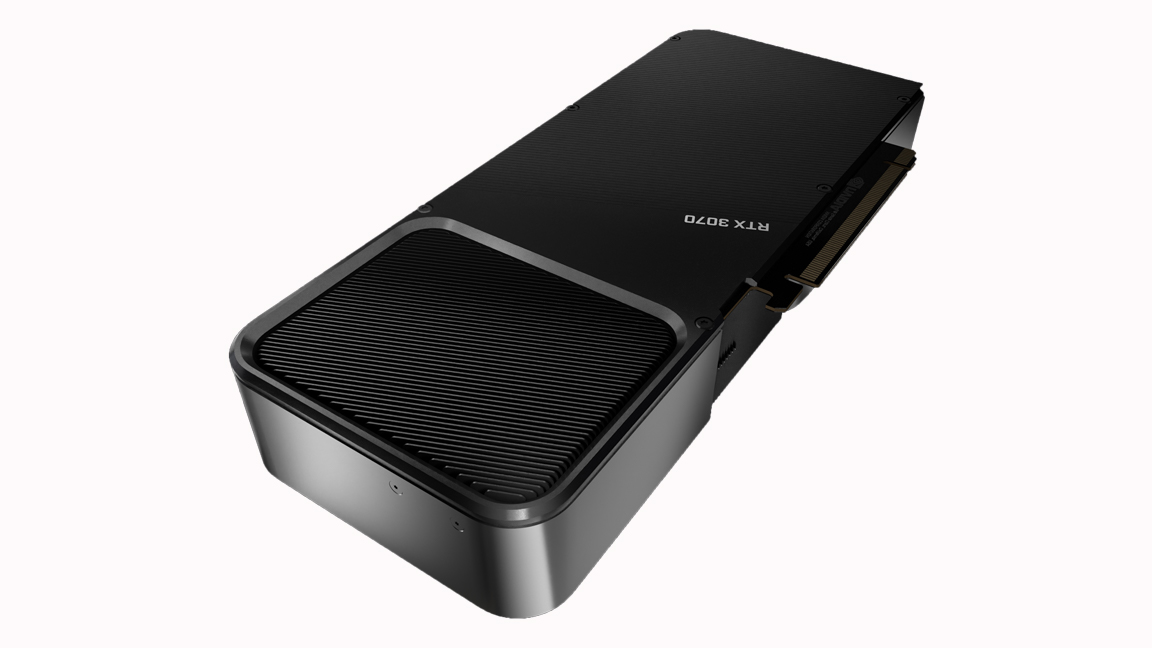
The best graphics card on the market for most people, the Nvidia GeForce RTX 3070 delivers excellent performance – on par with the RTX 2080 Ti even – without costing an arm and a leg. Before this card, 4K gaming was out of a lot of people’s budget. The RTX 3070, therefore, brings it to the mainstream for the first time, and that’s without you having to compromise on settings for most games. And did we mention the fact that this GPU is incredibly cheap? A cheap price tag plus 4K gaming on quality settings equals great value, and that’s why the RTX 3070 tops our list.
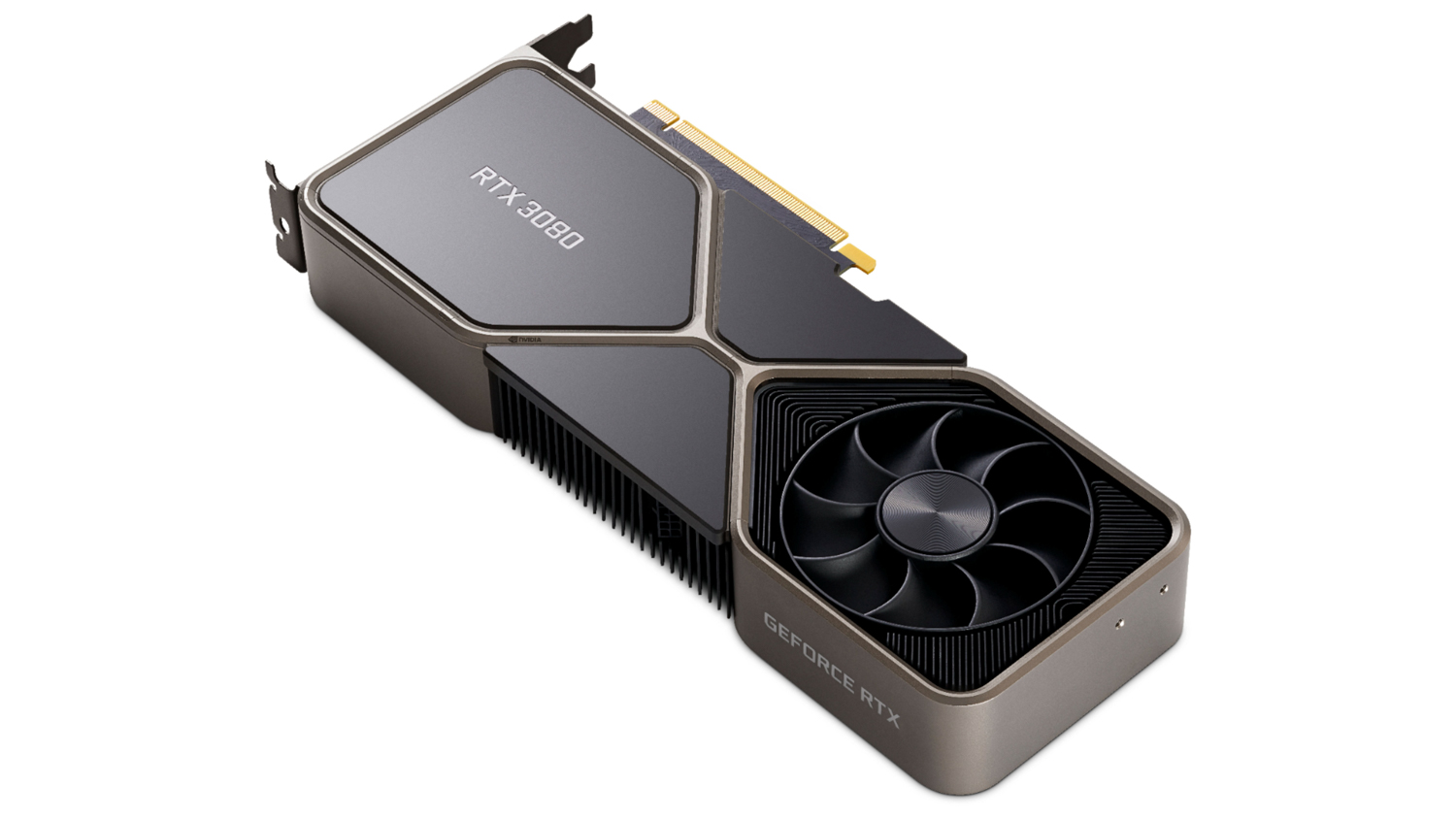
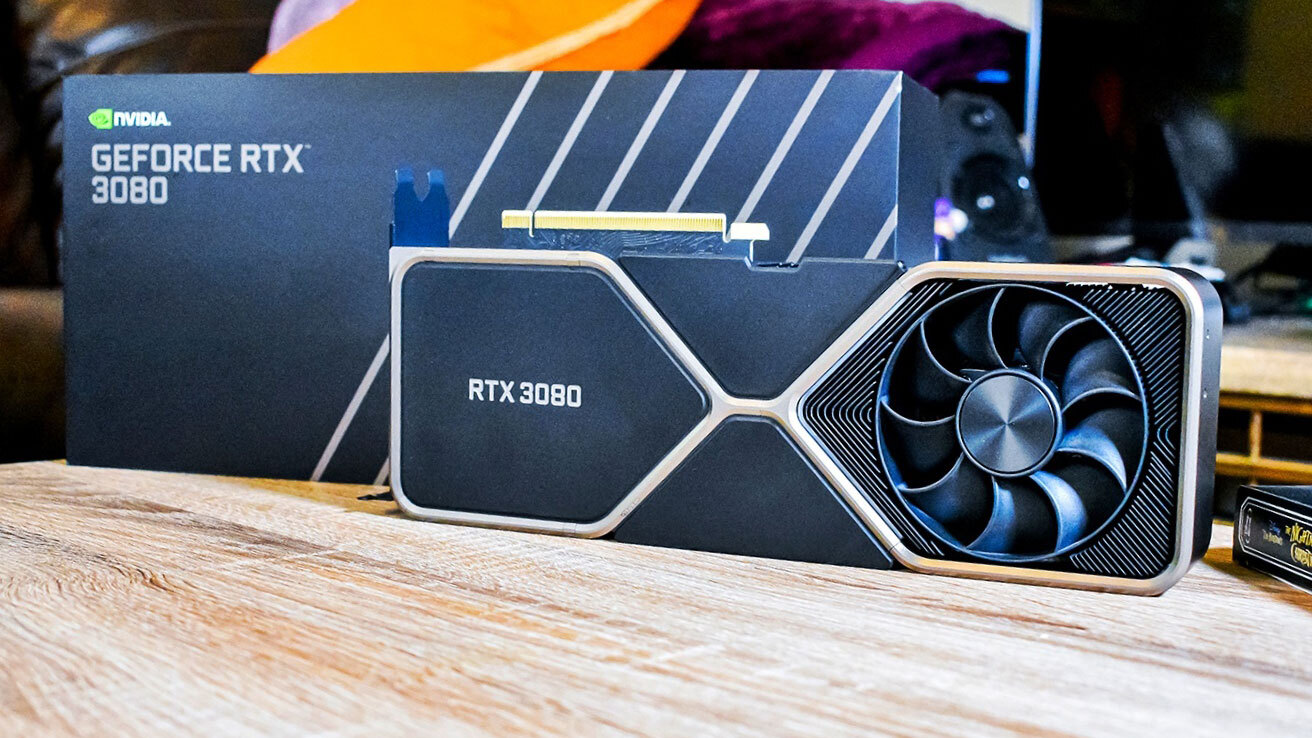
With the Nvidia GeForce RTX 3080, 4K gaming just became a lot more accessible. Before, you had to shell out more than $1,000/£1,000 to get playable framerates with the RTX 2080 Ti. However, with the next generation of Nvidia graphics cards, the price of 4K gaming has been cut nearly in half, thanks to the RTX 3080. It boasts one of the largest generational leaps in GPU history, delivering a 50-80% performance boost over the RTX 2080 and a 20-30% boost over the RTX 2080 Ti, all while keeping the same price point as the RTX 2080. This is both an absolute powerhouse of a graphics card and a great value, if you have a bit of extra cash lying around.
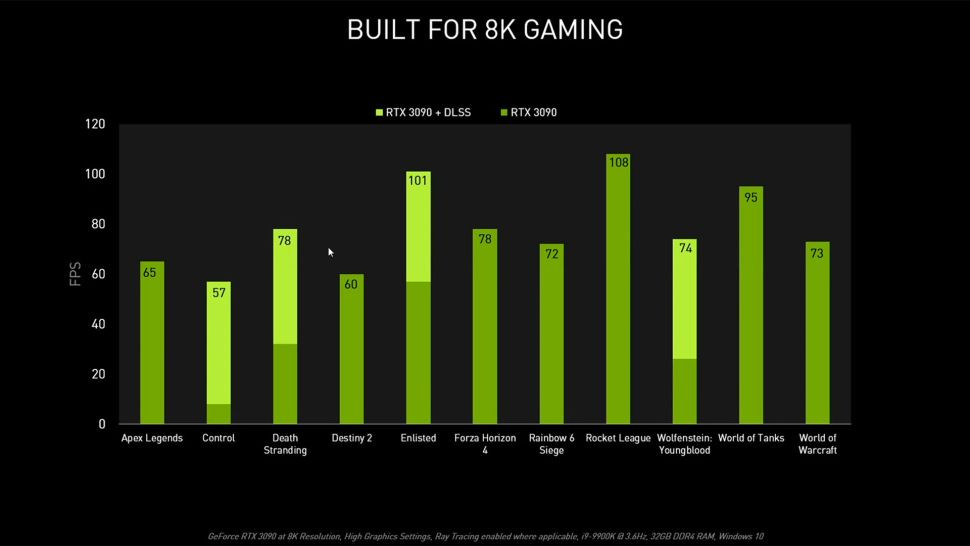
You can’t beat the Nvidia GeForce RTX 3090 when it comes to performance. With a whopping 24GB of RAM, no game or, more importantly, heavy graphics project will suffer performance issues. In fact, you can even get some 8K performance at 60 fps out of the 3090. It is an incredibly expensive unit, and quite large too, so it will probably be too much GPU for most users. The Nvidia GeForce RTX 3090 is, in essence, a replacement for the Titan so it’s meant more for the creative user tackling intensive 3D and video rendering than for the avid gamer. Even so, it comes with a massive reduction in price compared to the Titan, even if it’s still out of most people’s budget.
Stream processors: 3,584 | Core clock: 1,506 | Memory: 11GB GDDR5X | Memory clock: 10Gbps | Power connectors: 2 x 8-pin | Outputs: 1.4 with DSC DisplayPort, HDMI with 4K60 Support
Generation-defining performance
Affordable
No ray tracing
Only 6GB of VRAM
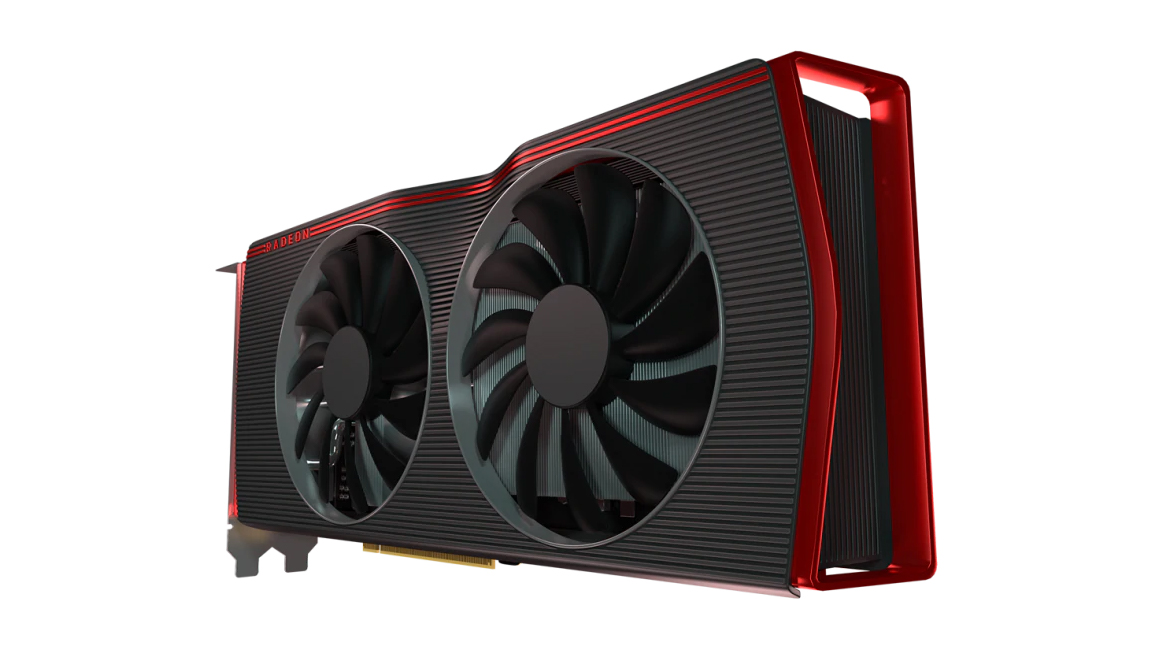
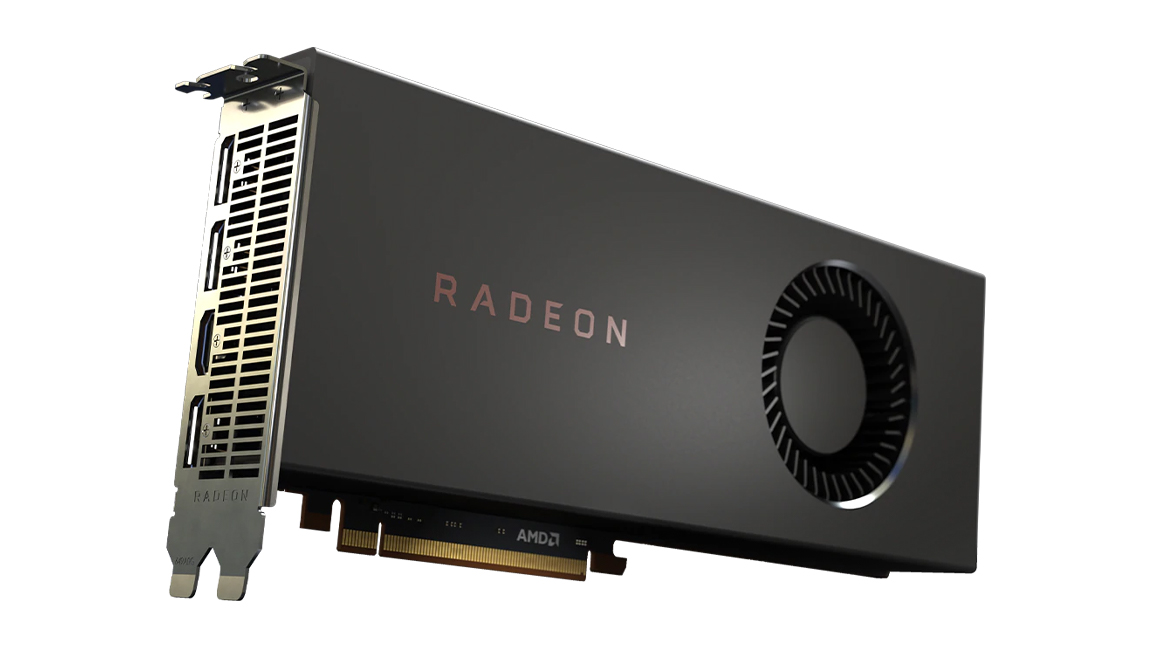
If you’re looking for the best graphics card out there for 1080p gaming, you might want to look into what the AMD Radeon RX 5600 XT has to offer. This AMD card beats the Nvidia GeForce RTX 2060 with its more affordable price tag, delivering high frame rates and plenty of software features while requiring less power. Sure, it doesn’t have the competition’s ray tracing and deep learning supersampling (DLSS), but for raw performance and value, AMD’s contender comes out the winner.
Stream processors: 2,560 | Core clock: 1,605 | Memory: 8GB GDDR6 | Memory clock: 14Gbps | Power connectors: 6 pin + 8 pin | Outputs: 1 x DisplayPort, 1 x HDMI, 1 x DVI-DL
Founders Edition cheaper than original 2070
More CUDA cores
1440p gaming with ray tracing
Still kind of expensive
Founders Edition card is heavy
The souped up Nvidia GeForce RTX 2070 Super isn’t just remarkable because it’s a supercharged version of the very popular RTX 2070, offering exceptional 1440p gaming. It’s also striking because it offers all that power at a very reasonable price, making it a compelling buy for most users, even for those on a budget. Plus, if you’re wondering about ray tracing, here’s the best card to jump in – you don’t have to break open that piggy bank for the RTX 2080 or RTX 2080 Ti anymore.
Stream Processors: 2,304 | Core Clock: 1,465 MHz (1,725 MHz boost) | Memory: 8GB GDDR6 | Memory Clock: 14Gbps | Power Connectors: 1 x 8-pin and 1 x 6-pin | Outputs: 1 x DisplayPort 1.4 with DSC, 1 x HDMI with 4K60 Support
Excellent performance
Affordable
No ray tracing
This absolute behemoth of a graphics card is still basically brand new, and it’s already topping our list of the best graphics cards, booting former reigning champion and its direct rival, the Nvidia GeForce RTX 2060, off the top spot. At $349, this powerful mid-range card brings 1440p gaming at Ultra or Max settings to the masses, making it affordable and accessible to everyone. At that price point, it doesn’t need to be perfect – those looking for ray tracing will have to wait. But, for what it offers and how much it costs, it’s well-deserving of its title as the best graphics card of 2020 for most people.
Stream Processors: 4,352 | Core Clock: 1,350MHz (1,635MHz boost) | Memory: 11GB GDDR6 | Memory Clock: 14Gbps | Power Connectors: 2 x 8-pin | Outputs: 3 x DisplayPort 1.4, 1 x HDMI 2.0, 1 x USB-C
High fps 4K gaming
Spearheading ray tracing revolution
Extremely expensive
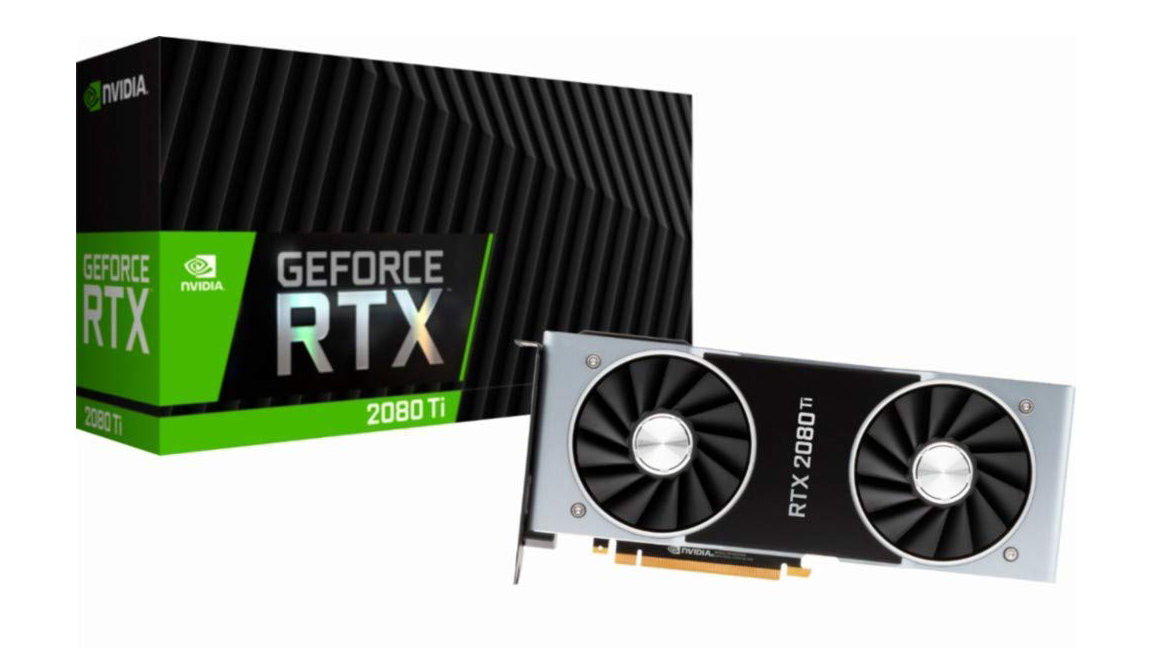
If you need the best graphics card, and you don’t want to settle, the Nvidia GeForce RTX 2080 Ti may be one of the best graphics cards for you. This is the most formidable graphics card you can buy without jumping for a professional graphics solution. And, now that games like Battlefield V, Metro Exodus and Shadow of the Tomb Raider actually implement the RTX features, there’s never been a better time to jump on the ray tracing bandwagon. Just prepare yourself for that sky-high price.
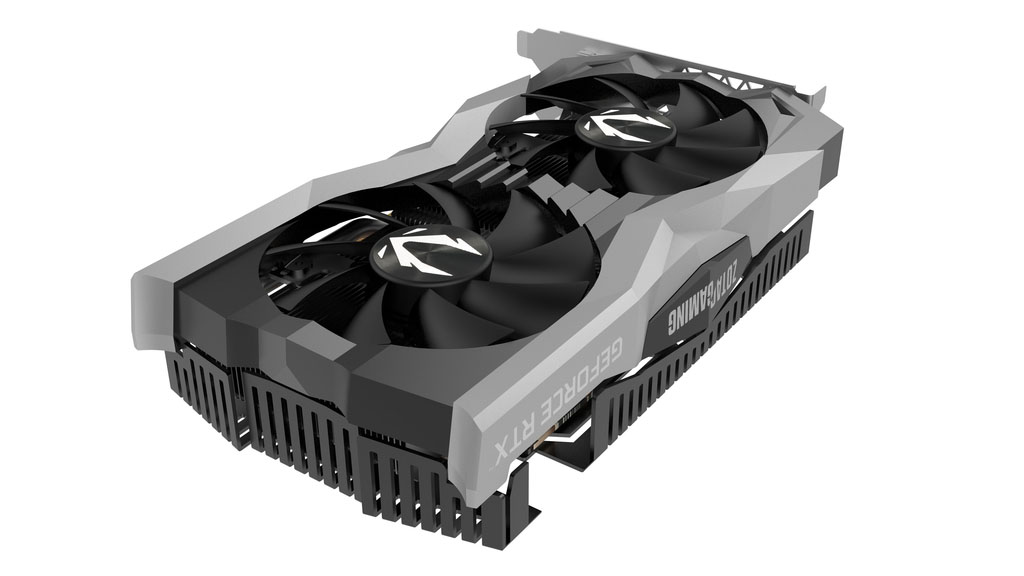
Just because you’re putting together a microATX or mini-ITX gaming PC doesn’t mean you have to have a lightweight GPU. Zotac has made sure of that, allowing you access to Ray Tracing at a reasonably low price with their mini edition of the Nvidia GeForce RTX 2060 Super. Since it is a smaller card, you will miss some features like SLI support, RGB lighting, and VirtualLink for VR. However, if you just want to get some excellent performance in a stripped-down GPU, then the Zotac GeForce RTX 2060 Super Mini more than fits the bill.
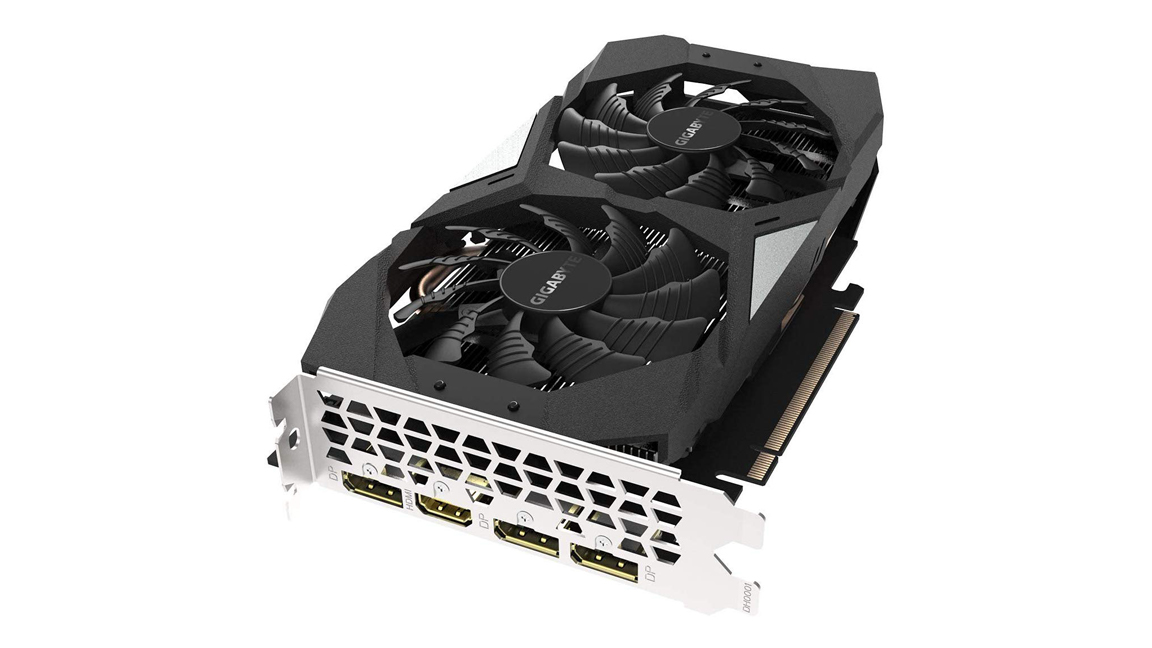
(Image credit: Gigabyte)
9. Gigabyte GeForce GTX 1660 OC 6G
The best Budget graphics card:
Stream Processors: 1,408 | Core Clock: 1,530MHz | Memory: 6GB GDDR5 | Memory Speed: 8Gbps | Power Connectors: 1 x 8-pin | Outputs: 3 x DisplayPort 1.4, 1 x HDMI 2.0
Extremely affordable
Great entry-level performance
GDDR5 memory
With all those fancy (read: expensive) graphics cards cornering the market, the budget-friendlier ones sometimes fly under the radar. That’s unfortunate, particularly since cards like the Nvidia GeForce GTX 1660 deserve a spot in the limelight for delivering excellent 1080p performance at a very affordable price. With the Gigabyte GeForce GTX 1660 OC 6G, you’re also getting a healthy factory overclock and all the outputs you’ll ever need, so you can play all your favorite games with several monitors attached. We’d call that a bargain, maybe even the best we’ve ever had, and it certainly warrants a spot in our best graphics cards list.
Stream Processors: 1,536 | Core Clock: 1,500MHz | Memory: 6GB GDDR6 | Memory Speed: 12Gbps | Power Connectors: 1 x 8-pin | Outputs: 1 x DisplayPort 1.4, 1 x HDMI 2.0, 1 x DVI
Affordable
Excellent 1080p performance
Limited memory bandwidth
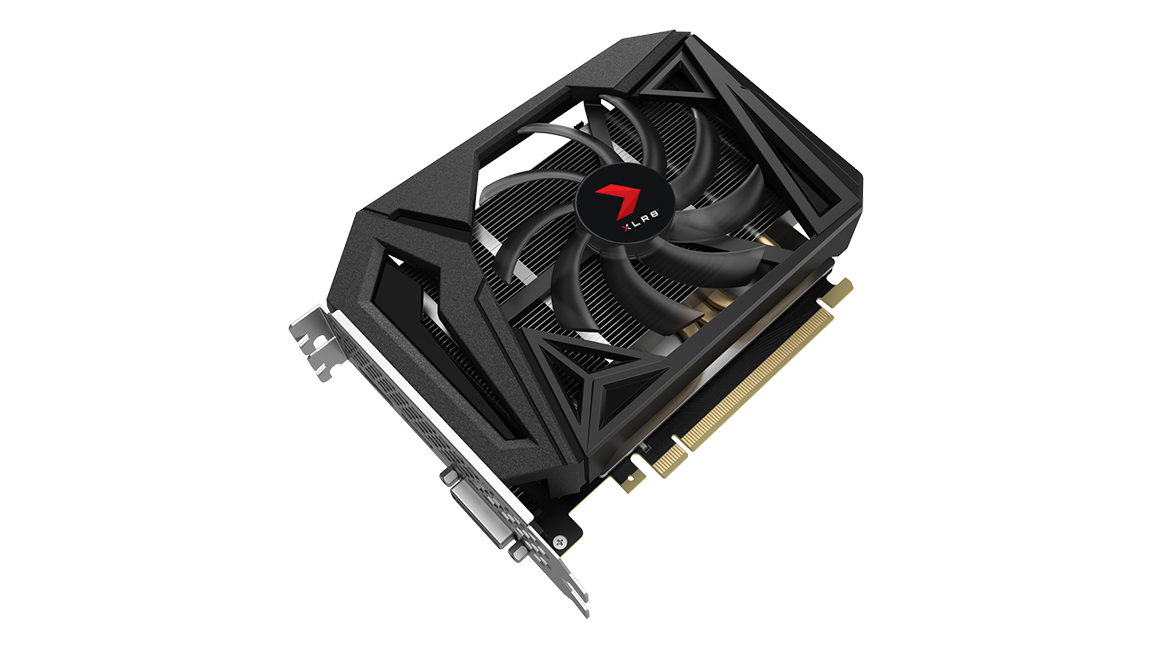
When Nvidia first revealed its Turing lineup, it was hard to find a model that didn’t cost an arm and a leg. Nonetheless, with the launch of the Nvidia GeForce GTX 1660 Ti – especially the PNY XLR8 Gaming OC model – next-generation performance became accessible to everyone. You won’t have access to 4K 60 fps gaming with this card, but it’s one of the best graphics cards for anyone still using a 1080p display, and it can handle most esports games well above 60fps. At that resolution, you’ll have trouble running into any title that it can’t handle.
It’s official: the best Nvidia GeForce graphics cards still rule the roost. That’s especially with the new and even more powerful RTX 3000 GPUs – RTX 3080, RTX 3070 and RTX 3090 – launched at Nvidia’s September 1 event and slated to hit the streets soon. AMD’s Navi cards’ attempts to topple Team Green has been valiant, especially when it comes to price and value. However, when it comes to performance, Nvidia proves it’s still king.
Of course, we still have to wait and see what AMD's RDNA 2 has in store. However, seeing as none of Navi GPUs could beat the current flagship, RTX 2080 Ti, and the new RTX 3070 already beats that in speed and price, Big Navi’s chances are looking a bit slim. And that’s on top of the fact that a good chunk of Nvidia’s line belongs in the best graphics cards list.
Whether you are looking for something affordable or want something top-of-the-line for your battle station, you’ll find among the best Nvidia GeForce graphics cards the best card for you. Even better, with the impending release of the RTX 3000 lineup, you’re probably looking at a discount on all these cards in the near future. Keep an eye on our price comparison tool for any deals for these wonderful graphics cards.
The best Nvidia graphics card on the market for most people, the Nvidia GeForce RTX 3070 delivers excellent performance – on par with the RTX 2080 Ti even – without costing an arm and a leg. Before this card, 4K gaming was out of a lot of people’s budget. The RTX 3070, therefore, brings it to the mainstream for the first time, and that’s without you having to compromise on settings for most games. And did we mention the fact that this GPU is incredibly cheap? A cheap price tag plus 4K gaming on quality settings equals great value, and that’s why the RTX 3070 tops our list.
With the Nvidia GeForce RTX 3080, 4K gaming just became a lot more accessible. Before, you had to shell out more than $1,000/£1,000 to do so with the RTX 2080 Ti. However, with the next generation of the best Nvidia GeForce graphics cards, the price of 4K gaming just dropped a few hundred dollars, thanks to the RTX 3080. More than that, it boasts one of the largest generational leaps in GPU history, delivering a 50-80% performance boost over the RTX 2080 and a 20-30% boost over the RTX 2080 Ti, all while keeping the same price point as the RTX 2080. This is both an absolute powerhouse of a graphics card and a great value, if you have a bit of extra cash lying around.
Creative professionals will be blown away by the Nvidia GeForce RTX 3090, especially with the great value it offers. Whether you’re looking for playable gaming performance at 8K or the massive compute performance and copious amount of VRAM you need for 3D rendering – let alone maxing out whatever game you're playing at 4K, this GPU is the one to beat. It’s massive and incredibly expensive so only get it when you’ve got some extra cash lying around and if you need to game at 4K or higher. However, if you want the best of the best, this is the card to get.
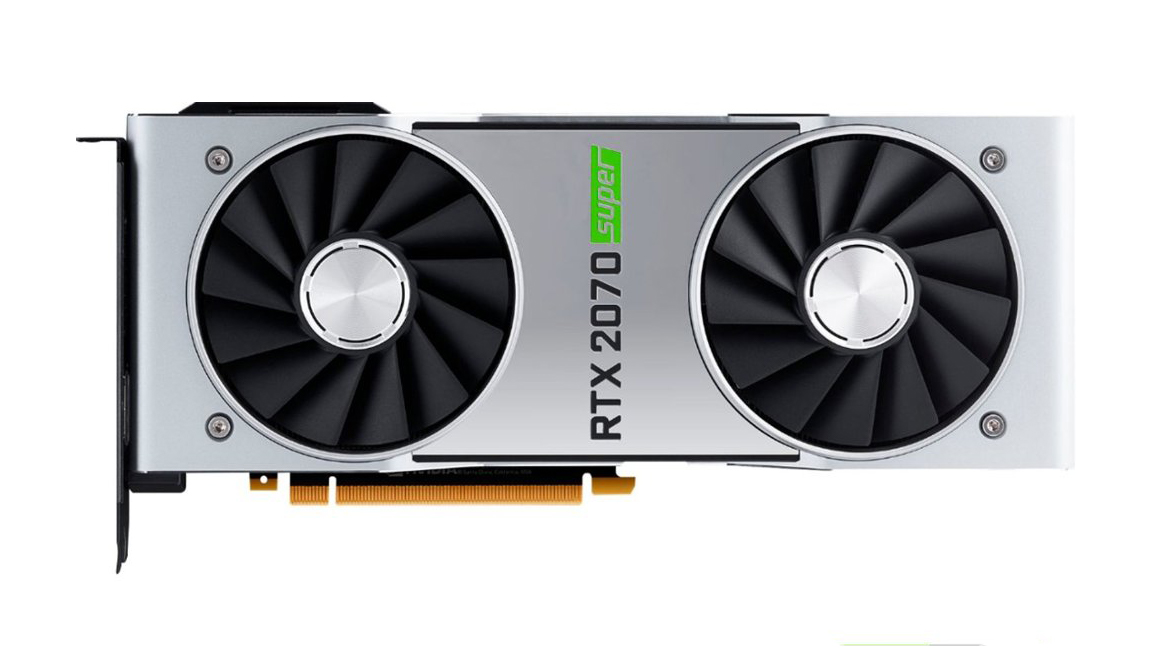
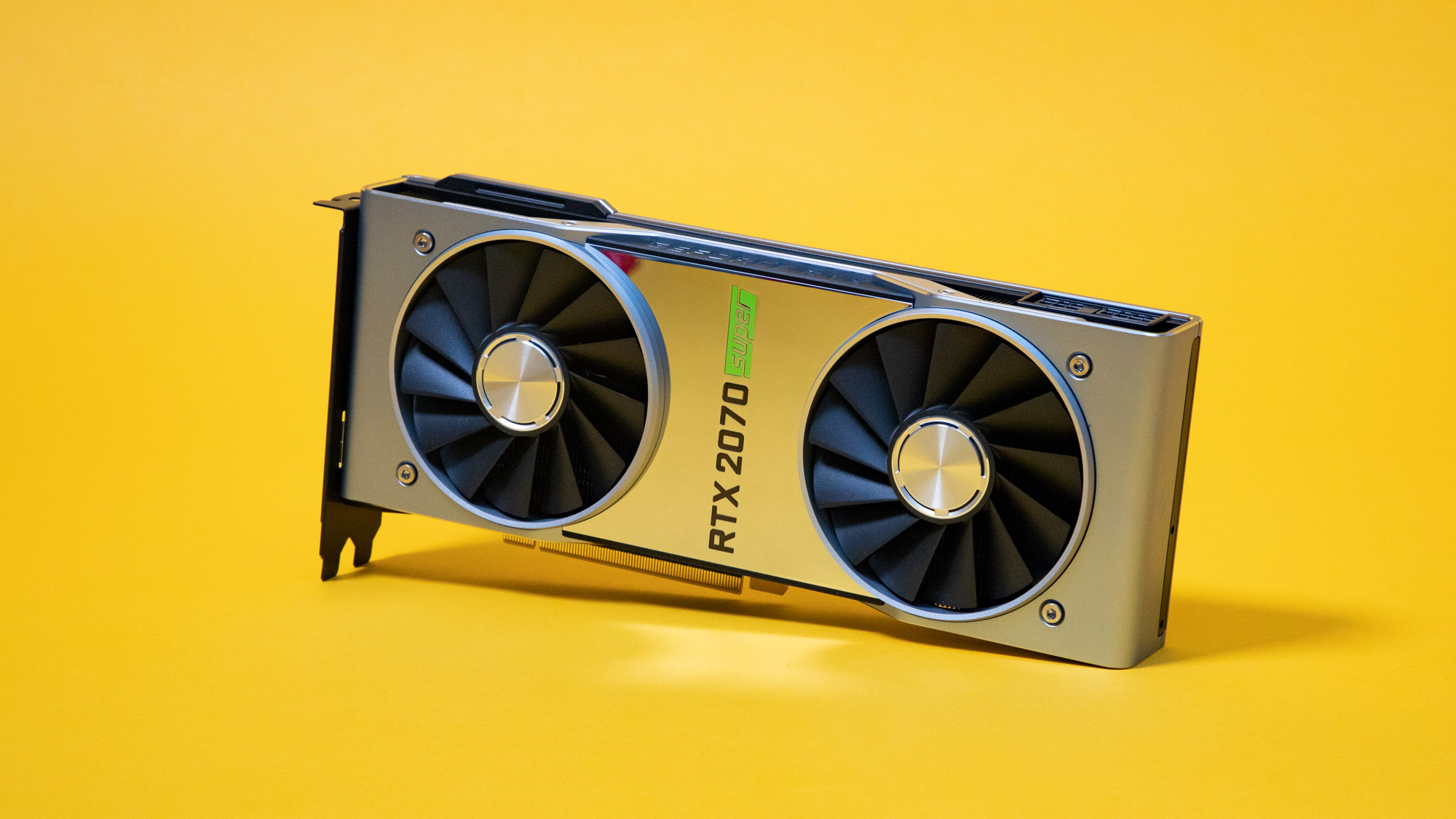
Nvidia GeForce RTX 2070 Super is impressive, especially in 1440p gaming.(Image credit: TechRadar)
4. Nvidia GeForce RTX 2070 Super
The same RTX 2070 – only supercharged
Stream processors: 2,560 | Core clock: 1,605 | Memory: 8GB GDDR6 | Memory clock: 14Gbps | Power connectors: 6 pin + 8 pin | Outputs: 1 x DisplayPort, 1 x HDMI, 1 x DVI-DL
Founders Edition cheaper than original 2070
More CUDA cores
Still kind of expensive
Until Nvidia actually rolls out that Nvidia GeForce RTX 2080 Super, the RTX 2070 Super might just be the Best Nvidia GeForce graphics cards purchase you’ll make. This graphics card is impressive, especially in 1440p gaming and if you’re looking to get on the ray tracing bandwagon, a souped up RTX 2070 that’s also very affordable so pretty much everyone can add it to their setup without breaking the bank.
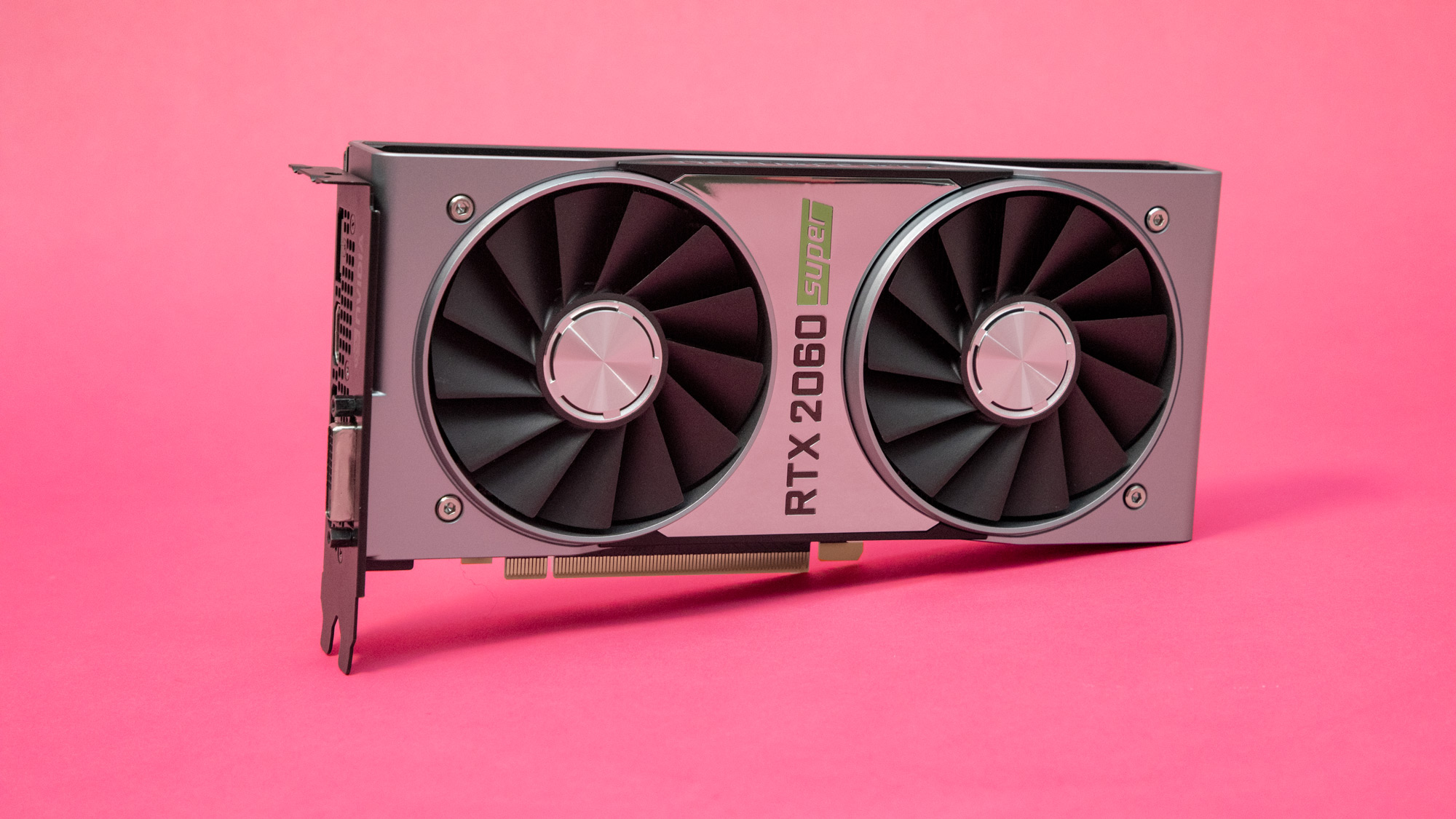
The Nvidia Geforce RTX 2060 Super is what most gamers are looking for.(Image credit: TechRadar)
5. Nvidia Geforce RTX 2060 Super
The best graphics card for most people
Stream processors: 2,176 | Core clock: 1,470 | Memory: 8GB GDDR6 | Memory clock: 14Gbps | Power connectors: 8 pin | Outputs: 1 x DisplayPort, 1 x HDMI, 1 x DVI-DL
Excellent 1440p performance
Affordable
Can't handle 4K gaming
The Nvidia GeForce RTX 2060 Super is hardly perfect – that is, it can’t handle 4K gaming. However, this graphics card positioned as the more affordable alternative to the RTX 2070, giving you the same level of performance as the popular mid-range GPU at a much cheaper price and offers great 1440p gaming. The RTX 2060 Super is what most gamers are looking for, and it definitely deserves a spot on our list of the Best Nvidia GeForce graphics cards.
Nvidia GeForce GTX 1660 Super is the best Nvidia graphics card for you, if you're on the budget.(Image credit: Future)
6. Nvidia GeForce GTX 1660 Super
1080p and high frame rates
Stream Processors: 1,408 | Core Clock: 1,530MHz | Memory: 6GB GDDR6 | Memory Speed: 14Gbps | Power Connectors: 1 x 8-pin | Outputs: 1 x DisplayPort 1.4, 1 x HDMI 2.0, 1 x DVI
Affordable
Excellent performance
No ray tracing
The more expensive graphics cards in Nvidia's arsenal get a lot of attention these days, what with all the ray tracing and Deep Learning Super Sampling. But, if you don't have a ton of cash to throw around, the GTX 1660 Super is the Best Nvidia GeForce graphics cards for you. This little GPU absolutely tears through any game in 1080p, and with its modest price tag, it's perfect for anyone that wants killer performance on a budget.
Nvidia's Quadro RTX 6000 loads up on 24GB of GDDR6 memory while also packing plenty of performance.(Image credit: Nvidia)
7. Nvidia Quadro RTX 6000
Creativity comes at a cost
Stream Processors: 4,608 | Core Clock: N/A | Memory: 24GB GDDR6 | Memory Speed: 14Gbps | Power Connectors: N/A | Outputs: 4 x DisplayPort 1.4, 1 x Virtual Link
VRAM galore
Multi-GPU scaling
Very expensive
If you're involved in creative workloads like 3D design or video editing, you might be running into some serious VRAM needs. In those cases, it can be worth it to have a graphics card that is going to give you tons of headroom to keep information in the GPU's memory, instead of constantly needing to load it in from your storage solution. While it comes at a high price, Nvidia's Quadro RTX 6000 loads up on 24GB of GDDR6 memory while also packing plenty of performance. And, you can combine multiple cards for even more performance.
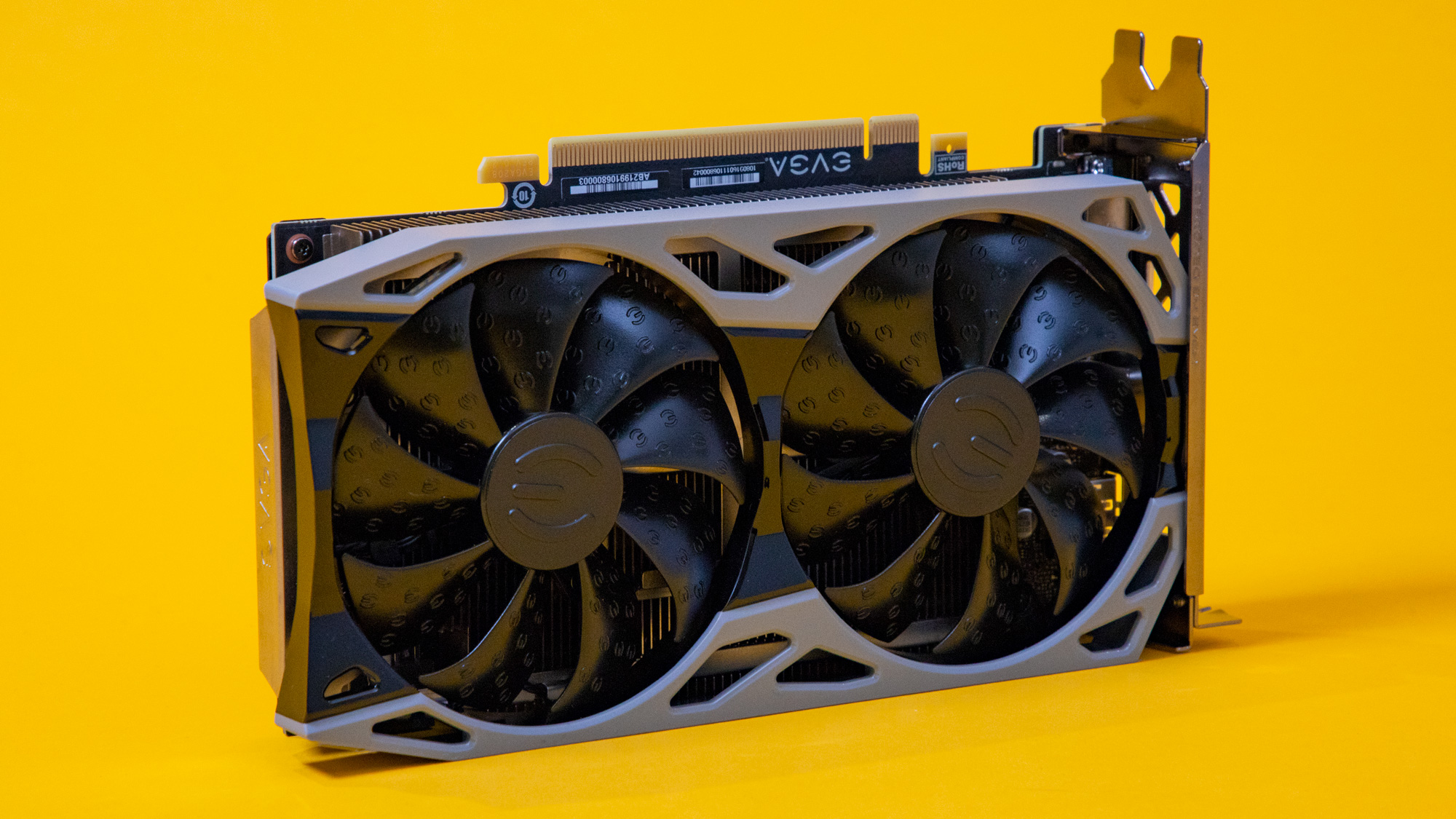
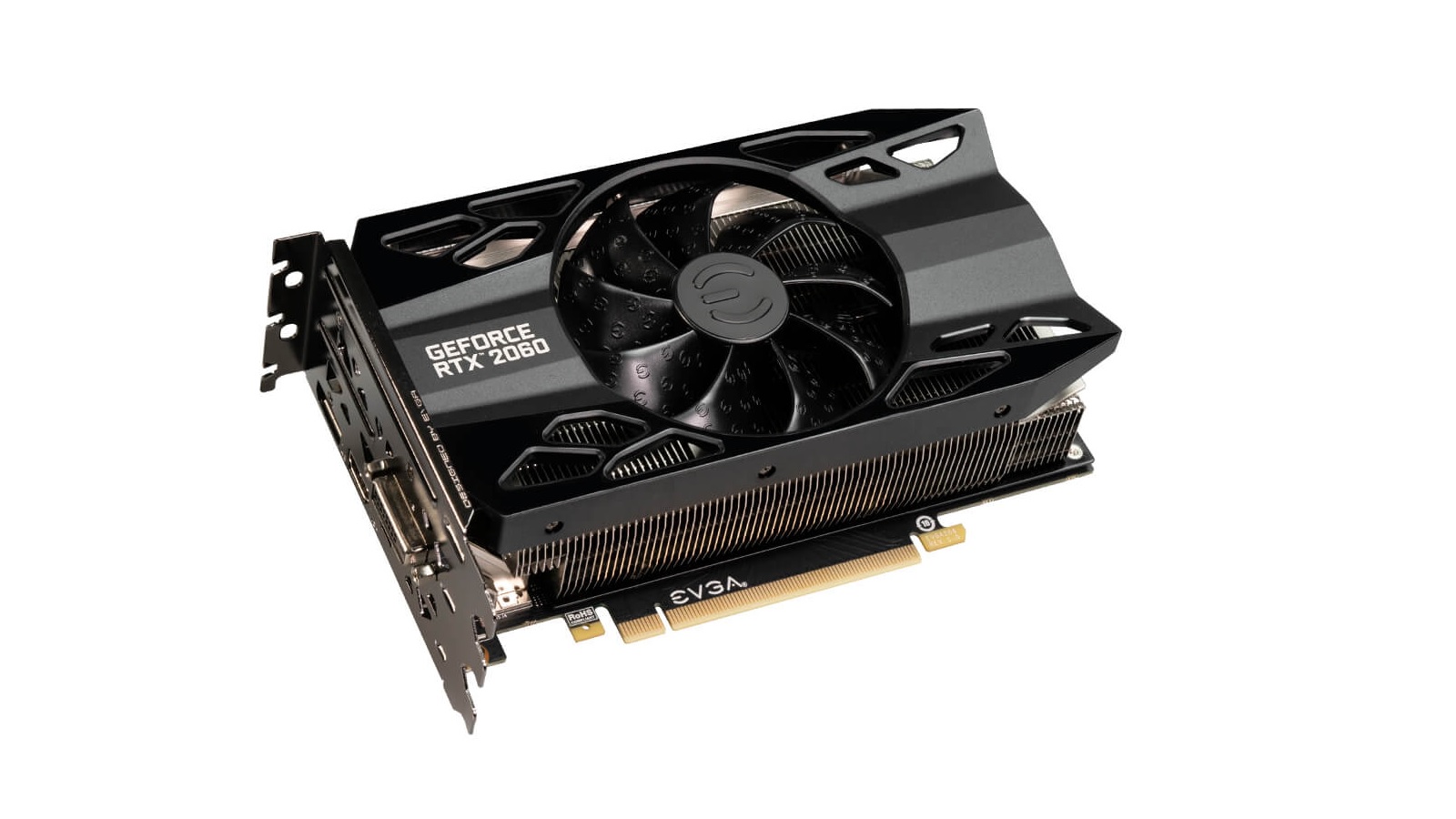
EVGA has a well-priced model in the EVGA GeForce RTX 2060 XC Black Gaming.(Image credit: EVGA)
8. EVGA GeForce RTX 2060 XC Black Gaming
Short but packs a punch
Stream processors: 1,920 | Core clock: N/A | Boost clock: 1,680MHz | Memory: 6GB GDDR6 | Memory clock: N/A | Power connectors: 1 x 8-pin | Outputs: 1 x DisplayPort 1.4, 1 x HDMI 2.0b, 1 x DL-DVI-D
Short and powerful
Not seriously marked up
Thicker radiator
Fewer outputs
If you're trying to keep your build small so it doesn't take up a ton of space in your room, you might be looking at a Micro ATX build. And, mini graphics cards can be a major helper there, since a graphics card tends to be one of the bigger components attached to a motherboard. EVGA has a well-priced model in the RTX 2060 XC Black Gaming. It may be thicker than your typical dual-fan variant, but that extra radiator thickness helps it dissipate heat with the single fan, and its short length can help it fit in tight builds.
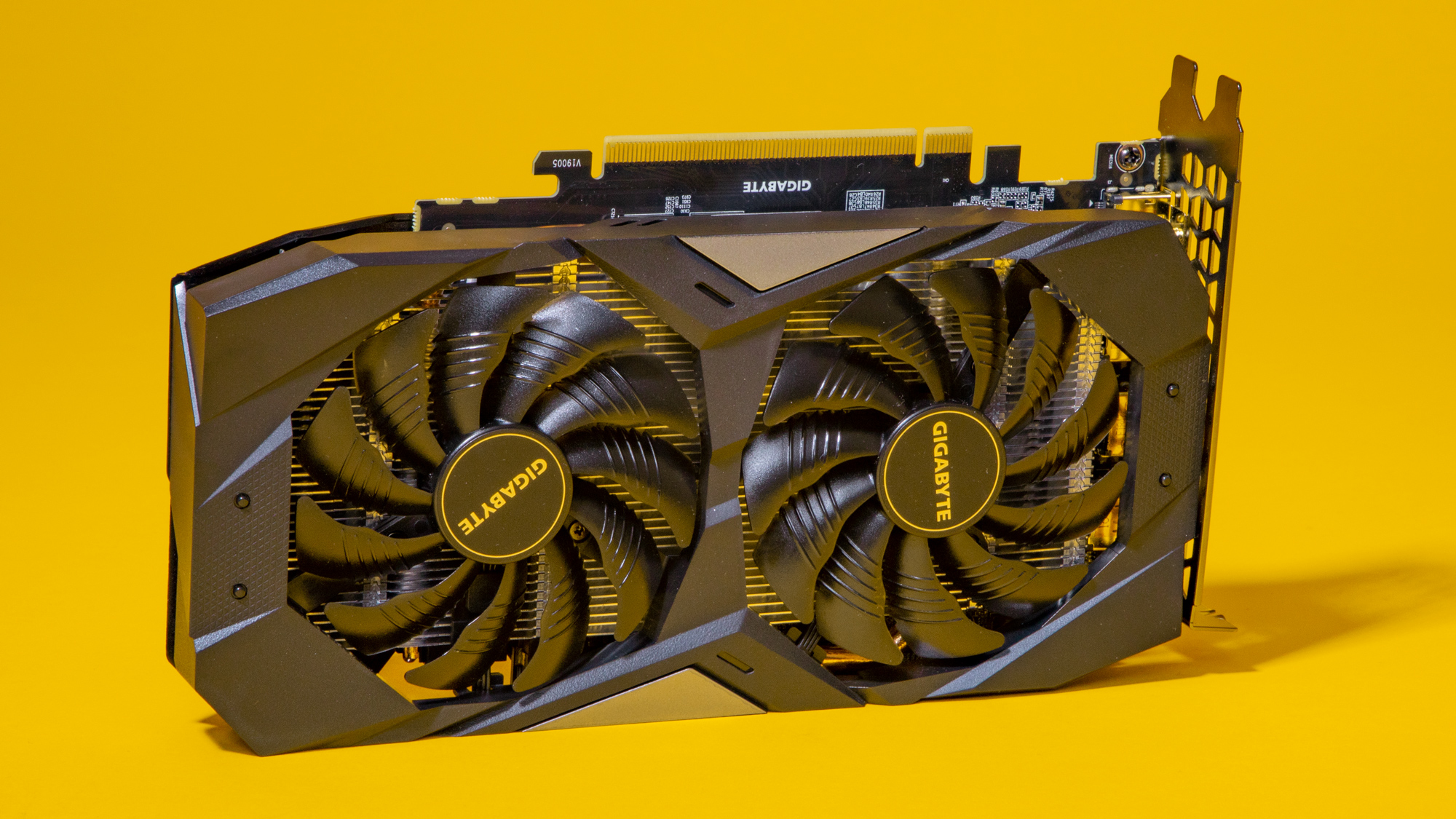
Gigabyte offers the GeForce GTX 1660 OC 6G for an excellent budget price while still giving you a touch of overclocking.(Image credit: TechRadar)
9. Gigabyte GeForce GTX 1660 OC 6G
It's just so affordable
Stream Processors: 1,408 | Core Clock: 1,530MHz | Memory: 6GB GDDR5 | Memory Speed: 8Gbps | Power Connectors: 1 x 8-pin | Outputs: 3 x DisplayPort 1.4, 1 x HDMI 2.0
The cheapest Turing card
Excellent budget performance
Not GDDR6 or GDDR5X
While the higher end graphics cards get all the hype, they tend to have a worse performance-per-dollar value then budget cards. And, while AMD often hits that sweet spot, Nvidia sometimes remembers to offer value as well. That is represented nowhere better than the GTX 1660. Gigabyte offers the GeForce GTX 1660 OC 6G for an excellent budget price while still giving you a touch of overclocking, so you can enjoy 1080p or even 1440p with some tweaked settings. Best of all, you won't need to take out a mortgage to afford this card.
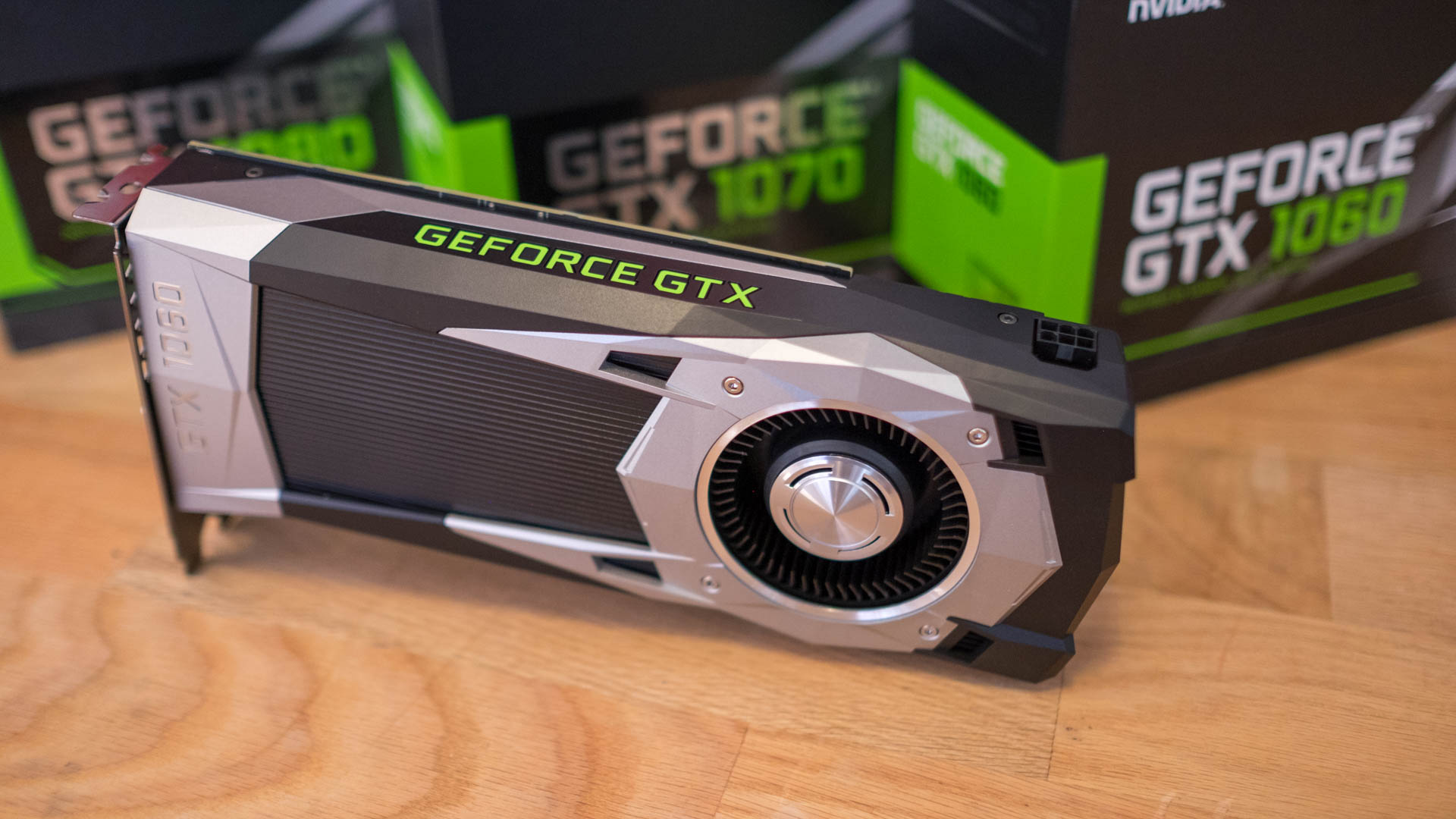
Nvidia GeForce GTX 1060 has enough power to run 1080p even at high settings and still get smooth visuals.(Image credit: TechRadar)
10. Nvidia GeForce GTX 1060 6GB
A budget champ for 1080p
Stream Processors: 1,280 | Core Clock: 1,506MHz (1,708MHz boost) | Memory: 6GB GDDR5/X | Memory Clock: 8Gbps | Power Connectors: 1 x 6-pin | Outputs: 1 x DisplayPort 1.4, 1 x HDMI 2.0b, DL-DVI
1080p and 1440p potential
Discounts available
Need supplemental power
With all the new Turing cards coming out, Pascal may be easy to forget about. But, if you're into eSports games, you're probably more concerned with getting 1080p at 120+ FPS. And, you can do that with the older Nvidia GeForce GTX 1060 no problem. For popular eSports titles, the GTX 1060 has enough power to run 1080p even at high settings and still get smooth visuals. Best of all, the prices are driven down by newer cards, so you can score a GTX 1060 at a discount.
The impressive Nvidia Ampere is not only for data center devices. It’s also the architecture behind the manufacturer’s next-generation RTX GPUs – namely the RTX 3080, RTX 3070 and the Titan-level RTX 3090, all of which were unveiled at Nvidia's September 1 event alongside other exciting announcements like Nvidia Broadcast and new 360Hz G-Sync displays.
THE VERDICTS ARE IN
Nvidia GeForce RTX 3070 | 5.0 stars | Amazing performance, Best value graphics card today, Awesome ray tracing performance | Same inflated prices as Turing, Required 12-pin power connector
Nvidia GeForce RTX 3080 | 4.5 stars | Excellent 4K gaming performance, Low temperatures, Many useful non-gaming features | Still kind of expensive, Dongle a little annoying, No USB-C in Founders Edition
Nvidia GeForce RTX 3090 | 4.0 stars | Best GPU performance on the market, Excellent cooling performance, Set it and forget it 4K gaming | Extremely expensive, Very large card
So far, things are going swimmingly for the successor to both the Volta and Turing architectures. The RTX 3000 cards, especially, are delivering staggering performance. The Nvidia GeForce RTX 3080 is already out and impressing us with its 4K gaming prowess. On the other hand, the RTX 3070, which will hit the shelves on October 28, delivers performance on par with the RTX 2080 Ti at less than half the price.
The company has also been putting in the hours on the A100 GPU, for what should hopefully be a 20x improvement in computing power. With the explosive growth in cloud computing, AI is increasingly integral and important. Whether it’s Amazon building grocery stores that enable instant purchasing when you throw something in your cart, or IoT devices littering your home, or even self-driving cars, more and more computing power is needed. 7nm Nvidia Ampere architecture, as well as the 3rd generation Tensor Cores, are a huge part of that.
Any business needing such hefty computing power should be able to take advantage of the data center GPU, like the DGX A100 which is a rack of eight A100 GPUs costing $1 million. In fact, Google Compute Engine already has. It’s possible that Microsoft, Dell and Amazon have already bought in or will soon.
Thanks to the RTX 3000 series, Nvidia Ampere is now one of the most exciting Nvidia releases in the mainstream market yet. As Nvidia CEO Jensen Huang puts it, those who’ve been sticking to Pascal until a worthy successor comes along should feel “safe to upgrade now."
Cut to the chase
What is it? Nvidia's 7nm next-generation GPU architecture
When will it be available? Available right now for enterprise, starting September 17 for the RTX 3000 series
What will it cost? Announced RTX GPUs start at $499 (£469, about AU$680)
Nvidia Ampere release date
(Image credit: Nvidia)
The first wave of the highly-anticipated 3000-series graphics cards has just been launched at the Nvidia September 1 event, somewhat confirming recent rumor alleging that Nvidia will launch three new graphics cards in September.
The RTX 3000 flagship, Nvidia GeForce RTX 3080, is going to be available on September 17 to be followed by the Nvidia GeForce RTX 3090 on September 24. The RTX 3070, which is poised to replace the RTX 2080 Ti, is slated to be released sometime in October, though no official date has been announced.
With the next-generation consoles like the PS5 and Xbox Series X likely launching around November, we certainly expected Nvidia to launch its next-generation GeForce cards around the same time to capitalize on the next-gen gaming hype. Once the cards are actually out, water cooling should be available immediately for early adopters.
Nvidia Ampere price
(Image credit: Nvidia)
The first three GPUs in the RTX 3000 series has just been announced, alongside their respective price tags, and we’re happy to report that two-thirds of them are priced competitively.
This is great news for consumers. These cards will be a hot commodity when they are released, so there's definitely reason for Nvidia to price them even higher than Turing cards. Luckily, and perhaps thanks to AMD, that isn’t the case here.
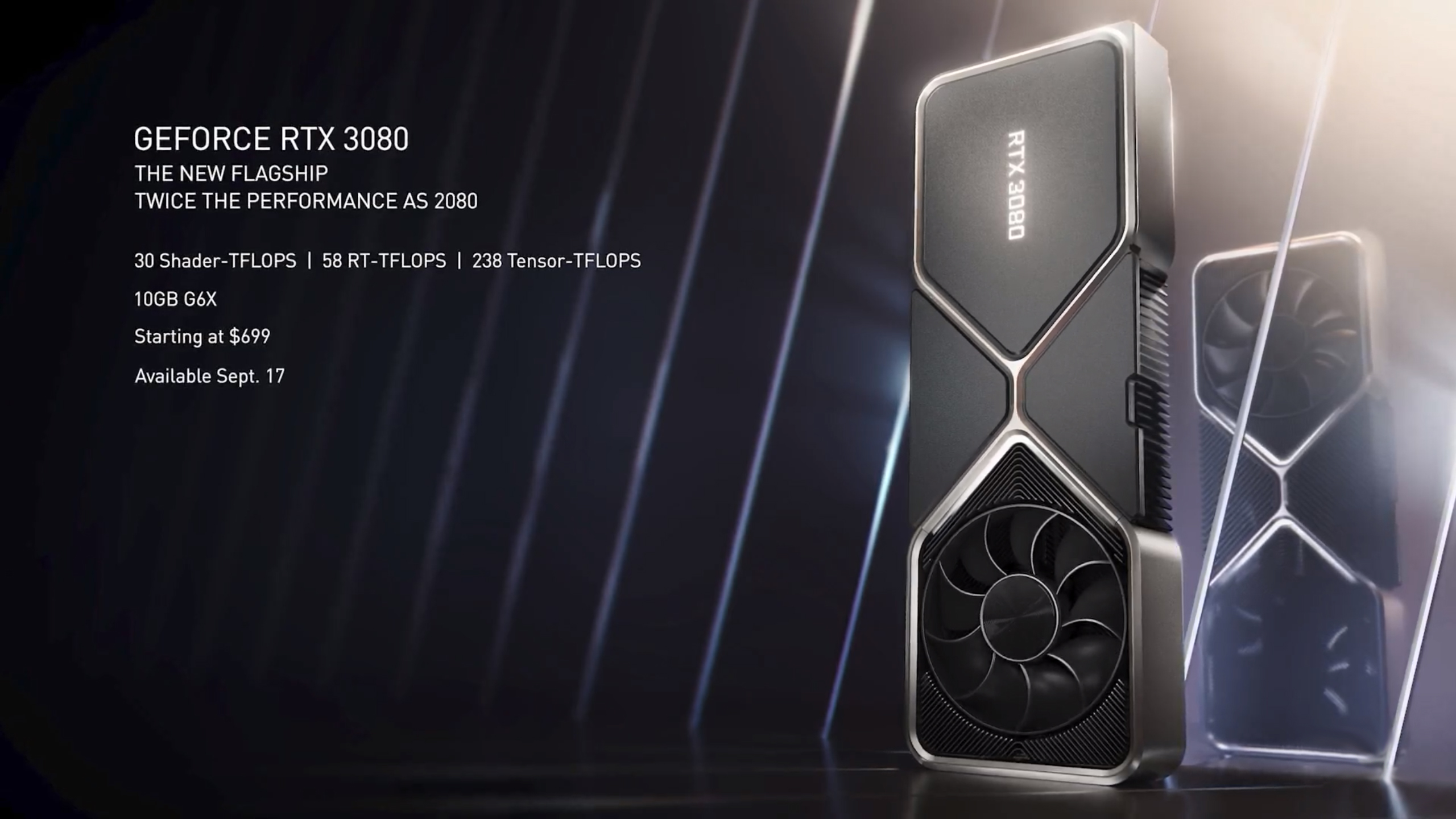
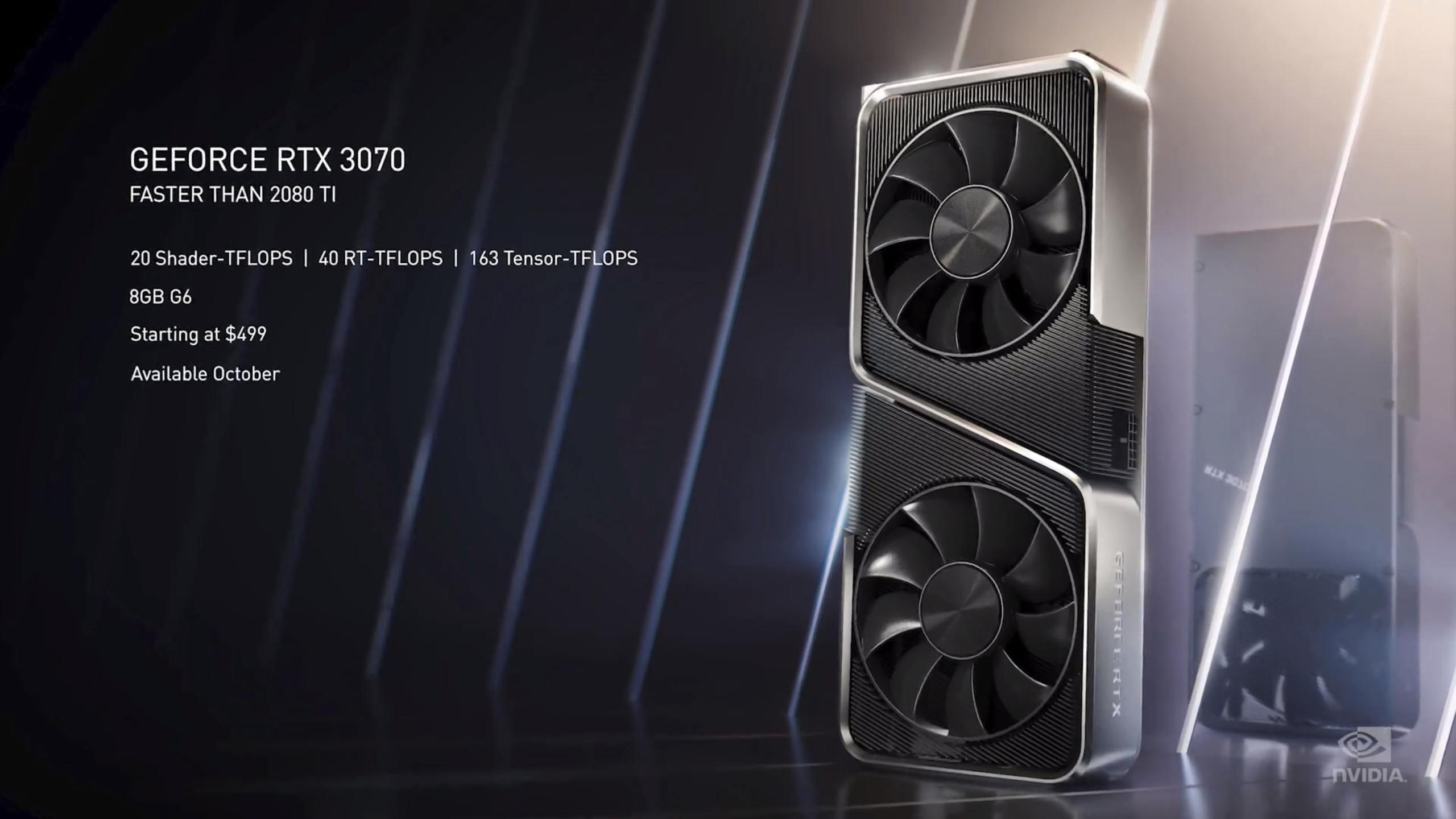
The Nvidia GeForce RTX 3080, which is apparently twice as fast as the RTX 2080, Starts at $699 (£649, about AU$975) – that’s $100 less than the price of the RTX 2080 when it was first released. The Nvidia GeForce RTX 3070, which apparently is going to be faster than the 2080 Ti, is coming in at just $499 (£469, about AU$680). So, compared to the previous generation, it looks like Nvidia is really coming after AMD in terms of rolling out powerful GPUs that are more accessible in pricing.
(Image credit: Nvidia)
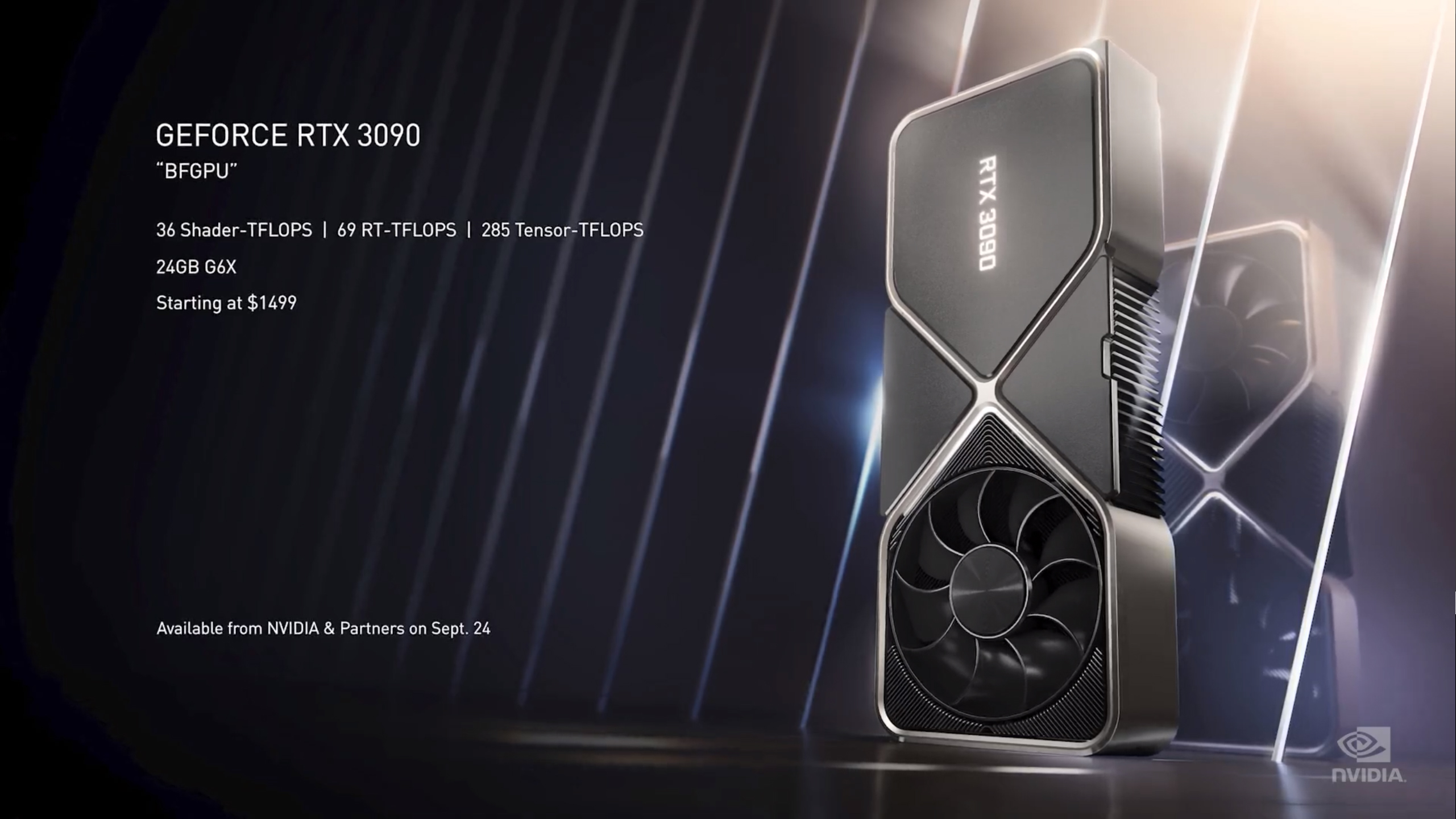
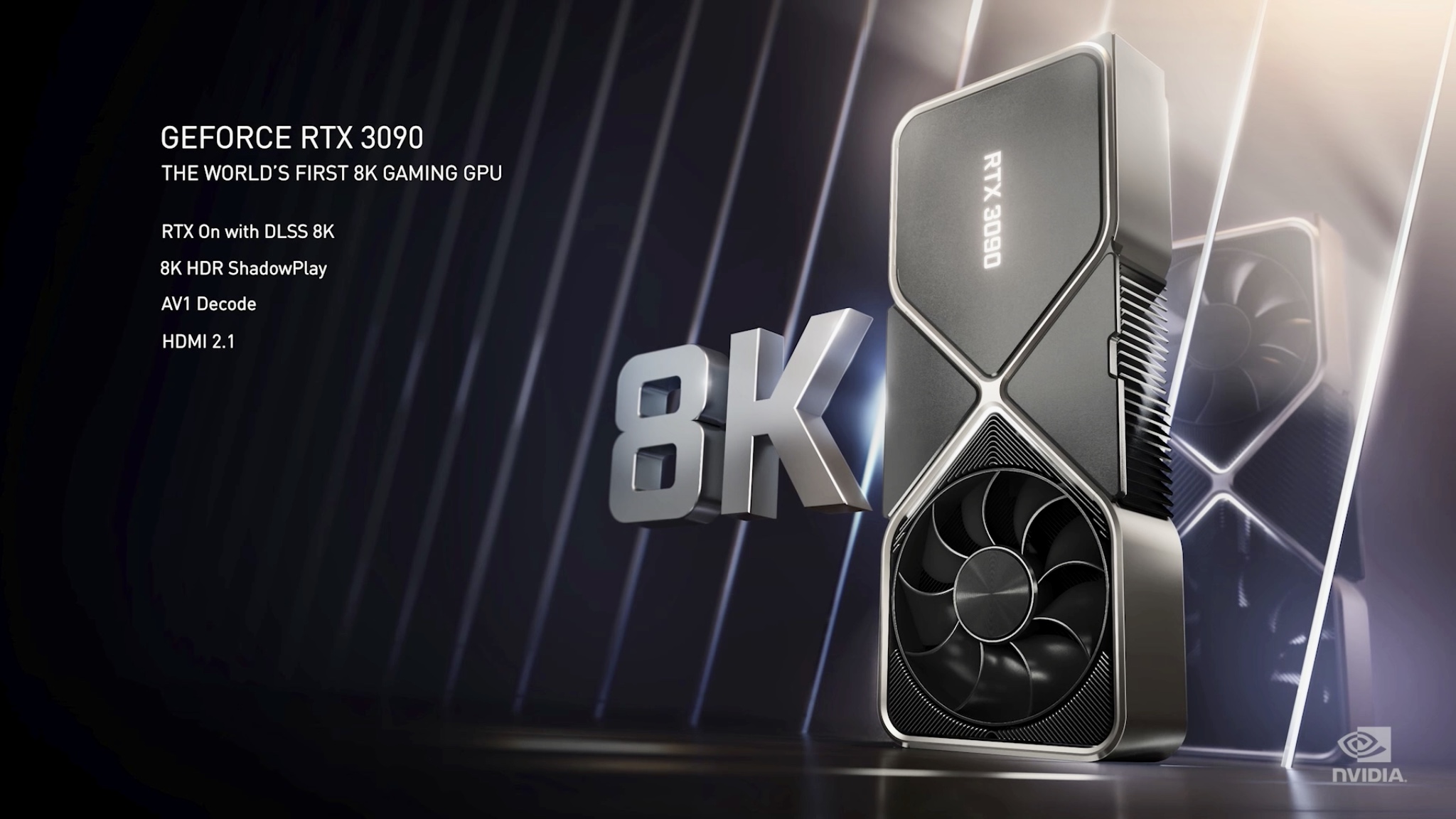
As for the RTX 3090, it is unfortunately poised in the premium range with a hefty price tag of $1,499 (£1,399, AU$2,100). Still, considering that Nvidia is calling this the greatest generational jump, and that it’s a triple slot card that’s capable of playing games at 8K, 60fps and is 30-degrees cooler than Titan RTX, it’s not a bad price.
Remember, the Titan RTX rolled out $2,499 (£2,399, AU$3,999), making the RTX 3090 a whopping $1,000 cheaper and only $300 more than the RTX 2080 Ti.
Nvidia Ampere specs
(Image credit: Nvidia)
The Nvidia A100, which is also behind the DGX supercomputer is a 400W GPU, with 6,912 CUDA cores, 40GB of VRAM with 1.6TB/s of memory bandwidth. Needless to say, it's kind of a behemoth – but it kind of has to be.
But, it's even more powerful than it lets on. Nvidia is claiming that this GPU is a 20x jump in performance over the last generation, which makes it easy to understand why companies from Amazon Web Services to Microsoft are already jumping in on the action.
(Image credit: Nvidia)
But what does that mean for GeForce? Kicking off the Ampere GeForce lineup is the RTX 3070, which will boast 20 Shader-TFLOPS, 40 RT-TFLOPS and 163 Tensor-TFLOPS, alongside 8GB of GDDR6 RAM – and it’s expected to be faster than the 2080 Ti. On the other hand, the RTX 3080, the flagship, will have 10GB of GDDR6X RAM, 30 Shader-TFLOPS, 58 RT-TFLOPS and 238 Tensor-TFLOPS. It will, according to Jensen, double the performance of the RTX 2080.
(Image credit: Nvidia)
Finally, the RTX 3090 will have 36 Shader-TFLOPS, 69 RT-TFLOPS and 285 Tensor-TFLOPS, as well as 24GB GDDR6X RAM.
One speculation does point to the existence of a Nvidia GeForce RTX 3080 Ti, whose Asus model may have been leaked recently, having a massive 627mm² die. This further fuels rumors that Nvidia Ampere GeForce GPUs will be based on Samsung's 8nm node, rather than the 7nm TSMC node that the pro-level Ampere chips are based on.
Other GeForce RTX 3000 cards have made an appearance in the rumor mill as well. Speculations that the RTX 3070 Ti will be built on the GA104-400, and up the ante to 3,072 CUDA cores and have GDDR6X memory support.
Either way, with the next generation of games pushing higher resolutions, and with more games with ray tracing hitting the market thanks to the new consoles, you can expect these next graphics cards to be incredibly powerful, especially if they have to go up against AMD RDNA 2 or "Big Navi" cards.
Nvidia Ampere performance
(Image credit: Nvidia)
The RTX 3080, the first Ampere RTX GPU to hit the streets, is out in the world, and we’ve already put it through its paces. It’s an absolute powerhouse of a graphics card, doubling the performance of its predecessor and even beating the RTX 2080 Super as well as the previously unbeatable RTX 2080 Ti.
Calling this GPU "fast" is a bit of an understatement. It delivers excellent 4K gaming performance, consistently running anywhere from 75-100 fps at 4K with maximum graphics settings during our tests. And, that’s while keeping it cool at around 60°C in a closed tower with two 240mm fans serving as intake.
We also tested the MSI RTX 3080 Gaming X Trio, which beats the Nvidia RTX 3080 Founders Edition by about 7% in most 4K game benchmarks. It’s also every overclocker’s dream, touting what could be the best cooling solution in a 3080 and more robust power delivery than the Founders Edition.
With the RTX 3080 already delivering breathtaking performance, it’s certainly a promising start for Nvidia’s RTX 3000 series. We can’t wait to get our hands on the RTX 3070 and the RTX 3090, and take them out for a spin.
from TechRadar - All the latest technology news https://ift.tt/3orIwNo
Realme’s C series is likely to get a new addition soon in India with the likes of Realme C17. Also, a special edition of Realme C15 called the Realme C15 Snapdragon Edition might launch in India soon.
According to tipster Mukul Sharma, the Realme C17 budget phone will be launched in India by November end of early December. The Realme C17 will be the company’s fifth device in the series this year after the Realme C3, Realme C11, Realme C12, and Realme C15.
Provided there are no last moment changes, the Realme C17 is set for launch late November or early December in India.#Realme #RealmeC17October 26, 2020
Apart from Realme C17, the company is also planning to launch Realme C15 Qualcomm Edition in India. According to Mukul Sharma, Realme C15 Qualcomm Edition will come in two variant with 4GB of RAM and 64GB of storage and 3GB + 32GB variant. Colour options will include Power Blue and Power Silver.
The Realme C15 which was launched a couple of months back in India is powered by MediaTek Helio G35 SoC and the new edition is said to come with a Snapdragon chipset. Although we do not have te exact detail of the chipset yet, considering the price point of Realme C15, it looks the device will be powered Snapdragon 460 or Snapdragon 665. Apart from the chipset, we expect everything else to remain the same.
Realme C17 Specs
(Image credit: Realme)
The Realme C17 comes with a 6.5-inch HD+ (1,600 x 720) LCD panel with a 90Hz refresh rate. This is again, one of the cheapest phones with a 90Hz display. On the inside, it is powered by the Snapdragon 460 chipset and Adreno 610 GPU. This is paired with 6GB of RAM and 128GB of storage, which can be further expanded via micro SD. However, for India, we can also expect 4GB RAM variant.
As for the optics, there’s a quad-camera array on the back, consisting of a 13MP f/2.2 primary camera, an 8MP ultra-wide lens, a 2MP macro shooter and a 2MP monochrome sensor. The selfie camera has a resolution of 8MP and is housed in a punch-hole notch on the top right.
As with other Realke C series devices, the Realme C17 gets a 5,000mAh battery and also supports 18W fast charging over USB Type-C. Other features include a headphone jack and NavIC support or navigation. There’s also a fingerprint scanner on the back for biometric authentication.
The Realme C17 is priced around Rs 14,000 in Bangladesh and in India, it is expected to come in multiple variants and should cost under Rs 15,000 here as well.
Google today said that it had met its goal of including recycled material in all its products ahead of schedule. It has also set new targets for reducing landfill waste at its assembly units and moving to plastic-free packaging.
A US appeals court on Monday rejected a Justice Department request that it allow the government to immediately ban Apple and Alphabet's Google from offering Tencent's WeChat for download in US app stores.
End-to-end encryption is available on Zoom desktop client version 5.4.0 for Mac and PC, the Zoom Android app, and Zoom Rooms. The Zoom iOS app is still pending Apple App Store approval. When this feature is enabled, the meeting is secured and not even Zoom servers are able to access the encryption keys used to secure the meeting.
Apple has raised the App Store prices in India as well as five other countries, namely Brazil, Colombia, Indonesia, Russia, and South Africa. The new development will come into effect for apps and in-app purchases made through the App Store in the next few days.