A travel tracking software firm has suffered a data breach
The researcher discovered 10 open Lost & Found databases
Over 800,000 Lost & Found customers could be exposed
A dataset containing 820,750 records totaling 122GB has been discovered online, most likely belonging to German tracking software firm Lost & Found, which primarily services the aviation industry.
As revealed by security researcher, Jeremiah Fowler, this was in an unprotected and publicly exposed dataset of 14 databases in total, 10 that were accessible and 4 that were restricted. Within these, the researcher found shipping labels, lost item reports, and screenshots, ranging from personal electronics, wallets, bags, medical devices, and other personal effects travelers often take on flights.
That’s not all though, as a number of personally identifiable documents were also included, such as passport scans, drivers licenses, employment documents, and more. The researcher suggests these could either be lost and uploaded by airport staff, or used to file claims and identify ownership of lost documents.
Customers at risk
Once a disclosure notice was sent, the databases were restricted “within hours”. It’s not yet known whether the databases were owned and managed directly by Lost & Found, or if a third-party contractor had control. It’s also unclear how long the dataset was exposed, or if threat actors accessed the information.
Since there is a possibility that the information was accessed by threat actors, this leaves anyone exposed in the breach at risk. Since IDs and passports were included, this means the primary risk is identity theft, as criminals could use these scans to apply for loans, credit cards, or bank accounts.
To protect against this, anyone concerned they may be affected should closely monitor their account, transactions, and statements, and immediately report any suspicious activity to their bank.
Alongside this, be vigilant against any social engineering attacks by carefully inspecting any unexpected communications you receive from unknown sources - especially those prompting action.
Lenovo's AI Stick connects to non-NPU PCs, adding AI-powered abilities
Showcased at MWC 2025, pricing and availability remain unknown
The device is compact, around 9cm long, and requires a Thunderbolt port
If you want to benefit from on-device AI capabilities but aren’t currently in the market for one of the many fancy new laptops with built-in NPUs, Lenovo is working on a couple of intriguing solutions.
The first of these is the AI Display, which is a screen that has a built-in discrete NPU that not only adds intelligent features to the monitor but can also add AI functionality to non-AI laptops or desktops. The other is the AI Stick, a small brick-like device that connects to any non-NPU-equipped PC.
Both of these concepts were showcased at MWC 2025, and while there’s no word on pricing or availability for either device yet, I can’t imagine Lenovo will want to hang around too long before launching them.
Thunderbolt required
Although we don’t know the dimensions of the AI Stick, based on the render that Lenovo has shared with a USB-C cable plugged into it, it looks to be about 9cm long - so pretty tiny.
Lenovo says of the AI Stick that it will give “users with a non-NPU-equipped PC access to advanced AI features such as local Large Language Models (LLM) and AI-enhanced graphics apps on their device.”
The company goes on to explain that the device “contains a 32-TOPS NPU that connects to a PC via a USB-C Thunderbolt port to allow the PC to use Lenovo AI Now functionalities and can also be plugged into a wall socket to unleash maximum performance for demanding AI tasks.”
Lenovo AI Now is the PC maker’s personal assistant designed to boost productivity and automate tasks on the company's various AI-powered devices.
While the AI Stick, like the AI Display, is a great idea, it’s one that’s sadly limited by the fact that any PC you use it on will need a Thunderbolt port. If you were hoping to give AI smarts to that older laptop or desktop, it looks like you’re going to be out of luck.
Mobile World Congress officially begins on March 3, and TechRadar Pro will be on the ground to bring you all the news, updates, and announcements.
We will be hearing from some of the leading voices in the B2B tech space, so stay tuned for all of the live updates as they happen and detailed write ups with insights from some of the biggest names in tech.
from Latest from TechRadar US in News,opinion https://ift.tt/DWqvZN5
Framework Desktop is a customizable 4.5-liter, 3.1kg mini PC with AI capabilities
It has a customizable front panel, modular components, and multiple cooling options
The device is powered by AMD Ryzen AI Max processors with up to 128GB RAM
Framework is best known for its modular laptops which can be customized to suit your needs and, unlike many of today's computers, are also easily repairable. The company has just unveiled its latest notebook, the Framework Laptop 12, which has us super-excited, but even better than that is the company’s first desktop system.
Called (as you might have guessed) Framework Desktop, the new product is a 96.8mm x 205.5mm x 226.1mm, 4.5-liter, 3.1kg mini PC. If you’re wondering just how small that is, the image above shows it next to a banana for scale.
Framework Desktop DIY Edition, which is available to pre-order now with shipping expected in Q3 2025, is aimed at users who want a high-performance, easily upgradable mini PC with AI capabilities, but don’t want to splurge the sort of cash rival systems like Apple’s Mac Studio and Nvidia’s DIGITS cost, with the base model setting you back just $1099.
Highly customizable
(Image credit: Framework)
Because it’s from Framework, the device is highly customizable. The system features two processor options. The AMD Ryzen AI Max 385 has 8 cores, 16 threads, a 3.6GHz base clock, a 5.0GHz boost, and 32MB L3 cache, while the Ryzen AI Max+ 395 increases this to 16 cores, 32 threads, a 3.0GHz base clock, a 5.1GHz boost, and 64MB L3 cache.
Both processors have built-in GPUs, with the AI Max 385 running at up to 2.8GHz with 32 compute units, and the AI Max+ 395 reaching 2.9GHz with 40 compute units. An onboard NPU provides 32 tiles and up to 50 TOPS of performance.
Memory options include 32GB, 64GB, or 128GB LPDDR5x-8000, depending on the processor. Storage is provided through two NVMe PCIe 4.0 M.2 slots, with a maximum capacity of 8TB per slot. The mainboard follows the Mini-ITX form factor, and the system supports up to four displays. Connectivity includes AMD RZ717 Wi-Fi 7, Realtek RTL8126 5Gbit Ethernet, HDMI 2.1, DisplayPort 2.1, USB-C with USB4, and USB-A 3.2 Gen 1.
Cooling options include fans from Noctua and Cooler Master. A custom heatsink with six copper heat pipes and aluminum fins is included. The 400W FlexATX power supply meets ATX 3.0 standards and features an efficient cooling fan with a zero-RPM mode.
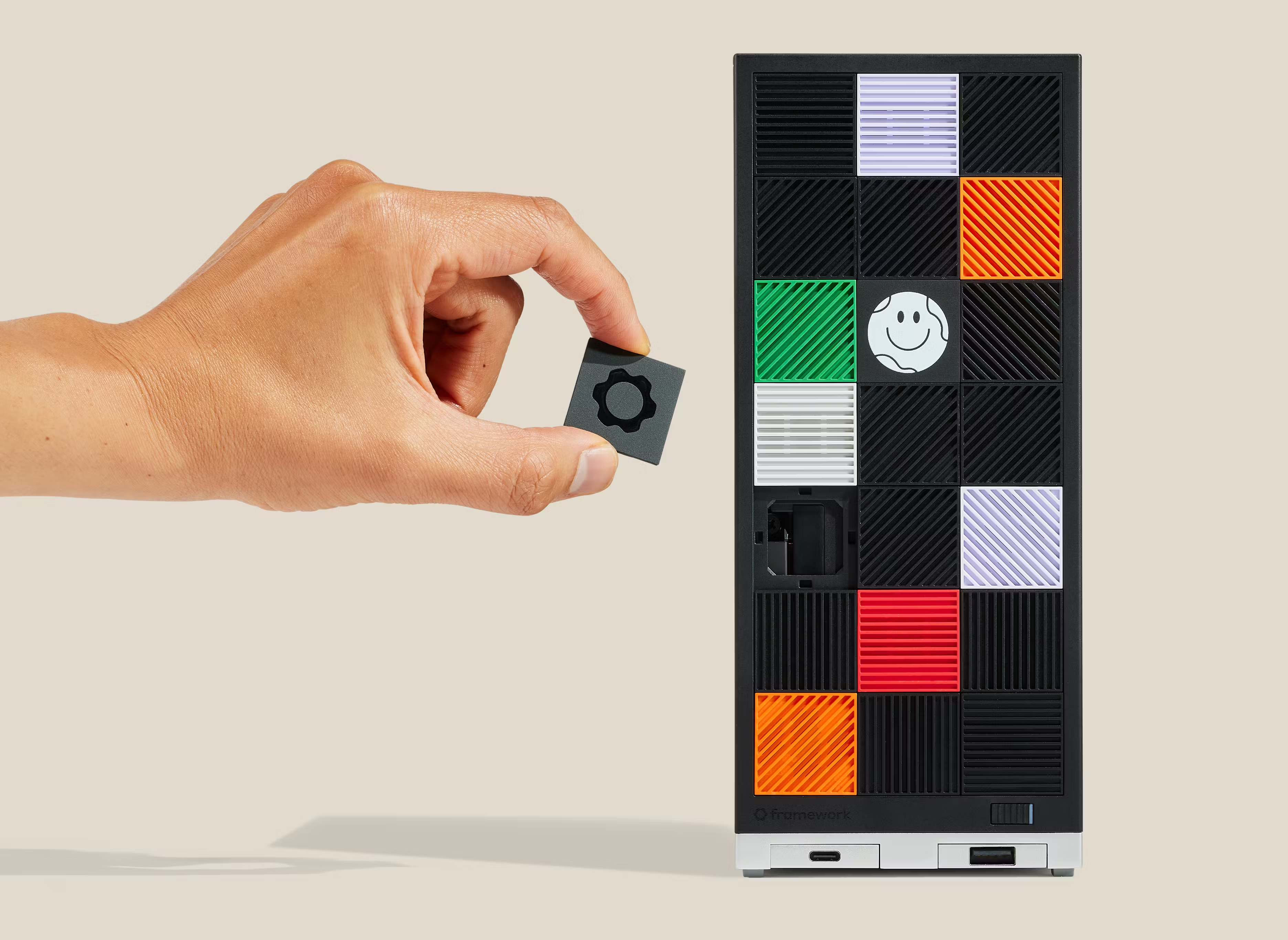
The case is built with 30% post-consumer recycled plastic and 50% recycled aluminum. One thing we particularly like is the customizable front panel, which has spaces for 21 tiles so you can dress it up how you want, and there’s also a choice of side panels – black or translucent.
High-tech Eight Sleep pods allow Elon Musk and DOGE staff to rest at work
But a researcher found security flaws, including an AWS key and remote access
Hackers could exploit the beds to infiltrate home networks and connected devices
Whatever you think about Elon Musk, and his role heading up DOGE (Department of Government Expenses), he’s certainly not slacking off. According to Wired, the divisive billionaire has reportedly been working long hours (as have his staff who are apparently putting in 120-hour weeks) and is so committed to the cause of cutting costs, he’s been sleeping in the DOGE headquarters at the Eisenhower Executive Office Building, just down the road from the White House.
To help everyone with the inevitable fatigue, Musk has accepted a consignment of Eight Sleep pods. These smart beds offer sleeping, reading and custom positioning, snoring mitigation, and come with a hub to keep the sleeper cool or cosy, depending on their preference. These beds appear to have been supplied FOC, but they aren't cheap if you want to buy them – the top of the range Cali King Pod 4 Ultra costs $5,000 and requires a monthly subscription of $17 or $25 – not a problem if you’re a billionaire of course.
For such a big outlay you’d expect the beds to be safe to sleep in, but now, a top security researcher has claimed the pods have a worrying flaw.
An active AWS key
Dylan Ayrey of Truffle Security uncovered a major vulnerability in his smart bed, exposing critical security flaws in Eight Sleep's internet-connected mattress. The researcher says he found an active AWS key within the bed’s firmware that seemed to be streaming data directly to Amazon.
Digging deeper, he also discovered a remote backdoor that he says gives Eight Sleep engineers SSH access to every customer’s bed, allowing them to run arbitrary code without oversight. He says employees could theoretically track sleep patterns, detect occupancy, or even control bed functions remotely.
Beyond personal privacy, the security implications extend to entire home networks. With unrestricted SSH access, hackers or malicious insiders could pivot through the bed to infiltrate smart fridges, laptops, or other connected devices. Ayrey compared the access level to Uber’s controversial "God Mode," a tool the ride-hailing company was found to have misused to monitor users without consent.
The AWS key was revoked shortly after Ayrey reported it, so its exact purpose isn’t known. “We can tell from the surrounding context that the key had write access to Kenises, but beyond that, it’s unclear,” Ayrey says. “What we do know though, is an attacker could have used that key to send 5,000 `PUT` requests per second into Kinesis and racked up a $100,000 per month bill for Eight Sleep.”
Unhappy with what he found, Ayrey came up with his own, safer, alternative to the smart bed using an aquarium chiller, which he said provides the same temperature control with “none of the apps, subscriptions, internet connectivity, backdoors, and security liabilities of an Eight Sleep”.
With M1, M2 and M3 versions of the MacBook Air and M4, M4 Pro and M4 Max versions of the MacBook Pro, it can be hard to choose. Our experts will help you find the right MacBook.
Oscar Nuñez will reprise his belovedThe Officerole in Peacock's new series
The series doesn't have a name yet
It is believed that producers wanted to keep Nuñez's appearance a surprise, but it was leaked
The Office was an absolute masterclass of comedy, and I consider it one of my favorite shows. I'll admit, I did feel a little apprehensive when I found out it was getting a Peacock spin-off show, but then again, it can't be as bad as the disastrous Prime Video attempt at The Office, right? Anyway, my interest in the new series has been piqued because it has just been revealed that Oscar Nuñez will be reprising his role as Oscar Martinez, and I'm so excited to see that character back again.
When it comes to Oscar's return, we know that he won't be the central character, so don't expect any Michael Scott style antics, we'll be seeing someone new in that role. Sadly, if you were hoping to see the likes of Pam, Jim, and Dwight, it seems Oscar is the only one returning to the office, and he'll be joining a new line-up of actors. As we understand it, this spin-off is set in the Office universe, but it's not a direct sequel.
According to Variety, producer Greg Daniels felt he "told a complete story for most of the characters — but if there was one character he’d like to revisit and explore, it would be Oscar.
Variety added: "It’s believed that producers were hoping to keep Nuñez’s involvement a surprise, but the news first leaked Wednesday via newsletter The Insneider."
What do we know about Peacock's The Office spin-off?
Right now, we don't know much! It doesn't even have a name and is currently known as the 'Untitled Daniels/Korman Project' (referencing the two producers Greg Daniels and Michael Korman). Hopefully we'll start to see some more details over the coming months though, as I am curious about this one.
We do have a loose plot, however, which is that we'll follow the staff of a dying Midwestern newspaper whose publisher is trying to revive it with volunteer reporters. So while it's not Dunder Mifflin, we've still got the paper connection, and it's going to be set up like a documentary using the same crew who filmed The Office. So this could explain why Oscar has found himself here, whether he's working for the new company or he's simply got experience being a documentary subject.
Solidigm 122.88TB SSD provided the storage for a test involving Nvidia's Nano Super
The system was used to run DeepSeek and although it worked, it wasn’t fast
The Gen 4 PCIe SSD’s speed was restricted by the Nano Super’s Gen 3 connection
At the end of 2024, Solidigm added a 122.88TB QLC SSD to its product line. The D5-P5336 will be available in U.2 15mm to start and then in E1.L later in 2025, meaning it won’t fit in a typical consumer PC. Its price is expected to exceed $10,000 anyway, so you’d need deep pockets if you want to buy one.
If you’re wondering how such a giant-capacity SSD might perform, we have the answer - sort of - but it doesn’t come in the form of a traditional review.
StorageReview tested the Jetson Orin Nano Super - Nvidia’s compact AI single-board computer for edge computing - to see how it performed on AI development tasks, specifically LLM inference. The Nano Super comes with a 6-core Arm CPU, a 1024-core Ampere GPU, and 8GB of LPDDR5 memory. At $249, it is an affordable choice for AI developers, but its limited VRAM presents a challenge for running LLMs.
Not smooth sailing
“We recognized that onboard memory limitations challenge running models with billions of parameters, so we implemented an innovative approach to bypass these constraints,” the site explained. “Typically, the Nano Super’s 8GB of graphics memory restricts its capability to smaller models, but we aimed to run a model 45 times larger than what would traditionally fit.”
Doing this involved upgrading the Nano Super’s storage with Solidigm’s new U.2 drive, which has a Gen 4 PCIe x4 interface and promises sequential read/write speeds of up to 7.1 GB/s (read) and 3.3 GB/s (write), along with random performance of up to 1,269,000 IOPS.
The Nano Super has two M.2 NVMe bays, both of which offer a PCIe Gen3 connection. The team connected the SSD to an 80mm slot supporting a full four PCIe lanes using a breakout cable to get the most bandwidth and used an ATX power supply to deliver 12V and 3.3V to the SSD.
While the full potential of the drive was limited by the Jetson’s interface, it still managed up to 2.5GB/s of read speeds. Using AirLLM, which loads model layers dynamically rather than all at once, the site managed to run DeepSeek R1 70B Distilled, an AI model 45 times larger than what would traditionally fit on such a device.
Processing speed turned out to be a major bottleneck for the experiment. Running smaller models worked well, but generating a single token from the 70B model took 4.5 minutes. While not practical for real-time AI tasks, the test demonstrated how massive storage solutions, like the D5-P5336, can enable larger models in constrained environments.
You can see how the test was achieved, and the problems that were encountered and overcome along the way, in this YouTube video.
You'll need a reliable headset for work that has top voice-calling performance and audio quality. We tested quite a few options and here are our top picks.
Lonestar plans to offer disaster recovery services from the Moon
It successfully tested a lunar software-defined data center in 2024
Its next mission, launching soon, will test a physical data center (kind of)
We all know how important it is to back up our personal data in case of a disaster - I certainly learned that lesson the hard way years ago when a hard drive malfunctioned and fried my desktop PC. As devastating as that was for me personally, for businesses, the loss of data can be catastrophic, as while files and folders can be backed up in many ways, including to the cloud, offsite data centers, tape storage, and NAS, some solutions take the idea to the extreme.
One such example is the Arctic World Archive (AWA), which stores data-filled containers inside a sealed chamber within a decommissioned coal mine in Svalbard, between mainland Norway and the North Pole. If that isn’t safe and remote enough for you, well, there’s always space.
Florida-based Lonestar Data Holdings was founded by Chris Stott in 2021 to provide data services such as Disaster Recovery and Resilience-as-a-Service from Earth’s ultimate backup location - the Moon.
A RISC-V venture
Lonestar successfully tested the world’s first software-defined data center on the International Space Station (ISS) in 2021 and 2022, then conducted a full data storage test from the Moon's surface last year.
Working with its lunar access provider, Intuitive Machines, Lonestar completed its first mission to the Moon (called "Independence") with a proof-of-concept demonstration after the IM-1 Odysseus Nova-C lander touched down on the lunar south pole last February. It wasn’t a complete success, as the vehicle ended up on its side.
Lonestar’s next mission, again with Intuitive Machines (this one called "Freedom"), will be a test of its first physical “data center” (a RISC-V processor with a Phison SSD running Ubuntu) sent off-planet. That mission is set to launch on February 26.
Writing about Lonestar, Blocks and Files says, “The Freedom IT unit has a 3D-printed casing designed by BiG, an architecture and design group led by Danish architect Bjarke Ingels. The exterior is said to ‘reflect the silhouettes of NASA astronauts Charlie Duke (Apollo Moonwalker) and Nicole Stott (Space Station Space Walker).’
It is somewhat unexpected that a small computer system in a lunar landing vehicle would have resources devoted to a casing that, once enclosed in the Athena vehicle and loaded into the SpaceX launch rocket, will never be seen again. Presumably, Lonestar wants to capture people’s imagination with the idea.” As far as marketing stunts go, it’s a good one.
Assuming everything goes to plan, Lonestar hopes to begin continuous commercial services in 2026.
Amazon's next big Alexa event is imminent, and it's set to be a major one for all things Echo and smart home. The device-focused event, which will take place on February 26 at 10AM ET in New York City, marks the company's first Alexa announcement since September 2023. That was when the Echo Pop Kids smart speaker and its second-gen Echo Show 8 were unveiled. This time, Amazon is likely focused on the Alexa voice and could announce a big change for its smart assistant.
While Amazon hasn't officially revealed what's in store for its Alexa event, it hasn't been afraid to drop little hints here and there in the build-up to the next device launch. So far, we can venture a safe guess that the Alexa voice assistant will be the prime focus of the event, which is said to receive a significant AI upgrade, followed by the announcement of a new Echo smart speaker and possible Fire TV updates.
Therefore, we have a solid idea of what we expect next from the tech giant, but as we've said, nothing has been set in stone. We won't know for sure until Amazon makes it official during its event, so you can bet our eyes will be peeled for all the latest announcements during our live blog, which we'll update regularly throughout the event. Still, before that, these are the announcements we're expecting to see at tomorrow.
A next-gen Alexa
(Image credit: Getty Images)
At Amazon's last device event in September 2023, the company teased us with a brief look at Alexa AI, an AI-powered version of the voice assistant with ChatGPT-style functions. This could include an advanced ability to interpret context and distinguish natural speech, conducting multiple requests in a single voice command, and a possible monthly subscription fee.
There's no doubt that Alexa AI will be the star of the show at Amazon's event. However, as recent leaks have pointed out, the AI revamp may be slightly delayed before access is granted.
We've recently reported that an anonymous source informed The Washington Post ($/£) that the AI-revamped Alexa voice had been experiencing inaccuracies when asked questions. As a result, its release date could now be pushed back to March 31, but it will still be announced at Amazon's Alexa event tomorrow.
New Echo smart speakers
(Image credit: Future)
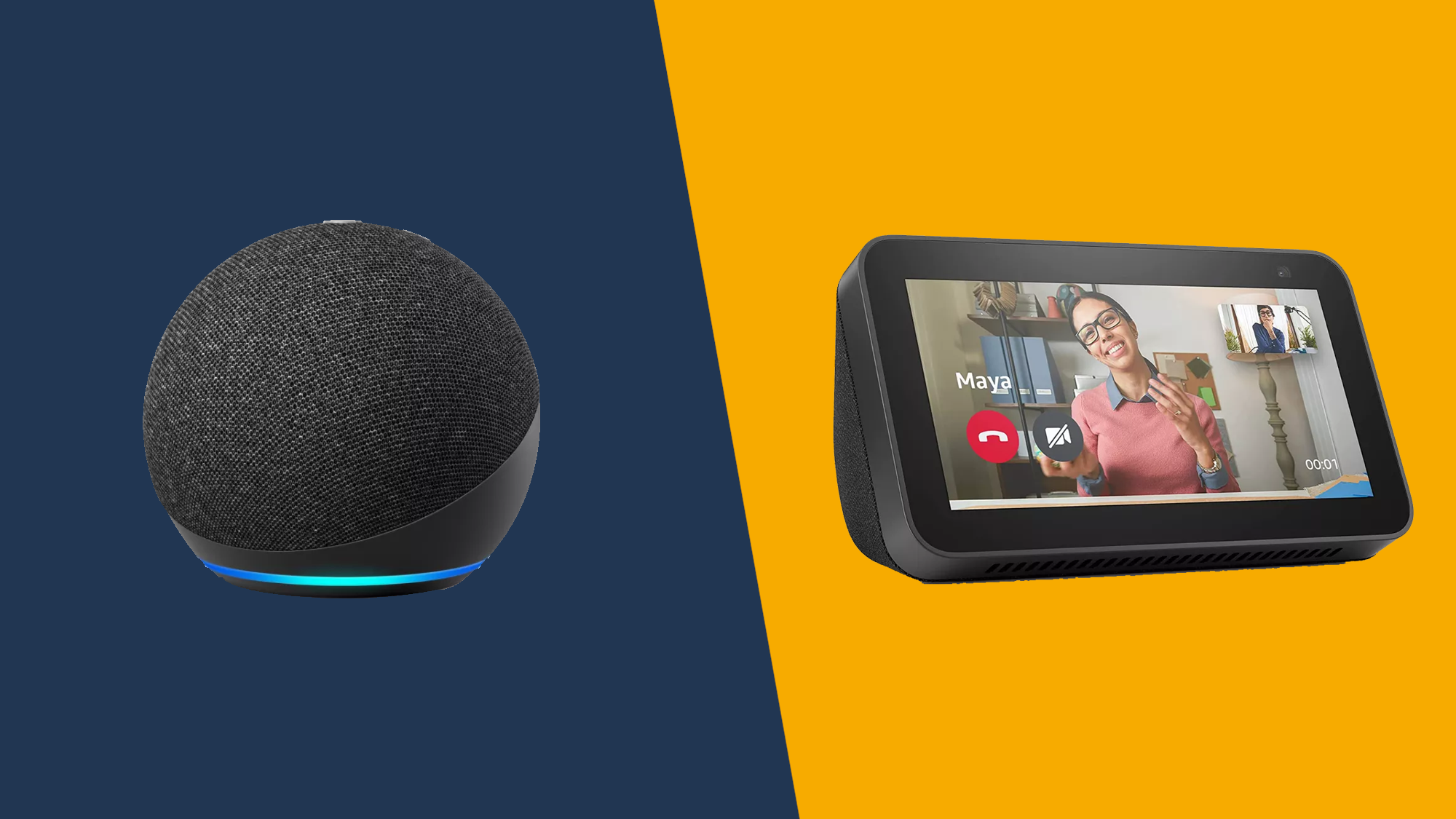
There's a chance we could see a brand new Echo speaker join Amazon's seemingly never-ending lineup of smart home devices that make up some of the best smart speakers. The last time the company unveiled a new Alexa speaker was the Amazon Echo 4th Gen in 2020.
Despite skipping its Alexa event last year, Amazon didn't starve us of some fresh Echo devices in its other smart home device ranges. Most notably, the Echo Show 21, which reigns as its largest Echo device, and its Echo Spot smart alarm speaker both made their debuts.
Given the near five-year time gap since Amazon's last Echo speaker hardware update, an announcement isn't completely unrealistic. A new smart speaker would also be handy for pairing with the AI-integrated Alexa voice.
Alexa subscription tiers
(Image credit: Future / Lance Ulanoff)
As we know, Alexa AI is likely to appear during Amazon's big Alexa event. However, we believe that the revamped voice assistant will offer limited free use before introducing a monthly subscription fee. Thankfully, though, this will likely not impact the classic Alexa we all know and love.
We've been aware that Amazon has been toying with the idea of implementing a fee for its new Alexa voice which could cost you between $5 to $10 a month. Considering that Amazon has fallen behind its AI competitors ChatGPT, Google Gemini, and Apple Intelligence and has yet to ride the AI train, from a business perspective, charging a monthly fee makes sense. However, from a consumer perspective, we're still not entirely convinced that this will be worth splurging on, given its numerous delays and reported inaccurate responses.
Updates for Fire TV, and maybe a new device
(Image credit: Amazon)
While its Alexa voice assistant will be the main focus, it's likely that Amazon speak about its Fire TV device range. Amazon's 2023 device event revealed features for its Fire TV devices, including an improved Alexa voice search function and AI screensavers. Following Amazon's Android TV update, we believe the company could introduce new Fire TV devices alongside updates to the abovementioned features during its event.
Mentions of new Fire TV hardware were spotted on one of Amazon's developer pages, stating the following; “Android 14-based Fire TV is based on API level 34. The following sections explain some of [the] important changes that you should consider when you build apps for Android 14-based Fire TV". This gives a strong indication that new Fire TV devices will be one of the star announcements at tomorrow's event.
This leak has come at an awfully convenient time with the Alexa event due to happen tomorrow, adding to our suspicions that Amazon could expand its Fire TV line. With the lack of mentions of specific hardware models, we're unable to pinpoint what exactly this will entail, but we'd expect it to be the announcement of a new smart TV or streaming stick.