Google has released a mid-year update on Australia’s search trends, and the data from 2020's first six months provides some interesting insights into our collective fears, questions and curiosities as we all try to navigate one of history's most challenging years.
As you might’ve guessed, ‘coronavirus’ was the most searched topic in Australia over the first six months of 2020, well and truly dwarfing all other terms. For example, in March, search interest in the pandemic was more than four times greater than what Google saw for the bushfires in January.
Other topics with the most growth this year provide a snapshot into Aussies coming to grips with the new normal – we’re looking for information on social distancing, panic buying, quarantine and… Zoom video calls.
The virus has also dominated our questions since the beginning of the year, with ‘how many cases of coronavirus in Australia?’ taking the number one spot.
Questions related to coronavirus account for 15 of our top 20 searches this year – we’ve been searching for answers about the symptoms of Covid-19, where it started and when it will end.
Other questions on our mind during the pandemic have included Australians asking how to make hand sanitiser, where to buy toilet paper and when does the JobKeeper payment end.
In an already tumultuous year, searches for the Black Lives Matter movement have also seen a surge in growth year-on-year, fuelled by renewed global protests and the death of George Floyd.
Searching for DIY and distraction
Not everything is so bleak though. The data shows searches for Animal Crossing made it into the top 10 – a game for Nintendo Switch that released in March and perhaps couldn’t have come at a better time.
As for other entertainment that captured our attention, Netflix's Tiger King and Joe Exotic were trending searches, but beating those two queries out, we really wanted answers about Carole Baskin.
Google’s search trends also show that Aussies have been looking to get away from the screens and back to more peaceful pursuits – the results show a 10-year high for searches related to craft and gardening, and the second highest peak on record for meditation.
These searches don’t reflect the phrases with the highest search volume overall, but rather show which search terms have had the biggest growth in traffic in the past six months.
Here's everything there is to know about Tesla's Texas-bound Cybertruck, from its mammoth payload promises to its electric range and brutal acceleration.
UPDATE:Amazon has confirmed that Prime Day 2020 will take place this year, but has refused to reveal a date. All we know is that it will take place "later this year", so rumors of it kicking off in October may well be true.
Prime Day may have arrived late to Aussie shores but it was a great time for it to kick off in 2018. It launched in Australia just when Amazon started to increase the duration of the major sale event from a mere 24 hours to much, much longer. And that meant, in 2019, we got a shopping spree that lasted a whopping 65 hours – starting on schedule at midnight on July 15 and ending only when it did on the US West Coast.
Across the almost-three days of Prime Day last year, over 340,000 Aussies visited Amazon per day, with 40,000 of them making purchases. If that’s the kind of traffic Amazon can handle, we won’t be surprised if the e-commerce giant ups the ante in 2020.
However, there have been some doubts about Amazon Prime Day taking place in 2020. We weren't expecting the event to be cancelled outright but given how many reports of we've had of the sale being postponed, it did feel that perhaps Amazon would cancel Prime Day for this year and prepare for Black Friday instead. An earlier Reuters report suggested the avalanche of deals would likely arrive in August. Not long after that, credible sources told the Wall Street Journal that the date had been moved to some time in September. Then a new report suggested it's been postponed once again to some time in October.
So, will we actually get a Prime Day in 2020? Rest assured, the answer is yes. We don't have a confirmed date yet but Amazon has told TechRadar that the sale will take place "later this year".
This not only gives Amazon time to steady itself from the effects of the current Covid-19 pandemic, it also gives consumers time to possibly recover from the economic downturn the global crisis has brought. But whether an October date will ride into the Black Friday deals territory – another invented online shopping period that Amazon heavily relies on – remains to be seen.
Whether Amazon Prime Day 2020 is in September or in October, we have a lot of questions: on what date or dates will it happen? What Prime Day sales are expected this year? Should you buy on Prime Day or wait until Black Friday?
We're here to help answer those questions while official details are still in the offing.
Amazon Prime Day began in the US in 2015 as a celebration of the company’s 20th anniversary, with more deals on offer than Black Friday back then. Prime Day then quickly transformed into Amazon’s mid-year sales event where members of Amazon Prime get exclusive discounts on a wide range of items. While it began as a one-day sale, 2018 saw the offers last for 36 hours, while 2019 saw a recording-breaking 65-hour event for shoppers in Australia.
Why does Amazon have Prime Day? It's presented as a neat ‘thank you’ to its paying members, but one that involves giving Amazon more money and shifting a lot of stock at the same time.
Prime Day isn’t just about selling Amazon-branded products – many other brands and third-party sellers also save their best deals for Prime Day, completely aware that thousands of extra shoppers will be hitting the online store.
To make the most of Prime Day you’ll need to get yourself an Amazon Prime membership which, in Australia, will set you back just AU$6.99 a month or AU$59 a year – half the cost of the US subscription.
While you’re paying for the privilege of free, swift delivery (although that’s currently being slowed down to make space for the essential items people are ordering), signing up for Prime means you’ll also have free access to Amazon’s streaming services, including Prime Video, Prime Music and Twitch. Members also get free access to Prime Reading and Prime Photos for all their ebook and storage needs.
Amazon hasn’t confirmed the date for this year’s big sale event, but Prime Day has never been pushed beyond July before. That said, the current coronavirus pandemic has made things a little uncertain. Amazon has been struggling to cope with online shopping demands in most markets, Australia included, so scheduling Prime Day as per tradition in July has been difficult.
While an earlier report suggested Prime Day 2020 would be in August, a later report claimed it had been postponed to September. However, if the latest news is to be believed, Amazon has pushed the event further back to October. This was revealed in emails sent to third-party retailers and was seen by CNBC.
Amazon has also confirmed to us that Prime Day will be "later this year", so an October date looks very likely. That said, it's possible different markets will experience Prime Day on different dates as India is kicking things off as early as August 6 and will continue for 48 hours.
Last year's Prime Day deals lasted 65 hours for shoppers Down Under,h and while we're hoping it will be same this time round as well, having it late in the year may affect Amazon's plans for Black Friday and the company could cut the duration of the sale short.
Amazon has historically picked a Monday to start the deals and Prime Day usually runs through Tuesday (with a possible extension corresponding to the time the big sale ends over on the US West Coast).
If October is indeed the month, that leaves one of four choices for the start of Prime Day 2020:
Monday, October 5, 2020
Monday, October 12, 2020
Monday, October 19, 2020
Monday, October 26, 2020
If Amazon is truly planning an October event, then the company may need to work around Apple's iPhone 12 launch date – which itself is still unknown but is likely to hog the spotlight.
As soon as we catch wind of the Prime Day 2020 date, we'll be sure to update this page so you can prepare your Amazon wish list.
How long will Prime Day 2020 last?
Well, it's hard to say with any degree of certainty. We can't see Amazon reducing the amount of time Prime Day lasts for, so we're expecting Prime Day 2020 to last at least 65 hours this year, if not longer, although an October date might affect Amazon's plans for Black Friday that happens in November.
That said, in light of the recent reports of Prime Day 2020 moving back in the year, it could be even longer than expected. Prime Day a few years ago was only that, a day, but in 2018 it moved to 36 hours, and last year was a whopping 65 hours of deals for Aussies.
So we'll just have to wait for official word on what's happening to see how long this year's shopping spree will last.
(Image credit: Amazon)
Are Prime Day deals competitive?
Amazon has a plethora of offers on its site each day and those are usually some of the best prices you can find on consumer tech. Whether you’re after a Samsung Note 10 or a Philips Hue smart lighting system, chances are you’ll get them cheaper on Amazon than any other Aussie retailer. It’s even more the case with Prime Day deals.
Leading the raft of deals during Prime Day 2020 will be Amazon’s own products, including all the Echo and Kindle products, not to mention Ring security devices. Amazon is also one of the most convenient places to score a discount on the Oculus VR headsets and, now, lay your hands on official stock of Samsung devices, Xiaomi phones and Instant Pots.
You can easily score about 35% off on Amazon’s own devices during Prime Day which, for the rest of the year probably don’t drop more than 28% or thereabouts. If you’ve managed to score a $500 discount on Samsung or Huawei devices during one of Amazon’s regular deals, then it’s highly likely that the discount will be much deeper come Prime Day. It’s the perfect time to snag a Nintendo Switch or find the lowest prices on the best premium headphones – cheaper than any other retailer who will likely be scrambling to price-match.
What were people searching for on Amazon Prime Day 2019?
According to analytics experts Hitwise, Amazon saw an increase in traffic across all major categories on the Australian site, with the Electronics & Computing showing a 359% growth in reach between 2018 and 2019, with Amazon-branded items being the most popular products on the site, followed closely by the Nintendo Switch. There were nearly 100,000 page views for all NIntendo-branded items, including consoles and games.
With Samsung now having partnered with Amazon to sell its products on the e-commerce platform in Australia, it was no surprise that the South Korean brand clocked up over 95,000 pageviews during Prime Day 2019.
The other big winners in Australia included Sony, Sandisk, Corsair and Philips.
What to expect from Prime Day 2020
We’re not expecting shopping trends during Amazon Prime Day 2020 to change very much. The Nintendo Switch is still going to disappear within minutes of being discounted, and this could happen to the Switch Lite too if you aren’t quick enough.
Of course, Amazon’s Echo devices will likely be flying off the shelves like before, and we’ll still see the Paperwhite beating out the other Kindles in terms of sales. You can even expect to pocket some decent savings on Ring’s range of security devices, including the Doorbells and the cameras.
Premium headphones have been very popular on Amazon over the last couple of years and 2020 will likely see that continue, particularly for Sony and Bose headphones. With the Bose Noise Cancelling Headphones 700 one of the more expensive ANC cans on the market, Prime Day will be a great time to get a set for less.
With more TVs available on Amazon Australia now, we think Prime Day 2020 would be an ideal time to upgrade your home entertainment system, especially if you’re in the market for a good 4K smart telly.
It will also be a good time to get yourself a new fitness wearable, be it from Garmin’s very premium GPS sports watch range or more affordable options from Fitbit. Likewise, cameras and drones will see a price drop, too, so keep that credit card handy.
How to shop on Prime Day in 2020
1. Check out our deals predictions and, eventually our Prime Day deals list
There are also too many deals available on Prime Day. It's never a problem finding discounts, it's always an issue of figuring out what deals are worth your money. That's why we always set up a curated list during the sales marathon.
2. Amazon Prime Day has historically required being a Prime member, so be sure to have a subscription on Prime Day
Amazon started Prime Day as a clever way to drive up its Prime subscription count, and this online shopping marathon – conveniently opposite Black Friday – accomplished just that.
3. Create a wish list to curate what you want, as there will be loads of deals
You're also going to want to create a wish list ahead of time, which will let you sort out what you want and how much everything costs. This will give you a head start. You'll be able to see which deals dropped in price and which did not.
4. Snap up the best Prime Day 2020 deals before they're gone
We often find the best deals to go in a matter of minutes, at which time Amazon rolls out a waitlist for those who were just behind the curve.
Prime Day: why does it matter more to Amazon?
There are some crucial differences between Prime Day and Black Friday. The first is that Prime Day is Amazon’s own day. It’s right there in the name which, of course, refers to Amazon’s Prime membership program and associated services. Amazon doesn’t own Black Friday, and that means ultimately it’s just another retailer shouting for attention – a massive retailer with a really loud voice. Black Friday is a sales event for the entire retail sector. With Prime Day as its own take on November sale period, it makes it much harder for rivals to muscle in on something that Amazon has effectively created from thin air.
The second and more important difference is that Black Friday doesn’t create new spending. It just moves it slightly. As we’ve discovered in recent years, the money people spend over the Black Friday period is money they were probably going to spend anyway: all Black Friday really does is concentrates pre-Christmas shopping in the last week of November.
Prime Day spending is different in two ways. First of all, people aren’t spending the money they’d already planned to spend on Christmas presents. And secondly, they’re buying mainly for themselves, not for others.
There’s another key benefit for Amazon. Its global bestsellers on Prime Day weren’t just Amazon devices; they were Amazon devices that connect to Amazon services. Fire TVs, Kindle Fires, Echo devices, Alexa remotes. Each one of them connecting to Amazon Prime, and each one of them requiring a Prime membership to buy in the first place. So when Black Friday rolls around, Amazon will have a whole bunch of Prime members for whom shopping on Prime is the default, and who might want to enhance their Amazon-powered smart homes with Amazon-branded Black Friday deals.
Prime Day means that, for Amazon, Christmas now comes twice a year.
After weeks of teasers and mini announcements the OnePlus Nord has finally been unveiled in full. This upper mid-range handset has a lot going for it, from six cameras in total to a 90Hz refresh rate, 5G support, and more. But it’s also got some tough competition, most notably from the iPhone SE (2020).
That’s Apple’s first real mid-range handset in a long time, and with the Apple name behind it, plus a lot of things to recommend about it - including a truly top-end chipset and a lightweight design - it’s a major rival to the OnePlus Nord.
But while these can both be seen as budget alternatives to big-name flagships, they’re also very different to each other in a lot of ways. Below you’ll find a rundown of all the key similarities and differences, so you can make a decision as to which is right for you.
OnePlus Nord vs iPhone SE (2020) price and availability
(Image credit: TechRadar)
The OnePlus Nord is out properly in the UK on August 4 (though before that there is a pop-up sale event on July 31). It costs £379 for a model with 8GB of RAM and 128GB of storage, while a version with 12GB of RAM and 256GB of storage will set you back £469. It’s worth noting however that there’s currently no availability in Australia or the US.
The iPhone SE (2020) on the other hand is out already and starts at $399 / £419 / AU$749. That’s for a model with 64GB of storage and as those prices suggest, it’s available in the US, the UK, and Australia.
If you want more storage, you can also get the iPhone SE (2020) with 128GB for $449 / £469 / AU$829, or with 256GB for $549 / £569 / AU$999.
So the OnePlus Nord starts a chunk lower than the iPhone SE (2020), at least in the UK, where they’re both available.
OnePlus Nord vs iPhone SE (2020) design
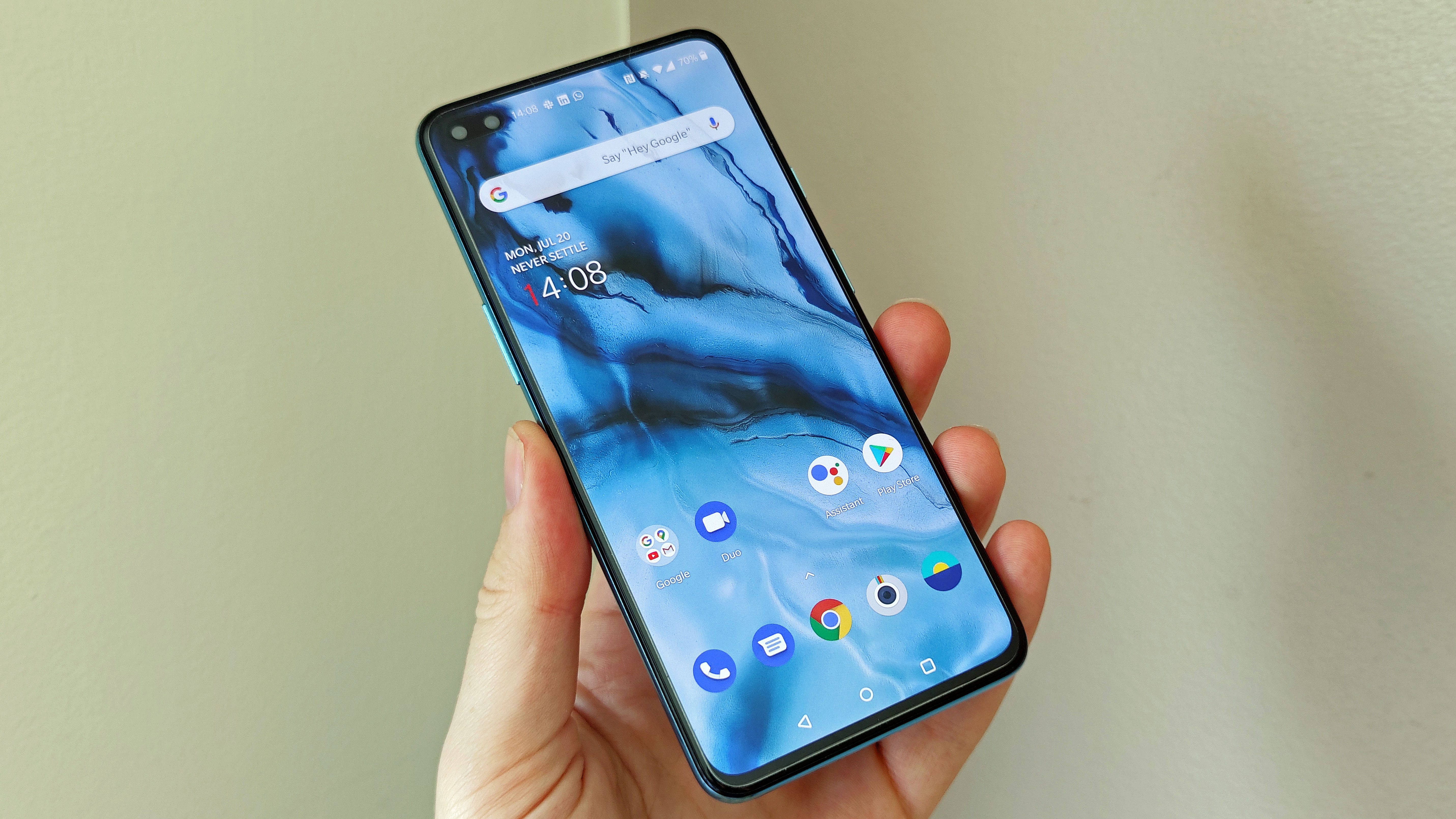
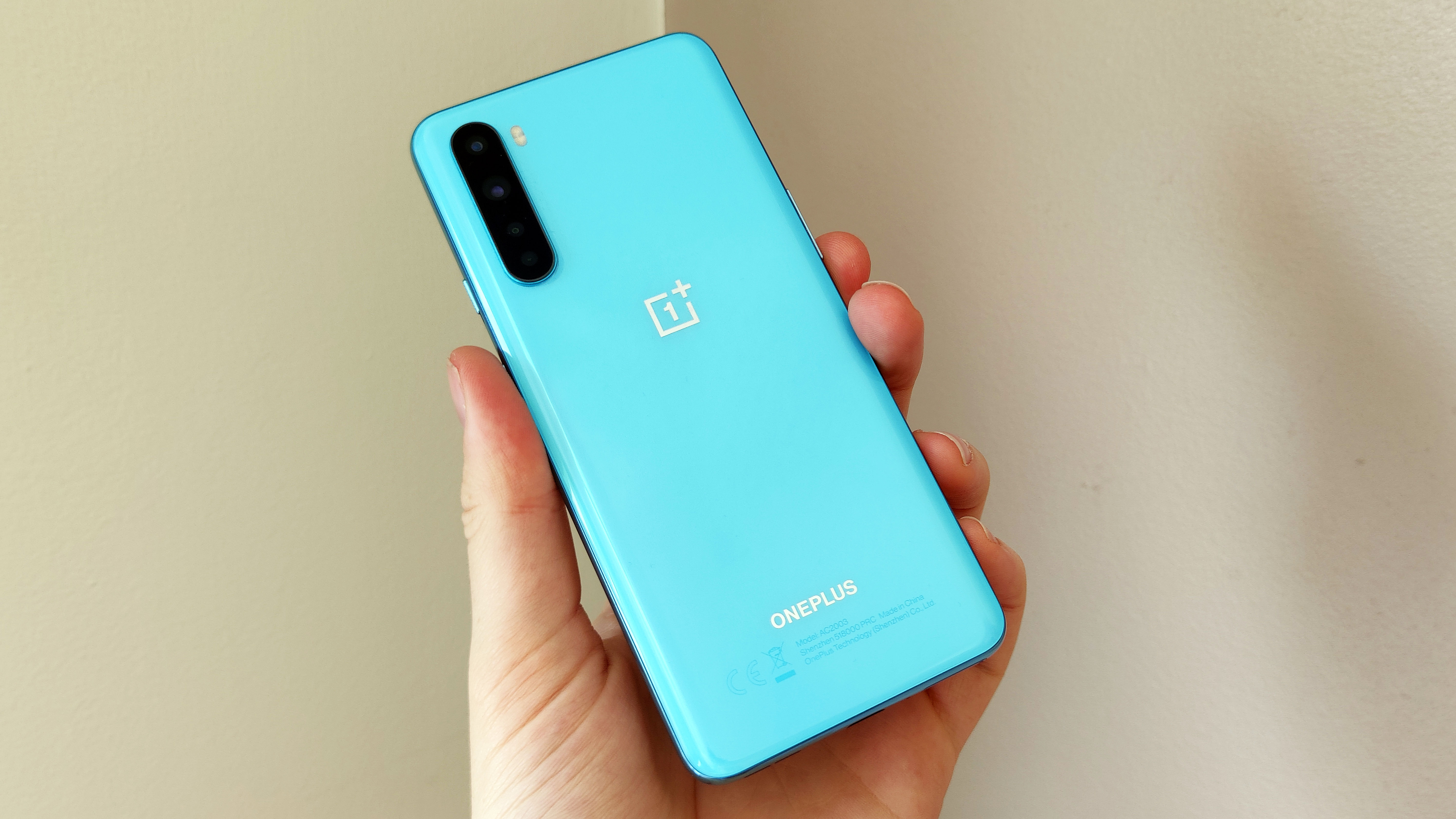
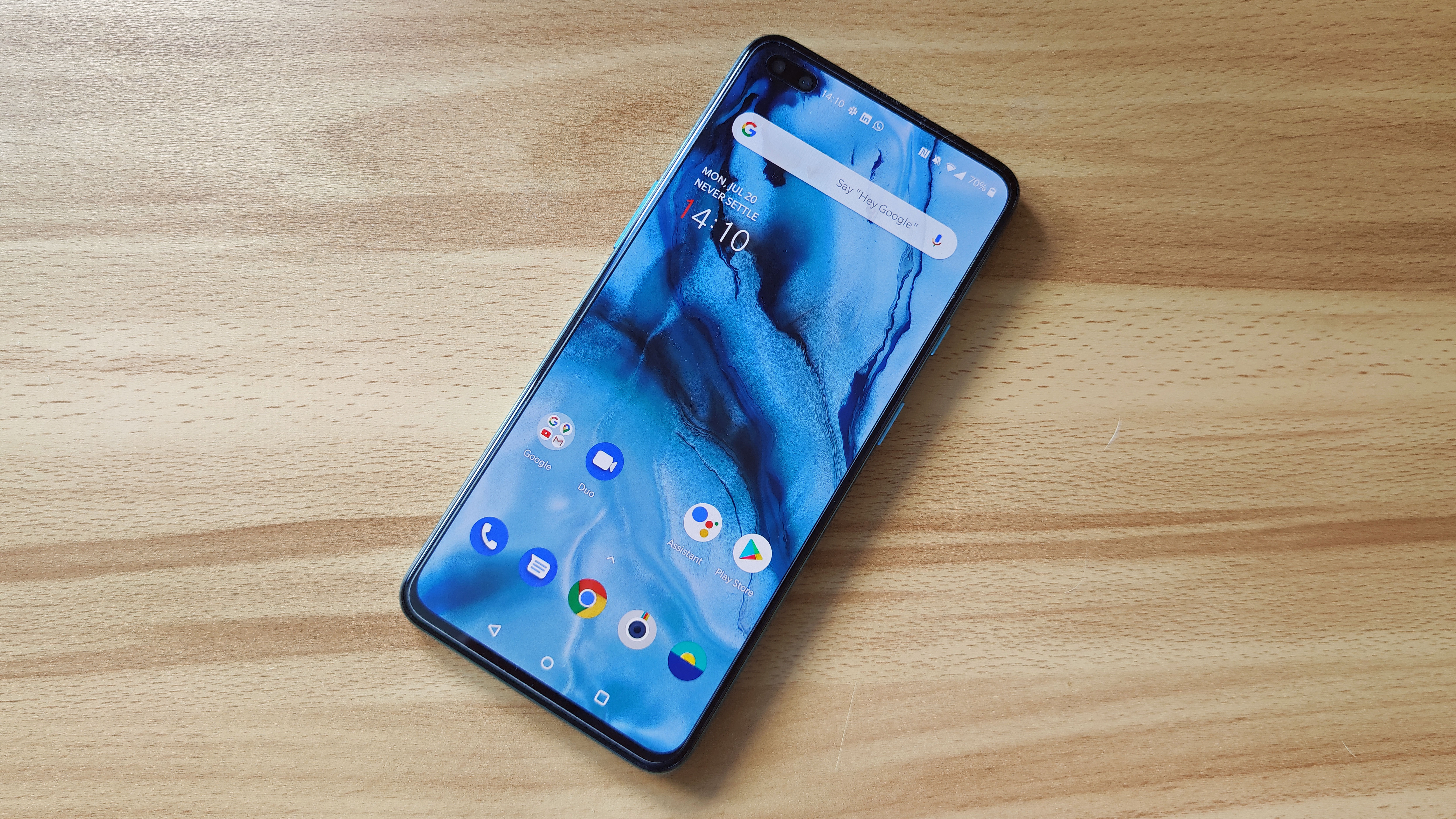
The OnePlus Nord has a glass back in Blue Marble or Grey Onyx shades, with a camera block running down the top left edge. Flip it over and you’re greeted with basically nothing but screen – the bezels are small, and the dual-lens front-facing camera is housed in a cut-out in the top left corner.
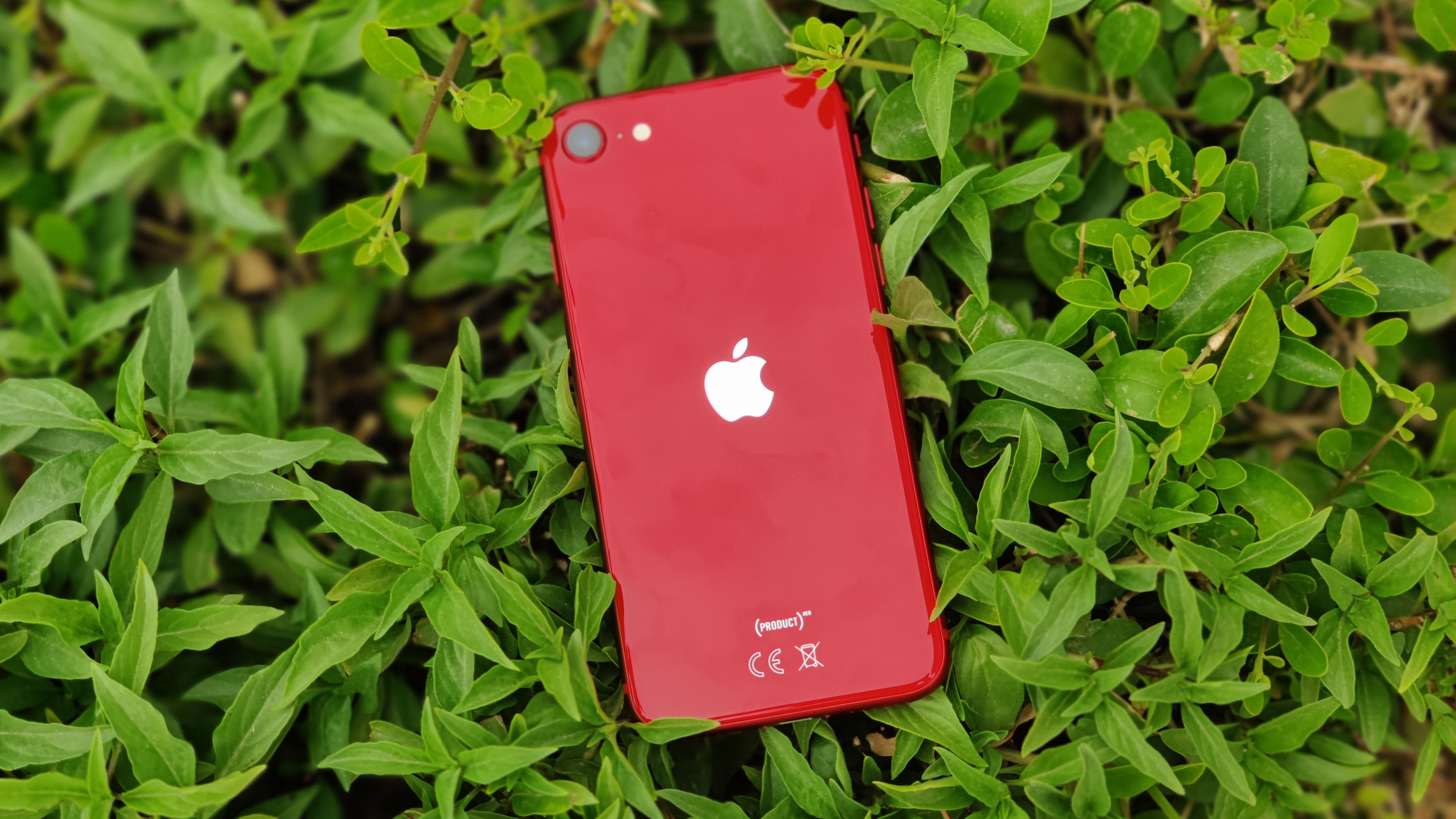
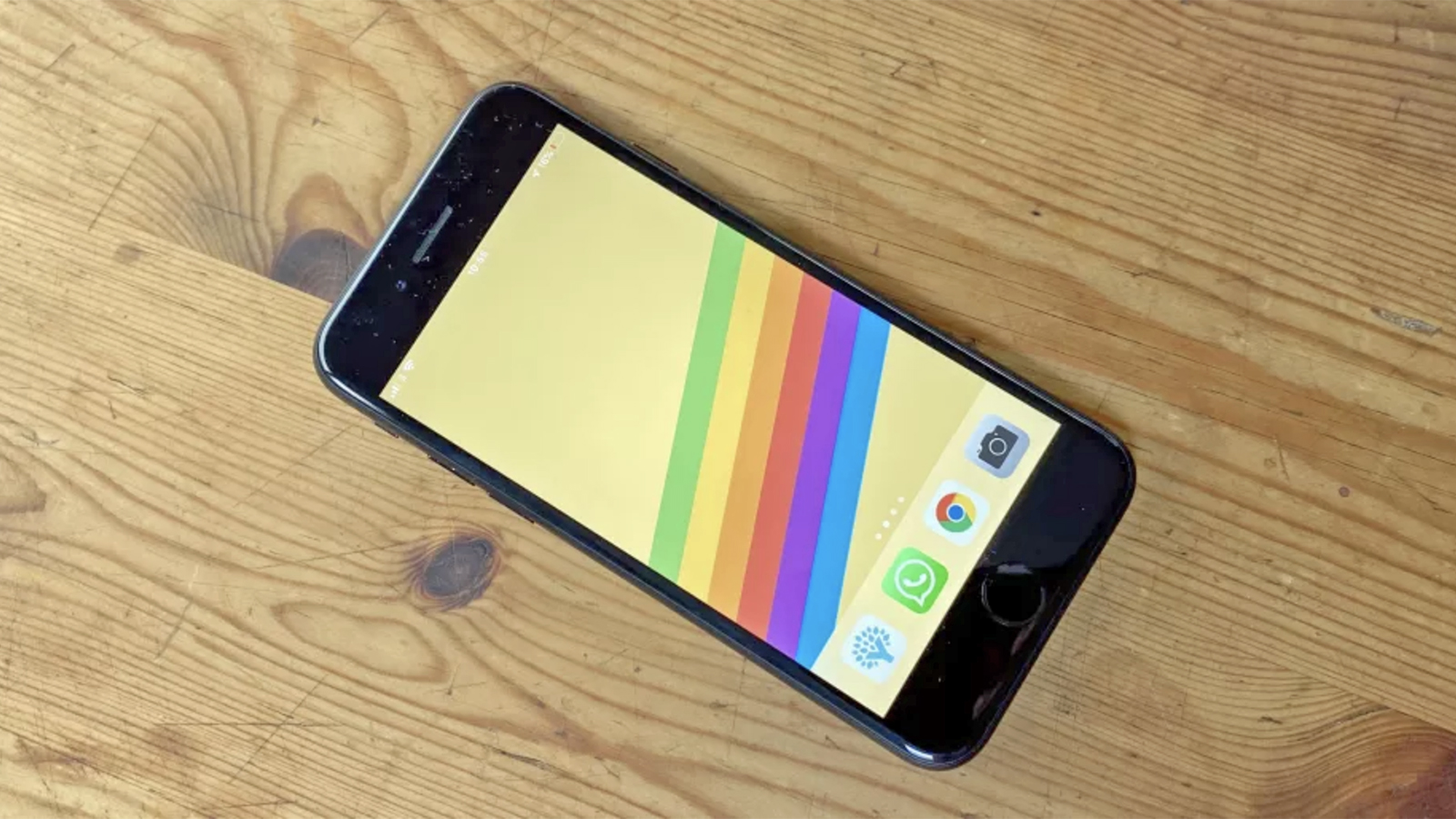
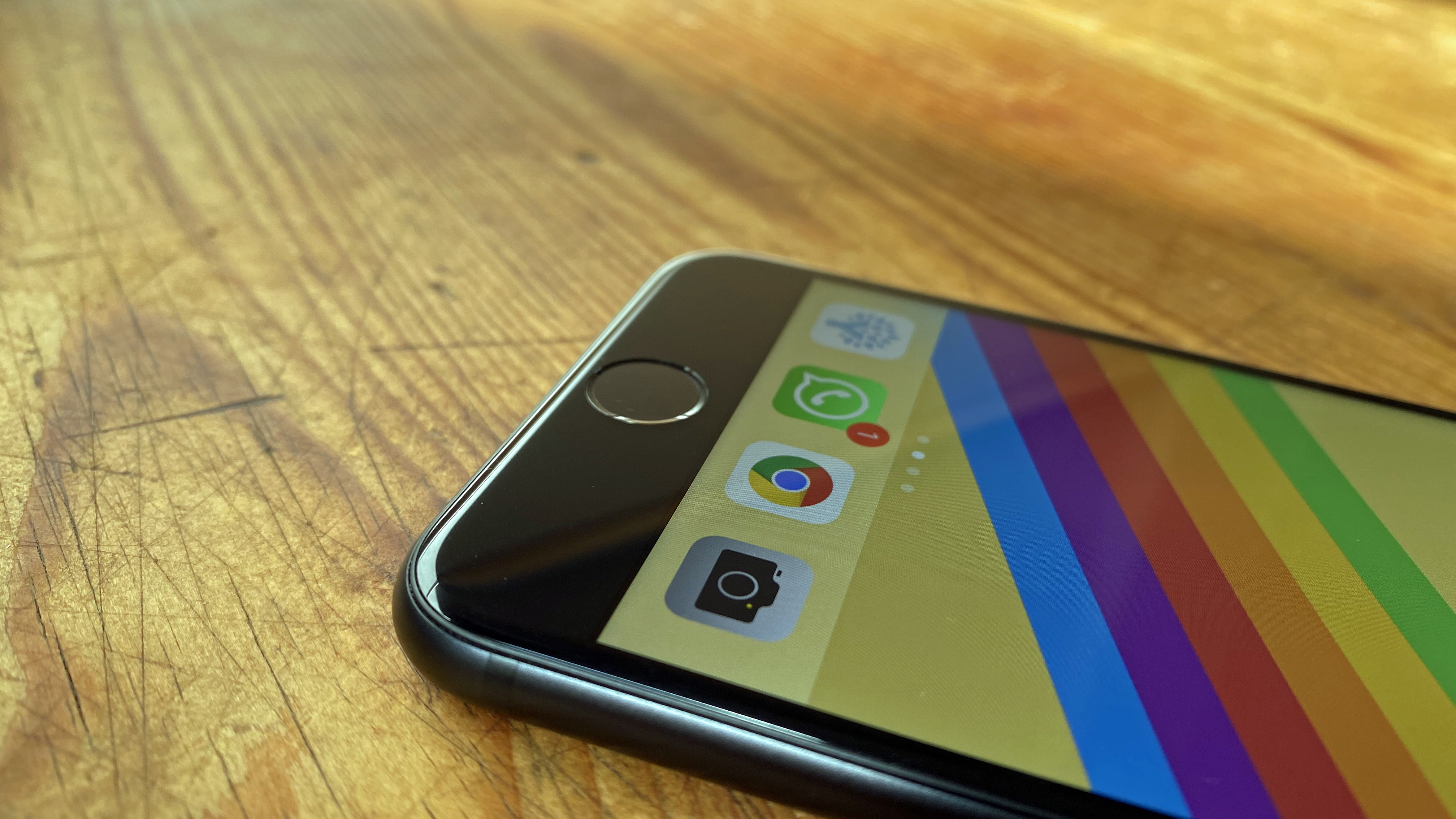
The iPhone SE (2020) meanwhile has a glass back in black, white, or red, with a much smaller single-lens camera in the top left corner of the rear.
The front has large bezels above and below the screen, with the front-facing camera housed in the upper bezel, and a home button (which doubles as a fingerprint scanner) in the lower one.
(Image credit: Future)
It’s an altogether less modern design than the OnePlus Nord’s, but one thing the iPhone SE (2020) does have going for it is a much smaller, lighter shell. The SE (2020) is just 138.4 x 67.3 x 7.3mm and 148g, while the OnePlus Nord is 158.3 x 73.3 x 8.2mm and 184g. So the Nord is bigger in every dimension, as well as being heavier.
OnePlus Nord vs iPhone SE (2020) display
The main reason the OnePlus Nord is larger than the iPhone SE (2020) is its screen, as the OnePlus Nord has a 6.44-inch one, while the iPhone SE (2020) has just a 4.7-inch one.
The Nord’s display is a 1080 x 2400 Fluid AMOLED one with a pixel density of 408 pixels per inch, a 20:9 aspect ratio, and a 90Hz refresh rate.
The iPhone SE (2020) on the other hand has a 750 x 1334 IPS LCD screen with a pixel density of 326 pixels per inch, a 16:9 aspect ratio, and a 60Hz refresh rate. So as well as being smaller it’s less crisp and likely to feel less smooth in operation, due to the lower refresh rate.
(Image credit: Future)
That smaller size however is likely to appeal to anyone who wants to easily be able to operate their phone with one hand, or fit it in a small pocket.
OnePlus Nord vs iPhone SE (2020) camera
(Image credit: TechRadar)
There are big differences between the cameras of these two phones, not least because you get a whole lot more lenses with the OnePlus Nord. In fact, it has six in total – four on the back, and two on the front.
Starting with those rear lenses, there’s a 48MP f/1.75 main camera with optical image stabilization (OIS), and that’s joined by an 8MP f/2.25 ultra-wide one, a 2MP f/2.4 macro one, and a 5MP f/2.4 depth one. So there’s no telephoto camera, but otherwise this has the main lens types accounted for.
On the front meanwhile, the OnePlus Nord has a 32MP f/2.45 main camera and an 8MP f./2.45 ultra-wide one.
The iPhone SE (2020) on the other hand has just a 12MP f/1.8 snapper with OIS on the back, and a 7MP f/2.2 camera on the front. But while it lacks the Nord’s versatility, we were fairly happy with the snaps it took in our review, so it remains to be seen how the OnePlus Nord will compare in practice.
OnePlus Nord vs iPhone SE (2020) battery
The OnePlus Nord has a 4,115mAh battery with support for 30W fast charging, which the company promises will get it from empty to 70% full in half an hour. The company hasn’t said how long it will last between charges, but it’s a reasonable size.
The iPhone SE (2020) meanwhile has a much smaller 1,821mAh battery. This supports 18W charging and also wireless charging, the latter of which you don’t get on the Nord, and while it’s a lot smaller, it’s also powering a much smaller phone. In our tests we found it lasted around a day, which is fairly average.
OnePlus Nord vs iPhone SE (2020) specs and features
The core specs of the OnePlus Nord include an upper mid-range Snapdragon 765G chipset (with 5G support), 8GB or 12GB of RAM, 128GB or 256GB of storage, and an in-screen fingerprint scanner.
The iPhone SE (2020) has a higher end A13 Bionic chipset (the same as you’ll find in the iPhone 11 Pro Max), but no 5G support, and just 3GB of RAM. Storage meanwhile comes in at 64GB, 128GB or 256GB, and while there’s a fingerprint scanner it’s in a button rather than the screen.
(Image credit: TechRadar)
It’s hard to say which will perform better, though in our tests the iPhone SE (2020) certainly did very well for what it costs. Of course, for some buyers the lack of 5G on Apple’s phone will push them towards the Nord.
Another big difference between the two is their operating systems, as while the OnePlus Nord runs Android 10 (with the company’s OxygenOS overlay on top), the iPhone SE (2020) runs iOS 13. So if you have a strong preference for one operating system or the other, then you already know which you’ll prefer on that front.
Takeaway
(Image credit: TechRadar)
The OnePlus Nord looks set to be one of the most exciting mid-range phones of 2020. Its starting price is very low for what’s on offer, and there’s a lot on offer – from a quad-lens rear camera, to a dual-lens front-facing one, 5G, a big battery, lots of RAM and a large screen.
The iPhone SE (2020) though will appeal to fans of compact phones, fans of iOS, and those who want a top-tier chipset.
We’ll have to put the OnePlus Nord through a full review before we can say definitively how good it is, but on paper it sounds very promising, and we already know that the iPhone SE (2020) is great.
Samsung wowed us at the start of this year when it first unveiled its new Odyssey gaming monitors at CES, and again in May when more details of the new screens were revealed, as well as an Esports tie-in.
While it's taken a while for them to reach shops, the new screens have finally broken cover and are now on sale in the US, UK, Australia and various other regions.
Samsung has been getting increasingly serious about gaming monitors over the last few years, and the new Odyssey G7 and G9 bring what the company describe as “the best in Samsung screen design and innovation by combining an immersive QLED display with 1000R curvature to offer a gaming experience with a futuristic feel, fast response and eye comfort.”
The new Samsung Oddyssey G9.(Image credit: Samsung)
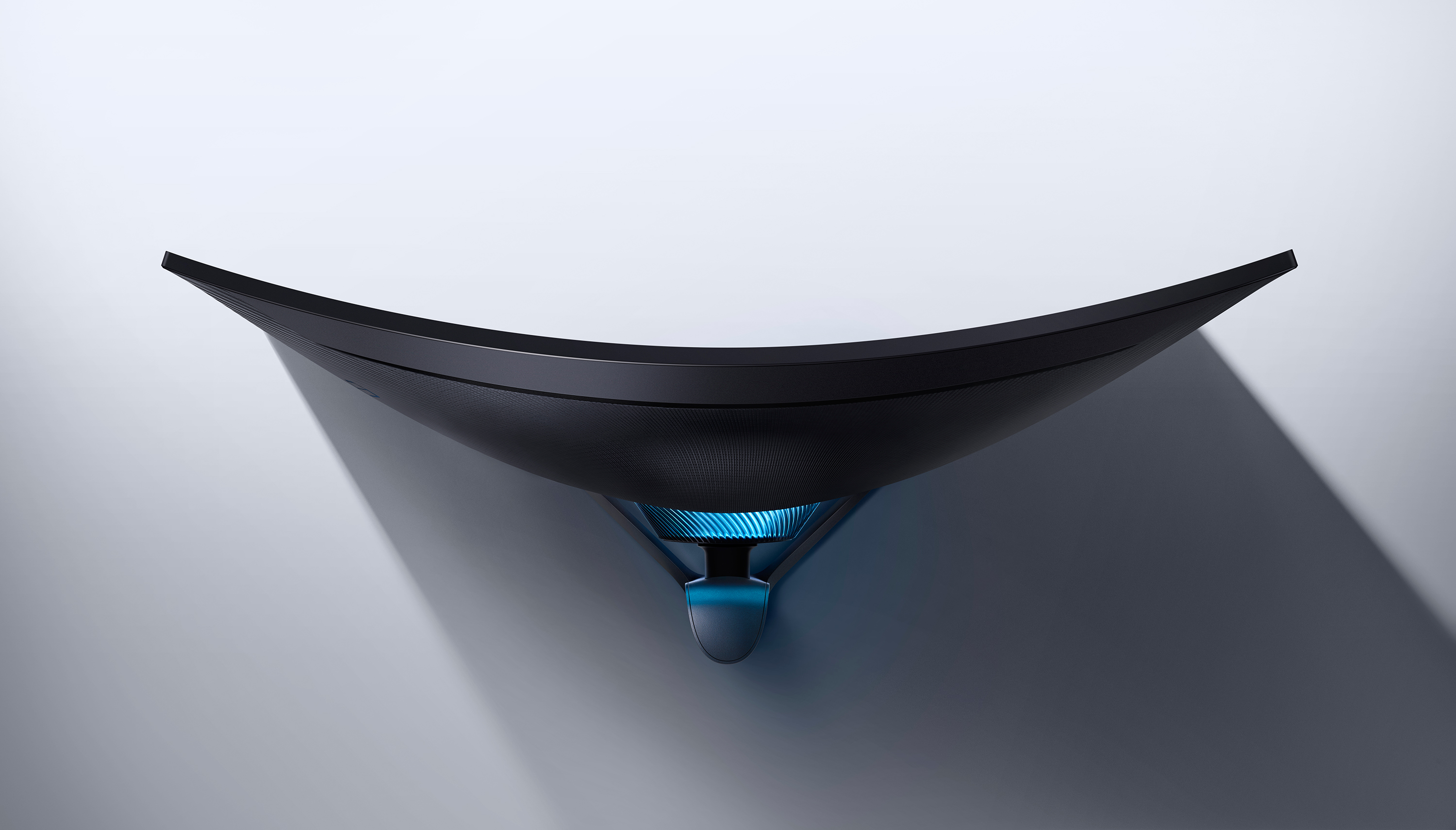
On all three of the new displays, the headline specs are the combination of blazing-fast 240Hz refresh rates and aggressive 1000R curves – which makes these the world’s first gaming monitors with such an extreme bend. Samsung is also using its well-regarded QLED technology for colours and brightness that (as on the Korean company's TVs) really help amp up the vividness of these screens. They also feature a quick 1ms response time, which is high-level pro-gamer territory.
These things have a seriously futuristic look, and we don’t mind admitting we’re a little smitten with the design, especially the very funky rear area where the stand is attached. Samsung calls it the ‘Infinity Core’ and it can be set to dim or remain static during gaming, or display user-selected colours.
Samsung's very curvy Odyssey G7.(Image credit: Samsung)
As previously mentioned, there are three Odyssey models in the new range – the top-of-the-line G9, which is a 21:9, 49-inch beast priced at US$1,699 / £1,279 / AU$2,799, and the more conventional 16:9 G7 which comes in 32-inch (US$799 / £629 / AU$1,099) and 27-inch (US$699 / £549 / AU$999) sizes. The G9’s resolution is a mammoth QHD 5,120 x 1,440, while both G7 models are 2,560 x 1,440 (WQHD).
All three monitors are available now in the US. The G9 and 32-inch G7 also available in the UK, with the 27-inch G7 available for preorder. In Australia, the entire range goes on sale on August 3.